
Not efficient, but effective

Standard

Sermon for July 16, 2023

Readings:

Isaiah 55:10-13
Psalm 65: (1-8), 9-14
Romans 8:1-11
Matthew 13:1-9,18-23

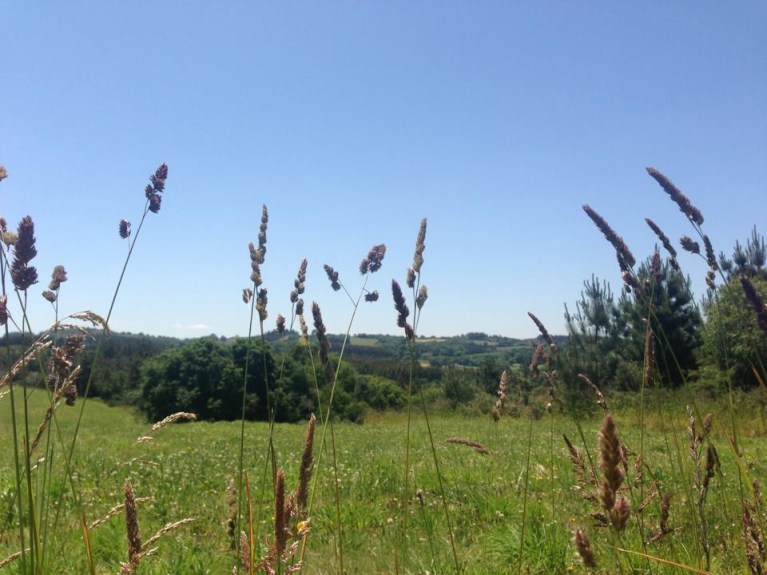
In the year 1701, Jethro Tull, the eighteenth-century British farmer and agriculturalist, NOT the 1970s rock band, invented a thing called a seed drill. It was a device that allowed farmers to plant seeds precisely: in rows at the proper depth, exactly where the farmer wanted them to go. It was really a revolutionary thing, because before that time the most common way of planting seeds, especially for field crops like grains, was called broadcasting. You took a handful of seed and you scattered it across the newly tilled soil. There are even manuals from the Tudor period in England explaining to farmers exactly how to do this. You take a step, and scatter. Another step, scatter. Step, scatter, step, scatter, on and on until you have covered your field. This was the way that planting was done pretty much as far back as anyone could remember. It was effective, but it wasn’t efficient, because you couldn’t control exactly where the seeds went. Inevitably some seeds would wind up on your footpath, in untilled soil, and of course you always had to worry about things like weeds and birds. Before Tull’s invention of the seed drill this was simply the life of the farmer. It was the way that things were. You knew that some seed would be wasted and you accepted that because you also knew that a lot of it would grow. Broadcasting wasn’t efficient, but it did work. 

If you look at this method of farming through modern, enlightened eyes, you are liable to think, as Jethro Tull did, that this is a problem that must be fixed. This is wasteful. This is inefficient, which in our modern world is just about the most horrible thing ever. God forbid something should be inefficient! We must find a way to stop scattering seeds in places where it is unlikely to grow. We must fix this problem. That is what Jethro Tull saw when he saw seeds being scattered in the field. A problem that needed to be fixed. But Jesus saw something different.

Jesus and all of his disciples would most certainly have been aware of how fields were planted. They would have understood how broadcasting worked. But what Jesus saw in the practice of scattering seed across the field was not just a farmer planting his crops; Jesus saw an image of how God works. Jesus saw in the sower a symbol or an image of God and God’s kingdom. And that is what he wants his disciples to see. This is what Jesus does all the time; he takes an everyday symbol, often from farms and fields, and he uses it to help his followers see God at work, in their everyday lives. 

How is God at work in the world? God is like a sower scattering his seeds across his field. God’s word, God’s grace is being cast all over. Is it landing in soil that is rough and rocky? Yes. Do enemies encroach? Yes. Is that seed, that word, that grace always going to produce the fruit that it could? No. Is every poor sod that gets a seed or a kernel deserving of such? No. But God goes on sowing. He keeps scattering seed relentlessly, even on pieces of ground that don’t deserve it and where it isn’t likely to produce much fruit. Why? Is God a fool? Does God need a seed drill to make sure his grace and his word is neatly and efficiently planted? What does Jesus want us to do with this image of God that he is sharing with us?

What does Jesus want us to do? Well my suggestion to you is this: nothing. Jesus isn’t asking us to do anything in this lesson today. I know that is hard for some people to hear. Especially if you are the sort of person that is a fixer, or if you have spent so much time in corporate performance improvement that you can’t look at any process without trying to make it more efficient, but it may just be possible that Jesus is simply revealing a truth to us. That this is, quite simply, the way things are. God scatters his grace broadly, but it doesn’t always bear fruit every place it lands. That is a reality that we are probably not going to change. Jesus isn’t telling us to do anything about it. Now Jesus has never been shy about telling his disciples to do something when he wants them to do something. The gospels are filled with Jesus giving specific instructions and commandments. But he doesn’t do that here. The only instruction that Jesus gives here is “Listen!” Listen. In part of the passage that gets cut out, Jesus tells his disciples that they need to know some of the mysteries of the kingdom and that is why he is speaking to them in parables and helping them to understand and see and interpret the symbols of God’s kingdom. Jesus isn’t looking for action here; he is looking for understanding. But he also tells the disciples quite plainly: some people won’t get it. Some people won’t understand, but Jesus wants his disciples to understand. So he uses symbols to reveal to them God’s kingdom.

God is like that man in the field casting his grain seeds. The seed is good. The seed has life within it and can bear fruit. It always has the potential to grow, but sometimes it doesn’t. Whether the seed lands on hard soil, or whether it is consumed by weeds and birds, sometimes it just doesn’t grow. But sometimes it does. Much of the time it does and bears fruit abundantly, and that is enough to keep the sower sowing. The sower doesn’t seem too concerned about the seed that lands on the path. God sows his word, his grace in this world, knowing, knowing that some of it is going to land on hard soil and won’t grow, or won’t grow for long. But he keeps on sowing. Some of God’s grace lands in place where it simply can’t bear fruit, but he keeps scattering it anyways. Why? Well, perhaps because some of it does bear fruit, and that is enough. It is enough for the sower to know that some of the seed will bear fruit. Some of it will grow. To the modern mind this is foolishness and inefficiency and waste. But to our Lord this is the mystery of the kingdom.

It is a human tendency to want to try and fix this system of wastefulness, to make all of the seeds grow, but Jesus isn’t asking us to do that at all. Not here. The thing is, I don’t think we are always very good at knowing how to prepare the soil or what helps things grow or not grow. That was actually one of Jethro Tull’s problems. He couldn’t fathom how manure could be good for growing anything, but it is. Manure actually helps crops grow. So you see, even if we are clever enough to devise a tool to control where seeds go, we don’t always know what is good soil and what is bad. Jesus doesn’t ask us to make God’s kingdom more efficient. Jesus will eventually send his disciples out with instructions to preach, baptize, heal and forgive, they would be sent out to sow God’s word in the world and to show people his grace, but Jesus also repeatedly makes clear to them that much of their work will not produce the fruit they desire. Some people will outright reject them, some people will convert and backslide, some will just wander away. Jesus tells them and makes it very clear, that this is the way that it is. It is not a sign of failure; it is not a sign of not working hard enough; it just is. We go on sowing seeds knowing that some people won’t get God. Some people won’t respond to grace. When you accept that, when you accept that some seed just isn’t going to land where it can grow and when you stop worrying about it and making it some personal failure, then you can get on with the scattering and that’s more important because much of the seed that you scatter does grow. 

We work very hard to try and sow the seeds of the gospel here. But some people have no interest in the story we tell. Some people seem enthusiastic and want to sign up for everything and then disappear two weeks later. Some people just drift away, finding one excuse after another to come less and less until they forget why they ever came at all. Frustrating, yes. But on the other hand, some people come here and find this place to be part of the bedrock of their lives and the people here become family and Jesus’s story becomes their story and their lives do indeed bear much fruit. You can never be too sure how people are going to respond. This is how God’s kingdom grows. Not in neat and efficient little rows and not always in the places that we expect. 

God’s method of spreading his kingdom isn’t always efficient, but it is effective.

A prophet with Good News

Standard

Sermon for July 2nd, 2023

Readings:

Jeremiah 28:5-9
Psalm 89:1-4,15-18
Romans 6:12-23
Matthew 10:40-42

There is a battle going on in this morning’s Old Testament lesson, only the excerpt that you heard was so short that you aren’t likely to appreciate everything that is happening, so I want to fill in some of the details for you. There is a battle or a duel taking place in public between two different prophets: Jeremiah and Hananiah. One of these prophets has a message of good news, and one of them has a message of bad news and the people need to decide which one of these prophets to put their faith in.

You see, it is a critical time for the Kingdom of Judah and the people of Jerusalem. There has been corruption, and bad leadership in the kingdom for some time now. Bad kings, faithless priests, questionable prophets. People have wandered away from the covenant, worshipped foreign Gods or pretended to worship God of Israel while they really just did whatever they wanted. Some people didn’t even bother to try and follow the commandments. Society is a bit of a mess. And now, a foreign king, the king of Babylon, has invaded, looted the temple and hauled some of the kingdom’s elite off into exile. It is a critical time and people are wondering what to do and what comes next. They look to their prophets for answers, but then they get two very different messages. 

One prophet has a message of good news. He tells the people this present suffering is going to quickly pass away. Two years, tops! Happy days are coming soon. King Nebuchadnezzar will soon see the error of his ways, or God will somehow correct him, the holy vessels will be returned to the temple, our exiles will come home, we will be set free from the Babylonian yoke and there will be peace and prosperity in the land. Two years. Just wait, this will all soon be over.

The other prophet has a much more sobering message. There’s a long road ahead. Seventy years, he says! The king of Babylon isn’t going anywhere soon. There is going to be more suffering and hardship. There will be more exile. We are going to be taken places that we don’t want to go and we are going to have to serve rulers that we don’t want to serve. And, yes, our God is going to redeem us and restore us to the promised land, we believe that, but that is a distant vision and it is going to happen in God’s time, not our own. It will take at least a generation. God’s time is not our time. We need to be prepared to be in this for the long haul. We need to be playing the long game, because that is how God operates. God plays the long game. Well that is less good news. It’s not a very compelling message. Who to follow?

Better to follow the prophet of good news, right? I mean, he has positive energy and a vision. He sounds optimistic and confident. Let’s go with him. The problem is only one of these prophets is actually telling the truth. Only one is a true prophet, and it’s not the one most people want. 

In our passage from the Book of Jeremiah this morning, the prophet Hananiah has just been telling people that their national distress is going to be settled and resolved in two years. Hananiah says in two years this crisis will be over, the temple treasury will be restored and everyone will be back where they belong. Two years! Well a public figure saying two years sounds a lot to me like a contractor saying two weeks. Don’t worry, this job will be done in two weeks! Contractors are like lawyers, many of them are professional liars, and sadly a lot of prophets fit that description too. Maybe not outright liars perhaps, but some so-called prophets often have a tendency to let their own hopes and dreams and wishes interfere with the message that God is actually giving them. 

Hananiah makes this great prediction of two years and Jeremiah chimes in and says: Amen! Hallelujah! Let it be so! I hope you’re right. I hope that is a word from God. BUT, and this is a big but, all those other prophets that came before us, they all seemed to predict that there would be hard times. Do you have a better connection to God than they do? Then Jeremiah says sarcastically, look if peace comes, then I will know you really are a prophet and that you really did get a message from God, but not until then, because God didn’t tell anyone else that it would be that easy. Jeremiah never found that promise in God’s word, so he wasn’t ready to put any of his faith in a quick fix. He would love to see it, but it’s not what his hope is founded on. 

That’s where our passage ends this morning. The battle continues for a little bit afterwards, and then Hananiah drops dead. I guess it is an occupational hazard for people who claim to speak in God’s name. Watch what you say! The true prophet in this story was Jeremiah who was saddled with the burden of telling people an unpopular truth. Jeremiah knew that the problems throughout the kingdom that he had been calling out for years, he knew that they have deep, deep roots and that they aren’t going to just go away before God does some radical pruning. There usually aren’t simple solutions to complex issues. Maybe God is going to use this Babylonian king to make us into something new, something better than we are right now. Jeremiah knew that there were painful times ahead, but he still had faith that God could and would work out something wonderful through it. That wasn’t a message that most people wanted to hear. People want simple, uncomplicated answers to complex problems. People want quick fixes and easy solutions. But that is not Jeremiah’s message. It was Hananiah’s message, not Jeremiah’s. But Jeremiah was the one who told the truth.

This is an unpopular truth: it is usually only bad things that happen quickly. Bad things happen quickly; good things take time. Sometimes a very long time. Maybe there are a few exceptions, but the world doesn’t often run on our schedules and we humans are an impatient lot. We want the world fixed now. But God doesn’t promise us quick solutions. Humans promise that; God doesn’t. Jesus, who had the power to raise the dead with a word and heal the sick with a touch, he didn’t tell his disciples that following him would be easy. He didn’t promise them quick solutions. If you’ve been following along in the gospel readings for the last few weeks, then you will know that he promised them just the opposite. Not peace, but a sword. Not unity, but division. Not acceptance, but rejection. Jesus promised his disciples that following him would be a long and hard road and that some people would reject them just like he was going to be rejected and just like the prophets like Jeremiah had been rejected long before him. Many people would reject their ministry and their message, but not everyone. Some people would welcome them, some people would receive their message, just like some people did receive the prophet Jeremiah’s message, as much as it sometimes seemed like bad news. And those people would be blessed. Blessed, because their hope was resting on truth and not on a lie. Blessed, because they were believing in God’s promises and not the empty promises of man. 

Jesus knew about the prophet Jeremiah. He quotes him and imitates him sometimes; we sometimes find Jeremiah’s words in Jesus’s mouth, so maybe Jeremiah’s message wasn’t actually bad news after all. It wasn’t the message people wanted, but it might have been the message they needed. As Christians, our hope, our faith needs to rest on truth, not on a lie. It needs to rest on God’s actual promises, not the fantasies we invent. And our faith and hope need to address the situation we are actually in, not the one we wish we were in. True Christian hope is rooted in reality. It is rooted in the world we live in and in the lives we live.

 In the next chapter of the book of Jeremiah, after Hananiah drops dead, Jeremiah writes a letter to some of the people that are already living in exile and this is what he tells them:

 Build houses and live in them; plant gardens and eat what they produce. Take wives and have sons and daughters; take wives for your sons, and give your daughters in marriage, that they may bear sons and daughters; multiply there, and do not decrease. But seek the welfare of the city where I have sent you into exile, and pray to the Lord on its behalf, for in its welfare you will find your welfare. 

Jeremiah’s advice: get on with life. Live today. Plant, eat. Have babies, enjoy your family. Do the best you can. God’s grace can be found all over this broken world. You don’t need to wait for some glorious future day to experience God’s love and to see his promises fulfilled. You can experience that now. If you are waiting for the world to be a happy perfect place, before you find God in it, you may be waiting for quite a long time. But if you can learn to look past your broken dreams and shattered expectations, you just might find that God is in your life now. When you look at it that way, Jeremiah’s message might have been better than Hananiah’s. Maybe it was the good news all along.