
Sermon for Nov. 5, 2023
Readings:
Micah 3:5-12
Psalm 43
1 Thessalonians 2:9-13
Matthew 23:1-12
One of the things that truly separates humans from animals is our capacity, and our propensity, for hypocrisy. It isn’t just that we humans are capable of being hypocritical, it is that we invariably ARE hypocritical. We do not practice what we preach, not consistently. Yes, to greater and lesser degrees depending on the person, some folks are better at living their values than others, but we all in some way find ourselves holding on to values or professing beliefs that we don’t live up to. We are not true to ourselves and we are not true to others. We often care more about appearances, than substance.
Now part of our conviction, as people of faith, as Christians, is that we were created good by our creator, along with the rest of God’s good creation, we were designed to be good; a blessing to the land we walked on. But we also believe that somewhere along the way things went wrong for us, we took a wrong turn, and we no longer live the lives that God created us to live. We were created to be good, but we aren’t anymore. At least not consistently. The evidence is all around us. We no longer live the lives that God created us to live. This is what we call “the fall” and it is a problem that is now woven into human nature. We can’t escape it. We were created to be good, but now sin is a part of human nature. Sin is a persistent, inescapable problem for us.
It is a problem for humans, but it is not a problem, I hasten to add, for animals. Animals live the lives that God created them to live. They aren’t capable of hypocrisy or falsehood. They don’t pretend to be rational or reasonable. They don’t pretend to be wise or good. With the exception of some animals’ ability to camouflage themselves, they don’t pretend to be something that they are not. They especially aren’t false to themselves. They aren’t fallen. Sin isn’t a part of the equation for them. So animals have a different relationship with God than we do, and therefore have no need of things like sacraments or God’s forgiveness. They live the lives that God created them to live. We humans on the other hand rarely do that, although we often pretend to.
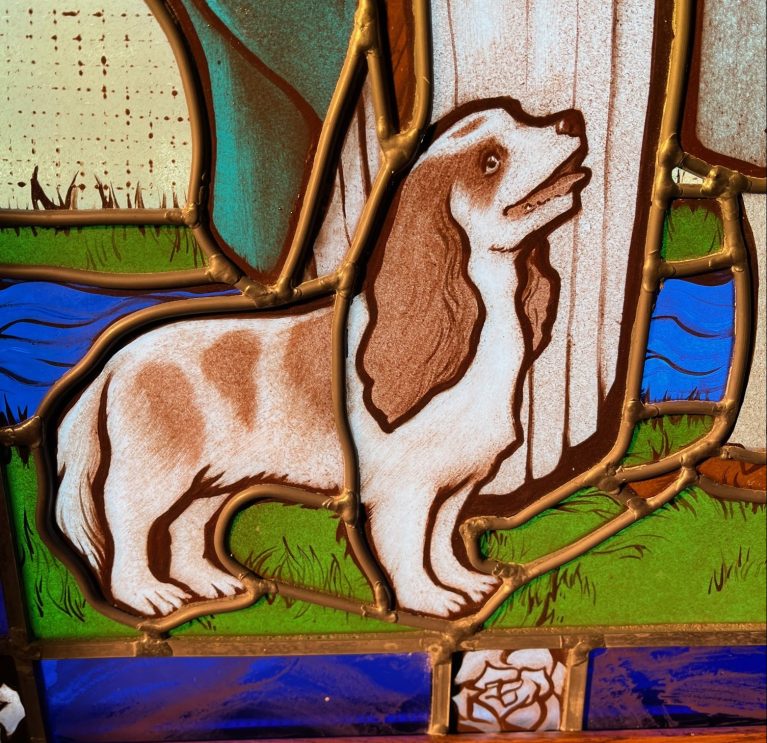
This distinction between humans and animals is pressing on me this week, in part because of this morning’s gospel reading and Jesus’s discussion of religious hypocrisy, but also for another reason that most of you are aware of. Winston. Losing a pet is a very painful thing and I know that some of you know that pain all too well. It isn’t something that I want to talk about a lot right now, because it’s too hard, but I do thank you all for your prayers and words of support. It means a lot.
I will say this though, and maybe this will be a comfort to some of you as well, if God was willing to suffer and die upon the cross to save sinful, fallen human beings and to offer salvation and everlasting life to hypocrites like us, that do not live the lives that God created us to live, if God is willing to do that for us sinners, if God is willing to offer us new life in the new heaven and earth that his is creating, then can you imagine what God must have in store for the parts of his creation that are not fallen? There is much about paradise and heaven and the world to come that is just shrouded in mystery for us. There is much we just don’t know. But God’s love for his creation has been revealed to us. We don’t need to over-simplify our faith, but we don’t need to over-complicate it either. The Bible is filled with animals and filled with evidence of God’s love for them. They may not be made in the image of God in the same way we are; humans may have a unique relationship with God through Jesus Christ, but I have no doubt that animals will have a place in the new heaven and earth that we all live in hope of. God’s love for his unfallen creatures is abiding, and I think God often uses them to show his fallen ones just what love is all about. Animals have so much to teach us about being better humans.
In Jonathan Swift’s famous novel Gulliver’s Travels, the last land he has his hero Gulliver visit, is this island where the relationship between humans and horses has been turned on its head. The horses, called the Hounyhmns, are the masters and humans, called yahoos, are the slaves. The hounyhmns are reasonable, rational creatures that don’t even have a word in their language for a “lie” and the yahoos, the humans, are every bit as deceptive and nasty as the humans are in the world we live in today. It is a revelation to poor Gulliver, and when he finally does return home, he chooses to spend all of his time in the stable talking to his two horses. I was thinking of that story this week as I read this gospel and reflected on how we humans tend to think that we are better than we actually are. Now if the world gets you down, I’m not saying that you should buy a pet and give up on humanity like Gulliver, as tempting as that may be, but I do think that our animal friends have a lot to teach us about humility, service, love, loyalty, and not pretending to be something that we are not.
We humans often pretend to be something that we aren’t. We pretend to be wise, we pretend to be virtuous, we pretend to be religious, we pretend to be smart. We are so good at pretending that I think we convince ourselves that we have God fooled. We can certainly fool ourselves into thinking that we are better people than we actually are. But God is never fooled. God knows what kind of life you live. God knows how you treat other people. God knows that we are hypocrites. The question, I guess, is do we?
Do we know that we are hypocrites or have we fooled ourselves? Do we genuinely care about living the lives that God created us to live, or are appearances enough? Jesus warns us this morning that we need to get beyond appearances. They don’t impress God. God is not moved by performative spirituality and self-satisfaction; God is moved by humility. God is not moved by people who think they have it all figured out; God is moved by people who know they are hypocrites, but are trying to live better. God is moved by people who recognize that they are fallen, yet still try to live the lives that God created them to live. God is more moved by creatures that show honor and respect than he is by those who seek honor and respect. So if we are looking for inspiration and guidance, as God’s children, on how to live lives of faithfulness and humility, and love and devotion, if we are seeking to be less hypocritical, our best examples may not be our religious leaders who preside at high altars and walk around in fancy vestments. The best among us, might in fact be the one down on the floor, gathering up the crumbs under the table.
 Inwardly Digest