
Supernatural Hope

Standard

Sermon for Easter Sunday 2024

Readings:

Alleluia! Christ is risen!

The Lord is risen indeed! Alleluia!

Well, excellent! That’s my job done for this morning. 

If it is the preacher’s job to proclaim the resurrection and to get you all to proclaim the resurrection in return, then I’ve just done it. We can move on with this service. I know that that will come as a tremendous relief to some of you, because I am know that some of y’all are thinking, “Lord, I hope he doesn’t go on too long.” Don’t you worry. I promise this won’t take any longer than 20 or 30 minutes. I’m kidding. 

Fortunately for me, the church and our tradition have made my job a lot easier this morning, because you all have prayer books and bulletins, and you know that when I say “Alleluia! Christ is risen!” That you are supposed to say “The Lord is risen indeed! Alleluia!” That is very helpful for me. It is also helpful that on Easter the church looks its most respectable and our proclamation looks the most reasonable. We are scrubbed up and clean. We pull out the best silver and put on our best clothes and our biggest hats. We welcome visitors and out of town family members. The music is joyful and upbeat. For a weekend at least, church seems like a perfectly natural and reasonable thing to do. The sanctuary is filled with beautiful flowers that remind us of warmer weather and sunny days spent outdoors playing in God’s beautiful creation. Who doesn’t want to celebrate the earth springing back to life again? Seems perfectly natural to me. The flowers and the springtime make our Easter proclamation of the resurrection seem so much easier. Almost reasonable and respectable. Who doesn’t appreciate the beauty of the world bursting into color again?

I love all the flowers. In fact, whenever I see daffodils, which are all over this time of year, whenever I see them, I am reminded of the first spring that I saw the rectory here. For any of y’all who may be new or may be visitors, the rectory is not the little house right here, but is about a mile away. The first time I saw it would have been when I was interviewing to be the rector of the Church of the Ascension. In any event, I remember the rectory in spring and there were these gorgeous bunches of daffodils growing right in the front garden. And they were so beautiful, but there was one little problem. They weren’t symmetrical and even; they weren’t distributed evenly along the garden border; they were concentrated in a few glorious clumps. After I became the rector and moved in, and after the daffodils had gone dormant again, I set about fixing that problem and breaking the clumps of bulbs up and distributing them all more evenly, like God himself would have done if he cared about things being neat and orderly. Well, the result of all that back breaking work is on full display at the rectory right now if any of you should happen to pass by. 

There is not a daffodil in sight! 

Not one. There hasn’t been for years. They’re all dead. You know, we decorate with lilies and daffodils and tulips at easter because they seem to die and miraculously come back every year, but I’m here to tell you that’s not true. These plants don’t die every fall and come back to life in the spring. They just go dormant. They go to sleep if you will, but they are still very much alive. Unless of course some fool messes with them. Then they might die. Daffodils can die. Trees can die. Lilies can die. A dormant plant can come back again and again and again. That’s natural. But a dead plant isn’t coming back. That’s natural too. It’s been twelve years, and I can assure you that my daffodils aren’t coming back.

My daffodils are dead. Dead things don’t come back to life. 

And Jesus was dead.  Jesus was dead. Don’t let the flowers fool you, because there is nothing natural about the resurrection that we proclaim here today. The lilies and the daffodils, they may seem to make our proclamation reasonable and respectable; they may make the story we are telling here a little easier to swallow, but in a few minutes when we ask you to stand and affirm the church’s creed, you will be proclaiming a belief in something that as far as our understanding of the world is concerned, is completely unnatural. Dead things don’t come back to life.

Dead flowers don’t come back to life. Dead bodies don’t come back to life. The women who were headed to the tomb that Easter Sunday morning, they knew that. The disciples who were huddling and hiding in the upper room, grieving their Lord, they knew that. The people who had casually followed Jesus, who had liked his preaching, who had hoped that he would be the one to save them, but then had seen him publicly crucified, they knew that. They knew he wasn’t coming back. 

But the stone was rolled away. Jesus’s body wasn’t there. Just this figure dressed in white with this impossible, unbelievable message. He has been raised; he is not here. Who could believe that? Flowers may seem to come back to life, but dead bodies don’t. So, when the women came back from the tomb of course they were afraid to tell anyone what they had seen. Mark says that they didn’t say anything to anyone because they were afraid. Of course they were afraid. Dead bodies don’t come back to life. That is not a reasonable thing to say or believe. 

You know it is one thing for me to say “Alleluia! Christ is risen!” in here, when I know how you will all respond. But the women didn’t know how people would respond to this proclamation that Jesus is alive. Why on earth would anyone believe that? And the women didn’t believe it as first. Mary thought someone had taken Jesus away. The other disciples didn’t believe it at first. John believed when he saw the empty shroud lying on the floor, but most of the disciples didn’t believe until they saw the risen lord. It’s not an easy thing to believe. It’s not reasonable. It’s not natural. And yet this single event is the heart and soul of the good news. This event is what inspired the disciples to record the details of Jesus’s life and teachings. This event is what gave them the courage to face death, in most cases execution or martyrdom, rather than to deny what they had witnessed. And when the early church gathered to define what was our core belief, the heart of the Christian proclamation to the world, it was Jesus’s death and resurrection, this event. Our creed, which you will proclaim in a moment, that hinges on Jesus’s death and resurrection. But this has always been a hard thing for the world to accept. 

The consensus of almost everyone on Easter Sunday morning was that Jesus was dead. It fell to just a handful of women to give the minority report, the dissenting opinion to the judgement of the world, that Jesus was alive again. It takes courage to do that. It takes courage to go against the wisdom or the popular opinion of the world. It takes courage to believe the unbelievable, even when the evidence is staring you in the face and calling your name. The women were scared at first but eventually they found the courage to go and tell the other disciples. Once the other disciples had seen the risen lord, they too were afraid to talk about what they had seen, but eventually the spirit moved them to go out into the world and to proclaim the news that nobody wanted to believe. That Christ was alive. After Peter received the anointing of the Holy Spirit, he went out into public and proclaimed: you know who Jesus of Nazareth is. His way of life, his deeds of power, that you know. His death and crucifixion, that you saw. But of his resurrection, we are witnesses. We are here to witness to this most unbelievable part of his story. That he was raised from the dead. That proclamation turns everything upside down. People resisted it then, as they resist it now, because accepting the resurrection means accepting that the world is not the reasonable, rational, predictable place that we thought we understood. It means accepting that there is a living God that has real power in this world and that we can encounter in the most unexpected ways. Some people are just not read to make that leap of faith. When Paul first preached to the people in Corinth, when he got to talking about the resurrection people scoffed at him; most people rejected his message, but a few people, a few people, said tell us more. 

Maybe you are one of those people here today. Unsure of the truth of this story, but willing to listen and to hear more. If that is the case then I thank God that you are here, and I pray that in some mystical way you will have an encounter with the risen Lord and that his grace will flow through you and give you the courage to believe this most unbelievable, unreasonable, unnatural story. 

Because this story changes everything. If this story is true, then the universe is more spectacular than we ever imagined. If this story is true, then God has the ultimate say over life and death. If this story is true, then everything else Jesus said is true, including his promise of preparing a place for us, so that where he is, there we may be also. That is a powerful hope, but it is an unnatural or a supernatural hope.

Despite my best efforts, or because of my best efforts, my daffodils are dead and they’re not coming back. Maybe there’s a daffodil heaven, I don’t know. But what I do know is that there’s a heaven for me. I know that because Jesus rose from the grave, came back from the dead, as the firstborn of a new creation that I get to be a part of. That is a supernatural hope that goes way beyond the joy of spring. That is a hope worth sharing, even at the risk of being the only voice proclaiming this good news. 

So Alleluia! Christ is risen!

The Lord is risen indeed! Alleluia!

Now go out and tell someone that doesn’t know it. Be a witness to the resurrection. You never know how someone might react. Some people may scoff at you, but others may say: “tell us more.” So, tell them more. Share your supernatural hope.
At the cross

Standard

Sermon for the Fifth Sunday in Lent

March 17, 2024

Readings:

Why do the Greeks in this morning’s gospel passage want to see Jesus? 

That has been the question that has been running through my head this week as I have been reading and rereading this passage. What do these people want from Jesus? Why do they want to see him? We don’t know. The bible doesn’t tell us. 

You know, sometimes I think that the things we don’t know about the Bible are just about as interesting as the things we do know. There’s a lot that we doknow about the bible and the stories and people that are in it, but there is also a lot, a whole lot, that we don’t know. Sometimes those things we don’t know can be pretty interesting.

Today is a good example. We don’t know who these Greeks are that come up to Philip asking to see Jesus. They might not have been ethnically Greek, like Toula Portokalos in my Big Fat Greek Wedding, they might not have been from Greece, they might have just spoken Greek. We don’t really know. 

They might not have been Jewish. In fact, they probably weren’t. We know that they were at the temple for Passover. But these could have been Greek-speaking gentiles that found the Jews and their God fascinating and compelling. There are lots of those people in the bible; people that are sometimes referred to as God-fearers. Maybe it was them. Plenty of gentiles were moved by what they were told about this Hebrew God, but they just didn’t completely convert because…well they probably had their own reasons. I imagine that many of the men just didn’t make the cut. Yes, that’s a bad joke, but I’m not going to explain it further. Anyways, these people might have been gentiles worshipping the Jewish God. It’s a good theory. We don’t know.

We also don’t know where these Greeks actually came from, but the gospel writer is pretty clear that they aren’t locals. These are outta town folks. Strangers. That we do know. These Greeks are strangers. They are strangers that want to see Jesus. 

But why do they want to see Jesus? The Bible doesn’t tell us why they want to see him, so we are left to wonder. Are these just tourists in to see the big city for a week and hoping to score the ultimate backstage pass? Do they want to see Jesus just because he is a celebrity? We don’t know. Everyone that wants to see Jesus in the scriptures has some reason, but they are often very different reasons. Think about all the people who wanted to see Jesus in the Bible:

Think of short Zacchaeus, the rich man. He wanted to see Jesus. He climbed a tree to get a glimpse of Jesus. He had heard that this man eats with tax collectors and wanted to know more. He probably didn’t know that Jesus was going to ask to come dine with him though.

Or, the woman who had been bleeding for twelve years. She wanted to see Jesus. She was desperate for relief from this sickness. She didn’t ask to be presented to Jesus, she just wanted to touch him as he passed by. She was convinced that that would be enough to heal her. And it did.

Or, the Roman Centurion with the sick servant. He wanted to see Jesus. We often talk about the Romans as the bad guys, the oppressors, but this centurion had actually helped to build a synagogue in the village. But his servant was sick and he was desperate. He didn’t even need Jesus to pay a visit. Speak the word only. Just say the word and my servant shall be healed. And he was.

Or, the Caananite woman who came crying out to Jesus, pleading for help because her daughter was possessed by a demon. We like to think of demonic possession as being the sort of crisis that is only fit for Hollywood and special effects. But demons are probably more mundane and more common than you think. This woman’s daughter was struggling with a demon and she wanted to see Jesus. Some of Jesus’s disciples just wanted this woman to go away and stop bothering them. But she doesn’t give up. She wants to see Jesus. And she does, and her daughter is healed.

There was another rich man that wanted to see Jesus. Ran up to him and asked him what he must do to inherit eternal life. He was following the commandments, but it turned out that his attachment to his money and his stuff was just a little too strong for him to really become a follower.

Who else wants to see Jesus?

Blind Bartamaeus? He would love to see Jesus. He would love to see anything. He can’t see Jesus, but he hears about him. He cries out for mercy, and is healed. 

There are other people who want to see Jesus that are even more desperate. Someone they love has died or is very near death. In each case, once the person dies, the people are convinced that Jesus can do no more. They just want answers. Where were you Martha asks? Where were you when we needed you? 

Some people who want to see Jesus have hard questions for him, like where were you? Why? Why the suffering? Why death? I wonder if these Greeks in today’s gospel had some hard questions for Jesus. Did they just want the first century equivalent of a selfie with a famous rabbi, or were they looking for something far more important? We don’t know. We don’t know why these Greeks want to see Jesus. And in the end, we don’t even know if they actually get to look in Jesus’s eyes or shake his hand. We don’t know if they got to see him the way they hoped to.

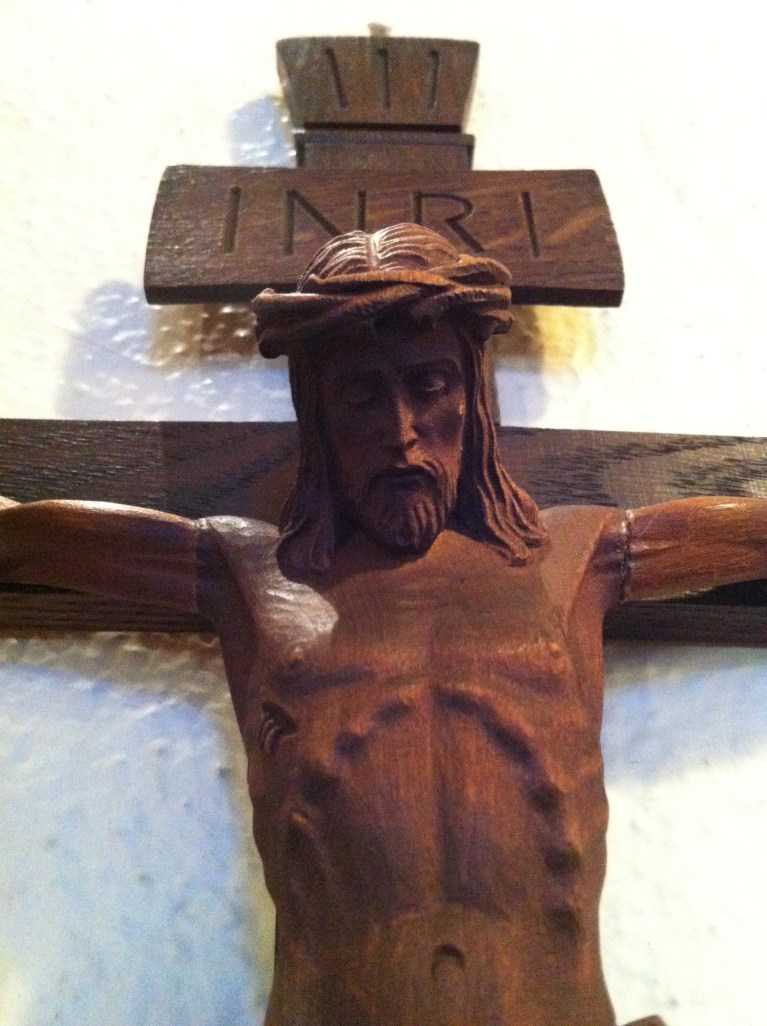
What we do know, is that Jesus tells his disciples that his ministry is about more than just clinging onto life in this world. When he hears that people want to see him, he points his disciples to the cross. He talks about his own death. The people who want to really see Jesus, they will see him, they will meet him, at the cross. When I am lifted up, he says, there I will draw all people to myself. He’s talking about his cross. That is where people who really want to see Jesus will meet him. At the cross. There is no other way to understand who Jesus is and what he’s about, than seeing him through the cross. 

The cross and resurrection are how Jesus is glorified. If we want to see Jesus, if we want to know him, if we want to understand what he is about and the deeper meaning behind everything he says, that is where we have to look: at the cross and the empty tomb. They are only a few steps away from each other. We often think of following Jesus as being some long, arduous journey, but serving Jesus and following him is really just about making those few steps from the cross to the empty tomb. That is where Jesus says we will meet him. That is where he says he is drawing all of us together. We come together at the cross, at the place where pain and desperation seem to have all the power, and from there Jesus takes our hand, and walks us to the empty tomb.

Some people think that if they just dig deep enough, if they push through all the religious hocus pocus, and legends about dead bodies coming back to life, that then they will actually be able to see the real Jesus. The historical Jesus as he is often called. Despite the fact that the people who go on these quests, and the documentaries that share their stories like to present themselves as being edgy and ground-breaking, they are nothing of the sort. For centuries there have been people that have wanted to separate the historical Jesus, the rabbi of social justice and practical advice, from the Jesus of faith, the saviour of the cross and empty tomb. It is a fruitless and impossible quest though. There is only one Jesus. Everything that Jesus said or did, was written down after that first Easter Sunday, after people had seen the cross and empty tomb. Everything we know about Jesus has been handed down to us from the people who saw his risen body. The Jesus of faith IS the historical Jesus. You don’t need an inside connection to see him or meet him. You don’t need secret knowledge. And it doesn’t matter why you want to see Jesus. 

That’s the thing about the Greeks in today’s gospel: I like to sit around and wonder why they want to meet Jesus; what are their motives? Do they want answers? do they want healing? do they want their broken hearts mended? do they want hope for new life? There are so many reasons why these Greeks, the strangers, these outta town folks might want to see Jesus, but he doesn’t seem to care what their reasons are. Maybe the bible doesn’t tell us, because it doesn’t matter. Maybe it doesn’t matter why we want to see Jesus; maybe it only matters where we go looking for him. I am going to be lifted up where everyone can see me, he says. If they want to come to me, to know who I really am and what I am really about, send them there. We don’t know why these Greeks want to see Jesus, but we do know where he says they will see him: at the cross. 

Respect for God can be contagious

Standard

Sermon for March 3, 2024

The Third Sunday in Lent

Readings:

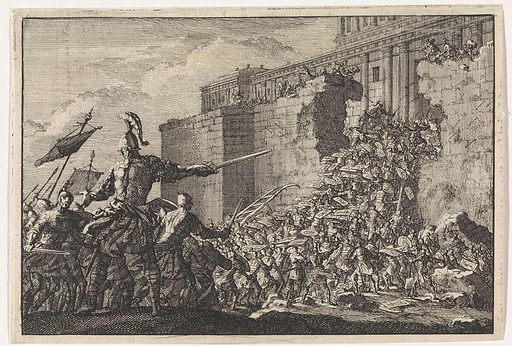
In the year 63 BC (so more or less 60 years before Jesus was born), the Roman general Pompey laid siege to the city of Jerusalem. Sadly, this was a scenario that Jerusalem had already experienced many times in its history and would experience many times more, even unto our present day. Well the city put up a good fight, but eventually Pompey and his troops figured out that if they tried to fight the Israelites on the sabbath day, they would indeed fight back, but if they didn’t directly fight them, but instead spent time building bridges and ramps to get over Jerusalem’s fortifications (in other words, doing the work to support the invasion), then they would be left alone because the Israelites would only break the sabbath if their lives were immediately at risk. So, Pompey used this to his advantage and eventually broke into the city. 

And when he came in, of course the first place he went was the temple mount. He wanted to understand what power this temple and this God had over these people. He wanted to know what it was that they were sacrificing to and that they were willing to lose their lives to protect. No doubt he also assumed that there would be untold riches inside as well. So, he strolls into the temple, walks right past all the priests who are begging him and pleading with him not to go any further. He pushes them aside and marches right into the temple building itself. And when he goes into the temple, the first thing he sees in the outer room is the golden lampstand, and an altar of incense, and a table with bread on it, a few nice things, but he assumes that the real wealth of the temple must be in the inner room, the Holy of Holies that is just beyond the veil. Only the high priest was ever allowed in there and then only once a year. 

So, Pompey pushes the curtain aside, walks in…and discovers an empty room. The holiest place in the world for these Jewish people, the thing that they were dying to protect, was an empty room. Now Indiana Jones fans, I am sure you are thinking “But what about the Ark?” The Ark of the Covenant, which contained the stones that the ten commandments were written on, that was in the sanctuary of the First Temple, the temple that King Solomon built. But that temple was long ago destroyed by the Babylonians and the Ark had ever since been missing. So, in the Second Temple, the Temple that Pompey walked into, and the Temple that Jesus would know some decades later, there was no Ark. The Holy of Holies was just an empty room. 

Pompey was completely perplexed at this. These Jews, he thought, were a strange people. Not only were they unwilling to do any work one day a week unless their lives were immediately at stake, but also the holiest place at the center of their faith was not a great golden statue of a God carved with human hands, but an empty space. An empty space that these Jews claimed, belonged to God. Pompey didn’t understand it. He certainly understood sacrifice. Pagans sacrificed THINGS all the time, but these Jews were sacrificing time and space. They were sacrificing their own creative powers. It was odd. Pompey didn’t understand it, but he saw something in it that he respected. He could have torn the temple down, but he didn’t. He could have looted the temple of its wealth, but he didn’t. Jerusalem would lose its freedom and become a Roman province, that was trueBut Pompey let the worship in the temple go on. He didn’t understand this Hebrew God, but he understood the power of respect. He saw the respect that the Jews had for this empty room, and something about that was compelling. So, he let the priests go back to work. Respect for God can be contagious. But then again, so can disrespect for God. Both can creep up on you, you know. 

When Jesus entered the temple some decades later what he witnessed was a creeping disrespect for God. The Holy of Holies was still there and set aside as sacred, as God’s space, but the areas around it, in the temple precinct outside, were becoming more and more profane. God had become big business for many of the temple authorities. And you may know that business and busyness in our language come from the same root word. People were busy. There was a lot of human activity going on. People were busy making things: making transactions, making a buck. For many people, God was their business, and I say that fully recognizing that I am a priest, who is also paid to do this work. God is my business too, so I can say with good authority that priests often get distracted by the business of worship and the business of church administration and are prone to forgetting that at the heart of our faith is time and space that belongs to God and no one else. There were a lot of people there in that temple in Jesus’s day that were more focused on monetizing God than on worshipping him. They weren’t worried about what belong to God; they were worried about what belonged to them. It had happened before in the time of the Prophet Jeremiah; it happens now in our own day. Disrespect for what belongs to God can creep in. Inch by inch, the money changers get closer and closer to the Holy of Holies. 

I assure you that God knows that we are like this. God created us in his own image, and a part of that image is the power to be creative. We can imagine things, and create things, and that is a God-given gift, but you see in order to remember that this gift is God-given, we must remember that we were created by God. A man can create many things, but he cannot create himself. All of us were created by something, or someone, else. None of us called ourselves into being. We get so caught up in our own creative powers that we forget that. We forget that we are creatures. So, God reminds us. 

Think about some of the commandments that we recited and heard this morning. Think about the commandment to keep the sabbath day holy. How does God command us to keep it holy? By filling it with activity? No. Just the opposite. By keeping it empty. Empty. Rabbi Jonathan Sacks says that we keep the sabbath day holy “by renouncing our own status as creators. On Shabbat, all melakha, which is defined as “creative work,” is forbidden. On Shabbat, we are passive rather than active. We become creations, not creators. We renounce making in order to experience ourselves as made. Shabbat is the room we make for God within time.” 

And likewise, the Tabernacle that the Israelites make in the wilderness, the holy tent, which in time becomes the Temple and the Holy of Holies. It could have been filled with the wonders of human creation, with golden statues carved by human hands, but no. It was God’s space, not ours. The more we filled it with human stuff, the less room there would be for God. “The Tabernacle is the room we make for God within space,” Rabbi Sacks says. He goes on to say that “Holiness is the space that we make for the otherness of God – by listening, not speaking; by being, not doing; by allowing ourselves to be acted on rather than acting. It means disengaging from the flow of activity whereby we impose our human purposes on the world, thereby allowing space for the Divine purpose to emerge. All holiness is a form of renunciation.”

Renunciation. To say that this isn’t mine, it belongs to something or someone else. That is what holiness is all about. Holiness is recognizing that something belongs to God and not to you. Giving God more space and not less. Doing the opposite of what the money changers in the temple were doing: not filling God’s space with our things. Leaving space in our lives and in our world for God. Obviously, this is something that God knows we need to be commanded to do, and continually reminded to do, because from day one humans have been prone to taking things that don’t belong to us. We don’t just steal from our neighbors; we steal from God too. 

We steal from God when we fill every moment of our waking lives with productive activity. Brothers and sisters, I confess to you that I love to make daily to-do lists, and I love crossing things off of those lists. I get a little high when I feel like I am being productive, like somehow I am worth more to God now that I cleaned that closet out, or wrote that letter, or got that thing crossed off of my list. I like to be productive and I like to be creative, but sometimes I need to remember that I was created. I need to remember that I was precious to someone before I could do anything for myself. I need to remember that this world was created and existed long before I was in it. I need to leave space in my life for God. In need an empty room that God can fill. We all do.

That means learning to do less sometimes, and NOT more. It means putting busy-ness, aside. It means emptying ourselves of all the stuff that just creeps in so that God has some space in our lives that belongs to him. The pagan world has never understood sabbath, and in case you were wondering, it is still a pagan world out there. But even those of us who know the commandments and have asked God to write them on our hearts, even we need to be reminded that God still makes claims to time and space in this world that he has created. We still need sabbath. And keeping sabbath is just as much a commandment of God as not stealing, not committing murder, and not coveting your neighbors property. 

Some things still belong to God. There is time that belongs to God. There is space that belongs to God. And there are people that belong to God. That is what makes them holy. Later in John’s gospel Jesus tells his disciples that the “will of him who sent me, is that I should lose nothing of all that he has given me, but raise it up at the last day.” Jesus’s body was God’s body. It was holy. We tried to take it from God, but God took it back. He raised it up again. It was a temple like no other. And it belonged to God. But there are other temples in this world still. There is still time, there are still places, and there are still people that are called to be holy. And not only is God watching how we respect that which belongs to him, so are the people who don’t know our God. So how we treat holy things matters. Disrespect for God may be contagious, it may creep up on us, but respect can do that too. Respect for God can be contagious.