
The God who meets us

Standard

Sermon for Trinity Sunday. May 26th, 2024

Readings:

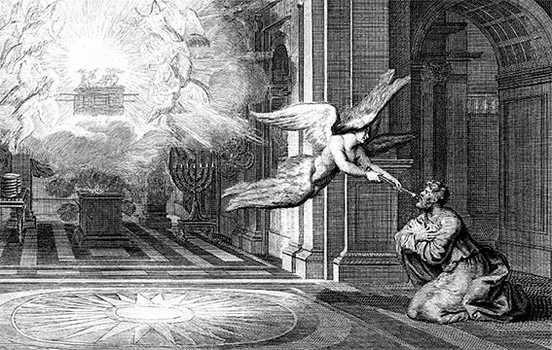
In the year that King Uzziah died, I saw the Lord sitting on a throne, high and lofty; and the hem of his robe filled the temple. Seraphs were in attendance above him; each had six wings: with two they covered their faces, and with two they covered their feet, and with two they flew. And one called to another and said:

“Holy, holy, holy is the Lord of hosts; 
the whole earth is full of his glory.”

The pivots on the thresholds shook at the voices of those who called, and the house filled with smoke. And I said: “Woe is me! I am lost, for I am a man of unclean lips, and I live among a people of unclean lips; yet my eyes have seen the King, the Lord of hosts!” 

This morning, we begin by hearing the story of Isaiah’s encounter with God. “In the year that King Uzziah died, I saw the Lord sitting on a throne.” 

You probably don’t need to worry too much about who King Uzziah was right now. We could talk about that in Bible study sometime. What you should understand though, is that King Uzziah was old. He had been on the throne for 52 years, so his death would have been one of those moments in time that people remembered. It is very much like when Queen Elizabeth died a couple years ago. It didn’t matter who you were, or how you felt about her, it was a moment in history that was significant. It was a point in time, in our collective lives, that we remember. It is a time marker. It’s funny how you can remember one thing, because of something else that happened at the same time. That is a time marker. Our lives are often filled with time markers. The bible is filled with them too. 

And it came to pass in those days, that there went out a decree from Caesar Augustus that all the world should be taxed.(And this taxing was first made when Cyrenius was governor of Syria.) 

You know that time marker. You hear it every year on December the 24th. It is how Luke begins the story of Jesus’s birth. The story isn’t about Caesar or Cyrenius; the story is about the Son of God, but this, Luke says, is when it happened. 

There was another time marker that you heard last week from the Book of Acts: “when the day of Pentecost had come.” Pentecost was an established Jewish feast, but it also happens to be when the Holy Spirit descended upon the disciples. The feast helped the disciples to remember when this encounter with the Holy Ghost happened.

These time marker details can seem insignificant. They can seem like a distraction from the story, but they aren’t. They are a reminder to us that the God we meet in the bible, is a God that we encounter in real time, our time. Human time. We have met the eternal God in human time, on this earth. The little details are there to say: this happened. This is when it happened. This is a moment, where we encountered God, in our lives and not just in our imaginations.

In the year that King Uzziah died…In the year that the old king, King Uzziah, the King of Judah, died, Isaiah says that he saw the true king, the heavenly king, the Lord, alive and sitting on his throne. Isaiah has this encounter with God. He sees a reality that is impossible to comprehend, much less explain. Strange creatures with six wings. And there were clouds of smoke, and the Lord wore a glorious robe, and the creatures around the throne were saying: “Holy, holy, holy, is the Lord of Hosts, heaven and earth are full of his glory.” It was a magnificent, wondrous vision. If that happens to sound a little like a mass to you, then GOOD! That image is what all of this is meant to invoke. We are meant to feel, like Isaiah, that we are in the presence of a transcendent God, who is both right here in front of us, and at the same time bigger and more glorious than we could ever imagine. We are meant to recognize that the God of eternity has come to meet us at this time and in this place.

That is what Isaiah saw: God coming to meet him. And he can’t even imagine why this is happening. Why him? “I am lost,” he says, “I am a man of unclean lips, I come from people of unclean lips.” Who am I? Isaiah is saying, who am I? Why should I be having this vision? I don’t have all the fancy words to go out and tell people what I just saw. Who would believe me? I’m not that holy or special. I am not worthy to share this vision or talk about this encounter. And just then, one of those strange creatures grabs a coal from the altar, flies over to him and he touches that burning coal to Isaiah’s lips, and he says to him: now you are! Now you are worthy. God has cleansed you of your sins. God has made you worthy. God has made you holy. And then Isaiah hears God ask the question: “whom shall I send, who will go for us?” And Isaiah says, “Here am I, send me.” Isaiah probably still isn’t sure how he is going to talk about this glorious God to an unbelieving world, but he’s willing to do it. He is willing to tell the story, no matter how unbelievable it seems. That is what having an encounter with God can do to you; it can make you get over yourselfit can send you out into the world with an unbelievable story on your lips.

Incidentally, there is a traditional and old prayer that is a part of the Latin mass that some priests still say before proclaiming the gospel, or at least I do. If you ever wonder what I am saying at the altar before I proclaim the gospel, it is this prayer:

Cleanse my heart and my lips, O Almighty God, Who cleansed the lips of the Prophet Isaiah with a burning coal. In Thy gracious mercy deign so to purify me that I may worthily proclaim Thy holy Gospel. Through Christ our Lord. Amen.

The prayer is a little reminder that the God that Isaiah encountered, is the same God that the disciples encountered in Jesus Christ, the God that the gospel reminds us “so loved the world that he gave his only son, so that everyone who believes in him may not perish but may have eternal life.” The gospel also reminds us that that is the same God that countless, countless faithful people have encountered in at times subtle and at times dramatic experiences of the Holy Spirit. Encounters that give us the chance to be born again, born anew, born from above. The prayer is a reminder that the God that Isaiah saw seated on the throne, is the same God of the Gospel that we proclaim.

And likewise, all those time markers that we find in scripture and sometimes casually skip over as if they were unimportant details in the text, they are reminders that the God of the bible is a God that is encountered. Our God is a God that is encountered in this world. Sometimes in very real and physical things. Our God is not a God of logical theory or human design; We would never invent something as impossible to grasp or explain as the Holy Trinity. We talk about God as Father, Son and Holy Spirit, because that is the God that we have met in this world, that is the God that we have encountered, not just in thoughts and ideas but in real time and in real places. This isn’t a God that always makes sense, or that is easy to understand, but this is the God that we have met. This is the God we believe in. 

Our God may be transcendent and glorious, and impossible for us to fully explain or grasp, and yet, our experience of this God has taught us that this is a God who longs to live in a close and intimate relationship with each one of us. This is a God who loves. This is a God who forgives and purifies. This is a God who calls, and this is a God who sends. 

Do we want a God that is less than that? Do we want a God that is a product of the human mind or of human philosophy, or do we want a God that walks with us, and meets us, in this world, in encounters that happen in human time, in human history? What would be the point of having a God that looks good on paper, if we never actually get to meet him? 

I’m not here to try and explain the Holy Trinity to any of you this morning, for which you may all breath a sign of relief, but I do want you to have an encounter with the God who is Father, Son and Holy Spirit. I want you to know that this God is alive and well, and that this God still has saving love for you. Now, you may not have a vision like Isaiah did, but the Lord who was sitting on the throne when King Uzziah died, was still sitting on the throne when Queen Elizabeth died, and is still sitting on the throne today, even in this moment. So let us gather for a few moments and place ourselves before the throne with the countless throngs of the faithful, with prophets and saints from every age, let us join our voices with theirs in giving thanks and praise to the God who comes to meet us. And then, when we have offered God our praise, and we hear God ask who will go into the world to tell the story of his love, faithfulness and forgiveness, may we join our voices with the prophet Isaiah and also say: “here am I, send me.”
A God who Keeps

Standard

Sermon for May 12, 2024

Readings:

On the night before Jesus died, he prayed. I know that it may seem odd now that we are well past Easter, and even past Our Lord’s Ascension into heaven, it may seem odd to jump back in our gospel readings to the night before Jesus was crucified, but that is where we go this morning.

 I guess in a way it is only natural, because after the disciples had witnessed Jesus’s Resurrection and then his Ascension into heaven, their minds certainly would have gone back to retrace all their steps over the past few months. They would have looked back with newly opened eyes to reexamine everything Jesus ever said or did, and the things that had happened most recently would naturally have stood out more prominently in their minds. So, this morning we go back to Maundy Thursday, we go back to the evening of the Last Supper, to after dinner was over, and we hear Jesus’s own post-communion prayer. 

“Holy Father, protect them,” he says. Jesus’s prayer is about his disciples. He is about to die, but his primary concern here is for his disciples and THEIRprotection. Their lives are his concern. “Protect them in your name that you have given me, so that they may be one, as we are one.” Protect them. Some other translations of this scripture, including the King James Version, use the word “keep” instead of the word “protect.” I think that is a better word actually because “keep” doesn’t just meant protect, but it also implies possession and belonging. If you keep something you hold on to it. Keep emphasizes the fact that these disciples BELONG to God. Their protection is directly linked to the fact that they are God’s treasured possession. Keep them, Jesus says, keep them. Keep them safe; keep them together; keep them in the truth and keep them united to us and to each other. Keep them.

There was a minister in England writing near the end of the 1600s named Matthew Henry who wrote an extensive commentary on the bible. And his comment on this passage is an extension of Jesus’s prayer and plays on this use of the word “keep.”

He writes:

Keep their lives till they have done their work; 

keep their comforts, and let them not be broken in upon by the hardships they meet. 

Keep their interest in the world, and let it not sink. 

Keep them in their integrity, keep them disciples, keep them close to their duty. 

Keep them for your name’s sake. Keep them in the knowledge and fear of your name; 

keep them in the profession and service of your name, whatever it costs them.

Keep them in the interest of your name, and let them ever be faithful to this. 

Keep them in your truths, in your ordinances, in the way of your commandments. 

Keep them by your own power, in your own hand; 

keep them yourself, undertake for them, let them be your own.

Keep them from evil. Keep them from Satan as a tempter that either he may not have leave to sift them and keep them from him as a destroyer that he may not drive them to despair. 

Keep them from the evil of the world and of their tribulation in it.

Keep them. Now those are Matthew Henry’s words; that is his expansion of Jesus’s prayer, but I think his use and repetition of the word “keep” meaning to hold, possess AND protect is really in keeping with (it is holding on to) Jesus’s original prayer and meaning. Keep them. Like a parent tucking their kids in at night, Jesus’s prayer before he leaves his disciples is that God will hold them tight. Now I lay me down to sleep, I pray the Lord my soul to…what? Keep! All at once it means to embrace, to own and to defend. That is what Jesus is asking God to do for these disciples. Keep them God.

And I think that it is important that we recognize and emphasize that the person who is being asked to do something in this prayer here is God. God is the one who is being asked to act. It is God who is being asked to keep, to hold, possess, and protect. It is easy to forget for a moment that Jesus is addressing God in the gospel today. He is so often talking to us. But this is his prayer to God that we are eavesdropping in on. It is so like us humans to always want to take center stage and make everything be about what we do or don’t do; and yeah, I think the things we do in this world matter and there are plenty of scriptures that talk about that, but I don’t think that this scripture is one of them. This scripture is about what God does. 

God keeps. God holds on to the people that belong to him. He gives them his word, his joy and his truth. Now God’s people don’t always hold on to God, but God is always willing to hold on to them. God keeps because that is who God is and what God does, but that is in contrast to what the world does. God keeps, but the world casts aside. The world throws away. In the eyes of God human life is precious; in the eyes of the world it is expendable. God keeps, but the world casts aside. God keeps his covenants; the world breaks them. God brings people together; the world drives them apart. God sanctifies truth; the world sanctifies lies. God raises up a human body to glorify it; the world raises up a human body to murder it. God’s ways, and the world’s ways are very different.

Now the Gospel of John is very clear about the fact that God created the world, but it is also clear, right here, that not everything in the world is OF God. There is a difference between God and the world. God keeps, but the world casts aside. But we are OF God. Jesus’s prayer reminds us that we are OF God. Jesus might not be telling us to do anything in this prayer, but his words should affect our actions nonetheless because they remind us of who we are and who we belong to. We belong to God, not the world. We are in the world. God wants us to be in the world. Jesus sends us into the world. There is work for us to do here and there are blessings for us to receive here, but we don’t belong to the world. We belong to God. We belong to a God who keeps.

Love is a commandment

Standard

Sermon for May 5, 2024

Readings:

You know, I am tempted to stand up here every Sunday and just flip through any newspaper and talk to y’all about how everyone has just lost their darned minds lately. And I could do it too, because I have lots of good and sound opinions about things and I would love nothing more than to demonstrate my superior opinions by standing here and talking about why everyone else is just crazy. But I’m not gonna do that, as fun as it sounds, and it does sound fun. Few things are more enjoyable than feeling righteous. 

But rather than pick on everyone else this morning, I will pick on myself. I heard someone recently say that there is a difference between gossiping and witnessing: gossiping is talking about what someone else is experiencing or going through; witnessing is talking about what you are experiencing or going through. So instead of just gossiping this morning, I am going to witness for a few minutes. The truth is, I don’t really know what everyone else experiences or is going through, but I can talk about my experience with some authority.

So here goes: It is a good thing that I know, love, and fear the Lord and that he has commanded me to love my neighbors, because I have to confess to you that sometimes that is the only way it is going to happen. Because to put it mildly, people are annoying. People are not always loveable. I don’t go driving around saying things like “oh bless you, BMW driver for almost sideswiping me on the parkway.” Nor do I say “thank you Lord, for putting this person in front of me that has not noticed that the light turned green some time ago.” Obviously, I don’t sit and read the paper and say “thank you God, that you have filled the world with people who lack the capacity to think and read critically! I am so glad that people feel comfortable having strong opinions about things that they don’t understand and can’t be bothered to learn about. Praise God!” I do not find it easy to love my neighbors. I especially find it difficult to love people who talk about love all the time like it is just some simple thing, and that we can all just live together peaceably like the whole world is just some idealized hippie commune. I’m sorry, but I just don’t think love is that easy. I have a hard enough time loving people on the highway, or loving my neighbors when they have their late-night and loud Saturday night party once a year, so I can’t imagine how hard it would be for me to love them if they had hurt or killed a loved one of mine, or stollen something that belonged to me. I like to think of myself as basically a decent person/nice guy, but I know for a fact that love does not always come easily for me, especially when it is trying to love people that are being unloving themselves. 

There is part of me that blames the internet and social media. I think we are just too much in each other’s business and we interact with each other in ways that are simply inhuman. I think it has become a megaphone for human sinfulness. But it is only part of the problem.

I think the bigger problem is that for all of our talk about love, we can’t help but think about love as a feeling and we forget that it is a commandment. A commandment. If love were simple a peaceful, easy feeling, then God would never have had to command us to do it. We would just do it. But it is a commandment. And, my experience at least, is that the commandments aren’t always easy and they don’t always feel good. Commandments are something that you obey or disobey.  I notice that in John’s epistle this morning, when he is talking about love and God, he uses the word “obey.” Obey. Obedience isn’t about just doing what you want to do, or saying what you want to say. Obedience is frequently just the opposite. Obedience is learning to reign in our emotions and impulses, not give in to them. Obedience means recognizing that there is a higher authority than you, your emotions, your opinions, your impulses. Maybe y’all find it easy to just love folks all the time, but I’m here to tell you that I don’t. My witness to you this morning is that sometimes, many times, for me at least, love is a matter of obedience to a commandment and not just a simple response to an emotion. Now John says that God’s commandments are not burdensome. Well, I don’t know about that. I have to think that what John means here is that these commandments are not an impossible burden. I don’t think he is really suggesting that love is easy. I think he is saying that because this commandment comes from God, we will have God’s support when we truly try to obey it. Love is not a burden we bear by ourselves; it is a burden that God shares with us. God knows, better than we do, just how unloveable we can be sometimes. God’s spirit can give us the grace to love, even when it is the last thing that we want to do. God’s grace can give you the power to love people you don’t like. God can help you love the unloveable. And there is real power in that. There is power and there is joy. 

I could easily stand up here read the paper and talk about how everyone has lost their minds, but with God’s grace that would cause me to lose my mind too. I just don’t understand why people can’t act right, and it’s crazy making. But then my faith reminds me that for some reason, the creator of the universe, loves these unlovable creatures that don’t act right. And that at least gives me pause to say, OK God, maybe you know something I don’t about these creatures you created. You looked at humans at saw something worth dying for, I can at least bite my tongue, or restrain my fingers from typing that stinging comment. Maybe I can give that car in front of my 10 more seconds before I blow my horn…maybe. 

Of course, commandments only work when you have love and respect for the commander and that I suspect is a deeper problem. The commandment to love our neighbors comes from God. If people don’t know, love, or respect God, then why would they care about any of God’s commandments. The love of God comes first. We need to feel and experience the love of God first, before we can truly show it to others. I’m not a child psychologist, but I have heard people argue that babies learn to smile but looking at us when we look at them. In other words, the joy that we feel when looking at our children, the joy that is written on our faces, gets reflected back to us in their smiles. They smile at us, because we are smiling at them. If that is true, then I think it must be true for God as well. We learn to love, because God first loves us. In some mystical way we experience God’s love and joy for us, and by seeing God’s love we learn to imitate it and show it. 

I don’t know about your experience, but my experience of living in this world filled with people that have bad opinions (meaning of course opinions that are different from my own), and my experience of living side by side with people that just don’t act right, is that love is hard. It is the hardest commandment God gives us. For me at least, a lot of times loving my neighbor is a matter of pure obedience to the Lord. A lot of times, knowing the Lord and loving the Lord, and knowing his love for me is the only thing that makes it possible. Sometimes it is the only way I can read the newspaper and not lose my own mind.