Let Jesus do his job.

Standard

Sermon for December 14, 2025

Readings:

This morning’s gospel passage records a very peculiar moment in the life of John the Baptist. I won’t call it a moment of doubt, though it could be that, but I think I would prefer to call it a moment of wonder. Wonder in the sense of being perplexed. Hopeful, but slightly unsure. Wonder in the sense of not having complete certainty. John is wondering about who Jesus really is. 

Now you may recall that John and Jesus are cousins. And you may also recall that John is well aware that Jesus is special. When Jesus comes to be baptized by John in the Jordan river, it is John who says to Jesus “I ought to be baptized by you!” John saw the spirit descend upon Jesus like a dove at his baptism. John said that Jesus was “the lamb of God who takes away the sins of the world.” John knows that Jesus is special. John knows that Jesus is greater than himself. But in the gospel this morning we get a very different image of John the Baptist. Now John is in prison. His own ministry is about to come to an end, but he knows that Jesus is still out in the world doing work. So John who is in this very dark place and who has reached the limits of his own abilities, wonders. Is Jesus really the messiah or is he another prophet? John’s ministry has been about pointing people to Jesus, but now he is sitting in prison, powerless. Maybe he is wondering what kind of power Jesus really has. Is Jesus really the messiah? John knows that he is probably going to die very soon at the hands of Herod, what then? Is Jesus really the messiah? Or is the coming of the messiah still a distant dream? Is Jesus going to save us, or is the saviour someone else?

That is the message that John, through some of his followers, sends to Jesus: Is it you? He doesn’t ask him for any specific assistance; he doesn’t ask his cousin to come and bail him out of jail; he just asks, is it you? Are you the messiah, or are we still waiting for another? John, in his distress, is wondering.

Jesus responds in a way that he often does, not with a direct answer, but with an illustration. He tells John’s followers to go and tell John what they hear and see. The blind receive their sight, the lame walk, the lepers are cleansed, the deaf hear, the dead are raised, and the poor have good news brought to them. Jesus’s response to the question “are you the messiah?” is a list of miracles. The blind receive their sight, the lame walk, the lepers are cleansed, the deaf hear, the dead are raised, and the poor have good news brought to them. It is as if Jesus knows that that question needs more than a yes or no answer. It needs proof, but it needs more than proof. It needs illustration, illumination. Jesus isn’t just affirming his status as the messiah, but he is also coloring in the picture of who and what the messiah is. The messiah isn’t about one miracle. The messiah is about all miracles. The messiah brings good news and encouragement to the poor and the hopeless. The messiah heals the sick and mends the broken. The messiah opens eyes and opens ears. The messiah raises the dead. Jesus doesn’t just point to one proof, he points to all of them. The messiah isn’t about one miracle. The messiah is about all miracles. The messiah isn’t just the greatest prophet; the messiah is the power of God.

The prophets, they do amazing things. The prophets can work miracles. Jesus honors John as a prophet this morning, but even the greatest prophet is nothing compared to the power of God. John, as a prophet, is a messenger of the kingdom. His job was to announce and prepare the way for the kingdom. But Jesus is the kingdom. Jesus is God’s kingdom on two feet. He isn’t just someone who can perform A miracle, he is the power and the force behind ALL miracles. Jesus is the grand miracle. The miracle of God becoming a human to break the power of sin and death and to restore all creation to glory. That is the grand miracle that gives all other miracles meaning and force. He isn’t one miracle. He is all miracles. That is frankly more than some people are hoping for; more than they are expecting.

That might be more of a messiah than even John was expecting, and John knew that we needed to be saved. Many of us don’t really know that, or we are prone to forget it. We may pray for miracles now and then, but then how much time do we spend trying to fix the world and everyone in it on our own? I know that as Christmas approaches, some of you are out there trying to make miracles happen on your own. You are trying to turn a dime into a dollar. You are trying to get through meals with relatives that don’t like each other. You are trying to find the perfect gift. You are trying to juggle too many obligations with too few resources, all while trying to imagine peace on earth and good will towards men. I’m guilty of all that I know. So Jesus’s message to John comes at just the right time for us. God does not expect us to do this on our own. The salvation of the world, and all the necessary miracles that that entails, that is the messiah’s job. This messiah, whose birth we are about to celebrate, HE is the miracle worker. So let Jesus do his job. Let Jesus do his job. 

It is ok to prepare. It is ok to work for the kingdom, to point to it and hope for it. And it is ok to wonder what God is up to. John the Baptist did all of that. But at a certain point, like John, you are going to come to the end of your abilities and what you can do, and that is when you just have to step back and let Jesus do his job. He is the messiah. Miracles, all miracles, are his department.

The world as it is

Standard

Sermon for Remembrance Sunday, November 9, 2025

Readings:

Job 19:23-27a
Psalm 17:1-9
2 Thessalonians 2:1-5, 13-17
Luke 20:27-38

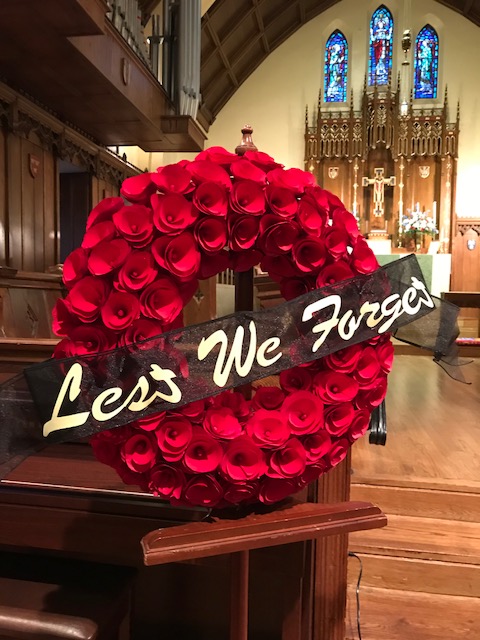
Things in this world are not as they should be. Things in this world have been messed up for a very long time. The evidence of this is in this service today. Today, the second Sunday of November, Anglicans throughout the world will remember their war dead. Soldiers, men and woman, who sacrificed their lives in the two world wars of the last century and in so many other battles since then. It is right that we should remember them, and pray for their souls and pray for their families. It is right that we should honor sacrifice. That is as it should be. What is not as it should be, what is obviously messed up, is that we live in a world where war is sometimes a necessity. We live in a world where freedoms have to be fought for, and protected. We live in a world where basic human dignity cannot be taken for granted. So it is right that we should honor bravery and self-sacrifice, but it is not right that human beings have created a world where such sacrifices are necessary. 

But that is a part of the story of our faith. I’m not saying anything new or controversial here this morning. A fundamental Christian belief is that human beings were designed in the image of God and made to live in peace and harmony with God, the earth, and each other, but from the very beginning we chose to turn away from that and to treat each other as objects or possessions and not as equal children of God. That is the very beginning of the Bible, but it is a theme that runs through the whole book and all of history. Think about our gospel reading this morning. The Sadducees ask Jesus a ridiculous question because they want to make fun of his belief in the resurrection of the dead. They ask Jesus if a woman marries seven times and all of her husbands die, and then she dies, in the resurrection whose wife will she be? Think about what is implied in what they are asking there. What is their real question? Who will she belong to? That is what they want to know. That is their understanding of marriage. That woman is a possession to them, not an equal child of God. Even in our most intimate relationships we objectify people and treat them as possessions. Is it any wonder that there is war between nations? We are broken human beings.

Scripture is so spot on about human nature, and if you need evidence of its truth, look around. Read the paper. The reason that we need to honor and remember the war dead today is because we live in a world of broken human beings, that can and will do terrible things to other human beings. We live in a fallen world and we have to deal with fallen humanity. Wars have to be fought. Maybe not every war, but some of them. Some conflicts we can avoid, but some we cannot walk away from, not if we value and respect our own lives or the lives of others. What would the world look like today if our fathers and grandfathers just walked away from Nazi Germany and Imperial Japan? Sure, our country is a long way from perfect, but it is still here. And you may or may not like some of the people who won elections this week, but you still got to vote. We cannot take that for granted. We owe a lot to those who fought. And one thing we owe them is to remember that humans are what they are. Humans are still not as they should be, as they were created to be, and that means that it is entirely possible that we will someday have to fight again. Things in this world are not as they should be. We are a long way from what God created us to be.

But God has not abandoned us to ourselves. We are believers in the resurrection. Unlike the Sadducees in our gospel story today, we believe that there will be a future day when God sets the world right again, and fixes all of us broken humans who cannot fix or save ourselves. No many how many wars we fight, we are never going to fix this world on our own. We cannot fix human nature, but God can. God can transform us and he can transform how we relate to each other. Think about Jesus’s answer to the Sadducees this morning. They ask who will the woman belong to? And Jesus’s answer is: she will belong to God. The Sadducees weren’t asking about love or marriage as we know it; they were asking about possession. And Jesus sets them right. In the resurrection, the only person she will belong to is God. This broken world and our twisted ways of relating to each other will be washed away and finally we will be able to see and relate to each other as God originally intended: as equal children of God. 

But that is a hoped for and devoutly believed in future day. We have been given a glimpse of that resurrection and our future glory in the resurrection of Jesus Christ, but until the day we all live in that glory, we will have to deal with living in a world that is not as it should be. The world as it is. We need to honor those who help us live in the world as it is. We need to honor those who fight the wars that have to be fought, and honor those who sacrificed everything to try and make the world a little better and a little safer. 

Blessings are worth fighting for

Standard

Sermon for October 19, 2025

Readings:

Genesis 32:22-31
Psalm 121
2 Timothy 3:14-4:5
Luke 18:1-8

I think that it is only fitting that our first scripture reading this morning should be about wrestling, as I am sure that I am not the only one here that woke up feeling like I had just been body-slammed by Macho-Man Randy Savage. Everything hurts. I have sympathy for our biblical patriarch Jacob this morning as he limps away at the end of that Old Testament story. He’s victorious, he has been blessed, but it is a victory and a blessing that comes with tremendous effort and some pain. Some of us know what that feels like right now. If you are a visitor today and weren’t around this weekend, or are watching from home, we have had a big church fair for the past two days and a lot of us are pretty tired. So, we know how Jacob feels.

But I’m not letting you go home today without a sermon, and the passage that you heard from the Book of Genesis a moment ago is a mysterious one that needs some exploration. Jacob and his family are on the move for reasons that I can’t fully get into this morning because nobody wants to hear a long sermon, I will at least spare you that, but I will just say it is a lot of family drama. Jacob has a brother that hates him, a father-in-law that tricks him, not to mention two wives and eleven children, so drama is to be expected. And Jacob is not a faultless character either. He is not simply some great example of primitive virtue. He is as complicated and as crooked as any of us. But that is something that should give us hope, because even as a person who is kind-of messed up, he still has encounters with God. And that is what that first scripture reading really is all about. It’s what all of our scripture readings this morning are about. An ordinary person has an encounter with God. God interacts with people that aren’t always good; God still cares loves people who are complicated. God does not remain distant from the mess of everyday human lives, but gets right down into the midst of it and grapples with us. God is in the midst of the drama with us. If you get nothing else from the scriptures or my sermon this morning, please remember that. God has encounters with ordinary, sinful human beings in the midst of real life. Jacob doesn’t just wrestle with God, God wrestles with him.

One night when Jacob sends his wives and children on ahead of him, he is left alone and has an encounter with a mysterious man. Our tradition sometimes identifies this man as an angel, but the text doesn’t say that. It just calls him a man. Eventually we learn that he is not just a man. We are not told why Jacob is wrestling with him though; we are just told that this mysterious man could not, or would not, subdue and overpower Jacob. He says “let me go” and Jacob replies “I will not let you go, unless you bless me.” Jacob is stubborn and bold, which I like to think of as qualities, though I personally probably exhibit more of one than the other. Anyways, in this moment the mysterious man confers upon Jacob a new name. He calls him Israel, a name which we means wrestled or striven with God, for as the man says, “you have striven with God and with humans and have prevailed.” Jacob then asks the mysterious man his name, because obviously he wasn’t wearing his name tag, and the man makes no reply. He just blessed Jacob, renamed him Israel, and disappears. But Jacob knows that something miraculous has happened. He knew that this was not just any man. This was God. He knows that his encounter with this man was actually an encounter with God, because he names the place Peniel, which means face of God. 

There is much that can, and has, been said about that mysterious Genesis passage, but in the end Jacob has an encounter with God and realizes it, because he is stubborn. He doesn’t give up easily. Jacob gets his blessing because he knows that a blessing is worth fighting for. Encounters with God are precious and they are worth a little pain and suffering. God is worth holding on to, even if it involves a bit of wrestling.

Now I must admit that everything I know about actual wrestling comes from watching professional wrestling as a child with my grandfather and uncle. Hulk Hogan, Ric Flair, Dusty Rhodes, Junkyard Dog, Ravishing Rick Rude, and Jake the snake Roberts…these were all names that I knew well as a child, so everything I know about wrestling comes from watching their crazy antics. If you don’t know who those guys are…well you have missed out on some high-class American culture. You can look them up. But the one thing I learned from watching all that is that wrestlers are constantly having to adjust and change their grips. Your opponent moves one way, you move another. You try this, you try that. Sometimes you are up, sometimes you are down. There are some predictable, standard moves, but then there are wild cards. It isn’t always the same exact thing. You have to be willing to adjust and change your grip. 

Now I am probably one of the most traditional people you are likely to meet, in the sense that I love tradition and traditions and I think that they are worth fighting for. Traditions are a blessing and blessings are worth a good struggle. Traditions are worth stubbornly holding on to, but how you hold on to them…THAT is what has to constantly change. You have to be willing to adjust your grip, move and change your position and even try something new now and then if you hope to prevail. The tradition of the Friendship Fair, for all of the pain that it is, is a tradition that I think is worth holding on to, because I think in many ways divine encounters happen because of it, not just in the two days of the fair, but in so much of the work that happens leading up to it. There are elements of the fair that really do produce joy and build relationships. These are the parts of the fair that we need to stubbornly hold on to; but then there are aspects of the fair that can and must change over time. We need to be mindful of that. We can maintain the tradition of the fair, but also change our grip here and there. Trying new things and sometimes letting go of old things that we just can’t do anymore. I’m not the sort of person who loves change, but it can be very good now and then. It was only a couple fairs ago that we started taking credit cards, and what a change that has made. We haven’t always had a beer tent or apple cider donuts, but those have both proved to be popular additions as well. Incidentally, in the beer tent on Friday, Michael Coyne challenged me that if I mentioned apple cider donuts in my sermon on Sunday that he would double his weekly pledge. Michael, you may consider that challenge accepted. Now, if all of you would do the same, we wouldn’t have to worry about the financial side of the fair at all; we could simply focus on the things that bring us joy. But we can talk about that more another day.

To our younger parishioners that are here and helping to lead this service today I would say this: the future of this fair is really going to be in your hands, not ours. I hope that some of the things we are doing now will be things that you see value in and will want to maintain, but I also know you won’t always do everything the way we do it and that’s OK. I hope that you will hold on to many things that you experience here in church: prayer, scripture, mystery, joy, encounters with God, and meaningful relationships. I hope that you hold on to the tradition of the friendship Fair, but how you hold on to it, may be a little different than how we have held on to it. And that is as it should be. I can tell you that it won’t always be easy, but there are blessings that come from all these mysterious divine encounters that happen in church, even in church fairs, and blessings are worth fighting for.

Saint Lois and Saint Eunice

Standard

Sermon for October 5, 2025

Readings:

Habakkuk 1:1-4, 2:1-4
Psalm 37:1-10
2 Timothy 1:1-14
Luke 17:5-10

Paul, an apostle of Christ Jesus by the will of God, for the sake of the promise of life that is in Christ Jesus, To Timothy, my beloved child:
Grace, mercy, and peace from God the Father and Christ Jesus our Lord. 

I am grateful to God—whom I worship with a clear conscience, as my ancestors did—when I remember you constantly in my prayers night and day. Recalling your tears, I long to see you so that I may be filled with joy. I am reminded of your sincere faith, a faith that lived first in your grandmother Lois and your mother Eunice and now, I am sure, lives in you. 

I wanted you to hear those words from Saint Paul’s epistle to Timothy again this morning, because sometimes I think we are so fixated on the big picture or the major names or themes in a scripture passage that we often miss smaller details and characters that have a story all their own to tell. So, let’s talk for a moment this morning about Lois and Eunice. They are mentioned in passing in Paul’s letter. “I am reminded of your sincere faith, a faith that lived first in your grandmother Lois and your mother Eunice and now, I am sure, lives in you.” Who are Lois and Eunice? They don’t get much press in church history. Their names are not widely known or celebrated. Churches aren’t dedicated to them. I have been to plenty of churches named after Saint Paul, and I have heard of plenty of churches named after Saint Timothy. But I have never seen a church called Saint Lois. I have never seen a church dedicated to Saint Eunice. And it’s a shame really. Someone needs to go and start a church and call it Saint Lois or Saint Eunice. We don’t really know who Lois and Eunice are. All we know is that Lois was a woman of faith who passed her faith on to her daughter Eunice. And Eunice herself would become a woman of faith who would pass her faith on to her son Timothy. It’s a boring little detail and hardly worth mentioning, right? Insignificant?

Except, maybe it isn’t an insignificant detail. Because if it weren’t for Lois and Eunice, there would be no Saint Timothy. This faith that Timothy has, this faith that Paul praises and celebrates, it didn’t just materialize out of the air. It has a genealogy. It was handed down to him. Timothy’s faith came from his mother Eunice. And Eunice’s faith came from her mother Lois. This is a faith that Paul is willing to die for. He describes it as a treasure that needs to be guarded. But it is also a treasure that gets handed down from one generation to the next. It is a gift that we receive and it is a gift that we give. Sometimes, like with Timothy, we get it from our parents or grandparents. Sometimes we get it from other people in our lives: distant relatives, friends, neighbors, or even strangers, but none of us, not one of us, came to faith entirely on our own. We all had someone who shared the gospel with us, or shared their faith in God, in some way. Maybe it wasn’t some great sermon. Maybe it was through their actions or their prayers or their hope or their perseverance, but somehow, someway, if you are here today then someone has planted a seed of faith within you. Someone shared their faith with you. Who was it? Maybe there are multiple people in your life that you can think of that shared their faith with you. If so, then you are blest. You are blest because you have been given a treasure. Don’t forget that. You have been given a treasure. The treasure is this living hope inside of you that keeps reminding you that the struggles of this world are not all that there is. The treasure is the conviction that there is a God that is worth trusting in, more than we trust in anything else in this world. The treasure is the belief that love is worth fighting for. The treasure is the promise that death is not the end for us. That treasure is a powerful thing that even in the tiniest amount can transform our lives and change the way we look at the world. Think about how the belief in the Resurrection must have given Lois and Eunice strength. Think about the troubles that those women must have seen in their lives. They would have known Psalm 37 very well. They would have know of God’s promise to deal with evildoers and set the world right, but in the Resurrection that would have seen God in action. They would have seen God keeping his promises to his children and that was a treasure to them that they had to pass on. You have been given a treasure too, and the treasure is not this building, it’s not a place or an inanimate object. It is a living thing inside of you. I think it is important to note that Paul says the faith lived within Timothy, and lived within Eunice, and lived within Lois. The faith is a living thing. Living things grow when you feed them and nurture them; they wilt and dwindle and may eventually die when you neglect them. That is why Paul challenged Timothy to rekindle that gift, that treasure that was withing him. We have been given a precious and powerful thing, but it needs guarding, it needs regular rekindling and it needs to be handed on. 

Today is not Mother’s Day or Father’s Day. It isn’t All Souls’ day or All Saints’ day. It isn’t even Grandparent’s day. But a couple names in a single verse of one of Paul’s letters is a good enough reminder that we need to take time now and then to give thanks to God for the Loises and Eunices in our own life. Without them and their witness and their sacrifices we wouldn’t have the faith that we have. They have surely given us a treasure. 

They only get a passing mention this morning and we know nothing else about them, but if it wasn’t for Lois and Eunice, Timothy would not have had the faith and Paul wouldn’t have had anyone to write to. 

It’s me, hi, I’m the problem. It’s me.

Standard

Sermon for September 14, 2025

Readings:

Exodus 32:7-14
Psalm 51:1-11
1 Timothy 1:12-17
Luke 15:1-10

I became an Episcopalian in college and the parish that sponsored me for the priesthood was actually a college chapel at the University of Miami. That chapel had a very interesting set of stations of the cross hanging on the wall in the nave. Now if you aren’t familiar with the stations of the cross, they are a very old devotional practice of remembering Jesus’s final moments through fourteen different reflections or stations that are often depicted in some artistic form. We have stations of the cross here. That is what those little pictures are hanging on the beams all around you. 

Well, at the chapel in Miami, it will come as no surprise that our stations had a very Caribbean flavor to them. They were actually all carved panels of wood that were done by an artist in Haiti. There were sometimes a topic of discussion though, because occasionally someone would make the observation that all of the Roman soldiers depicted, including those nailing Jesus to the cross, had distinctly African features. Now, the knee-jerk reaction that some folks would have to seeing this would be to proclaim that this artwork was racist in some way, because the “bad guys” were depicted as African. There is no question that racism finds its way into all aspects of human society because it is a product of human sinfulness and always has been. But the mistake some people made in their rush to pronounce a judgement on those stations of the cross is that they overlooked one crucial detail: the artist was Haitian. The artist was Haitian and he knew exactly what he was doing in depicting those Roman soldiers with African features. He wanted them to look like himself. He was putting himself into the story. The Romans, the crucifiers, the sinners, the “bad guys,” they needed to look like the person he saw when he looked in the mirror. The artist knew what he was doing. As someone who could have justifiably depicted the Romans as the French or the English, or any other nationality that had participated in the slave trade (and there are many), he chose instead to cast himself in that role. The oppressor in this artist’s depiction of Jesus’s journey to the cross, was himself.

Now I know that there are people who would want to analyze this on many different levels and make all sorts of pronouncements based on culture, history, or Psychology, and some of that may be perfectly true. But a fundamental part of the Christian journey of faith is the ability to recognize one’s own sinfulness. The ritual of baptism, where we actually become Christian, necessarily involves a recognition of one’s own sinful nature. It is not enough to point to the sins of others; we must take responsibility for our own sins. That is repentance and the Christian faith begins with an act of repentance. As September the 14th is the Feast of the Holy Cross in the church’s calendar, I have been thinking specifically about the cross of Christ this week, and my mind was drawn to those stations of the cross in Miami carved lovingly and carefully by that Haitian artist. And I can’t help but marvel at the spiritual maturity that it takes to recognize sinfulness and evil within your own self. That is what that artist was doing. He was saying that I, am not merely a passive bystander in the story of Jesus, but I am a sinner, and I am precisely the sort of person that Jesus died on the cross to save. I am a sinner, not because of my race, my gender, or my circumstances, but because of my humanity. Despite all of our therapy, and don’t get me wrong I am a huge proponent of therapy, it is a wonderful and life-saving thing, but despite therapy being more common, the ability to publicly and honestly acknowledge our own sinfulness and broken human nature seems to be less common. It is becoming a lost art. And I’m sorry, but I have to think that part of the reason we are living in this age of vicious division and political violence and online hatred, is that we are losing the ability to own and claim our own sinfulness. It is so much easier to always be a victim. It is so much easier to always look for the fault in someone else. The situation we are in is because of the radical left or the reactionary right. It is the fault of the mentally ill, the gun lobby, the internet, politicians. In times of great upheaval and uncertainty we want someone to blame. It has become increasingly unpopular and uncommon to own our own faults. Everyone else is the problem. I don’t often reference or refer to Taylor Swift, I’m not a devotee, but I am quite fond of her song anti-hero because I think it does just this: it shows someone taking responsibility for the troubles in their own life.

It’s me, hi, I’m the problem, it’s me
At tea time, everybody agrees
I’ll stare directly at the sun but never in the mirror
It must be exhausting always rooting for the anti-hero

Such a great lyric. We don’t want to look in the mirror. We don’t want to examine our own words or our own actions. We don’t want to acknowledge that we all share some responsibility for the pain and suffering in the world. Taylor’s song was very popular, but sadly the kind of honest introspection that she is singing about isn’t. We want to blame everyone else for our problems. The temptation to blame others for all your problems is so pervasive that it goes all the way back to the beginning when Adam blamed Eve and Eve blamed the serpent. We don’t want to take responsibility. And if all the problems in our lives are the fault of someone else, or some other group, then the solution is very easy: just eliminate them. Eliminate those people. This is what humans have done throughout history. This is what the Romans were doing nailing Jesus to the cross: eliminating a problem. This is what Paul was doing when he was having Jesus’s followers stoned to death. He was simply eliminating a problem. Until one day he realized that HE was the problem. 

In Paul’s letter to Timothy, he writes: “The saying is sure and worthy of full acceptance, that Christ Jesus came into the world to save sinners– of whom I am the foremost.” Of whom I am the foremost…do not forget that Paul added that little bit at the end. Paul isn’t just saying that YOU need Jesus. Paul is saying that I need Jesus. Paul is testifying to his own sinfulness and brokenness. He isn’t just saying y’all are messed up. Y’all are a problem. He is saying we are a problem. He is saying I am a problem. I am a sinner. We sinners, and that means all of us, we are the problem. We are the ones Christ came to save. We are the lost sheep. 

That is why the grace of the Lord is such an amazing gift for Paul, because he knows that is has nothing to do with merit or righteousness. Paul did not deserve the love of God. He says himself that he was a man of violence. But he says, he received mercy anyways. Paul did not deserve God’s mercy, but he received it. Paul did not deserve God’s love, but he received it. Paul did not deserve God’s grace, but he received it, because that is what grace is. Grace is a gift you don’t earn and don’t deserve. It is pure gift. Friends, our world needs more grace right now. Our world needs more people who know that they are sinners, who understand that they are not righteous, who can acknowledge that they have received grace and mercy from God and therefore must MUST show grace and mercy to others. Even if they don’t deserve it. Especially if they don’t deserve it. Because that is what grace is.

I am a big fan of the Wall Street Journal columnist and former Regan speech writer Peggy Noonan. Her columns the last couple weeks in particular have really been on point. Two weeks ago she shared an exchange that she had had with a veteran political consultant who was talking about young political operatives, and something she said really struck me. She said to this political consultant: “I write for those 33-year-old operatives you speak of who have actually never seen grace.” If they don’t know what it looks like they can’t emulate it, they can’t adopt it and give it new life because they don’t know what it was.”

We need to wake up and realize that there are young people in our world right now who do not know or understand grace, so it is up to us to tell them, but more importantly show them, what it is and how it works. We have been taught, and shown, grace by the master. Our Lord didn’t just come to save the persecuted, he came to save the persecutors as well. He came to save sinners of all sorts. He came even to save those Romans that were nailing him to the cross. He asked God to forgive them with one of his last breaths. That is how grace works. It is given to those who don’t deserve it. Those of us who worship beneath the foot of the cross week after week, need to remember that. We need to remind the world what grace looks like.

The paradox of God’s Grace

Standard

Sermon for September 7, 2025

Readings:

Deuteronomy 30:15-20
Psalm 1
Philemon 1-21
Luke 14:25-33

The religious life is filled with paradoxes, or seemingly contradictory ideas that are nonetheless, both true. It can be frustrating sometimes, when you go looking for an easy answer. One of those paradoxes is that sometimes the more you know, the less you understand. This is especially true with scripture. Today’s gospel is a good example. 

Now on the surface, today’s gospel is about the cost of discipleship. What does it really take to be a follower of Jesus Christ? Can we just call ourselves Christians and leave it at that, or is Jesus looking for more substantial proof? And Jesus is shockingly blunt. He says, “Whoever comes to me and does not hate father and mother, wife and children, brothers and sisters, yes, and even life itself, cannot be my disciple.” What a thing to say! Welcome back families! Here I am trying to make this a very family friendly church, and Jesus goes and pulls the rug right out from under me on the day Sunday school starts back up. Hate your families. Thanks a lot Jesus that’s very helpful. So to try and make some sense out of what Jesus is saying and to give some context, naturally I went back and looked at the whole passage of scripture and everything that came before this. That’s when things got more confusing. The more I read, the less I understood.

You see immediately before Jesus makes this statement to the large crowd, he had been at dinner with some Pharisees. It was at that dinner that he taught about being humble and not taking the high place at the table. That was the passage that I preached on last week. But then at that same dinner, Jesus goes on to tell a story that compares the kingdom of God to a great dinner. The host invited many people to come, but they all found some excuse not to go. Everyone was busy. Someone just purchased some land, someone just purchased some new cows, someone just got married. Everyone had some good reason to turn down their invitation to this free banquet. So the host sends out his messengers to invite the poor, and the crippled, and the blind and the lame, and when he discovers he still has room for more, he sends out his messengers again and says bring in anyone so that my house may be filled. Jesus tells this wonderful story about the Kingdom of God and he compares it to a free banquet, that some people refuse their invitation to, and then, in the very next line, we get today’s gospel passage. The very next line is Jesus telling the crowd the true cost of discipleship.

So which is it? Is God’s kingdom a free gift or is it something that costs us dearly? The bible can’t seem to decide. You see my confusion? Is the Christian life, about receiving God’s blessings, or is it about serving God? Are we supposed to celebrate the feast or carry the cross? Which is it? These two stories seem to give contradictory images of a relationship with God: the first image emphasizes God’s grace as a free and undeserved gift; the second image emphasizes what God’s grace can cost us. And yet, we are obviously meant to hear these two stories together. They are side by side in the scripture, and I am convinced that that is not by accident. This is another paradox, a truth about God that is not simple. We need to hold these two contradictory images together. This is the paradox of God’s grace: it is completely free, and it can cost you everything. It is celebration and it is sacrifice. It is rest and it is work. God’s grace, God’s Kingdom, the invitation to the banquet, the forgiveness of sins and the promise of eternal life, this is a free gift. We don’t earn it. We don’t deserve it. It is God’s love being poured out on us. That is a truth that is revealed to us in scripture time and time again. But, choosing to accept that invitation, does mean that some of the cares and pressing concerns of this world will have to come second. We will have choices to make. And sometimes choosing to put God and his invitation first, can be a really tough choice. It can and will involve hard decisions. It can and will involve sacrificing some of the things of this world. Maybe even our own lives. That was the problem with everyone that was invited to the banquet in Jesus’s story: they all had some other worldly concern that kept them from showing up. They didn’t hate the host, they were polite and sent their apologies, but they all had excuses that seemed more important. And those excuses kept them from receiving the great gift that God wanted to give them. This is the truth that Jesus and scripture is pointing us to: God’s love is a free and underserved gift, but how often do we choose to put lesser things first, before God? Is God always our number 1 priority?

You see, people get really worked up when they hear Jesus say “Whoever comes to me and does not hate father and mother, wife and children, brothers and sisters, yes, and even life itself, cannot be my disciple.” We don’t like to hear Jesus use the word hate, especially not when it comes to those we love, but we need to remember where that love we share with our families ultimately comes from. It comes from God. It is a gift from God. Your father, your mother, your wife, your children, brothers and sisters, even your own life…that all comes to you from God. If we put anything else before God, we are getting things out of order. We aren’t paying attention to the true source. Jesus doesn’t want you to actually hate your mother and father, because honoring your mother and father is a commandment of God. But the first commandment of God is I am your God, you shall have no other God’s before me, so everything else, no matter how important, has to come second. Without the first commandment to worship only God, none of the other commandments like honoring your parents have any power or authority. The first commandment is the foundation of all the commandments. God has to come first.

I think Jesus is trying to shake people up a bit and make them think about their lives. I think Jesus wants his followers to understand that following him means accepting God’s invitation to the banquet, and that means a radical shift in priorities that is necessarily going to change how you live in this world. It can mean making some tough choices, because the world we live in does not want you to put God first. The world wants to keep you busy with good excuses, so it’s tough. Despite the message that many people are sold about what it means to be a Christian, the Christian life is not a simple thing. In many ways it is a paradox that many struggle to understand and many oversimplify. God does want us to have life and have it in abundance; God does want to bless us with good things. But God also warns us that truly following him is not easy and involves real sacrifice and real work. This is one of those occasions where both things are true. God’s grace is free, but it will cost you something. It may cost you everything.

Looking up, without looking down

Standard

Sermon for August 31, 2025

Readings:

Sirach 10:12-18
Psalm 112 
Hebrews 13:1-8, 15-16
Luke 14:1, 7-14

In 1885, when this church was founded, it was founded to be a free church. What that means, is that it was the intention of our founding families that this church would not charge pew rents, but instead would rely on the voluntary donations and pledges of the congregation. Many of you are aware that there was a period of time, especially during the 1700s and early 1800s, when churches had box pews with little doors that were rented. It’s how churches paid the bills. A lot of you have “your pew” that you always sit in now, but back then your pew really was your pew. You paid for it and nobody else could sit there. And of course, just like going to a Broadway show, the best seats cost you more. So if you wanted to sit down front where you could see and be seen, you would pay a premium for it. There were usually some free seats, but they were in the balcony or in the back. If you visit many historic colonial churches, you will find just this setup. 

It really was a disgraceful practice, especially in the light of the plain reading of the gospel, but for so many years it was so common that it really was unquestioned. You just assumed that the fancy, rich folks in church got to sit up front, and the poor folks would sit in back. One of the later reforms that came out of the Oxford Movement, which was a church reform movement in the early 19th century that was started by my hero, John Keble, was the movement away from this pew rental system. Our founders were influenced by that. I think that we may justifiably be proud of our parish, and our founders, for wanting to abandon this pew rent practice. It is a good thing to be proud of. The bible has lots of warnings about pride, but we need to remember that there is good pride and there is bad pride. There is a pride that is born out of love and gratitude, and there is a pride that is born out of self-righteousness and disdain. We can embrace one, hut we need to be very careful of the other.

It is good to be proud of our parish and our founders for wanting to abolish pew rents, but in being proud we need to remember that we weren’t the first parish to try that, not by a long shot. We weren’t the first; we weren’t the only ones; and there were times when we seriously considered implementing pew rents because finances were so tight. So, we can be proud of what our founders did accomplish while at the same time recognizing that they weren’t perfect. We can love our parish without having to feel that it is necessarily superior to every other parish that ever existed. That is healthy pride, good pride. That is pride that is born out of love. And I think that all humans need that sort of pride. It is a pride that makes you raise your head and look up. You raise your head and look up to people who might be a little better at this thing called life than you are. You raise your head and look up to elders, and heroes. You raise your head to recognize superior skill, superior values, and superior wisdom. You raise your head to recognize something superior to yourself. Healthy pride involves looking up, not looking down, and to look up you need to be able to recognize that there must always be someone or something above you. And if you can’t do that, then you can’t know God. That is when the other kind of pride gets in the way.

Negative pride, pride that is born out of self-righteousness and disdain, looks down. Negative pride is about feeling superior to others. This unhealthy type of pride is presumptuous, it takes the high seat at the table. It assumes that it must be the best, the greatest, the wisest, and therefore does not strive to be better than it is. That is why this type of pride is so deadly. It alienates you from God above and from everyone else below. You have no need for anything above you and you are too good for anything beneath you. Negative, unhealthy pride is isolating and it leads to destruction. That is the type of pride that the scriptures are talking about in the first reading this morning:

The beginning of human pride is to forsake the Lord;
the heart has withdrawn from its Maker. 

For the beginning of pride is sin,
and the one who clings to it pours out abominations. 

Therefore the Lord brings upon them unheard-of calamities,
and destroys them completely. 

The Lord overthrows the thrones of rulers,
and enthrones the lowly in their place.

Be very careful if you think the throne is yours or if you think the best seat in the house belongs to you. You may just find yourself turned out of your pew when the true owner of the house arrives. Take the lower seat our Lord advises. Assume that there are others that are better than you. Look up and show respect. Remember that you still have things to learn. We may think that charging rent for pews is a totally abhorrent idea that is contrary to the gospel, but 100 years from now there may be some practices that we simply ignore or take for granted that future generations may be scandalized by. We can be proud of our ancestors, we can look up to them, but we needn’t be self-righteous in doing so. We can look up, without looking down, if you know what I mean. 

The funny think about learning to always look up to those above you, is that in doing so you learn to hold your own head a little higher. Learning to respect others goes hand in hand with learning to respect yourself. So healthy pride, pride that is born out of love, pride that is born out of admiration for that which is good walks hand in hand with humility. We can be proud of ourselves and our accomplishments, we can be proud of our children and our families, we can be proud of our church, our country, our heroes, and we can be proud of our cultures. We can be proud of all these things and we can love them without thinking that they are superior to all others or completely faultless. Humility isn’t about looking down in shame; it is about looking up in admiration. When we learn to look up to others, our own status rises as well. Those who exalt themselves will be humbled, but those who humble themselves will be exalted. 

Keep Holy the Sabbath Day

Standard

Sermon for August 24, 2025

Readings:

Isaiah 58:9b-14
Psalm 103:1-8
Hebrews 12:18-29
Luke 13:10-17

Jesus was in the synagogue on the sabbath day, which should come as no surprise to anyone. Jesus was an observant Jew who took God’s laws very seriously. Jesus said he didn’t come to abolish God’s laws, he came to fulfill them. God’s commandments matter to Jesus. And in the fourth commandment we are told “remember that thou keep holy the sabbath day.” The Book of Exodus goes on to say: “six days shalt thou labor, and do all thy work; but the seventh day is the sabbath of the Lord thy God: in it thou shalt not do any work, thou, nor thy son, nor thy daughter, thy manservant, nor thy maidservant, nor thy cattle, nor thy stranger that is within thy gates: For in six days the Lord made heaven and earth, the sea and all that in them is, and rested the seventh day: wherefore the Lord blessed the sabbath day and hallowed it.”

The Book of Deuteronomy adds an extra little verse to this and says: “And remember that thou wast a servant in the land of Egypt, and that the Lord thy God brought thee out hence through a mighty hand and by a stretched out arm: therefore the Lord thy God commanded thee to keep the sabbath day.”

The sabbath day is a day of rest. The sabbath day is a day of freedom. The sabbath day is a commandment. Resting is a commandment of God. It is one of the top ten. When people talk about sin, they like to talk about the exciting things: adultery, murder, stealing, bearing false witness, but listed among those commandments is the commandment to keep the sabbath day holy and to rest. And freedom is a gift from God. God does not want us to be slaves to the powers of this world. God does not want us to be slaves to productivity. God does not want us to be slaves to the almighty dollar, or to the office, or to email, or to drudgery. God wants us to rest and God wants us to remember his promises of freedom. God wants us to remember the grace that we have been shown. So, work is prohibited on the sabbath, but worship is not; the study of his word is not. And Jesus is in the synagogue worshipping God, and reading and reflecting on his word. Jesus is obeying the commandment. 

And as Jesus is talking, he looks out on the congregation and notices a woman there. It’s amazing that Jesus saw her at all because we are told that she was bent over double. She couldn’t stand up straight. And what is more we are told that this woman has been afflicted this way for eighteen years. I want to focus on this unnamed woman for a minute this morning, because I think it is too easy to focus on the conflict between Jesus and the leader of the synagogue and not notice the incredible faith that she was demonstrating. This woman has been bent over for eighteen years. We can assume that she was probably an older woman if she has been sick that long. Now those of you out there that suffer from back pain, mobility issues, or know what it feels like to sit behind the wheel of a car for too long, or have been hunched over as desk for too long, those of you who know the pain that can come from bad posture…I think I have probably covered most of y’all at this point. Think about being doubled over in pain for eighteen years. Now let’s go back to a time before Ibuprofen, or hot baths, before there was air conditioning or sliced bread or any modern convenience that makes life easier, because that is the time that this woman is living in. Think about the pain and discomfort that she must have been in.

And she showed up in church that day anyways. She showed up to worship God. This woman had every reason to stay home in bed and nobody would have faulted her for it. She was sick. If I had been her pastor I probably would have told her to stay home; it’s fine. But she showed up. Somehow, she made it to the synagogue, got inside, managed to deal with people bumping into her because they couldn’t see her hunched over. And of course, you know most people in synagogue in those days didn’t get a seat. Those pews may be hard, but at least your sitting down. If she wanted to sit, she would have had to sit on the floor. She probably just had to stand though. But she showed up. Why? There are other stories in the gospel where people seek out Jesus for healing, but that’s not the case with this story. She doesn’t call out to him or ask him for anything. As far as we know, she doesn’t know who Jesus is and didn’t know he would be there. She asks for nothing. But her presence there on that sabbath day says something more than her words ever could. 

This is a woman of faith and she is not going to let anything keep her from worshipping her God and honoring and keeping holy the sabbath day. She is sick and in pain, but she showed up, not because she thought that she would be healed, but because she loved God and respected his commandments and intended to keep them as best she could. She didn’t come to get something; she came to give something. Jesus sees her. He sees her faith and without being asked, he sets her free from her affliction. 

And the leader of the synagogue…who would have had a nice comfy place to sit by the way…became indignant because Jesus supposedly did work by curing her on the sabbath. And Jesus calls him out and says “you wouldn’t treat your donkey that way!”

Jesus takes God’s commandment’s seriously. He isn’t dispensing with God’s laws; he is interpreting them in the light of God’s love. Our gospel today begins with Jesus worshipping God in the synagogue on the sabbath day as we would expect. He encounters many people there obeying the fourth commandment, but two stand out in this story: one is a woman who has suffered incredible pain and inconvenience to be there that morning and the only thing on her lips is praise for God; the other person is a man, an important man, the leader of the synagogue, a person with honor and position (and a chair), and all he can do is criticize an act of mercy. Which one of those two do you think did a better job of keeping the sabbath day holy? 

A matter of perspective

Standard

Sermon for August 17, 2025

Readings:

Jeremiah 23:23-29
Psalm 82
Hebrews 11:29-12:2
Luke 12:49-56

I remember one time when I was a little boy, we were traveling through the sugarcane fields of South Florida. If you go inland, away from the beaches, in the region around Lake Okeechobee, you will find miles and miles of sugarcane plantations. Or at least you could when I was little. I don’t know what it is like there now. If you have never seen sugarcane growing, it looks a lot like bamboo: thick growths of big, tall stalks that can be 10 feet high or more. When you are driving through it, it’s like there is a wall on either side of you that you can’t see through. 

Anyways, I can remember driving past these sugarcane fields, when I noticed that some of the fields were on fire. And I remember thinking, “that’s terrible! those poor farmers! All that sugarcane is lost!” And then, as we drove a little further, I was even more upset when I noticed some people walking alongside the fields with torches in their hands, actually setting fire to the sugarcane! How horrible. This wasn’t just an accident; this was intentional destruction. Well, at some point I expressed my dismay about all this, and someone in my family explained to me that they weren’t destroying the sugarcane; they were preparing it for the harvest. 

What I learned that day, was that THAT was the traditional way that sugarcane had been harvested for hundreds, maybe thousands of years. There are new harvester machines that do it differently now, but the traditional way is that once the cane is fully grown and ready to be harvested, you set fire to it. And the fire burns through the field, and burns away all the leaves, and the dead grass, and along the way it drives off all the snakes and other nasty creatures that might be living in there, and what it leaves behind is just the pure sugarcane stalk, ready to be harvested. The sugarcane itself, and the sugar within it, is unharmed. It’s all the bad stuff that gets burned away. 

I saw smoke rising from the field and thought it meant destruction; someone wiser than me knew that it meant it was harvest time. 

The image of those fields burning came to my mind this week as I was reflecting on this gospel. Jesus said that he came to bring fire to the earth. Jesus said that he came to bring division. To hear Jesus say those things, it really rubs against the popular image of Jesus the nice teacher. We are told that Jesus is the Prince of Peace, and that he is all about love and forgiveness, and living abundantly and sharing and being kind and caring, and Jesus IS all of those things, but he is also more. Our situation as humans is more complex than we sometimes want to imagine. We need more than just a nice teacher. We need more than good advice and a helping hand. We need a savior. We need rebirth and transformation. There is much good growing within all of us. God put it there. It is his image. But there is a lot of dead stuff clinging to all of us too. And there are snakes in God’s field as well. If we are ever going to have peace; if we are ever going to know true love and forgiveness; it we ever hope to live in God’s kingdom, then some of the stuff that is growing in us, around us, or on us has to go. There are things that we need to be divided from. I will say that again, there are things that we need to be divided from. There may be people that we need to be divided from. There may be attitudes that we need to be divided from. There may be substances that we need to be divided from. You might even need to be divided from your money and your material possessions. Division can be a good thing. Fire can be a good thing. And the bible often associates fire with God. There was the fiery pillar in the desert, and the burning bush on the mountain, then there was the fire of Pentecost. Fire is powerful. It can be uncontrollable. But fire is transformative. It can destroy things, but it can also make new things. Fire transforms, and God transforms, and we need to be transformed. There are things in this world, there are sins, that need to be burned away in order for God to gather us in and make us into something better than we currently are. We need God’s fire to change us and Jesus said that he came to bring fire to the earth. You can see that as bad news, or good news, it’s a matter of perspective.

If you are a snake in the grass, it is definitely bad news. If you desperately want to cling to old dead things in your life: material things, bad habits, old grudges, past hurts…it might be bad news. If you are content with this world as it is and don’t feel any need to change, or grow, or be transformed into something better…then God’s fire is probably bad news. But if you are ready to be transformed, ready to let go of some things, ready to be gathered into God’s arms in God’s kingdom, ready to let that which is sweet within you be divided from that which is bitter, then God’s fire is good news. 

You can see God’s fire and think that it means destruction, or you can see it and recognize it as a sign of God transforming a field and preparing it for the harvest. Again, it is a matter of perspective.

Mr. McBeevey

Standard

Sermon for August 10, 2025

Readings:

Genesis 15:1-6
Psalm 33:12-22 
Hebrews 11:1-3, 8-16
Luke 12:32-40

Many of you know that the Andy Griffith Show is one of my favorite shows of all time. I have preached about it several times. If you are a younger person and don’t know the show, go and watch it. You can stream it online. If you are an older person and grew up with it, it is worth watching again. The show is an intentional throwback to a different time and place, it is idealized and sanitized, but it is nonetheless a reminder of personal qualities and values that could use a revival. 

I think my favorite episode of the show is called Mr. McBeevey. Opie is out playing in the woods and he comes back to the sheriff’s office all full of stories to share with his dad, Andy, and deputy Barney Fife. He tells them that he met this man named Mr. McBeevey, who spends all day up in the trees, wears a fancy metal hat, jingles when he walks, and can make smoke come out of his ears. Andy and Barney naturally assume that Opie is telling a fantastic tale about a made-up friend as children sometimes do. And then Opie says, “and he gave me this quarter.” And as Opie holds up a real quarter, Andy’s demeanor changes. It is one thing to make up a make-believe story, but it is another thing to tell an outright lie, and Opie seems to be crossing the line. When Opie insists that he is telling the truth, Andy drives out to the woods with him to find this Mr. McBeevey, but of course there is no sign of him. Opie refuses to change his story though. Mr. McBeevey is real. Andy and Opie drive home and now Andy is getting very cross. Make-believe is one thing and that’s fine, but Opie needs to understand the difference between the truth and a lie. Andy is resolved that he is going to have to punish Opie. 

So Andy goes to Opie’s room for a father-son talk which is just one of the best scenes ever. He explains to him the difference between the truth and a lie and he tells him what the consequences will be if Opie persists with this Mr. McBeevey story. But Opie says (crying), but Mr. McBeevey is real, and if I said he wasn’t I would be telling a lie. Don’t you believe me pa? And you see this change come over Andy’s face. Before he had looked stern and disappointed, and now you could just see this sense of bewilderment and love. So Andy goes back downstairs. And Barney, who is always a little too eager to act in every situation, says to Andy: well, aren’t you going to punish him? And Andy says, no. Barney replies, you don’t mean to tell me that you actually believe in this Mr. McBeevey do you? And Andy says, no….but I do believe in Opie. No, but I do believe in Opie. 

I love that scene so much. Andy cannot comprehend the story that Opie is telling. It seems magical, nonsensical, unbelievable. Andy has serious doubts or questions about this Mr. McBeevey, what he doesn’t doubt though, is his son. Andy’s relationship with Opie and love for Opie his him the strength and the courage to say, I don’t understand this, I don’t know how this can be true, but I am going to trust you. My friends, that is faith right there. That is how faith works. Faith is not about certainty. Faith is not about seeing is believing. Faith is not about understanding. Faith is not as much an act of the mind as it is an act of the heart. Faith is a response to a relationship. It is an act of love. 

Our second reading this morning is the eleventh chapter of the Book of Hebrews. I remember once when I was in college I met a guy who had memorized the entire chapter and would perform it and I supposed if you are going to memorize a chapter of scripture this is an excellent choice, because it is all about faith. The passage talks about the faith of Abraham and Sarah, believing that God would do the impossible for them. There are a few verses missing there this morning that also talk about Abel and Enoch and Noah, and later we hear about Issac and Jacob. And we are told that “All of these died in faith, without having received the promises, but from a distance they saw and greeted them.” The great patriarchs and matriarchs of our faith, they had to trust in God and in their relationship with God, more than they trusted in themselves. Abraham and Sarah had doubts about where or not they would ever have a child, I assure you, but they trusted in God anyways. To be a person of faith means to be able to believe in things that you cannot yet see. To be a person of faith means to lean on love more than you lean on understanding or your own perceptions of things. 

You do not have to understand the meaning of everything Jesus ever said in order to love and follow him as the son of God. You don’t have to have a clear blueprint of heaven in order to believe in it. You don’t need to comprehend every single article of the creed in order to stand and say it will all of us every week. You don’t need to be able to explain why bad things happen to good people, or why good things happen to bad people. You ought to read the bible and pray, but you don’t need to be some great theologian to be a great person of faith. All you really need to be a person of faith is love. You need to love God and the more you are able to love God, the easier it will be for you to believe and trust in the promises that God makes to you. Love God, love Jesus, love whoever it was that first shared their faith with you. You don’t have to wait for a miracle or a sign to start loving God. You don’t have to see in order to believe, you have to love. When we stand every week and say the creed, we are not proclaiming things that we ourselves have seen: we weren’t there when God created the earth, we weren’t there when Jesus was born or when he suffered and died; we weren’t there when he rose from the grave; we may have encounters with the Holy Spirit, but we weren’t there when it spoke through the prophets, and so far none of us have seen Jesus come again to judge the quick and the dead, we have not experienced the resurrection of the body and the life of the world to come. Most of the things we proclaim in the creed have nothing to do with our own personal experience of God. It is the accumulated experiences and witness of countless generations of faithful people that have loved God, and experienced God’s love in return. The creed is a witness to the God we love and worship. We worship a God who creates. We worship a God who sacrifices and suffers. We worship a God who inspires and warns. We worship a God who judges, forgives and redeems. 

Living in relationship with this God means learning to use your heart as well as your mind. Sometimes love and relationship can open your heart to believe things that your mind cannot comprehend. At least, that is what happened to Andy when he decided that while he struggled to believe Opie’s story, he still believe in Opie. 

I guess I should add that at the end of that episode, Andy is wandering around in the woods trying to figure all this out, when he just utters the name “Mr. McBeevey.” Suddenly a voice from above says “Hello? Is someone calling me” Andy is completely startled and he looks up and down from the pole beside him climbs a telephone repairman with a metal helmet, and tools dangling from his belt that jingled when he walked. Andy was never happier to meet a telephone repair man in his whole life. Mr. McBeevey was real, and yes…he even had a trick to make smoke come out of his ears.