Before we know how to speak, we must first know how to listen.

Standard

Sermon for September 9th, 2018

Readings:

Isaiah 35:4-7a
Psalm 146
James 2:1-10, [11-13], 14-17
Mark 7:24-37

Before we know how to speak, we must first know how to listen.


There is a reason why the man that Jesus heals in the Gospel this morning is both deaf and mute: it is because our ability to speak and our sense of hearing are tied together. We learn how to speak by listening and by mimicking, repeating the things we hear. Children that are born deaf often have great difficulty learning how to speak. They can learn, but it isn’t easy because we learn how to speak by listening to others and repeating the sounds they make. That is why we have regional accents; we repeat sounds and we pronounce words the way that we hear others speaking. Before we know how to speak we must first know how to listen.


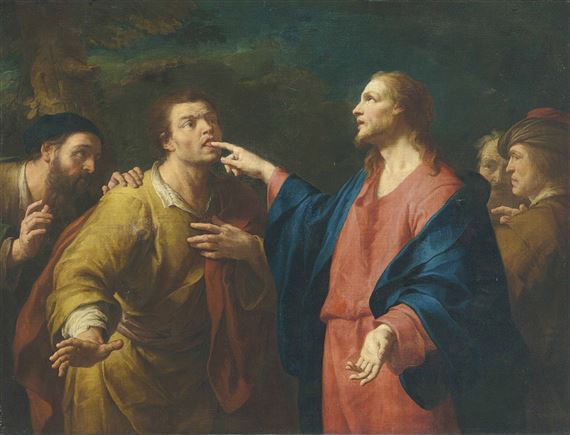
When Jesus heals the man in today’s gospel, first he touches his ears, then he touches his tongue. And Jesus says: “be opened,” and his ears are opened, and then his tongue is released.


Before the man is able to speak, he must first be able to listen.


That’s the way we are designed, but isn’t it interesting how often we try to make it work the other way? As babies we listen first and then we speak, but at some point along that journey to adulthood we decide that we no longer need to listen anymore. If we are polite we might wait for our turn to speak, but how often are we actually actively listening to what others say? How often are we just waiting for someone to finish talking so we can say what we want to say? Sometimes we do listen, in our finer moments, I will grant you that, but I think it’s a dying art. And if we can’t listen or don’t listen, or can’t hear, how can we expect to have our own words understood? How can we expect to know what to say? How can we expect to be heard even when we do speak? We need to learn how to listen first.


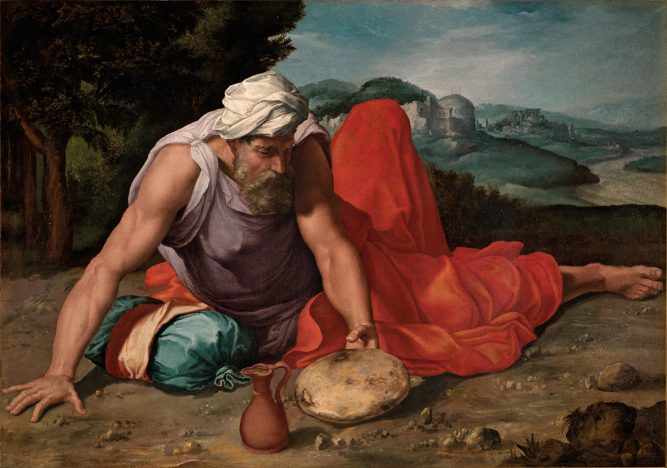
You may be wondering about the end of our gospel passage today: when Jesus tells the disciples that witnessed this miracle not to speak. That might seem odd to you, because didn’t this same Jesus send his disciples out into the world, commanding them to make disciples of all nations and to preach the Gospel to the ends of the earth? Aren’t we supposed to be evangelists; sharing the news of Jesus with the world? Why would Jesus tell them to be silent?


Well it’s true, eventually Jesus does commission his disciples to be evangelists to the world, but early on in his ministry, time and time again he tells them not to start preaching yet; not to tell others what they have seen. Christians have scratched their heads at those comments for years, but I think Jesus recognizes something very important: that his disciples are human with very human flaws, one of which is that the moment we start talking we stop listening. Jesus has more to share with his disciples; he has more to teach them; there is so much more about God that they need to learn and understand. If they start running around telling the world about the one thing they saw Jesus do, they are likely to miss everything else that he is saying and doing. There will come a day when Jesus will send them out into the world to preach and proclaim, but first they must listen. When Jesus was teaching his disciples, he repeatedly says to them: “Let anyone with ears to hear listen!” and “pay attention to what you hear!”


Before we know how to speak, we must first know how to listen.


Of course, they don’t listen to him. They are so intent on sharing this great story, that they can’t even hear his command not to tell. And while what they say is true, he does make the deaf to hear and the mute to speak, that is not the beginning and end of his ministry. Jesus’s life was about so much more than just a few miracles and healings. But the disciples weren’t ready to listen, or they thought that they were done listening.


Part of being a person of faith, part of being a Christian, a follower of Jesus Christ, is sharing that faith with others. It is not just the clergy that are charged with sharing the Good News, all of us are, but that is incredibly intimidating for some people. Talking about God or talking about our faith can be a very scary thing, so we shy away from it. We find ways to avoid it. We don’t know what to say; but I think we learn to talk about our faith the same way we learn to talk period, by listening.


Yes, I may spend a few (and it really is only a few) minutes each week talking about God, but if I didn’t spend a considerable amount of time listening to God every day, I don’t think I would have much to say. I couldn’t do this. Before we know how to speak, we must first know how to listen.


And there are many ways in which we may listen to God; it can’t just be an hour on Sunday morning, it needs to be all the time. Most importantly we listen to God through daily prayer and scripture reading; but there are other important ways as well: through spending quiet time alone; through observing nature; through listening, actually listening to the stories of others; through reading the profound thoughts of the saints and sages through the ages that have spent their lives listening to God. We need to be willing to listen to God first, even if what he has to say to us is hard to hear.


And that means learning to hear, to listen to the tough words of God too. If we close our ears when we hear Jesus say something that makes us uncomfortable, like his initial refusal to the woman in today’s gospel, then we will also miss him saying “the demon has left your daughter.” If we close our bibles when we read something like the Epistle of James that convicts us all of sin, then we will also miss the message that our sins have been forgiven. If we stop praying when we encounter the words “we are not worthy” then we will also fail to proclaim that our Lord’s property is “always to have mercy.” When we learn to listen to all that God has to say to us, the good and the bad, what a story we will have to tell.


God will not tell you that you are always deserving; he will not tell you that you are always good; he will not tell you that you are always right.

But here’s what he will tell you: he’ll tell you that you are healed; he’ll tell you that you are forgiven; he’ll tell you that you are loved. But in order to hear that, we must be willing to listen to him, even when he challenges us.


There is a world out there that needs to hear about the faith we have, and we need to learn how to tell it, but before we know how to speak, we must first know how to listen.

Lord, lay your hands upon us and open our ears before you release our tongues, so that when we do speak, we actually have something to say.

We do not lose heart – Beverly Lewis Memorial

Standard

Sermon delivered at the funeral of longtime Ascension parishioner Beverly Lewis

We do not lose heart.

That is what Saint Paul said to the Corinthians. In moments of pain, in times of suffering, when we groan under our burdens, when the world presses us down, when we are afflicted, when our bodies fail us and we struggle for every breath…we do not lose heart.

We do not lose heart, because as Christians we know that God has planted something within our hearts that cannot be destroyed. There is something within us that is not completely at home here in the world. There is something within us that is more powerful than death. We do not lose heart because God’s love is within our hearts and God’s love never fails; God’s love is never broken. God’s love never gets tired.

Paul goes on to say in his letter that “if anyone is in Christ, there is a new creation: everything old has passed away; see, everything has become new!” To be in Christ, to invite Christ into your heart and to unite yourself to his body, is to be eternally new; reborn with a life that belongs to God; redeemed with a heart that is restless, as Saint Augustine says, until it rests in him.


We do not lose heart, even when we must say goodbye to someone we love so dearly, but our hearts do ache. Even when we know and have faith that we are only saying goodbye for a season; even when we are confident that this person has been made new in Christ and is going from strength to strength in the life of perfect service in God’s heavenly kingdom…our hearts still ache.


It is on days like today when I am reminded of how important hymns are to our life of faith. Beverly was a great lover of music and I think she would have understood how music can speak to our souls in ways that the spoken word just can’t. In particular the hymns of our faith, many of which I would argue are divinely inspired, they can give us the words to express the hope and the sorrow that we feel on days like today. Sometimes they give us an image, a glimpse into heaven, where we can imagine the glory that awaits us there.


In a few minutes you are going to be asked to open your hymnals and sing one such hymn: at the offertory we will stand to sing hymn number 657, Love Divine, All Loves Excelling. It is one of the triumphs of Charles Wesley first published in 1747. But I want you to really hear the words that you will be singing. I want you to see the image that Charles Wesley is painting.


First he begins by asking that love of God which comes from heaven; that love which was incarnate in Jesus Christ to enter into our hearts:


Love Divine, all love excelling,
Joy of heav’n, to earth come down;
Fix in us Thy humble dwelling,
All Thy faithful mercies crown.
Jesus, Thou art all compassion;
Pure, unbounded love Thou art;
Visit us with Thy salvation,
Enter every trembling heart.


Then Charles invites us to look up and to long for that day when Christ will return, when he will raise the dead to life, set the world right, and where we will join the heavenly host in a life of unending praise:


Come, Almighty, to deliver,
Let us all Thy life receive;
suddenly return, and never
Never more Thy temples leave.
Thee we would be always blessing,
Serve Thee as Thy hosts above,
Pray, and praise Thee without ceasing,
Glory in Thy perfect love.


But it is the last verse in this hymn that really gets me. It asks God to finish the new creation that he began when he first entered our hearts:


Finish, then, Thy new creation;
Pure and spotless let us be;
Let us see Thy great salvation
Perfectly restored in Thee;
Changed from glory into glory
Till in heaven we take our place,
Till we cast our crowns before Thee,
Lost in wonder, love and praise.


What an image. Changed from glory into glory, till in heaven we take our place. Where we will cast our crowns down at the feet of God; where our earthly riches and accomplishments will mean nothing to us, compared to an eternity of basking in wonder, love and praise. As family and friends and loved ones, we mourn today for Beverly, but our faith reminds us that Christ has placed a new life within us, a life that death cannot conquer, and that someday we too can join Beverly in that heavenly choir, lost in wonder, love and praise.

Such a wonderful hymn, but there is an extra verse that isn’t in our hymnal. I discovered it this past week as I was reviewing this hymn and I instantly thought: “ah! That’s Beverly!”


You see, on my last few visits with Beverly, she struggled to breathe. Her illness made her short of breath and dependent on oxygen, but still even with the struggle she had such a light within her. She always had that wonderful smile. In the time that I have known Beverly, even through her struggles to care for Rodger, she always had this spirit within her. Looking at some of her old pictures, I still see that spirit, that light in her smile. And then I think of what obstacles she must have encountered in her life. How much did she have to overcome? How far did she come and bring her family with her? Where did she find that strength? Now I should add that if you followed Beverly on Facebook then you know that she wasn’t always upbeat about politics, but still she had strength and determination. When I read this missing verse, I thought “yes, this is a prayer for Beverly,” maybe it is a prayer for all of us.

Breathe, O breathe Thy loving Spirit
Into every troubled breast;
Let us all in Thee inherit,
Let us find the promised rest.
Take away the love of sinning;
Alpha and Omega be;
End of faith, as its beginning,
Set our hearts at liberty.


Whom shall we serve?

Standard

Sermon for August 26th, 2018

Readings:

Joshua 24:1-2a,14-18
Psalm 34:15-22
Ephesians 6:10-20
John 6:56-69

The first five books in our Bible, as many of you know, are known as the Five Books of Moses: Genesis, Exodus, Leviticus, Numbers and Deuteronomy (they are also known as the Torah or the Pentateuch). Although Leviticus and Numbers can be something of a tough read, I’m willing to bet that most of you have some familiarity with the stories in Genesis and Exodus. Adam and Eve, Cain and Abel, Noah, Abraham and Isaac, Joseph and his brothers, and of course Moses leading the Children of Israel out of slavery and into the Promised Land; these stories are a familiar part of our faith and even our Western culture. Movies, musicals and countless works of priceless art have been crafted around these stories.


The Book of Joshua, which we read today, is a continuation of the story after the death of Moses. It details the events that happened to the Children of Israel once they arrived in the Promised Land. It is the “now what?” book, if you will. In other words: now that you have witnessed God’s salvation, now that you have been delivered from slavery and death, now that you have reached the promised land…now what? How are you going to live from this point forward? That is really the question that Joshua wants to ask the assembly in the part that we just heard this morning that comes from the very end of the Book of Joshua.


And just before Joshua asks this all-important question (in the part of the story that we didn’t read today), Joshua retells almost the entire story of the Children of Israel’s deliverance. Beginning the Abraham, Joshua reminds them how every step of the way God was with them. Joshua reminds them of how God sent Moses and Aaron and the plagues, and how he had delivered them from the Egyptians, through the Red Sea, fed them in the desert, led them through the Jordan, and allowed them to take possession of the Promised Land. Joshua reminds them of what God had done for them, and then he asks them: whom are you going to serve?


Well of course the people say: we will serve the Lord! How could we not?! They were just reminded of what God, the God of Abraham, Isaac and Jacob, had done for them; how could they possibly even consider serving any other gods? Well this sounds great; They made a good good decision; now on to living a blessed life in the Promised Land, right? Public affirmation of faith made, now on with their lives.


Well Joshua was smart, because after the whole community promised that they would follow the God of Israel and no other, after they promised that they would serve the Lord, he not only wrote it down, he also set up a large stone in that place as an ongoing reminder, or memorial, of the promise they had made. Joshua was justifiably a bit skeptical of how capable these people were going to be of keeping and remembering this promise. No doubt, because Joshua remembered just how easy it was for the Children of Israel to forget what God had done for them. Think back to the Exodus story for a moment. How many wonders had the Hebrews seen by the time they reached the Red Sea? And still the Children of Israel complained against Moses and wanted to turn back. Then after they had been led safely to the other shore, been miraculously fed in the desert, and made it to the foot of Mount Sinai, how long did it take them to grow impatient, forget the miracles they had just witnessed and turn to worshipping other Gods? Not very long. Joshua knew that these people would need to be reminded, and reminded frequently, of what God had done for them, because he knew that the temptation to turn to other gods is always present. And we are always liable to succumb to it. At some point we are bound to, and we will always be in need of something to draw us back to the worship of the true God.


I don’t think human nature has really changed one bit since Joshua’s time. We are still always being tempted to serve other gods. We still forget what our God has done for us; we grow impatient and before we know it we start looking to other gods for answers; we start serving other gods. It’s easy for us to do too, because we don’t call our gods by proper names anymore, we don’t even think of them as gods, so we don’t realize that we are worshipping or serving an idol; we don’t think that we have turned away from our God, we might even convince ourselves that we are serving the true God when we serve one of these idols, but I wonder sometimes, I really do.


Think of all the –isms in our world that people are attached to (or have been attached to): nationalism, socialism, communism, fascism, liberalism, conservatism, capitalism…some of these start out as great ideas or good things, but once they move from being an idea to an ideology; once they become something we are devoted to; when they are no longer a means to an end but the end itself…that is when they become a false idol. They become another god that we are serving. We gradually forget the true God. We forget what he has done for us. We forget the promises that were made. We all do it. All the time. These other gods have a very sneaky way of distracting us, dividing us, and drawing us further and further away from the God that actually has the power to save us.


We humans are weak. Our God is a jealous God; he wants us to love and serve him only; but he knows that we are weak. He knows that we are constantly being tempted to forget his mercies and strength; we are constantly being tempted to serve other gods. So time and time again, God establishes rituals and prayers and he sends leaders and prophets like Joshua to remind the community and to build physical reminders of God’s presence in our midst. There is a reason why Jesus in his Last Supper commanded his disciples to “do this in remembrance of me.” It is because God knows how easy it is for us to forget. He knows that we need constant, daily reminders of what he has done. That is why the creed is so important, and the scriptures are so important; That is why many of our prayers, including the prayers we say at the altar, don’t just ask God to do things, but also retell the story of what he has already done; We need these reminders. We need them because each and every day we are faced with the same question that Joshua put to the Children of Israel; each day, each moment we have to decide whom we shall serve.

When God shows us who he is, will we believe him?

Standard

Sermon for August 19th, 2018

Readings:

Proverbs 9:1-6
Psalm 34:9-14
Ephesians 5:15-20
John 6:51-58

There is a great quote that I love from Dr. Maya Angelou where she says: “If someone shows you who they are, believe them the first time.”


What she meant, I think, was that people (intentionally or unintentionally) people reveal themselves to you. People show you their character; sometimes people own up to their own personality flaws, but in different ways, people show you who they are. You should believe them. You should believe them the first time they show you.


How many times have we gotten a glimpse of someone’s character and said to ourselves: “Oh, No! This person can’t really be that way. I must have just caught them on a bad day. She can’t really be that negative; He can’t really be abusive?” How many times do we try to justify someone else’s behavior, just so that we don’t have to believe what they have just shown us? We try to convince ourselves that this little character flaw was just an anomaly. How many times have people told us something about themselves and we just dismissed it, thinking that we know them better than they do?


Dr. Angelou’s advice is: don’t do that. You don’t have to figure everything out the hard way. Some things are revealed to you from the beginning. You don’t have to suffer or struggle for the information, it’s right there. You just have to decide to believe it, or not. You just have to decide what you are going to do with that piece of knowledge. It doesn’t mean that you are unforgiving to people, or that you head for the door the first time you see something in someone’s character that you don’t like. What it means is that you keep your eyes open. It means that you do not ignore or forget the information that has been revealed to you.


That, I think, is wisdom. I’m willing to bet that it was wisdom she learned the hard way, but it’s wisdom nonetheless. I am grateful to her for sharing that bit of wisdom with the world, because for those who have the power to receive it, and to believe it, that little piece of wisdom could spare them a lot of grief and heartache. That’s what wisdom does: wisdom wants to help us; to save us from suffering and pain and from making the same mistakes over and over again. Wisdom wants to bless our lives by giving us directions and insights. They can be simple, mundane things, or they can be incredibly profound. Wisdom is all around us, but how often do we ignore it?


How many times do we say to ourselves: that can’t be right…I think I know better? Why is it that we insist on going through life learning things the hard way?


Our Old Testament passage today comes from the Book of Proverbs. We don’t get readings from Proverbs all that often in our Sunday Lectionary and it’s a shame really, because Proverbs is full of wisdom. In fact, in our passage today, wisdom is personified very creatively as a woman. What kind of woman is she, you may ask? Well she is the kind of woman that after doing all the work herself: building her house, slaughtering her animals, making her wine and cooking her meal, she is the kind of woman that after doing all of that says to the simple people outside: “come.” She says: “Come in here and rest. Sit here and eat and drink, because I’ve already done all the work for you.” She doesn’t say: “No! This is mine. I worked for this and you can’t have it!” She says: “Don’t toil and struggle to do it all yourself: look! My table is already set, you just have to stop trying to do it your own way, and you can dine with me.” That is what kind of woman wisdom is. She wants others to benefit from the work that she has done.


And yet, people still reject her offer. People don’t like believing or trusting in things that are revealed to them. For some reason, it’s like we want to learn things the hard way or not at all. We seem to think that the only truths that are really true are the ones that we have discovered, or fought for, or suffered to find out ourselves. But here right in the middle of our Bible is this image of God, divine wisdom saying: “this doesn’t have to be as hard as you are making it. Let me tell you some things about life, and now that you’re listening, let me tell you some things about myself.”


It occurs to me that just as we are inclined to ignore the bad things that people reveal to us, we are also inclined to ignore the good things that God reveals to us. We don’t believe people when they show us who they are, that is why Maya Angelou’s advice is so important: because we should. But I also think that many times we don’t believe God, when he has shown us who he is. We think the only things worth believing are the things we found out ourselves, but that’s not wisdom.


Do you remember the Greek myth about Prometheus? He was the great hero of humanity that had to sneak up to Mount Olympus to steal fire from the Gods, and was punished severely for taking this divine light and bringing it down to mankind. He suffered but was celebrated as the great hero, because he had done it, he had found the precious fire of the Gods and brought it down to Man. That was the Greek myth.


Now look at what our scriptures are saying: our God, the true God, he’s not coveting, our hiding his fire; he’s not keeping his divine light away from humanity; he’s giving it to us…freely. We don’t have to climb up the mountain, he has already come down to us, and what he brought us, it wasn’t just light, or fire, or insight or wisdom…he brought us his own life and offers it to us. That’s a very different story.


We Christians are people who believe in revelation. Our God reveals himself to us; we don’t have to find him. We don’t have to reinvent the wheel in every generation. We don’t have to discover God on our own, because he has been revealing himself since the beginning of time. He reveals himself in the wonders of nature, and in miracles that defy nature; he reveals himself in the prophets and sages that were inspired to write and compile our scriptures; he reveals himself in tradition; he reveals himself most supremely and fully in the life of Jesus Christ; a life that was first revealed to a little Jewish girl saying her prayers; a life that we all partake in when he again reveals himself in the breaking of bread, and in our prayers.


We do not have to find God. He has already found us. His wisdom is inviting us into her house. Are we prepared to take Dr. Angelou’s advice to the next level?


When God shows us who he is, will we believe him?

The Voice in the Desert

Standard

Sermon for August 12th, 2018

Readings:

1 Kings 19:4-8
Psalm 34:1-8
Ephesians 4:25-5:2
John 6:35, 41-51

Elijah was one of the greatest prophets that the Israelites had ever known. Throughout the ages he has been revered by the Jewish people. Even today if you attend a Jewish Seder on Passover, you will likely find a chair and a cup reserved for Elijah. Elijah was so famous and important in Jesus’s day, that many people thought that Jesus was Elijah come again; some others thought that John the Baptist was Elijah come again. On the mountain of the Transfiguration, when Jesus’s appearance miraculously changes before the eye of Peter, James and John, It is Moses and Elijah that appear on either side of our Lord. So I don’t think that we can underestimate how important Elijah is to the history of our faith.


In the first Book of Kings, Elijah bursts onto the scene. We know very little about where he comes from or his background. What we know is that at that time the Kingdom of David had been split into two rival kingdoms: the kingdom of Israel in the North, where Elijah is working, and the Kingdom of Judah in the South. And the Kingdom of Israel, where Elijah is, was being led by a King named Ahab. Ahab had married a foreign princess named Jezebel, and instead of being faithful to his own God, the God of Israel, he had started to worship her God Baal. The prophets and priests of Baal were brought into the kingdom. Altars and shrines to Baal were setup, and the people began turning away from the God of Israel.


This troubles Elijah greatly, so he challenges the prophets of Baal to a public duel. He invites them to make a sacrifice to their God, Baal, to lay an animal on a pile of wood, but not to set fire to it. They should then call upon their God to ignite the offering. Elijah would do the same with his God, the God of Israel. The God that was able to send fire down upon the offering would indeed be the true God. Just to make sure there was no accusation of trickery, Elijah had water poured all over his sacrifice. The prophets of Baal tried their hardest, but alas, nothing happened to their offering. Elijah then cried out to the God of Abraham, Isaac and Israel, and his sacrifice burst into flames. His God was proven to be the true God. The people were amazed and the prophets of Baal were put to death.


You could say that Elijah was amazingly successful. He had done a great thing for his God. He had made a name for himself as well, but his success would be short lived. Because Elijah had also made for himself a very powerful enemy. The Queen Jezebel did not take kindly to her prophets being bested and killed. She vowed to have Elijah killed. So Elijah has to go on the run. And this is where we find him in our reading this morning.


After a day’s journey in the wilderness, Elijah, who had just experienced a powerful miracle; saw the power of his God; had his ministry publicly affirmed, this same Elijah succumbs to one of the most painful human emotions: despair. Elijah is experiencing a setback. He had been victorious, now he is on the run. Perhaps he thought that his victory over the prophets of Baal would move him up the corporate ladder. Perhaps he thought that King Ahab would be grateful for his correction and would promote him to chief prophet. Perhaps he thought that once people witnessed the power of the God of Israel that they would be unlikely to backslide again. But now all of these dreams of Elijah came crashing down around him. His brief moment of victory had turned into a failure. He wants to die.


He says to God: “take away my life, for I am no better than my ancestors.” Think about what Elijah is really saying there: “Take away my life, for I am no better than my ancestors.” In order for life to have meaning for Elijah, he needs to be better, or better off, than those that came before him; Elijah wants to be making continual, uninterrupted progress in his life. He wants to see his fame, and his ministry, and his 401k grow. He should be moving up the ladder, not running for his life. He shouldn’t be worse off than his ancestors. Elijah sees God’s blessing in progress. If he is not progressing, then he just doesn’t want to go on. God might as well take away his life.


And then an angel visits him, touches him and simply says: “Get up and eat.” And there was food. Elijah ate and went back to sleep. The angel touched him again: “Get up and eat. You are going to need food for this journey.” So Elijah eats again. And the food gives him the strength to keep wandering in the desert for forty days. And eventually Elijah comes to Mount Horeb, the mount of God, and he hears God speak to him: “What are you doing here Elijah?”


And Elijah says to God: “I have tried to serve you, but I have failed. The people just won’t listen, and now they are seeking my life.” And God says to him: “Go, stand on the mountain, and wait for me to pass by.” And Elijah goes and stands on the mountain. First there comes a great wind, but God was not in the wind. Then there was a great earthquake, but God was not in the earthquake. Then there came a great fire, but God was not in the fire. Then after the fire, a still small voice, almost like a profound silence. And Elijah knew that God was in that small voice, that silence, and he covered his face. And God asked him again: What are you doing here Elijah?”


And Elijah again said: “I have failed. I have tried to get your people to serve you, but they won’t listen and now they want to kill me.” And God says to him: “Go. Go back to the work you have been called to do, and on your way you are going to anoint new kings, and you are going to anoint a prophet to take your place when your time is over. I will take care of the rest.”


So Elijah goes back to his ministry, and back to calling people to faithfulness to the God of Israel, until the day that the Lord takes him home in glory. Then his junior Prophet, Elisha, picks up his mantle and carries on his work.


I have so much sympathy for Elijah sitting under that broom tree. It is so easy to get caught up in the idea of progress. It’s a great idea: if we work hard and do the right things that our lives will just get better and better. For some people that is what hope is all about: things just getting continually better.


The 20thcentury loved the idea of progress. One of the most popular pavilions at the 1964 World’s Fair was Walt Disney’s Carousel of Progress, where you go from one decade to the next in the 20thcentury and see how much better things kept getting. In between each scene they sing the song: “There’s a great big beautiful tomorrow.” I admit I love that ride, it’s still at Disney World and it is a classic, but I would be lying if I told you that I thought that’s what the world is like: things just getting better all the time. Perhaps that ride would be better suited to Fantasyland than Tomorrowland. No one can look at the 20thcentury and claim that it was a time of continual and uninterrupted progress, and I doubt that many of us could look at our own lives that way either. Life comes with ups and downs; it comes with successes and failures; progress is often followed by setback. If we think that God is only present in progress, then we are setting ourselves up for despair. Where was God when Elijah was running for his life? He was there feeding him in the desert; giving him the strength to endure his temporary exile. When Elijah’s efforts resulted in failure, what did God instruct him to do? Start over and make arrangements for the work to go on when your time is through.


Elijah’s ministry began with a tremendous success, and God showing himself in a spectacular public display of fire, but Elijah quickly learned afterwards that God is also present in the still, small voice, in the silence that can be found in the desert of despair.


Our hope as people of faith; our hope as Christians, is not that things are just going to keep getting better all the time; our hope is that even when times are bad, that God will feed us and sustain us; our hope is that even when we feel like we have failed, God will give us the grace to start again.

The Gifts of God for the People of God

Standard

Sermon for August 5th, 2018

Readings:

Exodus 16:2-4,9-15
Psalm 78:23-29
Ephesians 4:1-16
John 6:24-35

Food. Bread. Eating your fill. Hunger


The Gospel readings over the last couple weeks have been largely focused on Jesus feeding people and today we heard again about food, bread, eating your fill, and hunger, not just from the Gospel, but also from the Book of Exodus and the Psalm. It has not escaped my attention that while the scriptures have wanted to talk about God feeding people over these last few weeks, my life outside of the pulpit has been largely concerned and preoccupied with finding a way to feed my husband.


For those of you that don’t know, Keith had a procedure done in June, and one of the unintended consequences was that a tiny little hole opened up in his esophagus, allowing fluids to get into his lungs. If you have ever had something go down the wrong pipe, you have an idea of what that feels like. Well it has been a solid month of doctors and hospitals and procedures trying to locate and repair, and repair again, and regrouping and rethinking what to do, to make it so that he can eat again. The doctors are now pretty confident that his body will heal itself (as our bodies are miraculously capable of doing), but it must be allowed to rest, so for the next month he will have to take his food as a liquid through a tube directly into his stomach. I do want thank you all for your prayers and concern; it has meant a lot to both of us. Hopefully after a month, his throat will heal and he can gradually go back to eating normally again.


I can tell you from personal experience, that your relationship with food changes when you are no longer able to just bite into whatever you want. If you diet is in some way limited, it’s like your other senses get heightened. You start to notice every single thing people on television are eating. You can smell a slice of pizza from miles away. Every crunch of a potato chip rings through the air like church bells on Easter Sunday morning. When you can’t have food, you start to think about it a whole lot more. At one point this month, Keith, who was watching ads about food while unable to eat, made a comment about how food obsessed our culture is and I have been reflecting on that a lot these past few days. I do think we are obsessed as a society, but not really with food…we are obsessed with consumption, and there’s a big difference.


We don’t really want to talk about or think about all that food is in all it’s glory and mystery; what we want to do is to focus all our desire and attention on the shortest (and what I would argue is really the most meaningless) part of the whole food exchange: the act of eating itself; consumption, or more specifically, taste. All we really want food to be is a cure for hunger and a pleasurable sensation; We care a whole lot about the couple of seconds that the food is in our mouths, we care about filling our bellies a few times a day, but do we really think much about what our food means to us apart from that? I don’t think we do. We want food to be good to eat, but we don’t really want to think about everything else that it is. I think that is the original human sin.


If you think back to Genesis, the serpent convinced Eve that the forbidden fruit was one thing, and one thing only: good to eat. He convinced her to overlook what eating it would mean to her relationship with God. He wants her to ignore where the food comes from, or who gave it to her; he doesn’t want her to think that eating it will have any consequences. He tells her: “surely you will not die. In fact, you will become wise like God.” The devil convinces Eve to disconnect her food from the one who gives it. The devil doesn’t want us to realize that our bellies belong to God too, perhaps because he knows how easy it is to lead people by their stomachs.


Hunger is a powerful force. Hunger will lead you to do and say things that you never thought you would do or say. Hunger can turn you away from God; Hunger can turn you against your neighbor, if you let it.


That is what the Israelites realized in the desert. They were complaining to Moses and Aaron and they were saying that they would rather have faced the Eqyptians, than face hunger. That is one scary enemy, hunger. To think that people would rather be slaves than be hungry. They had disconnected their food from God; Food, or rather the consumption of food, filling their bellies, had become another idol drawing people away from living in relationship with the one true God. What the Israelites were forced to reckon with during their sojourn in the desert is the idea that food comes from God. God made it abundantly clear to them through the miracle of the manna that he was feeding them; the fine, flaky bread was a product and a symbol of their relationship with Him; seeing this manna made them realize that all food comes from God. Eating is about so much more than just a few seconds of pleasant taste. It is a life-giving act; you cannot separate your food from the one who gives it, because food is about relationship as much as it is about nutrition. All the food the Israelites had ever eaten, all the food that they would ever eat, it all came from God. Food is about so much more than just taste and consumption. Food is about life and our relationship with the one who gives life. If you ever wonder why the Bible is so concerned about food all the time, I think it is because the Israelites learned a valuable lesson in the desert: food can either draw us closer to God and to each other, or it can drive us apart. Undoubtedly this is why fasting is such an important spiritual practice: it keeps the devil from using hunger as a tool to enslave us.


If we only think of food as something good to eat, if we don’t think about where it comes from or the relationships it represents, then it becomes an idol, just like any other. We cannot disconnect our food from the one who gives it. If I have a choice between being in relationship with a farmer or being in relationship with a head of lettuce, I am going to be in relationship with the farmer. The lettuce may feed me for a day or two, but eventually it will wither and rot. It is having a relationship with the farmer that will continue to feed me from one season to the next.


So it is with God. We cannot worship the bread without giving honor to the one who makes the wheat grow. Jesus doesn’t want us to follow him for a piece of bread; he wants us to have a living relationship with the one who makes the wheat grow. Food is not just about having a full belly; it is about so much more. Food is about life and giving honor and praise to the one who gives life. We dare not separate the two.


What if we stopped looking at food as just something to be consumed and started seeing it for all that it really is? What if we really appreciated how our food connects us to God and to each other? I wonder if the world might look a lot different than it does today.


What if this meal, this little piece of bread and this little sip of wine, which we are about to take, forced us to stop and think about all the other meals we take for granted? We know that this meal at the altar connects us to God in a very special way; but what if it can also remind us of how every other meal connects us to God, and to each other?


Maybe this meal isn’t meant to fill our bellies as much as it is meant to fill our lives with gratitude for the fact that all food, whether it come from the dollar menu at the local drive thru or whether it comes from the pharmacy in a bottle, all food comes from God. If we really appreciated where our food comes from and how it shapes our lives and our relationships, then no meal should ever be taken for granted.


Every meal would begin with the simple recognition that these are the gifts of God for the people of God.


Family Reunion

Standard

Sermon for Sunday, July 8th, 2018

Readings:

Ezekiel 2:1-5
Psalm 123
2 Corinthians 12:2-10
Mark 6:1-13


So Jesus went down to his hometown to a little family reunion. Folks had come from all over the country. Like any family reunion or gathering, there was a lot of neck hugging and hand shaking in the beginning. People saying:


“Hey cousin, I haven’t seen you in years.”


“James, my goodness, how much you have grown!”


“Simon, how’s your mother-in-law, last I heard she had taken ill?”


“Jesus, how’s your mom doing? How many years now since Joseph died? Seems like it was only yesterday we were at the funeral?”


Of course, after about an hour of “hellos” and “howdys” they got down to what was really important: dinner. As usual, Jesus gets stuck catering most of the affair. Naturally it’s a fish-fry since that’s his specialty. Of course, there would be cornbread, and biscuits and hushpuppies and baskets of bread everywhere. You know, you make some wine at a wedding and save a couple picnics, and you end up getting stuck doing the food for the rest of eternity. But that’s OK. Jesus enjoys it. He loves bringing his family together.


Now his family is just like any other family. It doesn’t take long for people to start fussing. Cousin Peter doesn’t want to sit next Cousin Paul because they’re not on speaking terms, we’re not sure why. Nobody wants to sit at the kids table, they all want to sit next to Jesus at the head table. Some people don’t want pork in the collard greens. There are squabbles about inheritance; arguing over who gets to keep grandma’s silver and when it gets to be used. Who gets to be in the kitchen? What time is dinner? Who’s going to say grace? Some people want to eat outside; some people want to smoke inside;some want to use the nice china cause it’s a special occasion; some want to use paper plates cause its easier…and on and on.


Finally, Jesus gets everyone to sit down and be quiet, and he says: “you know, there’s a few things I want to say to y’all while we’re all together…” so he starts talking and teaching, just like he had been doing in the villages and towns. He said:


“Things in this world are going to start changing fast. The evil that you see, the wickedness and greed, the hypocrisy the violence, God’s not going to let it go on forever. There is a new world coming, there is a new kingdom coming, and if you want to be a part of it, you’re going to have to change too. The jealousy, and the squabbles and the anger and the unforgiveness, you’re going to have to let those go. Self-righteousness? Well there’s not going to be any room for that in this new kingdom, because there is only one that is righteous. Judgement and vengeance? Those will belong to God, and God alone. Your material possessions? They will be worthless in this new kingdom. If you want to be a part of this kingdom, you are going to have to let go of some things. That’s the hard part. Therewill be a cross for you to bear.


But here’s the good news: you are going to be blessed in ways that you never imagined. Those parts in your soul, and in your body, that are broken, they are going to be made whole again. The hurt that you carry around inside, God is going to heal it. Those sins that you just can’t let go of or forget, God is going to wash away. God will show you mercy; God will show you love. God will give life to that which is dead, even that which is dead within you.


God is alive in this world. He is casting down the unclean spirits and raising up a mighty new kingdom and you get to be a part of it, if you will. Come, follow me, and I will take you there. Follow me and I will show you the gate. Follow me and let’s share this news with the world.”


And the whole room just sat there, stunned, chewing their cornbread.


“What was all that about?” someone asked


“Who knows, doesn’t make any sense to me.” another replied.


“Surely, he doesn’t intend for us to take this kingdom he speaks of literally.”


“No, certainly not, I’m mean obviously he is speaking to people his own context. Clearly this doesn’t pertainto us.”


Someone else asked: “Wouldn’t it be better Jesus if you called it a sovereign reign or a new order, rather than a kingdom? When you say kingdom won’t people just think of kings like Herod?”


Others grumbled: “I have known this man my whole life, his stories aren’t new to me.”


“That boy always was above his raisin’, I remember that time he ran off on his parents. Looked for him for days they did.”


A voice from the back chimed in: “I heard he’s done some amazing things, hasn’t he healed the sick?”


“Yeah,” someone replied, “but I am beginning to wonder about some of these tales we hear. I am beginning to doubt these miraclesare true. They are probably just stories made up by his fanatical friends.”


“And where does he get off implying that we are self-righteous?” another murmured indignantly.


“Oh I just thought he was talking about the people in power in Jerusalem. I don’t think he is directing that at us.”


“Could someone pass me an extra piece of fish?”


“Who ate the last hush puppy?”


Well Jesus just shook his head. He said: “If I had been a big city consultant charging thousands you might have taken me seriously. If I just had some extra letters after my name, maybe you would have listened. A total stranger you would pay attention to, but your own flesh and blood? That’s too easy to ignore. Not much more I can do here.” And he walked out of the hall and headed down the road.


Jesus’s friends and a few close relatives caught up with him on the road.


“Hold up Jesus! We’re still with you.”


“Tell us what to do. We want to be a part of this kingdom you speak of. If what you say is true, then it is the best news we’ve ever heard.”


Jesus smiled and then he said to them: “then go, tell others.”


“Ok, Jesus, we’ll go, but we just want to make sure we have what we need. We can’t do this without the right tools. Give us a book with the right words and the right kind of prayers in it…we don’t want to end up using words like ‘y’all’ people will think we are unsophisticated.”


“Go,” Jesus said


“But Jesus, we need to do this strategically. Let’s plan to do some big rally’s in a few key cities and you can come and be the keynote speaker. You are the one people really want to see. You are the celebrity”


“No, you go. You can go two by two. You don’t have to go it alone, but you need to go. Some people will welcome you, some people won’t; don’t worry about that; just go and tell them what I have told you.”


“But, but, but Jesus, we haven’t budgeted for this. We need money to buy the right advertising space. We need to do a study of our communities. Give us a committee that can examine this issue for the nextthree years or so, then we will be ready. We are committed to this really we are, we just want to do it right.”


And Jesus said to them again: “Go! It doesn’t take money to talk about the kingdom of god, it takes guts, it takes courage, it takes love. Forget about all that other stuff. Just go! Time is wasting!”


“But Jesus, you can’t really mean that you want us to go out into the world without any tools at all? No fancy vestments, no electronics, no glossy handouts, no catchphrases?”


And Jesus said: “I will give you one tool and it is the only tool you need: grace.


Grace to overcome your fears.


Grace to know your weaknesses and to know my strength.


Grace to forgive people even when you don’t want to.


Grace to share love with a world that rejects love.


Grace to look beyond your own needs and to see the needs of others.


Grace to look beyond your own pain and to see the pain of others.


Grace to see that there is a world that exists beyond your own feelings.


Grace to see God working in the most unlikely and unexpected places.


Grace to pick yourself up when people reject you and to keep going.


Grace to keep believing when others don’t.


Grace to smile when others won’t.


Grace to proclaim the kingdom of god with your lips and with your lives.


Grace to know that I am with you even when you feel desperately alone.


Grace to plant seeds, even when the soil seems rocky or the weeds seem tall.


Grace to carry your cross, and grace to lay your burdens down.


Grace to prophesy to dry bones, and grace to see them come to life again.


If you want to proclaim the good news of this kingdom, then put your shoes on and get going. I will give you the one and only tool you need: my grace. It is sufficient for you. Here, take my grace and go, and just watch the demons scatter.

No Power or All Power: The Devil’s Two tricks.

Standard

Sermon for Sunday, June 9th, 2018.

Readings:

Genesis 3:8-15
Psalm 130
2 Corinthians 4:13-5:1
Mark 3:20-35

“The serpent tricked me, and I ate.”


Eve’s fateful words from the Book of Genesis. Eve is trying to ease her guilt; she is trying to shift the blame for her transgression, but nonetheless the words she says are true; the serpent did trick her. The serpent tricked Eve into thinking that God couldn’t be trusted; that God wasn’t true to his word; that God for some reason wanted to withhold good things from his children. The serpent tricked Eve into trusting him and while he was at it he tricked Adam too. Adam won’t take responsibility for listening to the serpent; he blames Eve and indirectly he even blames God for his downfall, saying: “The woman whom you gave to be with me, she gave me the fruit of the tree, and I ate.” In other words: this is your fault God, says Adam.


Well I’m sorry Adam, I don’t buy it. You knew what you were doing when you ate of the fruit. The serpent duped you too. Because that’s what the serpent does. He is a trickster. Like any good trickster or con-man he goes by several names; he has several aliases: the serpent, the accuser, the devil, Satan, even Beelzebul, but no matter what name he goes by or which scripture you find him in, he is always up to the same no good: tricking God’s children into misplacing their trust.


That’s the root of it all you know. All the evil in the world. It all comes down to misplaced trust: humans putting their trust in the wrong things. The bible spends all of two chapters talking about how the almighty God created a beautiful world filled with good things, but then in chapter three of the Book of Genesis, it gets right to the meat of the issue: why the world doesn’t seem so good anymore. What’s the root of the problem? Well the problem begins with a character that the bible describes as shrewd, subtle or cunning. The root of the problem is a trickster and the people who are willing to trust him.


Now I must admit, that preaching on the devil makes me a little nervous. Not that I am overly worried about what he is going to do to me; I’m frankly a little more concerned about what y’all are going to do to me; because in my experience when it comes to the devil people frequently fall into one of two categories: there are those that don’t believe that he exists at all, and then there are the people that think that he reigns supreme. There are the people who don’t believe in him and then there are the people who are terrified of him, and I am here to wade in the water right in the middle this morning. You see, I think that the devil, who we know to be a trickster, has two main tricks up his sleeve: he will either convince us that he has no power, or he will convince us that he has all power. No power, or all power. If he can convince us of one of those two things, then he can draw us away from the trusting in the power of God.


In his preface to “The Screwtape Letters,” C.S. Lewis wrote:


“There are two equal and opposite errors into which our race can fall about the devils. One is to disbelieve in their existence. The other is to believe, and to feel an excessive and unhealthy interest in them. They themselves are equally pleased by both errors and hail a materialist or a magician with the same delight.”


Equal and opposite errors: to either deny the devil or to become obsessed with him. I think that is just as true now as when Lewis wrote those words. People either want to dismiss all this as pre-scientific fable, or they want to watch movies like the Omen and the Exorcist, terrified at what the devil may do to them, but how often do people want to talk about or focus on the power that God has over the devil?

Isn’t it funny, if you stand up and say the devil doesn’t exist, people are with you. If you stand up and say that the world is going to hell and evil is running this world unchecked, people are with you. But if you stand up and say that God, Jesus, or the Holy Spirit is at work in this world casting the devil out, that’s when people think you are crazy. When you stand up and say that God can be trusted, and that God’s power is greater than any other power in this world, that is when people wanna lock you up.


It seems to me, that that is what is happening to our Lord in the gospel today. People think that Jesus is either crazy or possessed. If they think that the devil doesn’t exist, then they are probably inclined to think that Jesus is out of his mind and needs to be restrained. If they think that the devil has great power, then they probably think that that demonic power is how Jesus is performing these miracles. Either way, many people around Jesus are missing what is really going on. They are so focused on the devil’s power that they can’t see God’s power at work. What they don’t see is that God is at work correcting the damage that was done when humans first misplaced their trust. God is casting Satan out and inviting his children back into relationship with him. God is proving that he is the one who is trustworthy; he is the one who is faithful; he is the one who is powerful. Jesus is no trickster; he is the anti-trickster.


I know that in some circles it is still fashionable to question the existence of the devil. Some people want to say that this serpent stuff is just a fable; that Satan and the devil are just mythical characters created to convey an idea. Well, at this point in my life and ministry I have seen enough and experienced enough that I am less inclined to fall for that trick of the devil. I believe he exists, although I doubt that he usually manifests himself in spinning heads and pea soup as popular drama would have us believe. As I read the gospels, I can also have no doubt that Jesus believed he was real. I must admit though, that I am sometimes susceptible to fall for that second trick of the devil; sometimes I am inclined to overestimate his power. I am inclined sometimes to look out at the world and wonder if evil has been given free rein. Sometimes my own cynicism about evil in the world prevents me from seeing God at work, at that is just as bad as believing that the devil doesn’t exist. In either case I am distracted from witnessing the true power of God at work in the world.


I need to be reminded that just as the gospels leave us no room to doubt that Jesus believes in the devil, they also leave us no room to doubt that Jesus has power over him. If we take the gospels seriously then we will realize that we need neither to succumb to denial on the one hand, nor fear on the other. Trying to figure out whether the devil has no power or all power; that is a trick the devil plays so that we won’t recognize the true power of God. We shouldn’t be drawn into that one way or the other. What we do need to take seriously is the power that God has over the devil. What we need to take seriously is the power of Jesus to silence the devil and his lies. What we need to take seriously is the power that God has demonstrated to cast the serpent out and to bring his children home. That is a power that is real. That is a power we can put our trust in. And after all deciding what power to put your trust in, well that’s what it’s all about.


Pooh and the Holy Trinity

Standard

Sermon for Trinity Sunday 2018

Readings:


Today is Trinity Sunday, the Sunday in the church calendar when we remember and celebrate a fundamental Christian doctrine of God, that has also befuddled Christians and non-Christians alike for centuries. Since the Trinity can be such a hard concept to understand, I decided to turn to one of my favorite philosophers for advice and guidance this morning: Winnie the Pooh.


It is a very windy day and Pooh and Piglet are sitting in the Thoughtful Spot and wondering, when Pooh has an idea:


“Let’s go and see everybody,” said Pooh.


Piglet thought that they ought to have a reason for going to see everybody, like looking for small or organizing an expotition, if Pooh could think of something.


Pooh could.


“We’ll go because it’s Thursday,” he said, “and we’ll go to wish everybody a Very Happy Thursday. Come on, Piglet.”


So Pooh and Piglet go on their rounds visiting everyone in the Hundred Acre Wood. Eventually they come to the house of Rabbit.

“We’ve come to wish you a very Happy Thursday,” said Pooh.

“Why, what’s going to happen on Thursday?” asked Rabbit, and when Pooh had explained, and Rabbit, whose life was made up of important things, said “Oh, I thought you’d really come about something,”…they sat down for a little…and by-and-by Pooh and Piglet went on again.


“Rabbit’s clever,” said Pooh thoughtfully.

“Yes,” said Piglet, “Rabbit’s clever.”

“And he has brain.”

“Yes,” said Piglet, “Rabbit has brain.”

There was a long silence.

“I suppose,” said Pooh, “that that’s why he never understands anything.”


Pooh is brilliant. Pooh understands that sometimes the greatest barrier to understanding something is our own brain. Rabbit’s life is made up of so-called “important things.” Rabbit is clever and busy. Rabbit must constantly use logic, smarts, good sense. Rabbit likes to plant his vegetables neatly in rows, with everything labeled. Rabbit is very practical like that, which is why he is befuddled when Pooh and Piglet just show up on a random Thursday. Rabbit wants to understand what Pooh and Piglet are up to, but his brain just won’t let him. It’s a shame really, because if Rabbit could just stop trying to be clever for a bit, if he could try thinking with his heart instead of his brain, then he might just look up and see two dear friends that love him and want to share joy with him, for no reason at all. Just because it’s Thursday. That’s all that Pooh and Piglet were up to; they just wanted to spend time with their friends. They wanted to share joy, not for any particular reason, just for love. Love never needs a reason. Love is always its own reason. Rabbit is clever. Rabbit has brain. Rabbit can reason, but none of those things can help you understand love, and if you don’t understand love, you might as well not understand anything.


Children have this unique ability: children can think with both their hearts and their brains at the same time. Somewhere along the way we figure out that we are clever, that we have brains, and we start turning that heart off. We are taught that everything must be reasonable and rational; we are taught that our deepest and most profound thoughts happen up here in our heads and not down here in our hearts; but maybe Pooh is right; maybe some things can’t be understood with the brain.


Gallons of ink have been spilled by priests and theologians trying to explain the Holy Trinity, but we can’t get our heads around it. No matter how hard we try, we can’t fully understand it, it doesn’t make sense, but maybe that is because we are trying to be a little too much like Rabbit. Maybe we use our brains more than our hearts. This week, as I was sitting in my Thoughtful spot and wondering, I began to ponder how Pooh might approach the Holy Trinity.


Tapping his head saying: “think, think, think,” I think Pooh would quickly give up trying to make sense out of this idea with his head, being a bear of very little brain anyways, and he would look at it with his heart.


If he did, Pooh might see that:


All of the beauty of the Hundred Acre wood and everything in it, including every drop of honey, and every bee that makes honey, was created by God, for no reason at all, just for love.


That same God loved Christopher Robin so much, that when he (and all other boys and girls) was in trouble and in danger of being lost, he became a human just like him so that he could find him and save him, not for any reason,  just for love.


And that same God wasn’t content to just sit in one place, but moves about through all of creation just like the wind on a blustery day, inspiring his friends, guiding them and well, just wanting to be with them, not for any reason, just because he loves them.


I think Pooh wouldn’t worry too much about what he doesn’t understand, but would simply rejoice in what has been revealed to him. In fact, I know that is what he would do. At the end of The House at Pooh Corner, when Pooh learns that Christopher Robin is going to be leaving him and going off to this mysterious place called school, where he is going to learn about Europe and Kings and Queens and Knights and such things, Pooh asks Christopher Robin if he can be made a knight too. So Christopher Robin takes a stick and touches him on the shoulder and says: “Rise, Sir Pooh de Bear, most faithful of all my Knights.”


So Pooh rose and sat down and said “thank you,” which is the proper thing to say when you have been made a knight, and he went into a dream again, in which he and Sir Pomp and Sir Brazil and Factors lived together with a horse, and were faithful knights to Good King Christopher Robin…and every now and then he shook his head and said to himself “I’m not getting it right.” Then he began to think of all the things Christopher Robin would want to tell him when he came back from wherever he was going to, and how muddling it would be for a bear of very little brain to try and get them right in his mind. “So, perhaps,” he said sadly to himself, “Christopher Robin won’t tell me any more,” and he wondered if being a faithful knight meant that you just went on being faithful without being told things.


Being a faithful knight means that you just go on being faithful, without being told things; without understanding things. We adults are clever. We have brains, but brains are meant to understand earthly things. If you want to understand heavenly things, try thinking with your heart. Maybe that is why our Lord said that: “unless you change and become like children, you will never enter the kingdom of heaven.” Maybe a part of being born again, means learning to approach God with the faith of a child again. Children, like Pooh Bear, can think with their hearts. If we could look at the Trinity with the eyes of a child, we just might see God in all his glory; we might see that the force at the center of the universe is a grand, mysterious and wonderful being of unreasonable love, and we might rejoice that that God loves us, and wants to be with us, for no reason at all, just for love. We adults may not be able to understand the Holy Trinity, but I’m willing to bet that Pooh does.

Power by God to proclaim the Power of God

Standard

Sermon for Pentecost Sunday 2018

Readings:


Some churches will go to great lengths to try and capture, or recapture or portray the experience of the Apostles on that first Pentecost Sunday. Now first let me say that I am not here this morning to shake my finger at other churches or to make fun of the way that other people worship Jesus. It would be easy for me to do, because I am one of those people that sometimes has the audacity to think that there is a right way and a wrong way (or maybe I will try to be even nicer and say a right way and a less-right way) of doing things. I admit that I do have opinions about how things should be done. I am a great believer in tradition and I know that whenever I am trying to weigh in the balance doing one thing or the other, that tradition always has its thumb on the scale and I am totally ok with that. But as much as I love old worship traditions in particular, I also love worship in general, and I have worshipped in enough different churches and in enough different traditions and in enough different ways to know that even when things aren’t done exactly the way I like, or I the way that think they should be done, that God is still at work, Jesus is still being praised and that people can still be having legitimate experiences of the Holy Spirit. Anyways, I’m not sure that any souls were ever won for Jesus by being smug and self-righteous, and I know, as I am sure many of you know, just how it feels to have someone dismiss experiences of worship that I find deeply meaningful as being unspiritual, unscriptural or just plain wrong. So I’m not going to do that to others. I am going to endeavor this morning, to not pick on how other churches celebrate the feast of Pentecost or how they worship on any other Sunday for that matter.


But what I am going to say this morning is that I think very often when the church (and I mean the whole church, not just this church, but churches or Christians throughout the world) when the church talks about the experience of the Apostles on that Pentecost Sunday that we heard about in our scripture from the Book of Acts, and when we try to remember it in our liturgy, that we often have a tendency to focus on the wrong things.


The first thing we want to focus on is the mysterious experience that the disciples had in the upper room. It is fifty days after Jesus rose from the grave. Ten days earlier they saw his resurrected body ascend into heaven, and before he disappeared Jesus told them to stay in Jerusalem and wait until they received the Holy Spirit. And that is what they were doing: they were praying and they were waiting…and then things get weird: the sound of a rush of violent wind; this presence that seemed to fill the room, and then weirder still, these little flames or tongues of fire that seem to rest on each one of them. Now that is some weird stuff, and I know some churches have a lot of fun trying to recreate this story in symbol. Some churches may hang red balloons around the sanctuary to represent the little tongues of fire over the disciples; other churches may process in, waving red streamers over the congregation or they may have the children carry around paper doves flying on the end of a stick. Now don’t worry, I don’t plan to start doing any of those things here, not because I think they are necessarily wrong (although balloons in church is just asking for trouble), but mostly I don’t want to do it because I’m not sure that trying to recreate the mystical experience of little tongues of fire is where we should be focusing our energy this morning.


So then it must be about the languages right? After they received the Holy Spirit, they each discovered that they had the power to speak in different languages, and as they walk out of that upper room and out into the crowded streets of Jerusalem, they discover that they can speak to all of these other Jews from other countries and everyone can understand in their own language and it is a miracle. So some churches want to try and recreate that moment. The scriptures will be read in English and in Spanish, maybe French, Korean or Arabic. Some other churches will interpret this passage to be about the disciples having an ecstatic religious experience wherein the Spirit didn’t just give them the power to speak in known languages, but also in unknown languages (speaking in tongues, which is also known as glossolalia). Incidentally this is where the Pentecostal Church and the Pentecostal movement gets its name from. Now don’t get me wrong, I am all for celebrating other cultures and languages and the fact that Christians are a diverse group, and I am all for having and celebrating religious (spiritual) experiences, but is that really what this passage is about?


Was it a miracle that these simple Galileans could all of a sudden speak in other languages? You bet. But is that the most amazing part of this story? Not at All! It was a miracle sure, but it was a small miracle as miracles go. For one thing, it was not all that uncommon in the ancient world for people to speak more than one language. Yes, the spirit was giving them this ability to speak Parthian or Elamite instantly (so it was a small miracle), but with a little time and effort they could have learned on their own. You don’t need the Holy Spirit to speak Spanish or any other language today; you need a Berlitz course. I even saw advertised this week a new electronic device; it’s a stick that you speak into that can instantly translate into about 30 different languages. So if the Holy Spirit is just a trick God uses to make us multilingual, I guess we don’t need him anymore. Or could it be that we might be getting just a little bit too distracted by the other languages in this passage and are missing what the spirit is really up to?


So if it’s not about tongues of fire or about speaking in other languages, then what are we really celebrating today? Well before our Lord Ascended into heaven his last words according to the Book of Acts were: “You will receive power when the Holy Spirit has come upon you; and you will be my witnesses in Jerusalem, in all Judea and Samaria, and to the ends of the earth.” That is what the Lord said the Spirit would do: he would give us the power to be his witnesses. He would give us these little miracles so that we could proclaim his big miracle. That is what the Holy Spirit gave them power to do: to be proclaimers of the great miracle. Those devout Jews who heard the disciples speaking in other languages, what did they hear the disciples talking about? The weather? Sister Martha’s crumbcake recipe? The latest scandal overheard in the parking lot or shared on Facebook? No. They were talking about God’s deeds of power. They said: “…in our own languages we hear them speaking about God’s deeds of power.” Speaking in our own languages is just the medium (it’s the little miracle), but it is the message of God’s power that is what is really important here (that’s the great miracle). The disciples were given power by God to proclaim the power of God. They didn’t have this mystical experience just so they could sit around in the upper room and feel special, nor did they have it just so they could show off to the rest of Jerusalem just how smart and sophisticated and multicultural they were. No. They were given power by God, to proclaim the power of God and to tell the world (anyone who would listen) what God has done in Jesus Christ.


We are here to witness to how God’s spirit can change us and use us to draw the world to himself. Let’s remember, the disciples had been huddled inside, unsure of themselves. They were in awe and amazement at what they had witnessed, they were waiting and they were blessing God, and they were praying, and they had joy, but they weren’t ready to talk about it just yet. They weren’t ready to tell anyone else about what they experienced, but then something changed in them. Others saw the change, and at first they thought “maybe these people have had a bit to drink.” These people seem to have a little more joy than they had before and a little less fear than they had before, so something must be up. And it was Peter who stood up and said to the crowd: this isn’t the fruit of the vine you see at work here; this is the fruit of the spirit. God has poured out his spirit on these people, not for their own glorification, but so that others will see and know the power of God. If you see a change, it is because God changed them, and if God can change the stubborn hearts of men and women, what can’t he do? He might even be able to turn death into life. A God that actually changes people…that is a powerful God. That is a God worth worshipping.


We live in New York and I don’t have to tell you that to walk down the street and to hear someone talking in a different language, that is no miracle. You know what is a miracle? Walking down the street and hearing someone talk about God or talking about God’s deeds of power. That is the miracle today. With all of our technology and all of the talking heads that fill our lives reminding us daily of our own power and propensity to destroy ourselves, it is a miracle when we encounter someone that is willing to testify to God’s power to save us; someone not only willing to testify with their lips to God’s deeds of power, but even more than that, that also able to show through their lives just what that power can do.


Today we are baptizing a new Christian. If this child is going to grow into a disciple of Jesus; if she is going to grow in this faith then she needs to hear people talk about God’s deeds of power. She needs to hear about who Jesus was, and what he did and what he said and she needs to hear it from someone other than just me and her Sunday School teacher. She needs to hear it from all of you. She needs to know what the Holy Spirit has done in your lives. She needs to know about the power of God and what God has done to save her…what God has done to save all of us. Everyone in here has probably experienced the power of God in some way and maybe you are just afraid to talk about it. Please get over it. The Holy Spirit will give you the power to overcome that fear, if you let it. But then don’t just tell her about God’s power, show her. Show her through your life that you have been changed. Don’t let her doubt for a minute the power that we come here week after week to worship. If you open your prayer books you will see that we ask in our morning prayer service everyday that we may show forth God’s praise “not only with our lips, but in our lives.” God has given us the grace and power to do that through the Holy Spirit, not for our own glorification, not to make us feel spiritual or special but for his honor and glory; to draw the world to him, because the world is watching and the world still needs to hear about God’s great miracle. The world knows that humans can kill, but does it know that God can save? We were given power by God to proclaim the power of God. That is what Pentecost is all about. That is what we need to focus on; That is what we are here to celebrate. That is what we as the whole church are all called to be about, no matter our style, our language or which side of the altar we stand on; whether we do it with balloons and streamers or candles and incense; high church or low church; English, Spanish or whatever: we are called to be people that know we worship a powerful God and that aren’t afraid to share that God with the world. If we really want to recreate the experience of Pentecost, all we really need to do is start talking about Jesus, because if we are proclaiming God’s deeds of power with our lips and with our lives, it doesn’t matter what language we say it in, or how we choose to say it, people will hear it.