To be with God, with the people on our heart.

Standard

Sermon for May 13th, 2018

Readings:

The late Archbishop of Canterbury Michael Ramsey, once gave an address to a number of candidates about to be ordained as priests. In his speech he said that part of our role, as priests, is “to be with God, with the people on our heart.” That, he said, is what they were going to be committing themselves to when they vowed in the service to be “diligent in prayers.” They were promising to be daily with God, with the people on their hearts. I think that is one of the most beautiful and helpful images of what intercessory prayer is all about; it isn’t just mechanically reading down the list of thanksgivings and petitions, telling God stuff he already knows; it is a much deeper act of love. It is intentionally placing oneself in the presence of God and in that moment sharing in the love and concern that he has for his people. Prayer, especially intercessory prayer, praying for others, isn’t an action of the mind as much as it is an action of the heart: holding people in your heart, and then holding your heart up to God.


Archbishop Ramsey was speaking to a group about to enter the priestly life, but so much of what he had to say could have been addressed to any Christian anywhere; prayer isn’t just the domain of the ordained clergy, it is a ministry we are all called too. Here is a little fact that we often forget in the church: there really is only one true priest. There is only one priest in this church, and it’s not me. It’s Jesus Christ. He is our great high priest; he is the one who consecrates, blesses, absolves and more than anyone else, he is the one who lives in the presence of God with the people on his heart. Those of us who wander around in fancy vestments: our priesthood is really just a share in his eternal priesthood. We are set aside in a special way to teach, preach and bless, but not for ourselves…for him. We are stand-ins for him.


But it is not just the ordained clergy that are called to share in the priesthood of Christ: all Christians are. All of us here are called on some level to share in the ministry of this man Jesus. That is why when you are baptized in our tradition, one of the promises you make is to “continue in the apostles’ teaching and fellowship, in the breaking of bread and in the prayers.” You too are committed to be people of prayer: to be with God with the people on your heart. And after you are baptized the congregation says: “we receive you into the household of God. Confess the faith of Christ crucified, proclaim his resurrection, and share with us in his eternal priesthood.” Share with us in his eternal priesthood. That is what we are all charged to do as Christians in this world: to share in his eternal priesthood. You too are called to be with God with the people on your heart.


Part of that is very easy: to have people on your heart. To love and care for others; to worry about them and to want what is best for them; that, I think, comes naturally with love. If you love someone they are on your heart. Just ask any parent. Just ask any mother. Worrying is a natural by-product of love. What does takes intention and effort though, is taking that worry and that love and holding it up to God. Taking the time to be in the presence of God with the people that are on our hearts, that is where we all start sharing in the priesthood of Christ. And in that act of sharing our hearts with God, we aren’t informing him of things he doesn’t know; of course he knows, what we are doing is sharing in the love that he has for his people and sharing our burdens with the one who truly has the strength to bear them. Because when we sit with God with someone on our heart, we know that they are on his heart too. That is a powerful ministry. That is bringing people to Jesus. Yes, we want to bring people to the knowledge and love of God in Jesus Christ, but evangelism begins with prayer. It begins with the knowledge that the people that are on your heart, are also on God’s heart. There is more than one way to get people to church you know: if you can’t bring them in your car, you can bring them in your heart. It might seem like a rather small thing, but I have it on good authority that holding God’s people in your heart is one of the most powerful things that any priest: lay or ordained can do. I’ve seen it at work.


Our gospel passage this morning from John’s gospel is what is know by us ordained types as Jesus’s “High Priestly Prayer.” It is a private prayer between Jesus and his father that he prayed after his last supper, and right before his crucifixion. There are a lot of times when I think we preachers should just present the gospel and then just get out of the way. This might be one of those times. Maybe, instead of always trying too hard to be clever or smart, we should just let Jesus speak for himself, and I don’t just say that as clergy, I say that as a Christian. It is after all his ministry; it’s his priesthood that we all share in. So if you want to understand this man who is our one, great high priest, and if you want others to understand him, then listen to what is on his heart when he prays. There is no better way to learn how to share in his eternal priesthood, than to learn from the master. So hear his prayer again:


I have made your name known to those whom you gave me from the world. They were yours, and you gave them to me, and they have kept your word. Now they know that everything you have given me is from you; for the words that you gave to me I have given to them, and they have received them and know in truth that I came from you; and they have believed that you sent me. I am asking on their behalf; I am not asking on behalf of the world, but on behalf of those whom you gave me, because they are yours. All mine are yours, and yours are mine; and I have been glorified in them. And now I am no longer in the world, but they are in the world, and I am coming to you. Holy Father, protect them in your name that you have given me, so that they may be one, as we are one. While I was with them, I protected them in your name that you have given me. I guarded them, and not one of them was lost except the one destined to be lost, so that the scripture might be fulfilled. But now I am coming to you, and I speak these things in the world so that they may have my joy made complete in themselves. I have given them your word, and the world has hated them because they do not belong to the world, just as I do not belong to the world. I am not asking you to take them out of the world, but I ask you to protect them from the evil one. They do not belong to the world, just as I do not belong to the world. Sanctify them in the truth; your word is truth. As you have sent me into the world, so I have sent them into the world. And for their sakes I sanctify myself, so that they also may be sanctified in truth.


That is what it looks like to be with God with the people on your heart, and that is a ministry, that is a priesthood that we are all called to.

Under His Feet

Standard

Ascension Day Sermon 2018

Readings:

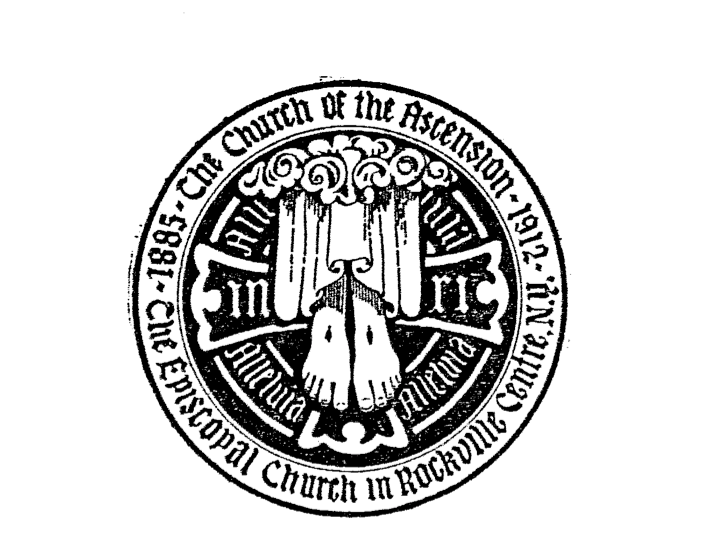
If you look on the front of your service bulletin this evening you will see the seal of The Church of the Ascension. Do not be ashamed if your first response is to laugh at it. Two nail-scarred feet flying up into a cloud. I think you have to admit that there is a certain cartoon-like quality here that just seems a bit absurd, and I know that the first time I saw it I laughed and thought to myself: “really?” “Is that the best they could do to depict the Ascension of our Lord?”


Of course, what I have discovered through time and a little research, is that we are not alone in having a somewhat whimsical representation of the Ascension attached to our church.


Some of you may know that our statue of Our Lady of Walsingham was actually brought back from the shrine in Walsingham, England by a group of Ascension parishioners in 2015. While we were exploring the shrine church, some of us naturally took the time to OLW_56421.jpg.htmlvisit its chapel of the Ascension. Well if you go into the Chapel of the Ascension at Walsingham, what most stands out (and I know I have a picture of this somewhere) is a couple of feet dangling down from the ceiling over the altar. At first glance it looks kind of absurd, and quite funny; like Jesus took off into the sky and got stuck in the ceiling. My first inclination was to laugh and think “I’m not sure that’s what Paul meant when he said “he hath put all things under his feet.” The shrine church in Walsingham isn’t terribly old, but it was built with an eye to ancient tradition, and there is a very old tradition of depicting the Ascension by showing Jesus’s feet going into a cloud. So we are not alone; in fact, we are in good company.
 

From medieval manuscripts, to the chapel in Walsingham, to our seal, to even Salvador Dali, artists throughout the ages have often decided that the best way to depict this mystery in the life of Jesus, his ascension into heaven, is by focusing on his feet. His head and body have passed into the clouds; entered into the realm of the unknown, and what we are left with is the image of his feet: nail-scarred to remind us that this is a body that has overcome the pains of death; very human, real flesh, and yet entering into a mystery that we can neither see nor fully comprehend.


The more that I reflect upon the Ascension, the more I realize that maybe the artists that first depicted it by showing only Jesus’s feet were onto something, because the truth is, we can’t see what Jesus sees now. Our scriptures give us some images of heaven, but the realm that our lord’s body has entered into…we can’t fully know. We can’t get our heads into that cloud. We can’t see it. No, I don’t think that Jesus’s body is floating around on a cloud somewhere, but I do believe that he has taken our human flesh, redeemed it, and united it with God. He has passed through the veil that we long to pass through. He is living out our hope; he is preparing the way for us to live fully in the kingdom of God with him.


If Jesus only came to fix our world, then the Ascension would make no sense, but if he didn’t care intimately about the world we live in, then his incarnation would make no sense. We have both. In Jesus, God takes on our human flesh, living, breathing, and eating and teaching in this world, but in the end he unites us with a reality that is beyond this world. Yes, heaven is our hope; we long to be with Christ wherever he is, that is after all a promise that he made us, but how we live that hope in this world matters. Jesus gave us promises, but he also gave us commandments. We can’t just take one and not the other.


So I think that showing Jesus’s feet to depict the Ascension might just be a brilliant way of teaching us not just about our destiny of being raised up with Christ on the last day, but also how we are supposed to live until that day comes: always holding on and looking to the feet of Jesus. Following in his footsteps.

Let’s think about the scriptures for a minute, and we will recall that feet actually played a pretty important role in Jesus’s ministry and in the ministry of those who followed him and I’m not just talking about the fact that they walked everywhere, although that in itself is significant.


What did John the Baptist say before Jesus was baptized? “I am not worthy to untie the thong of his sandals.” In other words, I am not worthy to even touch his feet.


And what about Martha and Mary of Bethany? You may recall Martha complaining to our lord that her sister Mary wasn’t helping with dinner because she was sitting at his feet, which he went on to say was the better choice. Mary would throw herself at Jesus’s feet again after her brother Lazarus died. She would cling to Jesus’s feet once more as she anointed them before his own death.


At his last supper, our Lord washed his disciples feet and he said to them:

“Do you know what I have done to you? You call me teacher and Lord- and you are right, for that is what I am. So if I, your Lord and teacher have washed your feet, you also ought to wash one another’s feet. For I have set you an example, that you should do as I have done to you.”


Feet aren’t always pretty things, but if we are to follow the example of our Lord then we can’t be afraid of them. We must remember our Lord’s words: “All those who humble themselves will be exalted.” If we hope to share in his exaltation, then we must also share in his humility. We must be prepared to be perpetually at our Lord’s feet like Mary of Bethany: listening to his instruction, imploring his mercy, and expressing our love and devotion.


There is another church that famously depicts our Lord’s feet: on the Mount of Olives, near Bethany at a site that is traditionally claimed as the actual site of our Lord’s Ascension. There has been a chapel there since at least the time of Constantine’s mother, Queen Helena. There preserved in the stone in the center of the little chapel is what is supposed to be Jesus’s right footprint, left upon the stone as he ascended into heaven. Now I’m not here to claim that this impression in the stone is the authentic footprint of Jesus, but I kinda hope it is. It’s absurd and funny, just like our own seal, and just like the feet of Jesus in the chapel in Walsingham. But it would be the perfect artifact of the Ascension, maybe a perfect symbol of our faith, because it doesn’t tell us a whole lot about where Jesus is going; but it is a clear mark of where he has been.

And isn’t that just like our God?

The world doesn’t want you here

Standard

Sermon for May 6th, 2018

Readings:

Note: This morning 4 of our youth were to receive their first communion during mass.


“And this is the victory that conquers the world, our faith.”


Or so says John in his epistle this morning, then he goes on to say:


“Who is it that conquers the world, but the one who believes that Jesus is the Son of God?”


Well, when I think of world conquerors I think of people like Alexander the Great, or Julius Caesar, Ghengis Khan… Napoleon and Hitler certainly gave it a go, but I sure don’t think of myself as one. I believe that Jesus is the Son of God, but I don’t feel compelled to invade Poland, or any other country for that matter…so how am I supposed to be a conqueror?


And what about our faith? Is the Christian faith conquering the world? You could make the argument that there was a time when it seemed like Christianity was bound to take over the world. It certainly was a dominant force in the West for many centuries, but what about now? We all know that church attendance in the West, meaning Western Europe and North America, has been on the decline for many years now. How can we say that our faith conquers the world, when many of us can remember a time when churches were bursting at the seams?; when parishes had their own basketball teams, and great, grand buildings were planned and built? Instead of conquering the world, I know plenty of Christians that feel defeated by it; that feel as if the world has conquered us. Well if all I ever looked out and saw were empty places and empty pews, where people used to sit, then I might feel discouraged too, but that’s not what I see. I see the faces of the people that are here.


Yes, we are a growing parish and it is nice to see new faces all the time, but that’s not what I am talking about. When I come to church, I want to focus on and give thanks for the people that are here, not just lament the folks that aren’t. Even when it seems like only a few are gathered, I think it is important to remember what each one of those people had to overcome to get there. They don’t have to be there. Whether you realize it or not, you actually had to overcome a lot to be here today. You had to overcome or resist a lot of forces in this world to come to church this morning. Now let me be clear here: we do not live in a part of the world where people are being actively persecuted and killed for being a Christian. There are many people who risk their lives to worship the God we worship, and there are people who overcome unimaginable obstacles to serve Christ. I want to honor that; but I also don’t want to minimize the forces that were working against you this morning either. Because the world doesn’t want you to be here.


You all had to overcome some pretty powerful forces in the world to be here, including some pretty powerful drives within yourselves. You had to overcome the desire to stay in bed. You had to overcome the desire to spend a restful, leisurely day off at home (which for many of you I know is a rare treat), but instead you decided to get dressed and come here. You had to overcome the demands and needs of your children, and maybe of your spouse or other family members. You had to overcome traffic, which in Long Island is no minor accomplishment. You had to overcome the temptation to drive directly to the mall or to brunch. Maybe you had to overcome your own doubts about whether this resurrection we proclaim really happened, or doubts about the very existence of God. Maybe you aren’t sure how much of this you believe and you question if your time couldn’t be better spent elsewhere. That is no little thing to overcome. The world didn’t help you to get here this morning. The world doesn’t want you here. Even in a nation where we are free to practice our faith, the world will still put all sorts of obstacles in your way to prevent you from worshipping God. And even after you have managed to overcome all of that, and made it through the doors of the church, you are still going to encounter obstacles or individuals or dare I say sin, that is going to want to make you turn around and head back home. Believe it or not, there are faithful Christians that week after week even endure bad preaching and bad music for the sake of worshipping God. No one in this church obviously, but they are out there I assure you. So if you are in church today, then in some small way at least you have had to overcome the world, because the forces of the world don’t want you here.


Why? What gave you the strength to overcome those worldly desires? What led you to make this place a priority over your other needs and desires? What drove you here today?


Well, the answer, for me at least, is not a 2012 manual Mini Cooper. The answer, I think, is love. There is no other reason for you to be here. The world doesn’t care. Unless you are one of the few people that actually works for this parish I can assure you that your boss isn’t watching. There might have been a time when society expected you to attend church, but not anymore. You know, maybe that’s a good thing, because now the only reason for you to be here is love. But that is also the best reason, because there’s not a force in this world more powerful than love. Love will lead you to do all kinds of crazy things. Love will lead you to risk or even give up your life, for the sake of your beloved. When we talk about finding the courage to overcome obstacles, love’ll do it, and it only takes a little.


Whether you have thought about it or not, I am willing to bet that the driving force behind you being here today is love. Love for Jesus. Love for the God that he both worshipped and revealed to us. Love for the man that was willing to suffer and die rather than deny the truth. Love for the guidance, wisdom and insight revealed to us by God, wisdom that gives our life meaning and purpose and direction. Love for the man who’s resurrection from the dead gives us hope of a world to come, even when our minds can’t completely understand all the mysteries of the world we are in. You might not have thought about all that as you got in your car to come here today, but sometimes love works very quietly that way. And love is so powerful that it only takes a little bit to start changing you, but it grows if you let it. And the more that little seed or spark of love for Jesus grows, the more we are going to want to listen to what he said. And the more we listen to what he said, the more our love for him is going to push us to do what he said. The more we abide in that love of his, the more we will love what he loves until one day we discover ourselves obeying his commandments and not looking at them as burdens or restrictions, but a joyful sign of the love we have for our Lord and Saviour. You know, on the night before Jesus died, he commanded us to remember him whenever we partake of the bread and the cup of the Eucharist. We’re pretty good at that; but on the same night he also commanded us to love one another. That’s a bit harder. But if we can look in our brothers’ and sisters’ faces and see someone that Jesus loved enough to lay down his life for, it’ll get easier.


You know, sometimes I think the church puts the cart before the horse: trying to teach people to obey God before they have taught people to love him. But once you’ve got love, that obedience part takes care of itself. As Paul says, love is not envious or boastful or arrogant. Love doesn’t usually blow its own horn, so you may not realize just how powerful it is, but it can, does and will overcome the world. Look how far it has already gotten you. Look how far it has gotten us. We may not have millions of dollars in the bank, and every seat may not be taken, but if we have love for Jesus then we already have everything that we need. The world doesn’t want you to be here, but your presence here today is living proof, that our faith, and our love, can overcome the world.


Wolves and Hired Hands

Standard

Sermon for April 22nd, 2018

Readings:


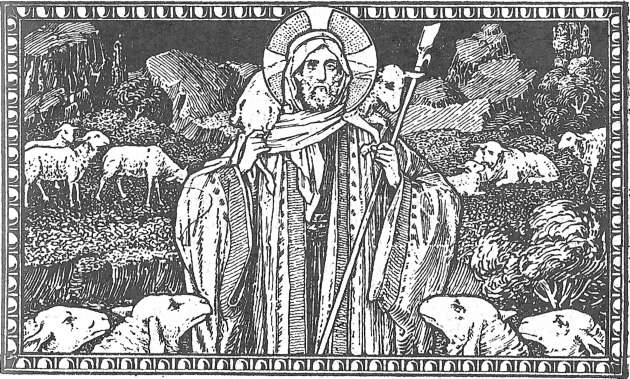
Wolves and Hired hands. If I wanted to, I could stand up here all day and talk about the wolves and the hired hands in the church and in our world, but what would be the point really? I am willing to bet that everyone in here could tell a story about a Foxy Loxy in your life. You all remember Foxy Loxy, who shows up at the end of the old folk tale to shepherd Henny Penny, Goosey Loosey and Turkey Lurkey right to his dinner table. The world has always been filled with characters like that, that are ready to use you and exploit you for their own gain: from politicians to the TV ad man to sadly even the preacher in the pulpit sometimes. The world is filled with examples of bad shepherds and every one of us has experienced a wolf or a hired hand at some point or another. In fact, it would be really easy to think that that is all there is; that there is no one and nothing that can be trusted; that everyone is simply looking out for number 1. It would be easy to think that, if all I did was watch the news or look at Facebook; it would be easy to become depressed, despondent and cynical if all I ever talked about or thought about were the bad shepherds and forgot that there is a Good Shepherd.


Everyone knows a bad shepherd, but not everyone knows the Good Shepherd. We are blessed because we are gathered here on Good Shepherd Sunday (as we are every Sunday) to remember and celebrate the man who said that he was the Good Shepherd. We are blessed because we are led by a man who, unlike wolves and hired hands, was willing to set aside his own self-interests, even to the point of death, so that he could save his sheep and lead them to green pastures and still waters. We are blessed because, although we know we know plenty of bad shepherds, we also know the good shepherd, and we know him to be our God, not everyone can say that.


I think it is easy to take for granted the comfort and peace that comes from being able to put your trust in something or someone greater than yourself. We live in a world where we are taught from an early age not to trust anything or anyone. As we get older, the more wolves, hired hands and bad shepherds we encounter, the less likely we are to trust; so we are left thinking that life is something we have to figure out on our own. it can all seem so hopeless, until at some point you experience or realize that there is a power in this world that can be trusted.


It comes in different ways to each of us. Some of us have an epiphany, or a moment of revelation, when for the first time we can identify a powerful unseen force working in our lives. Some of us witness great miracles. Some witness profound sacrificial love coming from another and wonder: “where could this type of love come from?” “What spirit or power could motivate a person to sacrifice their own needs, maybe even their own lives, for the love of another?” No matter how we experience it, the realization that there is a Good Shepherd and that he cares about you can change the way you look at the world.


I think that may be why the 23rd Psalm is such a beloved piece of scripture: it is an ancient revelation about the nature of God that touches us personally and gives us hope in a world that can sometimes feel very hopeless. I challenge anyone to find a more beautiful expression of faith and hope than you find in those few, simple lines of scripture. It is interesting to note, that if you look in the burial office of our prayer book, there is only one psalm that is printed in both the modern and the King James translation: Psalm 23. Even if you didn’t know any other scripture you probably knew that one. It is a word of comfort when we may feel lost or in danger. It is a reminder that the God we worship is not some distant, foreign being, but has a real personality: the personality of a loving shepherd. In a world full of dark valleys and enemies, we are being directed and guided by a force of kindness and mercy. Don’t take that comfort for granted. There are plenty of people in this world that don’t have it.


When Peter was questioned about how he had healed a man, through what power, he didn’t mince words: it was through the power of Jesus Christ. He didn’t try to take credit for it himself; he didn’t try to persuade the crowd that he had the power in his hands, or that he was the one who was trustworthy or faultless. No, he pointed them to Jesus. Jesus was the one and the only Good Shepherd. Jesus didn’t say that he was A good shepherd; he said that he was THE good shepherd. He didn’t say that he was A way…he said that he was THE way. Peter knew that he wasn’t the Good shepherd, he was probably so aware of his own shortcomings that he didn’t even think of himself as a shepherd at all, but as a leader of the church maybe he could hope to be a good sheepdog: always listening for the master’s commands, working joyfully to protect and guide the flock; that is how Peter saw himself, not as a shepherd in his own right, but as a devoted worker and follower of the one who is. Good priests and pastors know that they are not the shepherd, but hopefully they seek to obey him with a dog-like devotion. But all of us who are blessed to know the Good Shepherd have a ministry to a world filled with hired hands and wolves. We are called to show through our words and through our lives that there is a power in this world that is greater than us and worthy of our trust. There is a power that doesn’t see us as a number, or a commodity or something to be exploited, but as a beloved creature worthy saving, worth dying for. We are called to remind a broken, cynical world that there is reason for hope and there is reason for joy. Despite what our fairy tales may tell us, Foxy Loxy doesn’t win in the end; in a world filled with bad shepherds, there is one good one and we know his name is Jesus.


Sometimes a piece of fish, is not just a piece of fish…

Standard

Sermon for April 15th, 2018

Readings:

It’s November 1948, a U.S. diplomat and his wife land in Le Havre, France on their way to begin a new assignment in Paris. After collecting their luggage and heading down the road, on their way, they stopped for lunch in the city of Rouen. The lunch was a simple meal really; oysters, fish, salad, cheese and coffee. It may not have sounded very exciting, but this was France, and in France, the man explained to his wife, good cooking is part national sport and part high art.


The fish was sole meunière, a very simple dish really: just a fresh fish sautéed in butter with a squeeze of lemon and a sprinkle of parsley. Not overly exotic; but with one bite, the woman realized that her life would forever be changed. She called it an epiphany and a revelation. She had eaten fish plenty of times, but this was the first time that she really experienced fish. One little bite of buttery fish and this woman realized how powerful and important food can be, not just as a fuel for our bodies, but as a thing of beauty and joy that gives life to our souls; she realized that sometimes a piece of fish isn’t just a piece of fish, but the symbol and the taste of something far greater. She would spend the rest of her life trying to help others understand that same thing.


The diplomat’s name was Paul Child, but no doubt you are more familiar with his wife: Julia Child. That little lunch in Rouen would be a moment that would change her life forever. It was a revelation, an epiphany, and now she had a mission to share with the rest of the world that sometimes a piece of fish, wasn’t just a piece of fish, but rather a taste of heaven. When Julia Child was writing her memoirs late in life, she ended by again urging her readers to put time and care into their food, because (and this is how she concludes her life’s story):


“A careful approach will result in a magnificent burst of flavor, a thoroughly satisfying meal, perhaps even a life-changing experience. Such was the case with the sole meunière I ate at La Couronne on my first day in France, in November 1948. It was an epiphany. In all the years since that succulent meal, I have yet to lose the feelings of wonder and excitement that it inspired in me. I can still almost taste it. And thinking back on it now reminds me that the pleasures of the table, and of life, are infinite.”


The pleasures of the table, and of life, are infinite…or at least they can be. That was Julia’s revelation. The joy of that piece of fish remained with her long after she had cleared her plate. It was a joy she held on to her entire life, all the way to the end…and maybe even beyond that.


I don’t know who is exactly listed among the saints in glory. The church has always held up some individuals as being exemplars of the faith, worthy of respect and admiration; there are people that we have good reason to believe stand before the throne of God, but the precise list of names, well that is known to God alone. I’m not here to say that Julia Child was a saint; I don’t really know anything about her faith or her relationship with God (although, I must admit, a few years ago I found a tall votive candle with her picture on it in a kitchen store in Manhattan that says “Saint Julia, pray for us” I keep it in my kitchen next to my collection of cookbooks). What she believed about Jesus I can’t say, but knowingly or unknowingly, I do think that her life’s work was in some sense a ministry of his.


When Jesus was being tempted in the desert, he very famously quoted the book of Deuteronomy saying: “Man does not live by bread alone.” True enough. Jesus would never advocate putting one earthly pleasure or joy in the place of God, the source of all joy. We still get into trouble if we allow a fleshly urge or impulse to reign supreme. But Jesus cared a lot about food. I think he loved food and took great joy in it, and I think he also understood how powerful it is for people to sit down and enjoy good food together. I think he understood that food isn’t just something that provides fuel for our mortal bodies; it is a foretaste of the kingdom; it is an experience of joy and connection. Food doesn’t just connect us to the chef in the kitchen or the person sitting across the table. It connects us to people long dead.


The author Marcel Proust in his novel Remembrance of Things Past, famously took a bite out of a little Madeleine tea cake and was transported back to his childhood. In the Disney movie Ratatoullie, Chef Remy the rat, wins over critic Anton Ego by serving him ratatoullie that reminds him of his mother. I know that anytime I sit down with a baked potato or a serving of corn casserole, the taste brings back to me the joy of sitting and eating with my grandmother. Food is not God, but make no mistake, God uses it. God uses it to give us joy and to bind us together.


Think about Jesus’s life for a minute. His first miracle was at a wedding feast, turning water into wine. Although he was the son of a carpenter, his first followers were all fishermen, men that worked at gathering food. When 5,000 people gathered to hear him preach, he told his disciples to give them something to eat, and then famously multiplied then loaves of bread and the fishes. His parables and stories were full of references to food and feasts, and of course he often told them when he was sitting at the dinner table. His great prayer, the Our Father, includes of course a petition for daily bread. He even cursed a fig tree that didn’t have any fruit on it when he was hungry. This is a man who loves food and understands its power. No doubt that is why he would choose a meal, food, to be the means by which he would convey his life to his followers down through the ages. Communion with God, for Christians, happens primarily through a meal; communion; bread and wine that is really so much more than bread and wine. Food matters a lot to Jesus; it is the primary means by which he unites his followers with each other…and it is how he unites them with God. Food is so much more than just a cure for hunger.


So remembering how important food was to Jesus as he lived and taught during his earthly life, I find the stories of his resurrection appearances fascinating. In this morning’s gospel, a couple disciples had just run back to Jerusalem from Emmaus, a village a few miles away. They had been telling the story of Jesus’s resurrection to a stranger on the road. They invited the stranger to dine with them, and as he broke the bread at the table they suddenly realized that it was Jesus, there dining with them. Then he disappeared. As they are telling this story to the other disciples, Jesus appears again. Assuring them that he is not a vision or a ghost, but flesh and blood. They can touch him if they want. And then what does the resurrected Lord ask them? What do you have to eat?!


What do you have to eat? We are talking about a man that was crucified and died and buried, come back to life, defeated death and that is what he says to his disciples! What’s for supper? So they bring him a piece of fish, which obviously Jesus must be very fond of, and he eats it. Was he just trying to prove a point? Was he actually hungry? Or is there more going on here? Might this be a case where a piece of fish is more than just a piece of fish, but a symbol of pleasure, life and joy that doesn’t get left behind after the resurrection? Joy that isn’t left in the tomb but is a part of the resurrected life? Could it be that Jesus is trying to show us that the next world will not be some cold, spiritual sterile place, filled only with thoughts and ideas, but rather a lively world of redeemed creation with sights, sounds and even tastes that are all familiar to us from this world, but now fully reflect the true and infinite joy that comes from God?

This wouldn’t be the only time that the resurrected Jesus would be seen eating. In the Gospel of John, after the resurrection Jesus actually cooks for his disciples (again fish) and then leaves Peter with the parting words: “Do you love me…then feed me sheep.” Is Jesus only concerned with filling the holes in people’s stomachs or is food about more than that? Maybe Jesus and Julia understand that food, when treated with respect and care, can be a thing of infinite joy and beauty; a powerful agent that draws and binds people together, across continents and across time, and gives them a glimpse, a foretaste, of what heaven is all about. Maybe a piece of fish, is not just a piece of fish.


What the women know…

Standard

Sermon for Easter Sunday 2018

Readings:


Jesus is dead. That is what the three women headed to the tomb knew when they woke up this morning. Jesus their friend, Jesus their teacher, Jesus their Lord. He is dead. They may not be sure of many things, but that they are sure of. They don’t know what is going to happen to his followers now, most of them had already scattered or were in hiding. They don’t know what is going to happen to themselves: they had followed Jesus here from Galilee and had tried to support him in his ministry. Now what? Jesus is dead. They don’t even know how they are going to move the stone so they can anoint his body properly, but they know where is body is and they know it is dead. They were there when it happened. They witnessed it.


Those women didn’t miss Good Friday. When all of the other disciples had run away, afraid to see the man they loved die, afraid, perhaps of their own deaths, these women remained faithful. They were there until the very end.


We are blessed here this morning because we woke up this morning knowing something that these women didn’t know when they woke up. You and I know something that these women don’t know yet. We know how this story ends. We already know that when they get to that tomb it is going to be empty. The stone is going to be rolled away and the body that knew was dead is going to be missing.


Of course they were terrified! Of course they were afraid to say anything! Of course they fled! Who wouldn’t? The one thing they thought they knew for sure when they woke up was the Jesus was dead and now his body is missing and some guy in a white robe is saying something crazy. Risen? What on earth could that mean? That is crazy talk! Dead bodies don’t come back to life! These women knew that. Something terrible must have happened. Maybe someone stole his body. Maybe someone moved it. Risen? What is that crazy man in white talking about? Who could believe such a thing?


We are blessed here this morning, because we know that this story doesn’t end with a missing body. We know that the man in white that met them in the tomb isn’t a lunatic, but an angel. We are blessed because we know that what he said was true. Jesus is risen. In a little while Mary Magdalene will see him herself. Later on he will appear to Peter and the other disciples. They will touch him, they will eat with him again and they will even see him in Galilee, just as the crazy man, no the angel, in white had predicted. Pretty soon the women will overcome their fear and they will tell the story of what they saw. They will tell the other disciples and they will share with the world the word that the man in white said to them in the tomb: risen. He is risen! They knew that he was dead, but pretty soon they will also know that he is alive. They will eventually share that knowledge with anyone that will listen. We are blessed because we already know the good news, but we only know it because a few women had the courage to overcome their fears and share what they knew: Jesus was dead, but now he is alive.


These were courageous women. Don’t be distracted by their moment of fear when their world is turned upside down, because in their hearts these are brave women. They had the courage to watch Jesus die. They hadn’t run away like most of the other disciples; they were there for him. And even after the Sabbath was over, they would continue to be there. They would be faithful to taking care of his body; they didn’t know how they would move the stone, but they would find a way. These were brave women, make no mistake about that.


I find it interesting that Jesus revealed his risen body first to his disciples that could most reliably testify to his death. The women who stood by him on Good Friday were the first to see him on Easter Sunday. It was only those that knew that he was truly dead, that could fully appreciate the power of knowing that he is truly risen.


The good news of Easter is not that Jesus of Nazareth cheated death; it’s not that his memory lives on in those that loved him; it’s not that he is resurrected in the form of a movement or an idea. And the good news of Easter has nothing to do with spring, which lovely though it is, happens every year. Those women knew that; they also knew that dead bodies don’t rise again…and then they saw something that turned everything they thought they knew upside down. The man who they knew to be dead, they now know to be alive again.


Knowing that one thing changes everything. It changes how we look at life and death. It changes how we approach everything else in life that we think is final. It changes how sure we are of everything we think we know about the world around us. It changes how we look at everything that Jesus ever said or did. Knowing that Jesus died and rose again: that changes everything. That proclamation is at the very center of Christianity. Easter Sunday is not the happy ending that is tacked on to the end of Jesus’s story. It is the story. Witnessing that resurrection is what gave all of the disciples the courage to finally face death, because now, they knew, they knew that there was more for them waiting on the other side of it. Jesus had shown them that.


I am often amused and frustrated at people (usually preachers) that think they need to make Jesus relevant. Jesus is and always will be relevant. As long as people die, the man who conquered death through his resurrection is relevant.  As long as people truly die, they need to hear about the man who is truly risen. As long as he is risen he is relevant.


We are blessed because when we woke up this morning, we already knew that he was risen. That’s why we got dressed to come here, but just remember when you go back out those doors, remember those three women headed to the tomb. Remember how they must have felt before they saw that stoned rolled away. Remember their sorrow, their sense of hopelessness and being lost, remember how they must have felt on Good Friday, not knowing the end of the story, not knowing what we are blessed to know. Now remember that there is still a world of people out there that woke up this morning believing that Jesus is dead. See if you can find the courage to share with them how the story really ends.

Suffered under Pontius Pilate

Standard

Sermon for Good Friday 2018

Readings:

Poor, poor Pilate! I almost feel sorry for him. Pilate is stuck in a situation that he doesn’t want to be in. Here he is in the midst of a religious dispute, and it isn’t even his religion. I am sure that when Pilate accepted this position as governor or procurator of Judea that he had grander things in mind. No doubt he wanted to make a name for himself by skillfully ruling this quarrelsome province. Judea has always been a thorn in the side of every empire that ever possessed it. If he can bring it into line and create peace here, then surely the emperor would take greater notice of him; promote him to a better position, perhaps relocate him to a more hospitable part of the world. All he has to do is keep these Judeans in line. He could care less if this man Jesus said something that offended the temple authorities; it’s not his religion, it’s not his God. He doesn’t care about that. He just wants to make sure that this man isn’t plotting some rebellion. If he is a threat to Rome, dispose of him quickly. If not, then stop disturbing his Friday morning. He just wants to keep the peace until he can move on to greener pastures.


He questions this man that is brought before him and doesn’t find any signs of someone about to lead an insurrection. He talks about a kingdom not of this world, but that doesn’t concern Pilate. The kingdom of the emperor is his only concern. Pilate finds no fault in him; he says so. But some rabble-rousers in the crowd are unrelenting. They keep demanding that this Jesus be crucified. If the religious argument doesn’t work with Pilate, then perhaps the political argument will. “If you release this man then you are no friend of the emperor.” Ah…there’s the key. They threaten to disturb the peace that Pilate is trying to maintain. That he can’t have.


So Pilate decides to have the man crucified, and during all this I am almost persuaded to feel sorry for Pilate until he utters the biggest lie in the entire Gospel.


In Matthew’s account of the passion, Pilate stands before the crowd, washes his hands and says: “See I am innocent of this man’s blood!” As Pilate is condemning Jesus to be crucified he has the audacity to say that “I am innocent of this man’s blood.” Pilate would become the first in what would be a very long line of gentiles that would try to shift the blame for Jesus’s death onto the Jews, but he is the one who actually has the power to set Jesus free, he says so. And yet, he doesn’t do it. Make no mistake, he has Jesus’s blood on his hands.


It is there in that moment that Pilate turns from being an almost sympathetic character into a despicable one. Pilate is the most despicable character in this entire scene, because he actually knows the truth, and doesn’t care. He famously asked Jesus: “What is truth?” But we know that he knows the truth, or at least some of it. Pilate knows the Jesus is innocent of the charges against him, and still has him crucified anyways. He knows the truth and it has no affect on his actions; he knows the truth and doesn’t care.


Pilate knows that Jesus is innocent. The scribes and Pharisees and temple priests? Well, they may have lied about what Jesus said about the temple, they may have misunderstood him and many of his teachings, but they do think he is guilty. They do see him as a threat and I think they honestly believe that they are doing the right thing. Even Judas, Jesus’s friend that betrayed him probably thought that he was doing the right thing. We can look back now and see that they were misguided or mistaken, but at least they were sincere. And Judas certainly felt sincere remorse when he realized that he was wrong. But not Pilate.


In Pilate’s greatest moment in the spotlight on history’s stage he knows what is true and has the power to act on it, and chooses not to. He crucifies the truth and because of that his name is forever recorded in history and is spoken daily throughout the world, but not in the way he wanted.


In the creeds of our church, there are only two names mentioned after that of our Lord: one who is honored by bringing him into this world, and one who is condemned for sending him out of it. The Virgin Mary and Pontius Pilate. When we recite the creed we say that our Lord suffered…not by the hands of Annas, not by the hands of Caiaphas, not by the hands of Herod or Judas, and not by the hands of the Jews…no, we say that Our Lord suffered under Pontius Pilate. His name is the one name that we must forever associate with the death of Jesus.


Pilate thought that the truth didn’t matter. What difference does it make really if this guy is guilty or innocent? As long as I can maintain the peace…who will care really? Oh, but Pilate was wrong. The truth does matter. We may occasionally mistake a falsehood for a truth, that is only human. There are truths that we do not yet know, that is understandable. But it is something we should always be in pursuit of, even if we so do imperfectly.


Pilate isn’t condemned because he didn’t know the truth. He isn’t condemned because he made a mistake. He is condemned because he did know the truth and didn’t care. Pilate’s knowledge of the truth and indifference to it is a greater insult to our Lord, than those that called him a blasphemer and genuinely believed it. We may not always know the truth, but we must always care about it.


It is one thing for Pilate to get the truth wrong, but to not care what it is, well that is a different matter. Our creed forever reminds us that it is by Pilate that Jesus suffered.

The Courage to Sing

Standard

Sermon for Maundy Thursday

Readings:

In the story of Our Lord’s passion in the Gospel of Mark, which we heard read on Sunday, there is a curious line which you may easily have missed. After the last supper was concluded and before Jesus goes to pray in the Garden of Gethsemane, the Gospels of Mark and Matthew tell us that he and his disciples sang a hymn. It is the only time in all of our scriptures that we are told that Our Lord sang. Now it is likely that there was a song that was a part of the Passover meal ritual. We don’t know exactly what happened at Passover meals in Jesus’s time, the modern Passover seder developed later, but we do know some of the things that were eaten, we know that there were some rituals with cups of wine, and it is very likely that a portion of the psalms would have been sung as well (remembering, of course, that the psalms were always written to be sung). So it is entirely possible that Jesus would have sung many times in his life, but this is the only time that we are told about it explicitly, at this meal.


Think about the timing here. Jesus knows that he is about to be betrayed. He knows that he is about to be arrested and tortured. He knows that his death is coming quickly, and yet here he is singing. He has predicted that he would die and rise again, but that hasn’t happened yet. That is a matter of faith at this point. What lies ahead for him is suffering and struggle, when he leaves the Passover celebration he is going to his agony in the garden, but still he finds the courage to sing. That’s a pretty remarkable thing if you stop and think about it. How many of us can claim to have such faith in God’s saving power that we would have the courage to sing as we approached death? How many of us can celebrate salvation before we witness it?


When we think of Passover or Our Lord’s Supper, we often think of them as something we do to remember God’s saving work and that is very true. God says to Moses: “This day shall be a day of remembrance for you.” Jesus says to his disciples: “Do this in remembrance of me.” Remembering is important, but think for a moment about that first Passover meal. When did the first Passover meal happen? On the night before the Children of Israel were freed from slavery. Moses and the Israelites were commanded to celebrate their salvation before they witnessed it. That first Passover wasn’t just a feast of thanksgiving, it was an act of faith; faith that God would fulfill his promises.


What about the Eucharist? For Christians the Eucharist, the Holy Thanksgiving, is the ultimate remembrance of Our Lord’s death and resurrection. Paul said that “as often as you eat this bread and drink the cup, you proclaim the Lord’s death until he comes.” But when did the first Eucharist happen? During Our Lord’s last supper, the Passover meal that he was celebrating before his death and resurrection. That feast wasn’t just an act of remembrance; it was also an act of faith, a celebration of what God was about to do. Maybe that is why Jesus could walk away from it singing: the feast called him to look beyond the pain of the present moment, to remember how God had saved his people in the past and to trust that he would do so again.


Maundy Thursday is a rather odd service traditionally. We have just come through Lent and all that time we never sang the Gloria, the song of celebration that is usually at the beginning of mass. We don’t sing it in Advent and Lent, but here in the midst of Holy Week, the night before we remember Our Lord’s death, we do sing it. We not only sing it, we ring bells. The vestments tonight are white, a color that we reserve for great feasts of celebration. You would think that we would wait to wear white until Easter Sunday (I’m sure it would make the altar guild a lot happier), but we don’t. On this night before we remember our Lord’s passion, we feast and we sing and we celebrate, not just what God has done in the past but what he is about to do. We celebrate God’s salvation before we witness it.


That is what every Eucharist is in some sense about, not just giving thanks to God for what he has already done in Christ Jesus, but praising and thanking God for what he is about to do in us. We are here to thank God for mercies that we haven’t seen yet. We are here to celebrate an eternal life that we haven’t entered into yet. We are here to sing about a salvation that is to come. That is an act of faith. That is an act of courage. That is how our Lord spends his last night here on earth. What does Jesus say after supper in tonight’s gospel?: “Now the Son of Man has been glorified, and God has been glorified in him.” His last supper on earth was about giving glory to God, not just for what he did, but for what he was about to do, and one of the ways that God was glorified was in song.


You might wonder what exactly Our Lord was singing as he walked off to dark Gethsemane. Actually, we think we might know. There is a collection of six psalms that are grouped together and were sung on the major Jewish festivals from very ancient times. They form a prayer called Hallel, and they are sung even to this day. They are psalms 113 to 118. I’m sure that it is no accident that Psalm 116 is the psalm assigned for this feast tonight, and sung by our choir:


“What reward shall I give unto the Lord, for all the benefits that he hath done unto me?

I will receive the cup of salvation and call upon the name of the Lord.”


They are words our savior himself may have been singing on his last night. And what would have been his last song that he courageously sang as he walked into the garden to confront the agony of human sinfulness? Listen to the end of that song of prayer, Psalm 118:

1O give thanks to the Lord, for he is good; his steadfast love endures forever!

4Let those who fear the Lord say, “His steadfast love endures forever.”

5Out of my distress I called on the Lord; the Lord answered me and set me in a broad place.

6With the Lord on my side I do not fear. What can mortals do to me?

7The Lord is on my side to help me; I shall look in triumph on those who hate me.

8It is better to take refuge in the Lord than to put confidence in mortals.

9It is better to take refuge in the Lord than to put confidence in princes.

13I was pushed hard, so that I was falling, but the Lord helped me.

14The Lord is my strength and my might; he has become my salvation.

15There are glad songs of victory in the tents of the righteous: “The right hand of the Lord does valiantly;

16the right hand of the Lord is exalted; the right hand of the Lord does valiantly.”

17I shall not die, but I shall live, and recount the deeds of the Lord.

19Open to me the gates of righteousness, that I may enter through them and give thanks to the Lord.

20This is the gate of the Lord; the righteous shall enter through it.

21I thank you that you have answered me and have become my salvation.

22The stone that the builders rejected has become the chief cornerstone.

23This is the Lord’s doing; it is marvelous in our eyes.

24This is the day that the Lord has made; let us rejoice and be glad in it.

26Blessed is the one who comes in the name of the Lord. We bless you from the house of the Lord.

28You are my God, and I will give thanks to you; you are my God, I will extol you.

29O give thanks to the Lord, for he is good, for his steadfast love endures forever.

And with those words, Our Lord leaves the feast and walks into the dark garden. May we, like Moses, feast on God’s promises before we taste his freedom. May we, like Christ, have the courage to sing praises to the Lord, even before we witness his salvation.

Ask the Centurion

Standard

Sermon for Palm Sunday 2018

Readings:


I love Bible movies. I have quite a collection of movies based on stories from the scriptures, and I have no problem watching them over and over again. The movies, and the stories never get old to me. I guess that is because the Bible itself is a part of my daily life. It isn’t something that I turn to now and then looking for advice or justification; it is a world of texts and stories and individuals that I live with. I try to keep myself immersed in scripture, regularly swimming around in it, not because I am a priest, but because I am a person of faith. I want to remain connected to my ancestors in the faith, and scripture is one of the most important ways that we do that.


So I like to see how others interpret or imagine these biblical stories and scenes and since I love movies, what better way than watching an epic (and sometimes junky) bible movie now and then? Of course, Hollywood is in the business of entertainment, not education and certainly not worship, so one must always be careful of confusing a director’s vision or an actor’s performance, with the actual gospel; but even a failure on film can teach us something if it encourages us to look deeper or pay closer attention to what is happening. Even a bad bible movie can be good, if it draws us further into the story.


The best example of that that I can think of comes from the movie “The Greatest Story Ever Told.” Very expensive and very long with a somewhat dull Jesus portrayed by Max Von Sydow, and a cameo role for just about every available actor in Hollywood at the time, but the worst failure of the movie (and in my opinion the number one bible movie fail of all time) comes near the end with Jesus’s death on Calvary. The movie famously employed John Wayne to play the centurion at the foot of the cross. He has one line to deliver: “Surely this man was the son of God” and he totally butchers it. I’m not exactly sure how that line should have been delivered, but I know that’s not it. There is no emotion or life in his words; no sense of the importance of what it is that he is saying. I like John Wayne, but this has to be a low point in his movie career: 4 seconds in a 4 hour movie, only seven words to say and he totally flops. But he does succeed in doing one thing: he makes me want to know more about this character that he is portraying.


The centurion at the foot of the cross is one of the oddest moments in the gospel story. In this whole story that we just heard, the one character that actually recognizes Jesus as the Son of God is this unnamed centurion watching Jesus die. How strange. What was it that this centurion saw or witnessed that led him to this belief? He wasn’t Jewish, so Jewish expectations about who the messiah was, or what he should or shouldn’t do or say would have been irrelevant to him. He wasn’t one of Jesus’s followers, so he hadn’t heard him preach, hadn’t seen any of his miracles. That wasn’t what convinced him. He certainly would have seen crucifixions before, so the brutality of the scene wouldn’t have shocked him. So what was it? Was it the manner in which he accepted his death? Was it the darkness in the sky or the ground shaking beneath his feet? We don’t know. It is a mystery to us, what exactly changed his heart, but here is what we do know:


In Mark’s Gospel, the individual that most profoundly recognizes who Jesus is, is also the individual most responsible for his death. The person who truly recognizes what is happening on the cross, is also the person who most has to take responsibility for it.


From the moment that Jesus predicts his own betrayal, his disciples began saying: “Surely, not I?” I couldn’t be the one responsible for your death. I would never do such a thing.


The religious authorities that tried him and mocked him as a prophet, they think he is deserving of death. They condemn him, but they don’t want to pull the trigger. Let the secular governor, Pilate, take care of that dirty deed.


Pilate has the power to set Jesus free, but he doesn’t. Instead of taking responsibility though, he makes sure that he can blame the crowd…after all, he was just fulfilling the will of the people wasn’t he? Surely Jesus’s blood wasn’t on his hands.


Nobody wants to take responsibility for the death of this man, but the buck has to stop somewhere. The executioner, the man closest to the action, the last person with any authority in our story and the person who might very well have had Jesus’s actual blood on his hands is this lonely centurion. Did he tell himself he was just following orders? Did he try to justify that his actions would save lives by somehow keeping the peace? Who knows what thoughts crossed his heart, but no accusation or blame crossed his lips. The truth is, the centurion cannot deny his role in the death of this man, and that is what makes his statement so much more powerful.


The words “truly this man was God’s son” are being uttered by the man who might very well have held the hammer and the nail. The man who truly recognized who Jesus was, also had to recognize the role that he played in his death. Jesus was judged and condemned for offending God and threatening the peace, but who was the guilty one?


Maybe the centurion walked away from Calvary recognizing a profound truth: humans are always putting God on trial for their own sins. How many times have I heard people say: “where is God with all of the suffering and evil in the world? How can you believe in a God that stands by while innocent people are killed? How can a loving God allow such pain to exist?” I wonder sometimes if all these questions aren’t just another way of saying “I am innocent of this man’s blood.” Maybe we don’t want to acknowledge the role that we all have had to play in making the world as it is. But God has not ignored our suffering, even the suffering brought about by our own hands. He hears the cries of his children, he enters into our human flesh, feels our pain, experiences our fear, and offers us the promise of forgiveness and the promise of a new life. Christianity’s answer to what God is doing about the evil in the world is to point to the cross. In that one symbol we are forced to acknowledge both the consequences of our own actions, and the power of God’s love.


Where is God in a world filled with suffering?

Ask the centurion.

Renewing His Covenant

Standard

Sermon for Sunday, March 18th

Readings:


Last week I began my sermon talking about good King Hezekiah. Well good King Hezekiah was followed by his son, bad King Manasseh. Manasseh went out undoing all of his father’s reforms, and again worshiping foreign Gods. Well bad king Manasseh died and was followed by his son, good King Josiah. Josiah was only eight years old when he came to the throne, but by the time he was eighteen, he had already begun to reform the worship in his kingdom that his father had corrupted. Once again, the pagan altars and shrines were taken down and he set about refurbishing and restoring the temple in Jerusalem.


Josiah told the high priest, a man named Hilkiah, to go into the temple treasury and get money to pay the workers there. I guess some aspects of religious life never change…we are always looking for money to fix God’s house. Well, while Hilkiah was rummaging around in the temple treasury he found a scroll and as he opened it and began to read it he realized: this was God’s law, his Torah, his commandments. This was the story of how he had saved his chosen people and brought them to this land. But it wasn’t being processed around and celebrated. It wasn’t in a grand ark in the temple in a place of dignity and honor. Here it was, in the basement, unused and unread. Hilkiah can’t believe what he is reading. So he takes the book to the king and when King Josiah hears the words of the scroll, he tears his clothes. How far have his people strayed from God’s ways! How could they have forgotten God’s law! How could they have forgotten the story of their own salvation?!


Josiah has the entire community gathered at the temple: all the priests, all the prophets, big people, small people, everyone from the least to the greatest…and he has the book read. And the people hear how God had saved them. They hear how time and time again God made a covenant with their ancestors: Noah, Abraham, Isaac, Jacob and Moses. They hear the commandments and the law that was given to Moses. And they also hear how time and time again, God’s people broke his covenant. But each time God’s people proved to be unfaithful, there was God, ever faithful. Each time the covenant was broken, there was God, ready to renew it. Ready to forgive, ready to start over. It isn’t that the people never had to suffer for their own sinfulness, they did, but God always fulfilled his end of the bargain. He never forsook his people. All of those covenants that he made were everlasting. God would not fail, even if his people did.


Inspired by this proclamation and reclamation of God’s Torah, his law, his divine story, Josiah declares there in front of all of Jerusalem that he and his people would renew this covenant. They would follow God’s commands with all their heart and all their soul. They would observe the Passover, which had not been celebrated in generations. They would tell their children about the greatness of their God and they would teach them to walk in his ways. And when Josiah was finished speaking the people stood and cheered. Yes, they would keep this covenant.


Standing there in the temple courtyard was the High Priest’s, son. He was a young prophet in his own right, just beginning his career of serving God. He wouldn’t forget this scene. Perhaps he was a bit skeptical as young people often are. Perhaps he doubted that all these people gathered here would really keep this covenant. So many times before God’s people would prove faithless…why would this time be any different? And yet…he found Josiah’s words inspiring; he loved the idea that God’s commands should be taken into our heart and soul, and not just be letters on a scroll that can be rolled up and forgotten. Wouldn’t it be great if God’s covenant was always met with the love and enthusiasm that it was on that morning? Well maybe this young man was unsure about God’s people, but he was sure about God. God would be faithful.


The young man’s name was Jeremiah. And he didn’t forget that morning. The image of people rejoicing in the love of God, celebrating his word, committing themselves to his law in heart and soul, that moment must have imprinted itself upon his soul, because it was a vision of hope that he would cling to for the rest of his life.


The prophet Jeremiah can be a tough read for most people. He predicted and witnessed the destruction of Jerusalem and he wrote about it vividly. Most of his prophecy seems dire, negative, painful, because the people of his land did stray from God again; again they broke his covenant, and he knew that they would continue to do so. I can only imagine that he lived with a broken heart; broken by witnessing how far people have strayed from the love of God. And yet…right there in the middle of Jeremiah’s book is this little group of verses, interrupting the death and destruction to shine a light of hope. “The days are surely coming, says the Lord, when I will make a new covenant with the House of Israel and the House of Judah.” Jeremiah said that God would renew his covenant with his people again. Despite their failures, despite their faithlessness, God would be faithful. But if you only read those few happy verses and ignored the difficult ones that come before and after you might miss an important detail: when Jeremiah says that God will make a new covenant with the House of Israel, the House (or the Kingdom) of Israel is already dead. The people of the Northern Kingdom of Israel have already been massacred and hauled off into exile by the Assyrians. When Jeremiah says that God will make a new covenant with the House of Judah, the Southern Kingdom, he is talking about a Kingdom that is about to die at the hands of the Babylonians. So, God is going to make a renewed commitment or a renewed covenant with people that are either dead or dying. Jeremiah says that the death of his people, even death as a result of their own sins, will not cut them off from God forever. God says that the sun and the moon will pass away before he would reject his people. No, God will restore his people, he will reestablish the Kingdom of David, he will forgive their sins. That is a supernatural hope. There is a reason why we say in our creed that God through the Holy Spirit has spoken through the prophets; there is a reason why we honor them: because to be able to see what Jeremiah saw (all of the sin, the pain and the suffering) and still to hold on to even a seed of hope, well that is a profound grace. To stare death in the face and see the potential for rebirth and new life, that power, that message, comes from God.


Try to see in your mind, try to envision this renewed commitment and covenant that Jeremiah is talking about. What would it look like for someone’s heart to be so united to God, so in love with God, that observing God’s commandments are as much a part of their life as breathing in and breathing out? What would it look like for someone to be such a person of prayer that day and night their attention was turned toward God and that those who witnessed that prayer would have no question that God had heard them? What would it look like for someone to be so obedient to God that even their own suffering and death would not turn them away from following after God? What would it look like to be a part of a kingdom that no ruler of this world could destroy? What would it look like for God’s covenant to so shine in your life that even foreigners, people who worship others gods, are drawn to you and want to know your Lord? Have we ever seen someone whose union with God was so strong that even death could not break it? Have we ever seen a glimpse of this new covenant that God has promised us?


Maybe we have…