
Something worth investing in

Standard

Sermon for All Saints’ Sunday, November 5th 2017

Readings:

Revelation 7:9-17
Psalm 34:1-10, 22
1 John 3:1-3
Matthew 5:1-12

Many of you know that I had an unexpected death in the family this week. A dear cousin of mine in Georgia died quietly in her sleep last Sunday night. She had just spent the previous weekend hosting a family reunion at her house and nobody saw this coming, which of course made her death that much more of a surprise and that much more difficult. It was a hard reminder that the life we live in this world is such a fragile and temporary thing. “For we have not here a lasting city..” the Book of Hebrews says and indeed we don’t.


Ever since death entered into the world it has been our constant foe. It lurks around the corner as an ever present threat. We may try to ignore it and act like it doesn’t exist, but we only fool ourselves. We may try to fight it, and we should, health and vitality and life should be important to us, but in the end death still claims us. No amount of eating kale will save us, no gun or weapon, and no machine will keep us alive forever.


In all of human history only one man has ever proven that he has power over death. Only one. In the vision that Saint John had of the redeemed gathered in heaven the multitude are singing this song: “salvation belongs to our God who is seated on the throne and to the Lamb.” And the angels replied: “Amen! Blessing and glory and wisdom and thanksgiving and honor and power and might be to our God forever and ever! Amen.”


Salvation belongs to our God and to the Lamb. Nothing on this earth has the power to save us. Nothing on this earth is eternal. We have not here a lasting city. That does not mean that we are to live only for the moment with no thought to the future. We are not told to be foolish, but rather we are encouraged to always keep an eye on our ultimate future. We are told to recognize that our true salvation belongs to God and to his son, the Lamb, not to the stuff of this world which so preoccupies us.


The whole passage from Hebrews says:


 “For here we have no lasting city, but we are looking for the city that is to come. Through him, then, let us continually offer a sacrifice of praise to God, that is, the fruit of lips that confess his name. Do not neglect to do good and to share what you have, for such sacrifices are pleasing to God.”


We must always keep an eye on the city that is to come. Salvation belongs to God, and through the life, death and resurrection of his Son Jesus Christ, the Lamb, he has offered it to us. We have been given the promise of living in that everlasting city of God. Death, which we could never defeat on our own has been beaten for us. We don’t know exactly what the next life will be like, but we have witnessed the resurrection of our Lord Jesus Christ, (the first fruit) and our faith is that by living in him and sharing in his life, we too will share in that resurrection. We too will be like him.


That faith should affect how we live our lives in this world. It was that faith that led the saints throughout the ages to sacrifice the things of this world so that they could invest their time, energy and treasure in the city that is to come. The saints sacrificed worldly goods, worldly pleasures, they sacrificed lives of fame and fortune, they changed their priorities, they recognized by listening to the words of Christ that the things this world values are very often not the things that God values. The promise of heaven changed how the saints lived in this world. It should change how we live in this world too.


We are called to be saints of God. That doesn’t mean that we all achieve in this life what the church labels as sainthood, but it should be our aspiration. We are called to take our place next to the redeemed in heaven who sing before God’s throne. Our lips should proclaim the salvation that belongs to our God. Because we have been promised entrance into that lasting city, we should have a better appreciation of what has lasting value and we should invest our time and money accordingly.


I will be honest with you, I have lots of regrets in my life: I regret money that I have spent on stuff that never brought me the joy or the satisfaction that was promised; I regret time that I wasted chasing after meaningless things with no lasting value; I will tell you what I don’t regret though: I don’t regret one cent of what I have given to God in thanksgiving for all that he has given me. I don’t regret one second of time that I have ever spent in worship or in prayer. I don’t regret going to one family reunion and I don’t regret holding the hand of one person who was dying. I regret much that I have wasted in this life, but the time and treasure that I have given to God has never been wasted. When I make a sacrifice to God, whether it is money or time, I know that I am investing in something that has true and lasting value.


When my day comes, which it someday surely will, I want to be able to look at my life and see that at some point I decided to start investing my time and my money wisely. At some point I decided to stop chasing after more stuff and chose to put God first. At some point I decided to stop letting television and other people tell me what to value, and instead decided to put my faith and my time doing the things and investing in the things that Christ invested in. That’s what I want to be able to say when my day comes: at some point I recognized that salvation belongs to God and it changed the way I live in this world.


I want to challenge you today to make a decision. I want to encourage you to look at all the stuff in your life. Look at all the people in your life. Think about how you spend your time. Think about how you spend your money. Now ask yourself this question: what has lasting value? What is truly worthy of your time and your money? Invest accordingly.


Yes, we are asking you today to pray about what financial sacrifice God is calling you to make for his kingdom through the work of this church, but I also want to encourage you to pray about how you are spending your time: could you give God ten or fifteen extra minutes a day? Could you take the first ten or fifteen minutes of your day and spend them saying morning prayer? Or maybe take a few minutes before you go to sleep at night to read scripture or say evening prayer or compline? Instead of reading the news on your train ride to work, could you listen to morning prayer or an inspirational message instead? Let me help you with that. That’s why I’m here. It is an investment that you won’t regret.


Who are the saints in heaven? John was told that:

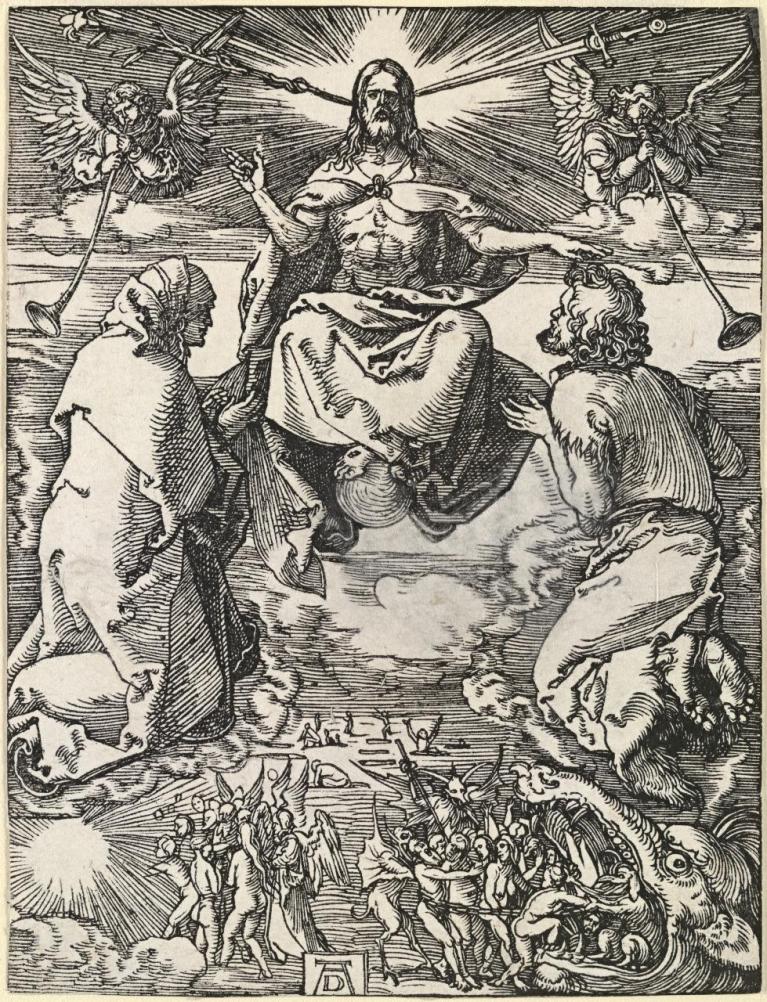
” these are those who have come out of the great ordeal; they have washed their robes and made them white in the blood of the lamb. For this reason they are before the throne of God, and worship him day and night within his temple, and the one who is seated on the throne will shelter them. They will hunger no more, the sun will not strike them, nor any scorching heat, for the lamb at the center of the throne will be their shepherd, and he will guide them to springs of the water of life, and  God will wipe away every tear from their eyes.”


You could say that that is just a vision written down by a man long ago, but I don’t know, to me, especially this week, that sounds like something worth investing in.


 

Food is love that you can taste

Standard

I needed to make a couple cakes for my church fair a few weeks ago. I don’t know why, but for some reason I just knew that it had to be Cousin Joyce’s Strawberry Cake. No other cake recipe would do. It was my Grandma’s favorite cake. Grandma loved all sweets but she loved strawberry the best, so if Joyce was in town visiting you could put money on the fact that at some point a strawberry cake would appear in the kitchen. Joyce was good like that. She knew that food was just love that you could taste. That cake wasn’t just dessert, it was a symbol of the bond between them.


I pulled out Joyce’s recipe and started baking. The smell of that warm cake coming out of the oven took me right back to Grandma’s kitchen. I could almost hear Joyce in her thick South Georgia accent telling stories about all the goin’s on in Cairo. Joyce didn’t just work for the Cairo Messenger, she was the Cairo messenger. She knew current events; she knew about stuff going on with family members that I had neither met nor heard of; but mostly she knew those good old funny stories about real folks and real mishaps that made you laugh till you cried, and when they were over you appreciated life just a little bit more. At least I did. The rest of the world had Cousin Minnie Pearl from Grinders Switch; we had Cousin Joyce from Cairo, Georgia. I think we got the better deal.


Joyce came from a long line of storytellers and she always had a story. I will never forget the story that Joyce loved to tell about Uncle Guyett mixing up his and Aunt Ollie’s false teeth, or the time that Aunt Ollie drove her scooter too close to the catfish pond and dumped herself in. Joyce was the person you always wanted your Yankee friends to sit next to, because you knew that they were only going to pick up about half of what she said, but in the half they understood they would come to know pretty quickly what it means to be a part of this family.

They would learn that we cherish the tales of bygone days and loved ones that have long since gone to glory.

They would learn that we have this uncanny ability to laugh at ourselves and each other, and that our humor often comes out in unexpected ways.

They would learn that we take caring for each other seriously.

They would learn that we are far more sophisticated and wise than people give us credit for being.

They would learn that we get mad, but then eventually get over it.

They would learn that family ties run deep, but friends can be quickly adopted and treated the same as blood.

All this could be learned just by listening to Joyce for a few minutes. If you wanted to give someone a baptism by fire into this family, introduce them to Joyce. She was our ambassador.


I guess it is fitting that in our family cookbook on page one is a picture of Joyce sneaking into my Grandma’s refrigerator right over a story she told about her husband Lewis and his cousins travelling around in the backwoods of North Florida. Feeding people and telling stories with and about family, that is what Joyce was all about; that is how she lived her life, right up until the end. Feeding people, caring for people, looking after people, or telling stories about people. You could be sure that wherever Joyce was, she was doing one of those things.


I know someone else that loved to feed people, care for people and tell stories. Joyce knew him too. He liked to tell a story about a king inviting people who were unworthy to a great banquet. The guests didn’t need to be rich or famous or important, they didn’t even have to be good; they just had to accept the invitation. You didn’t become a part of this king’s family by being born of his blood; you became a part of his family by being washed in the blood of his Son. When the Apostle John had a vision of the heavenly throne in the Book of Revelation he saw that it was surrounded by people who had come through much, but stood robed in white before the throne of God. They had been made clean, not by their own efforts, but by being washed and made new in the blood of the Lamb. They had accepted the invitation to the feast, and there at that throne and at that banquet they hunger no more, they thirst no more and they suffer no more. The Lamb is their shepherd and he guides them to the water of life, and God wipes away every tear from their eyes.


Joyce wasn’t perfect, but she knew the Lord Jesus who was, and is. I know that she tried to model her life after his example, and that even though she was going to stumble and fall, as we all do, she trusted him to pick her back up again. Because that’s what a loving parent does, and that is the God that she worshiped: a loving parent.


Yesterday when I heard that Joyce had unexpectedly died and been taken home to the Lord, I stopped in church to light a candle and say a prayer for her. There on the kneeler in the chapel where I was praying was a prayer book opened to Psalm 84:

How dear to me is your dwelling, O LORD of hosts! *
My soul has a desire and longing for the courts of the LORD;
my heart and my flesh rejoice in the living God.

The sparrow has found her a house
and the swallow a nest where she may lay her young; *
by the side of your altars, O LORD of hosts,
my King and my God.

Happy are they who dwell in your house! *
they will always be praising you.

Happy are the people whose strength is in you! *
whose hearts are set on the pilgrims’ way.

Those who go through the desolate valley will find it a place of springs, *
for the early rains have covered it with pools of water.

They will climb from height to height, *
and the God of gods will reveal himself in Zion.

LORD God of hosts, hear my prayer; *
hearken, O God of Jacob.

Behold our defender, O God; *
and look upon the face of your Anointed.

For one day in your courts is better than a thousand in my own room, *
and to stand at the threshold of the house of my God
than to dwell in the tents of the wicked.

For the LORD God is both sun and shield; *
he will give grace and glory;

No good thing will the LORD withhold *
from those who walk with integrity.

O LORD of hosts, *
happy are they who put their trust in you!


It was as if Joyce was pointing me to that Psalm herself. Maybe she was. The sparrow has found her a house, and I have no doubt she is happy there.


cover_001

This cookbook that Joyce was responsible for getting printed is one of my treasured possessions, and not just because it contains the recipe for her strawberry cake. When I look through these pages I see the names and faces of so many people that are waiting at that feast on the other side; including some we never dreamed we would lose so soon and so suddenly. I open this book and all of a sudden standing next to me is Uncle Sandy making his beef stew, Grandma making her cornbread dressing, Aunt Bebe stirring up a squash casserole, Butch throwing a red cockaded woodpecker into his ham hock and lima beans, Ollie frying hushpuppies. There are so many others gathered around the kitchen table like saints around God’s throne: Ralph, Dale, Aunt Ella Ruth, Gene, Jerry, Danielle, Uncle Guyett and now…Joyce. More than anyone else, Joyce is all over this book. Her recipes fill its pages, just like her food and her love filled our lives. I am heartbroken like the rest of the family, but I have a strong faith that I will be at a family reunion with her again, and I’m willing to bet that there’s gonna be cake there too.


One thing I always knew, was that if Joyce was around there was gonna be food and there was gonna be laughing and if that doesn’t sound like heaven I don’t know what does. I love you cousin. Save me some cake.


A Royal Invitation

Standard

Sermon for Sunday, October 15th, 2017

Readings:

Isaiah 25:1-9
Psalm 23
Philippians 4:1-9
Matthew 22:1-14

I love it whenever we get a scripture that describes God’s kingdom as a banquet and this morning we are doubly blessed because we get two: both Isaiah and Matthew talk about God preparing a feast or compare the Kingdom of heaven to a banquet. As I am always thinking about my next meal, I find the idea of heaven as some sort of eternal buffet very gratifying.


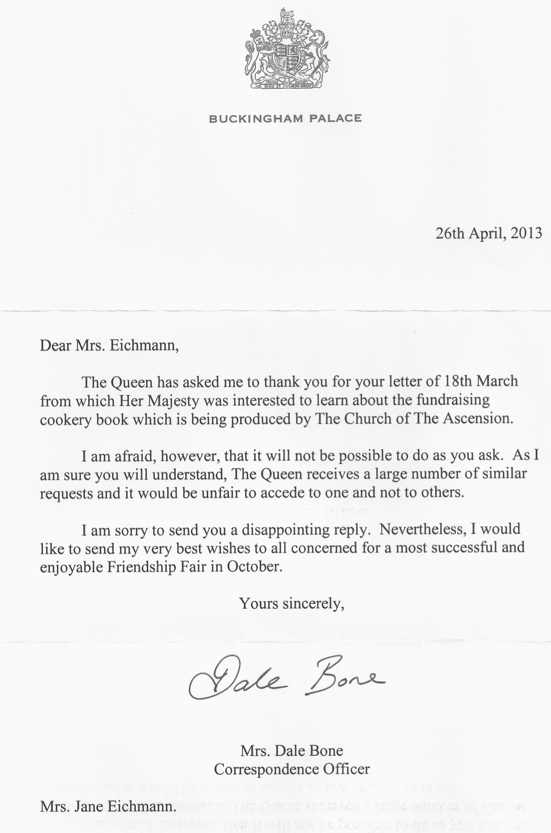
It was a few Friendship Fairs ago that a couple of our industrious parishioners decided to edit and publish a new parish cookbook. Incidentally, we still have plenty of copies, so if you are new to our parish come and see me after mass and I would be glad to give you one as a gift. As a part of this project, one of our editors decided to send a request for recipes to Queen Elizabeth at Buckingham Palace. Now of course, nobody here imagines that her majesty spends much time in the kitchen, but it seemed like a clever idea and who knows, maybe one of the palace chefs would take pity on us and send us a recipe. This was during the height of the Downton Abbey series, and Highclere Castle came through with a couple recipes, so you never know. Well Jane, who was responsible for this idea did get a response from one of the Queen’s secretaries very politely declining to submit any recipes. Now you must understand that in addition to being a foodie I am something of a rabid monarchist. Yes, I am an American citizen, but I happen to think that constitutional monarchy is a perfectly good form of government and I am a huge fan of the royal family and her majesty. I am the sort of person who would stand on the street corner for hours just to see her drive by (I Haven’t had the opportunity to do it but I would). So I was endlessly amused by the fact that we actually got a response from the palace. It didn’t matter that it was a stock response from a volunteer secretary, what mattered was that it came from the palace on official letterhead. If you turn to the front of the cookbook, you will find there a scan of said letter, forever memorialized in the pages of our book.


Now I just want to point out here the subtle craziness of this: this is a REJECTION LETTER. This is a rejection letter from the palace and I still found it so meaningful that I thought it needed to be bound and included in the book. This isn’t an invitation to tea. It isn’t a recipe for the Queen’s favorite scones. It’s a rejection letter from a secretary, a very sweet rejection letter, but a rejection letter nonetheless. Here it is though, right in the front of our cookbook, right where I think it belongs. That is how I respond to a rejection from the palace…can you imagine how I would respond to an invitation?


Let me tell you…it’s probably never going to happen (I’m not that crazy), but if it ever did, if for some reason the Queen decided that she needed a few more priests at her parties to balance out all the politicians and celebrities, and if I were to come home one day and discover a letter from the Lord Chamberlain’s office slipped into my letterbox inviting me to any event whatsoever at the palace, I can promise you…I’m gonna go.


There isn’t much in this world that would keep me from going. I don’t care if I have to take a redeye flight and turn around and come right back. I’m going to go. I’d probably even buy a new suit, just so that I looked my best. It wouldn’t matter if I was sick, tired, busy, whatever…I would find a way, because it would be important to me. What an honor it would be. What a privilege it would be. How many people get invited to be the guest at a royal banquet? What would make it especially meaningful is that there is no reason for me to be invited: I’m not a celebrity, I’m not a politician, I haven’t made a significant contribution to British culture, I’m not even a citizen. I’m just your average admirer from across the pond. And maybe you all think I’m a bit eccentric, and maybe I am, but if I were a betting man, I’d be willing to put money on the fact that if any of you received a similar invitation, you’d do the same thing.


I don’t care what your citizenship is, what your politics are, or what you think about monarchy, I’m willing to bet that if you got an invitation to the Queen’s house for dinner, you’d take it seriously. If there was any way you could go, you would go. Who wouldn’t? And I’m also willing to bet that you would take it so seriously that when you showed up for dinner you’d look pretty sharp. Maybe you wouldn’t buy a new suit, but you’d probably wear the best one you had, because this would be a special occasion. Someone really important was taking notice of you. You would take the invitation seriously. I think that’s pretty much human nature. I may be a monarchist, but I have a hard time imagining that anyone would refuse the Queen’s invitation.


That is what makes the parable in this morning’s gospel such a ridiculous story. A king gives a wedding banquet for his son. He sends out invitations, but the guests don’t come. He sends out messengers to the guests to invite them again, and this time they kill the messengers. Finally, he tells his servants to just invite anyone that will come, and even then someone has such little respect for the invitation that he can’t be bothered to change out of his street clothes. This is a ridiculous story. Jesus knows that it is a ridiculous story. His listeners understand that this is a ridiculous story, because for the most part, that’s not how people act toward kings and queens. If an invitation comes from a king or queen you take it seriously. You don’t ignore it, you certainly don’t kill the messenger, and when you show up you show the proper respect to your host by trying to be and look the best version of yourself that you can be. Jesus knows that the story is ridiculous and unbelievable and that I think is part of his point. We know that we wouldn’t treat an earthly king this way, but how do we treat the King of Heaven?


People get squirmy with this Gospel story because they don’t like the part about the guy getting thrown out in the end for wearing the wrong thing. But I don’t think the point of this story is the behavior of the king at all. Jesus isn’t trying to say that God is like this King; what he’s trying to say is that we are like those guests. His main point isn’t how God acts towards us; it’s how we act toward God. He tells this absurd story so that we will recognize the dramatic difference between how we treat God and how we treat the leaders of this world. We treat the heavenly King is ways that we would never dream of treating an earthly king. We ignore his invitation, we kill his messengers, and even if we openly accept his invitation, still we often prove ourselves unwilling to take it seriously, unwilling to change, literally or figuratively. We don’t take God and God’s invitation nearly as seriously as we would take the invitation from any earthly king or queen. That, I think, is Jesus’s main point.


In Jesus we know God to be a God of forgiveness and grace. We know God to be merciful. I don’t think that God is tossing people into the outer darkness for not being dressed appropriately. We know that the heavenly king is infinitely better, more just and more merciful than any earthly king. An earthly king or queen will reject you…here’s proof. Earthly rulers are fallible. They are human. They don’t share their recipes. Although I am a monarchist, I can understand why some people aren’t because if you look at history there have been plenty of inept and sometimes even wicked kings and queens. But we know that the King of Kings, the heavenly king is so much better. So if we are willing to take an invitation from an earthly king very seriously, shouldn’t we take an invitation from a heavenly king that much more seriously?


We all have been invited to the most amazing banquet. We have been invited to share not just in God’s table here, at this church, but we have been invited to partake of the heavenly banquet. I know that Holy Communion may not seem like a real meal. Just a small piece of bread and a tiny sip of wine, but consider for a minute what is truly happening here. The God and King of all creation has invited us poor sinners to a banquet. We don’t deserve to be here. There is no reason that God should welcome us here, but he does. We come together with other Christians, not just in this place, but across the world and across time. Those we have loved and see no longer, they are here. The saints of God throughout the ages, they are here. This is a foretaste of the eternal heavenly banquet that God, the King of Heaven, has invited us to, and the food that he offers us is his own life. No earthly king or queen could do that. The invitation to communion with God is the most important invitation we will ever receive. It is a royal invitation, so shouldn’t we treat it that way?


Let’s face it, even those of us who accept God’s invitation, often don’t do it with the true joy and enthusiasm that it deserves. Maybe we are willing to show up and eat, but do we care enough to change, to be better, not to be phony, but to be the best version of ourselves that we can be? Are we coming to this feast reluctantly on our way to someplace else or is this where we really want to be? Are we excited to accept this invitation? Are we really taking the King of Heaven’s invitation seriously?


The truth is, I’m probably never going to get an invitation to dinner with the Queen. She’s a very important and busy person, and it’s no surprise that I’m not at the top of her guest list. Don’t get me wrong I still wanna go and I’d be thrilled to get one. But it’s ok. I have to remember that I have already received a royal invitation. A far greater and more important king has taken notice of me and invited me to dine at his table. Can I take his invitation just as seriously?


The fruit we were meant to cultivate

Standard

Sermon for October 8, 2017

Readings:

Isaiah 5:1-7
Psalm 80:7-14
Philippians 3:4b-14
Matthew 21:33-46

Therefore I tell you, the Kingdom of God will be taken away from you and given to a people that produces the fruits of the kingdom


He was known as the meanest, angriest man on his block. A nasty old cuss, he had a drinking problem, a sick wife, and he had made an enemy out of everyone in the neighborhood. He would chase the neighborhood kids out of his yard until one day he got so angry, he grabbed his shotgun, ran after the kid playing basketball across the street and fired right into his back. Then he got into his car and headed to Kmart and started shooting people in the parking lot randomly. Then he headed across the street to the Winn-Dixie, killed two rookie police officers, both in their 20s, then he went into the store. Those customers that couldn’t escape by the back door, or that didn’t hide in the freezer were held hostage. The siege lasted for 7 ½ hours, until under a fog of tear gas the police were able to creep into the store aisle by aisle until they captured him. He had killed 6 people and wounded 14 others. The man’s name was William Cruz and the town was Palm Bay, Florida, where I grew up. And although you may not know or remember his name or the incident, at the time it was international news. That was in 1987 when I was 8 years old. It is the first time I remember encountering that kind of random and senseless killing and violence. At the time we were shocked that that sort of thing could happen in our own town, and we couldn’t imagine something like that happening again. Who would have imagined that 30 years later, such acts would become almost common and the death toll rather minor?


I spent a fair amount of time being angry this week. I was angry on Monday morning when I heard the news of yet another act of senseless violence in our country. I was angry that this disgusting act was perpetrated not by some foreign power or terrorist cell, but by one of our own. Most of all I was angry that I wasn’t in the least bit surprised. Who wouldn’t be angry that such a thing keeps happening in our land with no solution in sight? A lot of people are angry. If you watch the news, read the paper or turn on your computers, you will find almost unlimited amounts of anger. The pro-gun lobby is angry at the anti-gun lobby. Democrats are angry at Republicans. It would be very easy for me to get caught up in one side of that anger. I could deploy facts and figures. I could march and protest and believe me, I have done it. Those things do serve a purpose. But what happens when anger becomes your go-to response for everything that challenges you? I was in a meeting this week with a very angry person. They weren’t angry with me, they weren’t angry about Las Vegas, the person was upset about something else entirely, but the anger in this person was palpable. The person just seemed angry at the world. I thought to myself: “gosh, it must be terrible to be that mad all the time. What must this person’s life be like if lurking around every corner is another opportunity to be outraged?”


I began to realize that maybe anger is the real problem here. Don’t get me wrong I think our country has some serious issues that we need to address. There are times when I think we should be outraged, but I don’t know about you, but I don’t have the emotional energy to be mad all the time at everything that is going on in the world that I don’t like. I am tired of society telling me that I need to be constantly offended and constantly mad all the time. I am not going to invest what little energy I have left at the end of the day into cultivating anger. I want us to be able to actually take some corrective action on some of the serious problems in our society, but we will never be able to address them or do anything constructive about them until we get over our obsession, our addiction to being angry and outraged all the time. This is the state of our country right now: we are addicted to being outraged. We will look for it. We will parse everything someone says to see if they might have possibly made a misstatement and then we will pounce on it, drag that person down, destroy them in any way that we can and then go on, proud of ourselves at doing a righteous deed. We are angry and we are proud of our anger because it makes us feel righteous. We don’t know how to find that righteous feeling anywhere else so we find it in anger. As long as we can keep feeling angry at someone or something, we can keep feeling righteous about ourselves and our way of life. We don’t have to really look at ourselves as long as we can stay focused on how wrong someone else is.


So you are either for me or against me. There is no room for compromise. And therefore we make no progress on creating a healthier and better society for all of us. There is just more division.  Everything is black and white; right or wrong. God forbid people with different viewpoints should actually talk to each other or listen to each other. God forbid we should actually move people by winning their hearts and minds rather than just overpowering them. No, we would rather encase ourselves in our anger. That feels more comfortable. That makes us feel righteous. The addiction has gotten worse in recent years, but don’t go looking for one person, or one party to blame, and it’s not the internet’s fault either. The anger in our country has been growing for decades and our response to the problem has just been to create more anger. If all our anger is producing is more anger, then maybe we might try sowing something else for a change. Now I’m not saying that it isn’t right to be angry sometimes, of course it is, but if that is all you ever are, then I think there is a serious problem there. Jesus felt anger too, but even in his most desperate hour he didn’t live in it. He didn’t feed it. Instead he showed us a better way.


God has given us so much. Christ has promised us so much. We have so much to be thankful for. God has given us so much, and given it to us freely. We didn’t have to earn it. But, that does not mean that God doesn’t expect our lives to produce fruit. Just because we have the promise of forgiveness and eternal salvation in Jesus does not mean that God no longer cares what kind of fruit our lives produce. Quite the contrary, because we have been given so much in Jesus, we should care so much more about how our lives are a testimony to God’s love. That’s why Paul said that he regarded “everything as loss because of the surpassing value of knowing Christ Jesus my Lord. For his sake I have suffered the loss of all things, and I regard them as rubbish, in order that I may gain Christ and be found in him, not having a righteousness of my own that comes from the law, but one that comes through faith in Christ, the righteousness from God based on faith.”


For Paul, to be in Christ means that he no longer has to be concerned about his own righteousness. He doesn’t have to feel righteous all the time. His righteousness comes from Christ. He doesn’t have to find his righteousness in anger; his righteousness comes from God. That doesn’t mean that Paul didn’t get angry; he did, but Paul also recognized that anger was a product of the flesh; something that when left unrestrained will lead you away from the true righteousness that comes from God. In the Letter to the Galatians, what one might call Paul’s angriest letter, he says to his readers:


Live by the Spirit, I say, and do not gratify the desires of the flesh. For what the flesh desires is opposed to the Spirit, and what the Spirit desires is opposed to the flesh…Now the works of the flesh are obvious: fornication, impurity, licentiousness, idolatry, sorcery, enmities, strife, jealousy, anger, quarrels, dissentions, factions, envy, drunkenness, carousing and things like these.


I know plenty of Christians that latch on to that word fornication and they get so excited that their minds must tune out and miss all those other works of the flesh, maybe they will tune back in for drunkenness and carousing, but they definitely miss anger.


Paul goes on to list the fruit of the Spirit. Now if you grew up Roman Catholic you might have been made to memorize the Twelve Fruits of the Holy Spirit. Well Paul only lists nine. How y’all ended up with three extra is beyond me. Paul says:


By contrast, the fruit of the Spirit is love, joy, peace, patience, kindness, generosity, faithfulness, gentleness, and self-control.


That is the fruit of the kingdom. That is the fruit we are meant to cultivate. That is the fruit Our Lord is looking for. Those are the grapes he has sown in his vineyard, and those are the attributes that he expects to see in those that bear his name. If we are supposed to be working for the kingdom, then we need to be paying attention to the fruit our lives produce. Memorize those fruits of the Spirit: love, joy, peace, patience, kindness, generosity, faithfulness, gentleness and self-control. Do you see them when you look at your life, when you look in the mirror? Do other people see them in you? Are we seeking to cultivate those fruits in our children? Are we electing people that demonstrate those fruits in their lives? Can we use those powers to listen to people with whom we disagree and maybe find some common ground? Can we plant and nurture love, joy, peace, patience, kindness, generosity, faithfulness, gentleness and self-control and make this vineyard we live in a little more like the one God planted with choice vines in Isaiah 5, and a little less like the one that we have created with our wild grapes?


There is a John Mayer song that I love called Belief. It begins with the line:


Is there anyone who ever remembers changing their mind from the paint on a sign?

Is there anyone who really recalls ever breaking rank at all for something someone yelled real loud one time?


I love those lines. And as I have watched our country descend into this constant state of anger and madness, I am aware that it’s natural to get angry when someone does something that hurts or offends you, or says something that you disagree with, but living in that anger doesn’t fix anything. We need to make our country a safer place for everyone, but we aren’t going to do it with anger. Anger is what has led to these horrendous acts of violence. There are moments when we should genuinely be outraged, but we can’t live in that space all the time. We can’t cultivate that wild grape.


One of the things that makes our parish so unique and strong is that we are mixed: different politics, different races, different sexual orientations. How is it that we are able to come together week after week in this community? It isn’t always easy. There are moments of anger I assure you, there are wild grapes, but we get past it. Love is so much stronger. If we Christians really want to make our country, our society and our world a better place we will do it by winning people’s hearts through love, not by shouting angry slogans. The fruits of the Spirit are love, joy, peace, patience, kindness, generosity, faithfulness, gentleness and self-control. I don’t find anger in that list. I guess it must be a part of the problem. Maybe anger isn’t a fruit we were meant to cultivate.

Words of Christ in Red

Standard

Sermon for October 1st, 2017

Readings:

Ezekiel 18:1-4,25-32
Psalm 25:1-8
Philippians 2:1-13
Matthew 21:23-32

As you can probably imagine, I have quite a few bibles in my collection. Different translations, different commentaries; some have been gifts, some have been ones that I have purchased. This one is actually one of my favorites: it is a King James Version that has a verse by verse commentary. I particularly love the fact that it has the little tabs that help you find the book in the bible you are looking for. This one also happens to be one of those bibles that prints the words of Christ in red. Are you familiar with those? They were pretty popular among Protestants, especially in the King James Version bibles. Any words that are directly spoken by Jesus are printed in red ink. I actually find it rather useful sometimes. It really drives home the importance of who is speaking, and the importance of those words in a very visual way. It’s like making you stand for the gospel reading in mass: you are aware that these words have special significance.


At my ordination I, like every priest in our church, had to affirm that I believe both the Old and New Testaments to be the word of God and to contain all things necessary for salvation. It’s an affirmation that I still maintain today. It’s all inspired. God can and does speak to you in even some of the most difficult books and passages. But I actually like having the words of Christ in red, because it is a recognition of the supreme authority with which he speaks. It’s not that Jesus sets out to negate other parts of the bible (he repeatedly claims that that is not his intention); it’s that he, through his life and teaching, gives us a lens through which we can properly view everything else. He clarifies; he interprets; he demonstrates. For Christians he is the supreme interpreter of the law.


I know that when many people think of Jesus they think of his teachings. They think of him as a teacher and they think of his primary contribution to faith as the words that he said, but if you actually flip through one of these red letter bibles and look through the New Testament what you will find is that there is a whole lot of black. His words may be printed in red, but his actions they are printed in black and they form the bulk of his ministry that we have recorded. The world thinks of Jesus as a man of profound words, but what you discover as you dig deeper is that actions mean so much more to Jesus than just words. Words are important, but actions are much more so. Words are cheap, but actions take real effort. That is, after all part of what he is getting at in the gospel this morning isn’t it? The son who actually worked in the vineyard, his actions meant more than the words of the son who said he would go and didn’t. The son who worked in the vineyard did the will of the father, not the one who just said he would. Words are important, but actions are much more so.


When we talk about the Word of God, we naturally think about the Bible and what God is saying, but the truth is much of our scripture is focused on what God is doing or on what God has done. The words of God are important, but the actions of God are much more so. As far as we have been able to track, the oldest parts of the New Testament, those that were written down first, were Paul’s letters. In Paul’s time there was plenty of preaching and telling the stories and teachings of Jesus, but Paul was writing before the gospels were completed, before there was a written record of everything Jesus said. And if you look in a red letter bible to Paul’s letters, one thing that you will quickly discover is that there isn’t much red. Paul wasn’t terribly concerned with sharing everything that Jesus said in his teaching, in his words. Paul is far more concerned that those hearing and reading his letters understand who Jesus was and what he did in the world. Who Christ was and what he accomplished in his death and resurrection and how we therefore ought to respond to Christ, that is Paul’s concern. He would leave it to others to record the teachings of Jesus. He wants us to know what the actions of Jesus reveal to us about the God that he is one with. In Paul’s letter to the Phillipians this morning we get a little passage that we think might have been an early Christian hymn. Just like I am sometimes fond of quoting hymns, Paul was probably quoting a hymn when he wrote:


 Let the same mind be in you that was in Christ Jesus,

who, though he was in the form of God,
did not regard equality with God
as something to be exploited,

but emptied himself,
taking the form of a slave,
being born in human likeness.

And being found in human form,
he humbled himself
and became obedient to the point of death–
even death on a cross.

Therefore God also highly exalted him
and gave him the name
that is above every name,

so that at the name of Jesus
every knee should bend,
in heaven and on earth and under the earth,

and every tongue should confess
that Jesus Christ is Lord,
to the glory of God the Father.


It’s interesting to me that this ancient text doesn’t have any words of Jesus in it. There is no red ink here. This hymn is all about celebrating who Jesus is and what he did in the world. It doesn’t say anything about what he taught. It is his identity, his authority as one in the form of God and his actions, his willingness to suffer and die that were of greater importance to those early Christians and to Paul, than trying to remember everything he actually said and taught. Proclaiming his authority as the Son of God and proclaiming his actions in his death and resurrection, those came first; recording his teachings, that came later.


The world has known plenty of great teachers. There have been charismatic sages and prophets preaching and teaching since the beginning of time. What makes this one special? What authority does he have? It’s an important question. It’s a dangerous question. The temple priests were asking themselves that very same question when they saw Jesus teaching: who is this man, and where does he get his power from? They learned very quickly what a dangerous question that is. They asked him by what authority he was teaching and he agreed to answer only if they answered a question of his: by what authority did John the Baptist minister? Was it his own, or did it come from God?


As the priests tried to think of a response, they realized what a dangerous question they had been asking: to recognize John’s authority would be to recognize that they needed to respond to him. They weren’t ready to do that. They couldn’t come up with an answer that didn’t threaten to change their lives. So they couldn’t answer Jesus. “We don’t know” they said. So he doesn’t answer their question. The question doesn’t die though. I think it echoes throughout the ages. It gets asked again and again. Sooner or later it is a question we all have to answer: who is this man? By what authority does he speak? Ultimately I think we all face the same dilemma as those temple priests: to recognize a prophet’s authority, means that we have to be prepared to respond to what he says. Are we prepared to do that? I say it’s a dangerous question because answering it can dramatically change your life.


Two weeks ago I asked you all two important questions:


  1. Why Jesus? Why are you a Christian? What is it about Jesus or his story that makes you want to be a follower of his?
  2. Why Ascension? Why do you choose to be a follower of Jesus in this place? What is it about this community that draws you to worship Christ here week after week?


Some of you have already responded, and thank you. Some of you have commented to me on how easy the second question is to answer and how difficult the first one is. I’m not surprised. Of course the second question is easy! If someone has decided that going to church is important to them; if being a part of a Christian community is important to their life, who could blame them for wanting to do that here? We have a great choir, a great Sunday school, friendly people…we’ve got a lot to offer. It’s easy to see why someone would want to worship here and frankly I don’t think it is all that hard to convince people to choose this church. But I don’t think most people today are struggling with the question of should I go to this church or to that church. I think people want to know why they should go to church at all. That is a harder question to answer. That is why I asked you the first question. Why do you follow Jesus? What authority does he have in your life? Just be aware that it is a dangerous question…it always has been. Recognizing his authority means actually allowing his words to change you and call you to a different life.


Yes, what Jesus taught is critically important. His teachings have the power to change your life, otherwise I wouldn’t be here. But his words mean so much more to be, because I understand who he is. It is what he does that reveals his true identity and the authority that lies behind his words. Here, I think, is the great irony of the red letter bible: you can’t just jump to the words in red; if you truly want to understand the power of those words in red, you need to first understand what the words in black have to say about the man who is speaking.

More Than We Deserve

Standard

Sermon for September 24th, 2017

Readings:

Jonah 3:10-4:11
Psalm 145:1-8
Philippians 1:21-30
Matthew 20:1-16

The city of Ninevah did not get what it deserved. The bible doesn’t tell us how it was wicked, we don’t know if there was a particular sin they were all guilty of, or if it was just generally a sinful city. All we know is that they weren’t living the way God had called them to live.


It was Jonah’s job to point this out to them. Jonah had been hired or called by God to go to Ninevah and point out to them, not only the fact that they weren’t living right, but also the reality that this couldn’t go on much longer. God was coming and he was going to be judging the actions of the people of Ninevah. The end was nigh and it wasn’t looking too pretty.


Jonah was ready to see these wicked people get what they deserved. He had his viewing stand all picked out: just outside the city on a hill. A nice spot where he could sit and take pleasure in seeing God’s justice pour through Ninevah, cleansing it like a might river. But something happened.


As Jonah was preaching in the town, the people took what he said to heart. They believed him; they repented and fasted and begged God for mercy. They listened to what Jonah said and they changed their ways. My Lord, that is every preacher’s dream. They all got the message. That almost never happens. At least, Jonah certainly didn’t expect it to happen. And because they are able to acknowledge their sin and repent, God shows them mercy. He changes his mind and decides not to destroy the city after all.


Now you might think that Jonah would be proud of a job well done, but no. He is angry. He is angry at God. He’s mad because he wants to see people get what they deserve. He had just warned all those people that they were going to get what they deserved and now, they weren’t getting it. He felt like a fool. He felt cheated. Why should he have done all that work if God was just gonna forgive these people? He could have just stayed at home. He was hoping that he might get to see a few good explosions. Some action. Fire and brimstone. It was hard work, but at least he was gonna get to see some wicked people get what they deserved. And now…nothing. It is just burning Jonah up that God could treat him so unfairly. So he sits there, stewing. God has a bush grow up around Jonah and it gives him more shade and comfort, but inside he is burning up. Then the bush dies and now Jonah is burning on the inside and the outside. And he says to God: “why don’t you just kill me?” You aren’t going to give Ninevah what they deserve and I have a right to be angry because I’m not getting what I deserve as your servant. God says to Jonah: “You are upset about losing the bush, but you didn’t work for it.” In other words, you Jonah did not earn that grace, I gave it to you freely. You did not deserve to sit in the shade. You Jonah are mad because Ninevah is not getting what it deserved, but you are not getting what you deserved either. Stew about that for a while.


The scripture passage ends, but if I were Jonah I would probably go back and remember that I wasn’t always a willing laborer in God’s vineyard. Jonah tried to run away from what God was calling him to do. Jonah didn’t want to work for God. God said go to Ninevah, Jonah said nope, I think I’m gonna head in this direction. Eventually he got himself into some trouble. He tried to sail away, but when the seas got rough, he got thrown overboard. If that wasn’t bad enough he got swallowed by a big fish. He should be dead. He doesn’t deserve to be alive; he is only alive through the grace of God.


You can get mad at God for not giving people what they deserve, until you realize what a blessing that is.


Our gospel story today is the parable of the laborers in the vineyard. The landowner goes out to hire laborers for his vineyard. He finds one group first thing in the morning, then another group later in the day, then later on another group, and so on. At the end of the day, they all get paid the same. The first group, although they were given exactly what they were promised, are angry because the people hired at the end of the day, didn’t have to work as long and still got paid the same. It wasn’t fair. They had been working longer, they deserved more pay. I can identify with their frustration, but then I realized that that is the problem with interpreting this passage. I am trying to identify with the laborers who have been out in the field all day. What if, I’m not a part of that group? What if I’m one of the ones who came to the field later in the day? What if I am one of the ones getting more than I deserve? How does that landowner’s generosity look then?


The landowner is God and the vineyard is his kingdom. I think it is natural to want to identify with the workers who have been serving God all along, but it’s probably not true. No matter how much we have tried to serve God and his kingdom, I think most of us can identify times when we, like Jonah, have been running in the other direction. We want to remember the times when we are running through the streets of Ninevah, proclaiming God’s word, but we forget those times when we were anything but a servant of God. And yet, when we accept God’s invitation, those times when we were standing idly by or running away from him, they are covered by his grace. They are forgiven. And at the end of the day the reward that we receive isn’t what we deserve; it’s more than we deserve.


That is the God that we are here to proclaim: the God that gives us more than we deserve. The God that accepts repentance. The God that chases after us even when we are running in the opposite direction. That is the God we serve.


By accepting God’s invitation; by deciding to serve Christ and his kingdom in this world, you will not be given what you deserve and that is good news indeed. You will be given more than you deserve. Those times when you were standing idly by or serving other masters, that is forgiven and those times are covered by God’s generosity and grace. That sounds like good news to me.


The fact that God promises us eternal life, even though we haven’t earned it and don’t deserve it. That is some good news. The fact that God can forgive me when I acknowledge my sin and repent ; that is some good news. Being able to enjoy something you didn’t work for, that’s like winning the lottery. What a gift God has given us. It’s more than we deserve.


I am not here to serve a God that gives people what they deserve. I am here to serve a God who gives people more than they deserve. I am here to serve a God who has given me, more than I deserve. I serve a generous God.


The Apostle Paul knew that in Christ he was getting far more than he deserved. He could have been content just to accept that grace and receive his reward, but no. He was getting so much more from God than he deserved, that he just couldn’t keep quiet about it. He wanted to keep working in the vineyard, not because he hoped to earn more, but because he had already been given more than he deserved.


That is, I think, why we come here to worship Christ and serve him day after day and week after week. Not because we hope to earn more than others, but because we know that he has already given us more than we deserve.

The Judgment Only God Can Make

Standard

Sermon for Sunday, September 17th, 2017.

Readings:

Genesis 50:15-21
Psalm 103:(1-7), 8-13
Romans 14:1-12
Matthew 18:21-35


The word Judgment seems to be getting an awful bad rap these days. What do you think of when you hear the word judgment or hear someone use the verb “to judge?”


I hear people accused of being judgmental. I hear people say things like: “well, I’m not one to judge” or “who am I to judge?” Even Paul says: “why do you pass judgement on your brother or sister?” One could be excused for thinking that judgement in and of itself is a bad thing. But I’m not so sure.


I make hundreds of judgements every day. Making judgments, far from being just a bad thing, is sometimes an important part of staying alive. I have to judge when to start applying the brake when I drive my car. I have to judge when my piece of chicken is fully cooked. I have to judge how far away my foot is from the altar step. I have to judge how far I am swinging the incense from the chalice or someone’s face. In each case making a poor judgment can and has led to a rather unpleasant experience, for me or someone else. But then experience, either good or bad, can lead to wisdom, which hopefully results in better judgment in the future.


I’m not prepared to give up on the word judgment. I think we might need to revive it. Judgment is, after all, a part of how we make decisions. We judge between the benefits of doing one thing versus the benefits of doing another. You do it so many times a day you probably don’t even think about it most of the time. You need to be able to make judgments to survive. I think part of being a parent is about teaching your kids how to make good judgments. You weight the facts or the evidence in front of you and you make a judgment. You decide what the best course of action would be and that’s what you do. We want our kids to be able to make good judgments; we want our leaders to be able to make good judgments; we want to be able to make good judgments. So making a judgment, in and of itself isn’t a bad thing, it’s just the kind of judgments we make and how we make them.


We want to make good judgments, and the key thing, I think, to making a good judgment is having all the facts. In order to make a good decision, you need good information to base that decision on. There is no way you can make a good judgment if you don’t have all the facts. Sometimes the facts are obvious; sometimes they are harder to come by.


When it comes to another person’s walk with God; when it comes to the state of their soul, we never have all the facts. We need to recognize that. You may think you know someone very well. They could be your child or your spouse or your best friend, but it doesn’t matter how well you know someone, you never have all the facts about their interior life. They may have struggles that you know nothing about. They may have hopes, or dreams or fears that you have never imagined. There may be pain that they never talk about. You never know. We don’t have all the facts. Only God does. We can’t always know what is driving them, or what facts they are basing their decisions on. Only God does.


It can be very frustrating when people don’t see things the way you do. I can read a passage of scripture over and over again. Look up words. Research history. Study. Pray and decide what I think it means, and then somebody else comes along and reads it and says no that means something else. Were they just reading the same passage I was? Why can’t they see that my reading is right and theirs is wrong? What’s wrong with them?


Worship is another area where people just insist on doing things differently. I admit that I am someone who very often believes that there is a right way and a wrong way to do things. When it comes to worship I make a lot of judgments about how I think things should be done, but no matter how many times you try to tell some people that they’re wrong, they just keep on doing what seems right to them. Next month will mark the 500th anniversary of Martin Luther nailing his 95 theses to the door of the church in Wittenberg outlining all the ways in which he thought the Catholic Church was wrong and of course lighting the spark of what would become the Protestant Reformation. We have had 500 years of Christians trying to convince each other that the other side is wrong and where has it gotten us? More than 500 years really: Western Catholics split from Eastern Catholics about 500 years before that, and if you read Paul the way I do, it seems like there has always been this tendency for Christians to separate themselves from one another, sometimes over seemingly trivial matters, and where has it gotten us?


Anglicans (Episcopalians) are a weird hybrid. We inherited many of the protestant ideas or reforms that Luther called for, but we didn’t participate in the split in quite the same way. Not that our history is always admirable, far from it. But since the Anglican Church split from Rome not long after the Lutherans, there has been this tendency to define ourselves by not being those people (those people usually meaning Roman Catholics, but sometimes other protestants). The Anglo-Catholic reformers of the mid-nineteenth century received terrible ostracism and resistance because the things they wanted to do seemed too “Roman” and after all, we weren’t supposed to be like those people. Still to this day, I often hear Episcopalians trying to define ourselves in opposition to other types of Christians. We aren’t like this or we aren’t like that. We aren’t these people or we aren’t those people. I know I’ve done it, but I have to wonder if defining ourselves by what we are not, isn’t rather like the Pharisee thanking God that he is not like the tax collector. Maybe as we are judging or making decisions about how we wish to worship and follow Christ, we should be careful about how we view others who have made different decisions or who judge differently. Maybe we don’t have all the facts.


I was born in a Southern Baptist family, was baptized in a Congregational Church and was confirmed and later ordained as an Episcopalian. I went to seminary with people from a broad range of denominations and have worshiped with the most charismatic evangelicals and the most traditionalist catholics. All along that journey I have known faithful and thoughtful and believing and loving Christians. Just because we have discerned (or judged) that worshiping this way is what is best for us and for our faith, does not mean that there is necessarily something wrong with those that have discerned differently. You can make a judgment about what is right for you, without making a judgment about the person who disagrees with you. That I think is what Paul is getting at in his letter this morning: if something helps you to worship God, great. Do it. If it doesn’t don’t, but don’t go passing judgement on those that need it. If a certain type of prayer or a certain type of music speaks to you and helps you to glorify God, great, but you can’t expect everybody to see things the way you do. You can judge what is right for you, but you might not be able to judge what is right for someone else. You don’t have all the facts. As long as it is being done to the honor and glory of God, then accept that we may not always be of one mind about every detail. Being different doesn’t necessarily make you better or worse.


This is the conclusion I came to this week, after reading Paul’s letter over and over: I am not called to be a better Christian than you. I’m not. I am called to be the best Christian that I can be. You are not called to be a better Christian than the person sitting next to you in the pew. You are called to be the best Christian that you can be. We don’t have to judge ourselves in opposition to each other; we need to be judging ourselves against the person we used to be and the person that God is calling us to be. God is going to judge us each individually. I don’t think that God is grading us on a curve. I don’t think he looks at us and says: “well, at least he is better than her, so I’ll take him.” The same goes for us as a parish, as a church, as a denomination: we don’t have to define ourselves by constantly saying that: “at least we’re not like them.” We can make positive decisions about what is right for us as a church without tearing down others who see things differently. I really wish that Christians around the world would stop tearing each other apart. We have enough real enemies, there is enough evil to fight in the world without creating more by quarrelling over opinions. We may make different judgements or decisions about worship, practice and we may even differ on some doctrines, but could we maybe, possibly give each other the benefit of the doubt? Can you imagine what the world might be like today if Catholics and Protestants (all Christians) had decided to fight Satan for the past 500 years rather than each other? Maybe if we stopped demonizing each other we might actually get around to fighting the real Devil.


So here is a little admission of mine: every morning when I get up I listen to two podcasts online: the first, is morning prayer according to our Book of Common Prayer. The second is Joyce Meyer. She’s a very popular televangelist if you don’t know her. I know that may come as a surprise to some people, particularly my fellow priests, and I am sure that they are already judging me but I don’t care. I like her. That doesn’t mean I always agree with her, certainly not. We come from different traditions and often have a different perspective, but maybe that is why I like her. She challenges me to think differently sometimes. People say all sorts of things about her and I know that plenty have criticized her, but I have listened to her long enough now that I feel that even though we may have some big differences of opinion, we are worshipping the same Jesus. She has to judge what seems right to her and I have to judge what seems right to me. We all have to make those sort of judgments. But we don’t have to judge which one of us is better than the other, or which one of us is closer to God. That is a judgment that only he can make.

Forgiveness Comes First

Standard

Sermon for September 10th, 2017

Readings:

Ezekiel 33:7-11
Psalm 119:33-40
Romans 13:8-14
Matthew 18:15-20

If you are visiting us this morning, welcome; and if you are coming back after having been away for all or part of the summer, welcome back. The summer is a wonderful time of diversion and refreshment and travel, but I always feel it is nice to get back into the regular routine once it is over. Besides the autumn is my favorite season, so it is something I always look forward to.


If you are visiting or if you’ve been away, then you might not know that I have been away from the pulpit myself for the largest part of the summer. I had a very invasive jaw surgery this summer, that left me with my mouth more or less banded shut for six weeks. It will take some time before I am completely back to normal, so please bear with me if my pronunciation seems more off than usual.


I wrote on my blog a few weeks ago about how much I love the Andy Griffith show. Watching reruns of Andy and sucking milkshakes from a plastic bottle were my two primary sources of comfort during recovery, and while I promise I won’t keep referencing Mayberry in every sermon, I just can’t help sharing one of my favorite episodes with you this morning.


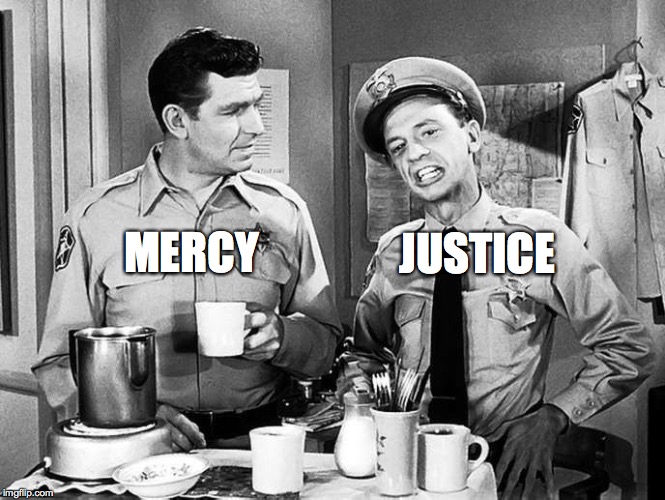
Sheriff Andy Taylor and Deputy Barney Fife were cleaning out the case files in the Mayberry courthouse one afternoon, when Barney stumbled upon a 19 year old case involving Floyd the barber and Mr. Foley the greengrocer. They had both been arrested for assault involving some altercation, but much to Barney’s dismay, no resolution was mentioned anywhere in the file. No guilt was assigned, no restitution or punishment proscribed. Nothing. Barney can’t believe it. Barney wants everything to be neat and orderly and he insists that everything be done according to the proper procedure. Andy tells him that it can’t be too important, just file it or throw it away. Floyd and Mr. Foley are two of the nicest and gentlest men in town and they have been friends for over 20 years so obviously whatever it was, was past. Let it go.


Well Barney won’t have any of that. He is determined to settle this case properly. He starts by interviewing Floyd, who doesn’t remember much. Then he interviews Mr. Foley, who thinks the dispute was over getting charged for a shave that he didn’t ask for. Then he tries to interview Goober who was five years old at the time and had been sitting in the corner reading a comic book and didn’t see anything. Well Barney tries to bring all the parties together to try and reenact the whole incident, and pretty soon their conflicting memories get in the way, then Mr. Foley calls Floyd a crook, Floyd punches Mr Foley, who then tries to get Goober to take his side, and Goober once again was reading a comic book and claims he didn’t see anything.


Then the whole town gets in on the battle: Mr. Foley punches Goober, Otis punches Floyd, and on and on until pretty soon half of Mayberry has a broken nose. Even Opie gets into a fight at school. Andy can’t take it anymore and he pulls Floyd and Mr. Foley into the courthouse. He sends Barney away and says to the two of them that we need to try to settle this like friends.

He says: “you two have been friends for more than 20 years, more than that you have been neighbors; you have been there for each other. You aren’t kids neither one of you and you both know the value of old friends and the first law of friendship is to be ready to forgive.”


The first law of friendship is to be ready to forgive. Forgiveness comes first. That isn’t what we think of when we think of Justice. When it comes to Justice we think that facts should be examined, guilt should be declared, restitution should be made, and then and only then maybe forgiveness can happen. That’s the way our legal system is setup to work. That is certainly the way Barney expects things to happen. But Andy sees things differently. Andy thinks that forgiveness comes first, and then reconciliation can happen. I wonder where he got such a crazy idea…


If Barney Fife represents Justice, then Andy Taylor represents Mercy. They are both fighting on the same side of the law, but you get awful nervous when Justice is left on its own. Mercy always needs to take the lead. Forgiveness needs to come first.


The first few times I read this morning’s Gospel passage, it seemed to me like Jesus was outlining a procedure for how to deal with conflicts in the Church. But as I dug deeper into this passage, I discovered that Jesus wasn’t creating new rules and procedures, he was amending old ones. In Deuteronomy, in the Law of Moses, it says that in order to prosecute someone for an offence or a sin, you need at least two or three witnesses. It’s a good law, because it is there to prevent someone from being unjustly accused, but Jesus thinks we can do even better. Before you go out and try and find other witnesses, before you involve anyone else, go to that person alone and try to reconcile. And even if you do have to involve two or three others, or even the entire community, your goal should always be reconciliation, not prosecution, not condemnation. But how does Jesus see reconciliation happening? Through forgiveness.


It becomes clearer if you keep reading beyond this morning’s Gospel passage and look ahead to what we will be reading next week:

Then Peter came to him and said: “Lord, how oft shall my brother sin against me, and I forgive him? till seven times?”

Jesus saith unto him: “I say not unto thee until seven times, but until seventy times seven.”


Well I’m not good at math, but I can tell that that is a pretty big number. I think Jesus is trying to say that we always need to be ready to forgive, no matter how many times we have been sinned against. Of course, that’s an easy thing to say, much harder to do. Jesus knows that, so he goes on to tell a parable, and I won’t retell the parable now, you will hear it next week, but I think the gist of the parable is this: forgiveness will get a lot easier when you realize how much you have been forgiven. If you know, truly know and appreciate how much you yourself stand in need of forgiveness how can you stand in condemnation of another? It is so much easier to forgive and be reconciled and to love your neighbor when you realize that we are all transgressors of the law; that we are a community of broken, sinful people, that despite our sins are still beloved of God.


If you come to church here regularly you will hear the word sin a lot. We are what is known as a “Rite One” parish; we use the traditional language liturgy, and despite what some people think, the difference is about more than just thees and thous. You get a lot more talk about sin and sinfulness in Rite One. It is still there in Rite Two, but not nearly as strong. I often joke that if Jesus didn’t wash away our sins the 1979 Prayerbook certainly tried. I get that such talk about sin can make people feel a bit squirmy and uncomfortable. Everybody wants to be built up and told how wonderful they are, nobody wants to hear that they might not be as lovely as they imagine. But I think it just might be something that we need to hear. Understanding and appreciating how much we have been forgiven, just might help us when it comes time for us to forgive others.


Our faith proclaims that while we were still sinners, Christ was willing to die for us. God was ready and willing to forgive before we were ready to ask for it. Forgiveness comes first.


I used to think that Barney Fife was just a bumbling fool and that Andy Taylor was wise and had it all together, but since I have reviewed the series with older eyes, I realize now that Sheriff Andy was a mess too; he made mistakes all the time. It is just easier to forget Andy’s mistakes, because his character always puts love and mercy first. He believes in the law, but he also believes that love is the fulfilling of the law, so love and forgiveness always come first. Where did he get such a crazy idea?


At the beginning of the episode I mentioned, before the old case of the punch in the nose is found, Andy and Barney are singing a hymn as they go about their work. Andy says the title is “Lose all their guilty stains” but you probably know it as “There is a Fountain.”


There is a fountain filled with blood,

drawn from Emannuel’s veins

and sinners plunged beneath that flood

lose all their guilty stains.


The dying thief rejoiced to see

that fountain in his day;

and there have I, though vile as he,

washed all my sins away


E’er since by faith I saw the stream

thy flowing wounds supply,

redeeming love has been my theme,

and shall be till I die.


Redeeming love has been my theme…maybe that’s not such a crazy idea after all. Maybe it is something worth sharing.

All I wanted was a decent cup of tea…

Standard

Sermon for July 9th, 2017

Readings:

Zechariah 9:9-12
Psalm 145:8-15
Romans 7:15-25a
Matthew 11:16-19, 25-30

Some people just don’t want a savior. I get it.

To have a savior, to need a savior, means on some level admitting that you cannot save yourself. I can understand having difficulty with that.

I am a very independent person. I like to be able to figure things out myself. I like to do things for myself. Some things I am pretty good at, but then again, I do get things wrong, all the time. Sometimes the errors are factual: like forgetting a name or a date. Sometimes the errors are moral: I know that I have done and said things that have hurt others, and I have done and said things that have hurt myself. It’s not that I ever set out to make either kind of error; I don’t try to be wrong, but sooner or later it always happens again.

When the apostle Paul says: “I do not do the thing that I want, but I do the very thing I hate.” I get that. It’s frustrating to make mistakes, especially when you are trying really hard not to.

You could tell yourself that you are simply not trying hard enough. You could blame your mistakes on others as many do.

Or, you could realize that you simply don’t have the power to do it on your own and that you need someone else to help you.

That was the revelation that Paul had. He eventually understood that salvation wasn’t something he was going to achieve through his own effort.

Some people still approach religion as if it were something that they could master, as if their intellect were more important than the disposition of their hearts.

Last Sunday our group attended mass while on pilgrimage at the cathedral which was just around the corner from our hotel. After we offered our worship to God in a very nice service, Keith and I thought that we might stop in at the coffee hour and meet some of the local congregation and perhaps greet the resident clergy.

As we were trying to mingle and make polite conversation, we encountered a retired clergy couple from England (a man and a woman). They were living in the area temporarily and were very excited to hear that we were married.

They thought that being two men, and priests, that we must be very theologically liberal, just as they were. And what commenced was an inquisition into our beliefs of various points of theology and biblical interpretation. In short order they were sorely disappointed.

They were shocked to find out just how seriously we take the Bible, and the traditions of the church.

When they found out that we actually believed in the Creed, the virgin birth and the Resurrection of Jesus Christ, they were simultaneously astonished and annoyed. If we disagreed with Paul about homosexuality, shouldn’t we disagree with him about everything else as well? Wasn’t all of this just an oppressive and backwards myth, which should have been dispensed with by sensible people long ago?

You know, and this may be a revelation to some people on both sides in the church, it is possible to faithfully disagree: it is possible that our faith is not an all or nothing proposition. It is possible to be neither liberal, nor conservative, but a faithful follower of Jesus Christ, sinful, but forgiven, thoughtful and believing. It is possible to disagree about particular issues and still uphold core doctrine. It is possible, but some people just can’t do it.

Honestly, at this point I was more taken with their bad manners than their bad theology. I am totally sympathetic with people who struggle with questions of faith and belief, but don’t attack me for actually believing what we all stand up and say we believe every week.

At last came the coup de grace, when he claimed that he absolutely did not believe that he was born in sin. He just wanted to come to church to hear that God loved him. To which my husband replied that we absolutely believed that we, like all men and women, were born sinners and that we had come to church not so much to hear that God loves us, but to say that we loved God. Of course we believe in a loving God that loves us first, but worship and therapy are not the same thing.

Those are two very different outlooks. They were intent on being correct, we were intent on being forgiven. I didn’t get the sense that they thought they needed a savior, we were pretty sure that we already had one.

If you think that following Jesus can be hard, you’re right. Trying to do the right thing, and then asking for forgiveness when you fail can be something of a burden, but it is the lightest burden you will ever carry. Trying to be perfect all on your own, now that’s hard. Some people just don’t want a savior, but I know I certainly need one.

Eventually we extricated ourselves from the situation as politely as we could, but I did find it a bit sad that here we were visitors in this place, and had happened upon another clergy couple that could accept our marriage, but not our faith.

I don’t use this experience as an example of most of my interactions with clergy in the U.K., far from it. This couple was the exception, not the norm. I use it as an example of how we often misjudge what people are looking for, both when they come to church and when they engage us in conversation and I use it to illustrate how dangerous it is to make assumptions about people, including theological assumptions, based upon knowing one thing.

I hadn’t come to church looking for an inquisition or a theological debate. I wasn’t looking for an enlightened priest that had all the scientifically and politically correct answers. I didn’t need someone to solve all the mysteries of the Bible, or to lecture me about the various nuances of scriptural interpretation.  And I certainly didn’t need someone to tell me that what I believed was a myth.

I wasn’t looking for a savior during coffee hour, I already knew I had one. That is who I had just come to mass to worship. In truth, all I was really looking for at that point was a decent cup of tea.

Some people just don’t want a savior. I get it, but I am not one of those people.


The Stories Fathers Tell

Standard

(N.B. The image above is of the original Winnie the Pooh on display at the New York Public Library. These toys belonged to Christopher Robin Milne and were used by A.A. Milne as the inspiration for his Winnie the Pooh stories.)

Sermon for Father’s Day, the Second Sunday after Pentecost, June 18th, 2017.

Readings:

Exodus 19:2-8a
Psalm 100
Romans 5:1-8
Matthew 9:35-10:8(9-23)

The best argument for the truth of the doctrine of original sin, and the fallen state of our human nature, is living with a three year old (or maybe a two year old, or a five year old). Not every moment in the life of a young child is precious, let’s be honest. There are some moments that absolutely require endurance; there are some moments that are almost intolerable. It’s true that children are born with the capacity to love, but they are born with a lot of other capacities as well, some that are a lot less charming. They are born with impatience; they are born with tempers; they are born sometimes being greedy or selfish; they are born with a lot of things.


It takes a parent that can see past bad behavior in a child; that can continue to love a child even though they are not necessarily being lovely. It takes a parent in order to shape the life of that child. It’s true that we do learn some sins as we grow older through life, but some things just seem to come from the beginning. We are born with all these different capacities and it takes a loving and patient parent to love us before we are loveable; to love us despite our wickedness sometimes. It takes a loving and patient parent to spend the time to shape us, and to shape our character, and our souls, to form us into hopefully decent human beings. Parents, more than just protecting and providing for their children, a good parent should shape their child, should help to form their child as they grow older.


Now we could talk about mothers and fathers this morning. I think the role of a parent is interchangeable between the two. The reality is that we are not here this morning to celebrate a gender, we are here to celebrate a role. And the role of Father which we celebrate on Father’s Day, is in many ways similar to the role of Mother: it is the presence in a young life that not only protects and provides for, but also shapes for the future; that guides; that wants to be a part of that life, and not just create it and walk away. And our parents, they shape our lives in so many ways (by their example, by their patience), but one of the ways that I think parents most shape our lives (which they may not realize) is through how they play with us.


You see, I think part of the role of a parent is not just to protect and to provide for a child, but I think a good parent will also understand that playing with their children is crucial. Now you may think that playtime for a child is just time for their pacification, for them to let their imaginations run wild and their fancies set free. But I think that in that playtime of make believe and storytelling is where character is tested and formed.


If you look at some classic fairy tales and if you listen to the way that children play as their act out their fantasies, they are testing who they want to be in the world, and what they want to be in the world. They are trying to imagine what their world and what their life can be like. What better time for a parent to help shape their child’s future than in playtime? It enables parents to share stories with them that can affect the rest of their life. If you want to test what makes a good children’s story, go and read it now as an adult. If it still touches you; if it is still relevant to your life as an adult; that is a good children’s story. Children’s stories should be taken seriously. They are not there just to pacify the child so that you can go on and do something else. A good children’s story should be as relatable to your life as it is to theirs. One of the best things that a father or a mother can do for their child is to tell them stories that will mold them and shape them for the rest of their lives.


I was revisiting some of my favorite children’s stories these past couple weeks and rereading them. I was just amazed at how much I get out of them now, probably more than I did as a kid. For me the ones that are my classic favorites are The Wind in the Willows by Kenneth Grahame and Winnie the Pooh by A.A. Milne. I have found that I can go back to those stories and find them perfectly relevant to my life in so many ways now, perhaps even more so now than when I was little. And the beautiful thing about both The Wind in the Willows and Winnie the Pooh, is that both of those stories were created by a father telling a story to his son. It was a father creating story time with his children that created both of those stories. And what a gift that has been, not just to their children, but to children throughout the world. Generations at this point now have had these wonderful make believe stories that have the power to shape who we are, and to shape our character.


One set of stories that I didn’t actually come to as a child (I came to them as an adult) is the Narnia series, the fantasy series written by C.S. Lewis. C.S. Lewis whom I am very fond of as an almost academic writer and as a spiritual writer, (and who can be a little difficult to approach because he is very, very smart and very heady) wrote these wonderful stories that just entrance children, and I think relate the faith to them and shape them into people of character. As I was reading about Lewis and his creation of The Chronicles of Narnia, I cam across this article written by C.S. Lewis’s stepson, Douglas Gresham. I want to share a couple pieces of what he wrote about his stepfather:

Lewis (I’ve always called him Jack, the nickname used by everyone who knew him) married my mother, Joy Davidman, when I was 10 years old. Four years after that my mother died. I was estranged from my father, who lived in America.

Suddenly a 62-year-old professor of medieval English literature who’d been a bachelor for almost all his life was the closest thing I had to a father. Jack was as grief-stricken as I was. And yet he did everything he could to raise me. I saw a C. S. Lewis few people knew, and I grew to love him deeply.

I didn’t feel that way on first meeting him. My own father was a successful writer, but he was an alcoholic and by the time he and my mother divorced he frightened me. My mother got to know Jack Lewis after writing to tell him how much his books on Christianity had meant to her.

The two began corresponding and then my mother moved to England and enrolled me in school there. I was excited to meet the author of the Narnia books and I pictured someone from Narnia itself, maybe a knight with a sword.

What I encountered instead was a bald, stout old man dressed in a shabby tweed coat and with tobacco stains on his teeth and hands.

I was crushed—until I began to get to know him. Almost immediately I noticed how funny he was. You always knew which room of the house he was in because someone was laughing there.

One of the first things he did was invite me out for a walk in the woods behind his house near Oxford. Jack loved trees and animals and gardens. More than that, he knew exactly how to talk to a child.

He was straightforward and took me seriously, not like some grown-ups, who get cutesy and condescending around children. He asked me what I liked to read and told me his favorite childhood books, including the Bea­trix Potter stories, which he said he still loved as an adult.

Most of all we talked about Narnia. We often spoke of it as if it were a real place, as if a faun or a centaur might appear in the woods at any moment. It was a delightful game.

Two years after my mother died I learned that my father had been diagnosed with cancer and, rather than face the disease, had committed suicide. I was now an orphan. Jack knew just what to say to me.

He didn’t offer trite condolences—he knew too much about pain and grief for that. There had been tragedy in my family and he didn’t try to sugarcoat that. He could have washed his hands of me but he didn’t. Instead, he made me a part of the last years of his life.

Jack died in 1963, when I was 18. At his funeral I saw a candle burning in a simple candlestick on his coffin. Others say they remember no such thing. But I am certain I saw that candle. Its flame burned unwaveringly through the whole service.

It was a perfect image of Jack’s love—for me, for my mother, for anyone blessed enough to have come into his circle of friends.

Jack Lewis embodied values that sound old-fashioned these days—courtesy, duty, loyalty. He was steadfast in his devotion to me and so I now do my best to remain faithful to him. What would I have done without him, alone there in England with no one to turn to?

I had gone as a child hoping to meet a knight in armor from a fairy tale. I got something far better, a father who understood that what children need most of all is unwavering love.

The complete article can be found here.


Douglas Gresham had two father figures in his life: one person who biologically created him and assisted in his birth, and another who helped to shape his soul and who cared to form and look after his character. One of those was his real father.


Jesus, when he is teaching and talking, time and time again he refers to God as “Father,” or “My Father” over and over again. He teaches his disciples to pray beginning with “Our Father.” He tells them in today’s gospel that when they are afraid of what to say that the spirit of their father will speak through them. So my question to you is this: when Jesus refers to God as “Father” which kind of father do you think he is talking about?


Do you think he is referring to a father that creates and then walks away, having done his job at the birth and feeling satisfied that his role is complete? Or, do you think the Jesus is referring to a father who is far more intimately involved in the lives of his children? Do you think he is referring to a father who wants to shape and mold, to live next to and besides, and yes even to play with his children?


I am sure, I am confident, that the father of Jesus isn’t merely a creator that walks away from his creation. The father of Jesus loves his children even when they are not loveable, as Paul reminds us in his letter to the Romans this morning. The father of Jesus chooses to live among his children to share in their pains. He wants to shape the character of his children. He wants to guide them. He wants to feel their pain; he wants to share in their joy. The father of Jesus takes his children seriously. And as we have learned through the life of Christ, the father of Jesus very often seeks to teach his children using stories. More often than not, when Jesus was teaching his disciples it was by using a story (a parable). That is how he reached out to them to shape their character and their souls.


Our human fathers, they will always be imperfect. No matter how bad or good our human fathers may be, we will always have another father. Jesus sent his disciples out into the world to preach a message to people who were like sheep without a shepherd; people who were longing and needing to be loved, to be shaped, to be guided. He sent his disciples out to those people with the message that they DO have a shepherd. They do have someone who cares, not just about creating them, but about shaping them. That they have a perfect father in heaven.


C.S. Lewis was a brilliant man, and one of the best apologists for Christianity in the history of the world, but he like all men was far from perfect. His strength as a father came not from his stature, his biology or his genes; his strength as a father didn’t even come from having all the right answers or from being brilliant. His strength as a father came from his steadfast love and from his willingness to take a child seriously.


Fathers, we honor you all this morning, but remember as a father, as a human father, you will always be imperfect. You will make mistakes and that is OK. Fathers don’t have to be knights in shining armour riding into town with their swords ready to defend and prepared to defeat every evil. You don’t have to be perfect, just be sure that in your words and in your actions, and especially in the stories that you tell your children, that you are always pointing them to the one father that is perfect.