
The Best Way to Honor Their Sacrifice

Standard

Sermon for May 28th, 2017.

Readings:

Acts 1:6-14

1 Peter 4:12-14; 5:6-11

John 17:1-11

Psalm 68:1-10, 33-36

Memorial Day, which is observed tomorrow in the United States, began around the time of the Civil War as Decoration Day, a day when people would visit war cemeteries and decorate the graves of the fallen soldiers. Supposedly, one of the reasons that this day was traditionally observed in late May, was so that flowers would have been readily available to decorate the graves with.


Well as much as placing flowers on the graves of the dead is a laudable custom, I can’t help but feel that the timing of Memorial Day is rather unfortunate. It comes at the end of the school year for kids, the end of the program year for churches and many other institutions, at a time when everyone’s minds are turning toward the coming summer and all that that entails. Because Memorial Day has become in our culture the unofficial beginning of the Summer Season, it is those summer activities that largely command our attention on this day, and not honoring the dead. Of course, moving the holiday observance to a Monday to make for a convenient 3 day weekend has only made this worse. Now Memorial Day is known for BBQs, the beach and sales at the department store, more than it is thought of as a day for honoring the dead.


While I agree with the VFW, that returning Memorial Day to its original date of May 30th, might be better; thereby making its observance something that is intentional, and not just a convenience, still I don’t think it would be enough. The purpose of Memorial Day is to honor those that lost their lives, not just in defense of our borders or our flag, but for our ideals. Those soldiers didn’t just die to preserve lines on a map, they died to uphold the very principles that Western Society is built on: freedom, democracy and self-determination. Its true we have always fallen short of our ideals; we have never achieved true equality in our societies, but at least it is an ideal; at least it is something we work towards and long for. Those principles and freedoms that we so often take for granted are what our soldiers died trying to defend. So we should ask ourselves: what is the best way to honor that sacrifice?


Is it enough to simply place a flag or a flower on a grave, or might true honor require something more of us? Might honoring a sacrifice require us to make a sacrifice of our own?


Regardless of what day we choose to pay our respects to fallen soldiers, I don’t think we do them much justice by simply tipping our hats as we go on about our lives taking for granted the principles they died for and not paying attention to the ways in which those same principles still need defending in our own day. A simple “thank you for your service” will not do. We must be willing to make sacrifices of our own. We must be prepared to continue to defend those principles and those freedoms, because if history has taught us anything, I hope it is this: there is no such thing as a war to end all wars. We can never just rest on the sacrifices made by those that came before us, because in every generation those principles which we hold so dear, will come under attack. Every generation will be challenged with defending them and protecting them anew. Respecting our fallen soldiers must mean respecting and protecting what they were willing to die for and that is far more difficult and more complicated than simply placing a flower on a grave.


After Jesus’s death and resurrection, his followers were certain that the victory had been won, that they were triumphant and that a new kingdom was about to be established that would put an end to their suffering and their struggles. They asked Jesus: “Is this the time when YOU will restore the kingdom to Israel?” They were ready to thank Jesus for his sacrifice, for all that he had done in dying for them and to praise his victory over death. They wanted to stand their and await all of the blessings that his sacrifice was destined to bring them, but Jesus looked at them and said: “it is not for you to know when God is going to establish a lasting kingdom or an eternal peace, but YOU will receive power, and YOU are to use that power to be my witnesses to the ends of the Earth.”


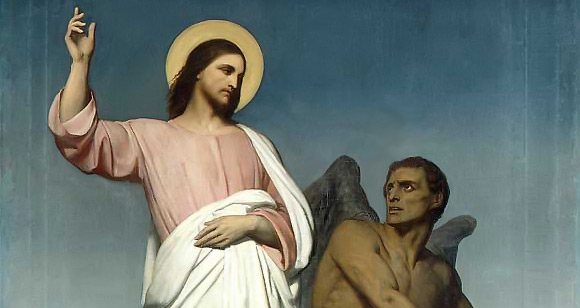
Jesus may have won the ultimate victory over sin and death, but Satan wasn’t done with us yet; his work may have been finished, but ours was just beginning. There was still work to be done in the world, there was still evil to confront and fight. As he ascended into heaven his disciples wanted to just stand there in awe of what he had done, but that is not what they were called to do. They were called to go back out into the world and continue the work that Jesus had begun. That is what he gave them the power to do. It is what Jesus and the Holy Spirit give us the power to do as well.


Peter reminds us that doing the work of Christ in the world is likely to involve some suffering and sacrifice. The devil never rests. He prowls around like a lion, seeking someone to devour. We can never become complacent. We cannot simply satisfy ourselves honoring the efforts and the sacrifices of others, and paying no attention to the ways in which we may be called to defend the same freedoms and principles that they did. We must be prepared to fight the devil ourselves; each and every one of us, because until that day when Christ returns in glory, the devil is not going to stop trying to steal our joy, our freedom and our peace. He will try to turn us against each other; he will trick us into abandoning the very principles we should be fighting for; he will fool us into becoming the very thing our fallen heroes defended us from. If we truly want to honor their sacrifice we cannot let that happen. We must be prepared to resist the devil, to resist succumbing to the evil in the world. We must be steadfast in our faith; a people who are willing to stand up for what we believe.


We cannot be surprised at the suffering and struggle in the world, especially by people seeking to live in a free society or people seeking to follow the will of God. Either way the devil, or the evil forces of this world are going to try to bring you down. As Christians we have been given the ultimate freedom from sin and death; as Americans, we have the great privilege of living in a free society. We cannot take for granted the freedoms and blessings that have been won for us; and whether that freedom was won for us by Christ on the cross, or whether it was won by our grandfathers on the battlefield, we have a duty in our own lives that goes beyond merely acknowledging what they did. We have work to do to. We have sacrifices to make. We have evil to resist. And we are not alone in this fight. Peter reminds us that we have brothers and sisters all over the world who are struggling and resisting evil just like we are. It seems like we are reminded of that all the time now. This week we saw Christians attacked in Egypt and free people attacked at a concert in England. Both were painful reminders that freedom, whether in this world or in the next one, comes at a price. We must be prepared to stand not only with our fellow Christians, or fellow Americans, but will all free people in the world that share our values.


After communion this morning we will be singing “my country tis of thee”, which was a popular national song in our country, long before “the star spangled banner” became our national anthem. Of course, it is the same tune as another national anthem, that of Great Britain. Both songs are sung by free people, who have suffered and lost much to preserve those freedoms. As a tribute to our friends across the Atlantic, the choir will sing the other version of “my country tis of thee” as a postlude. You are welcomed to sing along if you know the words.


I have said before that I believe that there is really only one war: the war between good and evil. It is a war, which like it or not we all must fight. We won’t all fight it in combat or on a battlefield, but we all must fight it. As Christians, we gather here every Sunday to remember the sacrifice made by Jesus Christ in that war. We give thanks for all of the glory that he won for us, but I hope, that as we leave here and walk out those doors, that we will remember that we have a duty that goes beyond giving thanks. I hope that we can be a people who truly wish to live differently; a people who know that some principles are worth fighting for and even dying for; a people who know that the devil isn’t done with us and who are prepared to resist him, steadfast in faith. If we want to honor Christ’s sacrifice, we must carry on his work in the world, and sometimes that will mean having to make sacrifices of our own.


It is good and right that we should take the time to remember the sacrifices made by the members of our armed services, and all of those who have fought to gain or preserve freedom, but we can do more than simply say “thank you.” We can go out into the world as citizens ready to live differently, holding ourselves to a higher standard, ready and willing to do whatever it takes to preserve the principles and the freedoms that they died for. That is the best way to honor their sacrifice.


Life Belongs to Him

Standard

Sermon for the Fifth Sunday of Easter, May 14th 2017

Readings:

Acts 7:55-60

1 Peter 2:2-10

John 14:1-14


I had the great honor and privilege a few weeks ago to visit the USS Arizona Memorial in Pearl Harbor.


The Arizona was one of the first ships bombed in the attack on December the 7th, 1941. The ship sank within minutes, killing over 1000 sailors, most of whom remained trapped inside. It is a very painful moment in our nation’s history.


The memorial is quite well-done. It straddles the sunken remains of the Arizona, and allows visitors to quietly look down and reflect, not only on the events that happened, but also on the fact that this is a burial site, sacred to the memory of all those whose remains still lie within the ship. As you stand there and look out over the water, eventually you notice little black droplets of oil that occasionally bubble to the surface creating a slight oil slick. They are know as the “tears of the Arizona,” and it is actually oil slowly leaking from the ship’s fuel tank. The Arizona has been submerged for over 75 years, and still it continues to leak oil.


For those that lost loved ones on the Arizona, the drops of oil are a continual reminder of lives cut short, and a loss that remains, even after decades. As I was looking down, prepared with my camera to take a picture of the leaking oil, I noticed a fish swimming into my shot, and then another one, and another one. Finally, a whole school of fish swam by and I realized, that of course, the sunken ship has now become a living and active reef. Despite the fact that oil and marine life do not mix, for whatever reason the leakage remains restrained enough here to allow new life to flourish. I quickly snapped a few pictures to remember the moment.

IMG_0161


As I boarded the boat to ride back to the shore with the other visitors I thought to myself: “isn’t it ironic: here is a battleship, built by humans as a display of our own power, and destroyed by other humans equally as a display of power. The memorial is a testimony to how much we value human life, and a reminder of how little we value it at times. And the ruined hulk sits at the bottom of the bay, a symbol of the death and destruction that we humans are capable of, and yet it is now surrounded by new life.”


It was the Second Sunday of Easter, and we had just come from church and hearing the story of the risen Christ appearing to doubting Thomas, and here in front of me was a different, but equally powerful symbol of resurrection that I could almost touch. As I got off the boat back at the museum, it was as if I could almost hear God talking to me and saying: “you see, I am the author of life and death. Life belongs to me. I choose when to give it and where to give it. You humans may try to usurp my power. You may take the life that I give, but I, and only I, have the power to give it back again.”


It is true that a sunken ship turning into a living reef swimming with new life, is not the same thing as a dead human body miraculously coming back to life again, but it does illustrate an important point: God is in control of life. Life belongs to God, not to us. We humans are always entrusting our lives to the wrong things; we trust in the wrong things to save us.


We mortals, we are so prone to reject the true cornerstone of our life. We put more faith in our own power and our own abilities, than we do in God, who is the one, true living cornerstone. But only God has the power to save us. Only God can transform death into life. We can build houses and ships and walls and buildings and fortresses, but only God can build life.


We can destroy things, but God always has the power to build them back up again. We can sink a ship, but God can transform that vessel from a coffin into a crib; from death into life.


The Romans thought they had finished the job when they sealed the tomb over Jesus’s dead body; they were sure that they had destroyed him, but they were wrong. God is in control of life. The Romans didn’t know that Jesus and the Father, the author of life, were one. In trying to display to the world their strength and power, the Romans killed countless people, but in this one poor carpenter they finally met their match. They came face to face with a life that they could not defeat.


Jesus said to Philip “whoever has seen me has seen the father.” In Jesus we are given a glimpse of what God is like: not only in his teachings, but also in his life and actions. And what we learn time and time again is that God will not be restrained by our expectations, nor does he wait for us to understand before he takes action. He repeatedly shows us that he can create new life in the places where we see only death. Not only can he do it, he’s the only one that can do it. Life belongs to him.


In the Book of Acts we are told the story of the first deacon, Stephen. A faithful man condemned on false charges, he was dragged out of the city to be executed by the mob. And as he looked up, expecting to see death raining down on him from above in his accuser’s stones, what he saw instead was Jesus. And rather than use his dying breath to condemn those who were taking his life, he decided instead to use it to forgive them and to entrust his life to the only one who had the power to give it back again: Jesus.


If God can do that for Jesus, he can do it for us too, all of us. If he can give new life to the lifeless shell of a sunken battleship, I believe he can also give new life to his children that were trapped inside. Although the Arizona Memorial is lovely, I am not really impressed with what humans can do. Sure we are pretty clever now and then, but no sooner do we invent something good or build something good, when that fallen nature of ours takes over and we find a way to destroy it or use it for evil. But God, God never ceases to impress me, he can always take that evil we do and make it good again. God and only God can transform death into life. Life, all life, belongs to him.


Darkness makes the light shine brighter

Standard

Sermon delivered on January 22nd, 2017

Jesus gets some distressing news at the beginning of the Gospel this morning. His cousin John, the man who baptized him, the prophet who roamed in the wilderness telling people to repent for the kingdom of heaven has come near, has been arrested. Jesus knows this can’t be good, not for John at least. King Herod owes his allegiance to the Romans, so he isn’t going to put up with anyone challenging his authority, least of all some backwater prophet. John’s days are numbered. I’m sure Jesus knows that.


The reasonable thing for Jesus to do would have been to go back to Nazareth, go back to making tools in his father’s shop, and lead a quiet peaceful life, steering clear of Herod and the Romans. But that’s not what he does. He grabs his stuff and moves a few miles away to Capernaum, a little city on the lake, and he begins to move throughout that region, preaching exactly the same thing that John was preaching in Judea: “Repent, for the kingdom of heaven has come near.”


Maybe the world got a little darker for Jesus after John was arrested. I am sure that John’s followers were pretty disillusioned too. But instead of quitting, Jesus picks right up where John left off, proclaiming the same message. And the message was this: repent. Change your life. Choose to live differently, because God is not as far off as you think. God is closer to you than you imagine; his kingdom is breaking into this world and you can choose to be a part of it. Repent, for the kingdom of heaven has come near.


I am sure that some people had a really hard time accepting or understanding this message: Do you mean to tell me that with all of the suffering in this world that God is actually close? With all of the hatred, killing, pain, anguish, with so much darkness in the world, it is hard enough for some people to believe that God even exists, much less that he is actually close and that he really cares about us and what we do, and yet that is exactly the message that Jesus continues to proclaim.


He walks up to two brothers on the lakeshore, proclaims his message and then says to them: follow me, and I will make you fishers of men, and they do it. They drop what they are doing, leave their nets behind and follow him. A little later he says it to two more brothers, and they do the same, leaving not only their nets but their father too. What would cause people to do something so radical as to leave their livelihoods and their family behind to go following after this man?


The gospel writer Matthew found the answer in the prophet Isaiah: the people who have dwelled in darkness have seen a great light. Those fisherman standing by the lakeshore saw something in Jesus. They saw light. They saw in him and in his message a light that they didn’t see anywhere else. It was that light that made them drop their nets and follow him.


I have commented before on how much I think we take light for granted. Most of us never have to deal with true darkness, not for very long. You flip a switch and the lights come on and everything is clear to see. But for most of human history it certainly wasn’t that way. Tonight we are having a candlelight service here as a special event, but for our ancestors every service was a candlelight service, there just weren’t any other options. Now we light candles at every service here, but it isn’t always easy to see them. The only time that you can truly appreciate the beauty of a candle is when you are sitting in the darkness. Darkness makes the light shine brighter.


There are other things that we take for granted too: things like hope, love, meaning, purpose, self-respect, forgiveness. Maybe you can remember a time in your life when you didn’t have one or all of those. Maybe you are struggling to find them now. Living without hope, love, meaning or self-respect, that is a very dark existence. And if you have ever lived that way, and someone came along showed you a light: a glimmer of hope or redemption, you would probably happily leave the darkness behind and follow that light.


I can’t say exactly what was going on in the lives of Andrew and Peter and James and John. They were poor fishermen living in the country. I can only guess that there must have been a lot of darkness in their world. Perhaps they were living without hope or purpose; maybe they felt trapped by their circumstances; maybe they felt that God was distant and didn’t care much about their lives; whatever their individual emotions, they each saw in Jesus and in his message (the message that change was possible and that God was near) something so compelling that leaving everything else behind wasn’t a difficult decision. However difficult their individual lives were, that darkness only allowed them to see his light more clearly, and by that light they were saved. They spent the rest of their lives trying to carry that light to others as well. That’s what it means to be a fisher of men: not to trap people unawares or reel them into church unwillingly, but to carry a light out into the darkness.


People always have and always will complain about how dark the world is. Suffering, pain, grief, hatred, murder, depression, anxiety…these things weren’t invented in the last century, they have always been around. If you want to you can stare out into the darkness your entire life, lamenting about how dark it is, but what good will that do? If you want to do something about the darkness be a light. If Jesus was distressed by John the Baptist’s flame being extinguished, he responded by going out into the world and lighting twelve more candles. If you don’t like the way the world is, if you don’t like the way our country is, then don’t just stare into the darkness and complain; take your light out into that dark world. If you think the world is going to hell, then it is up to you to carry Christ’s light out to those who cannot see it. Don’t worry about the darkness, it only makes the light shine brighter.

Shepherds and Wise Men

Standard

Sermon for the Feast of the Epiphany 2017

The story of the Birth of Jesus Christ, as we all know it, and as it is depicted in movies and songs and in countless nativity scenes, is not really one story, but two that we have tied together. What we know about the birth of Jesus, we now from the Gospels of Luke and Matthew, two different authors who give us different details about this miraculous birth. If you only read one gospel or the other, you miss out, because each of them contain only a piece of the whole story. While our tradition has woven these two storylines together to give us one image of the nativity, it is helpful sometimes to unravel them to see how they complement each other.


In the gospel of Luke, which we read on Christmas Eve, we hear of the census that was taken while Quirinious was governor of Syria. We are told that Mary and Joseph found their way to Bethlehem, where she gave birth to Jesus and laid him in a manger because there was no room for them in the inn. We are also told that there were shepherds in the fields keeping watch over their flocks by night, that were told by an angel that they would find the child wrapped in swaddling clothes and lying in a manger. There is however, no star, and no mention of the wise men in Luke’s account.


In the gospel of Matthew, which we read tonight on Epiphany, we hear that Jesus was born in Bethlehem to Mary and Joseph, but there is no mention of a census, no mention of an inn, no manger and no shepherds. Instead, Matthew tells us this fascinating tale about these wise men following a star. It leads them to a child that was born King of the Jews, and there they offer their gifts of Gold, Frankincense and Myrrh.


In Luke we have shepherds but not wise men; in Matthew we have wise men, but no shepherds. Now I point this out not to argue that one version is more reliable than the other, but rather to show that our understanding of the birth of Jesus comes from two different stories that focus on different details. It is not that one must be right and the other wrong; we aren’t being asked to choose between Luke and Matthew; we simply need to recognize that the image we have of Christ and his birth is a composite, made up of different stories that while probably true in the details they present, are nonetheless incomplete. Sometimes it is only by looking at the differences in the stories of the gospels that we can really appreciate what they have in common and the great truth, which they are all trying to point to.


On the surface it would not seem that Luke and Matthew have much in common at all: just the characters of Jesus, Mary and Joseph and the little town of Bethlehem. Afterall, what do shepherds and wise men have in common with each other? Our two birth gospels give us two very different types of people that are able to identify and adore the baby Jesus: the very wise and the very simple. The wise men travel far, are entertained by kings and priests, and are able to offer the child expensive gifts of gold, frankincense and myrrh; the shepherds, who only keep company with the sheep and the livestock, find Jesus in their own town, but have nothing to offer him but praise and adoration. One group was probably dressed in fine and exotic clothing, the other in the only homespun clothes that they owned. Of all the people that could have been found at the birth of Jesus, it would seem that few could have less in common than wise men and shepherds, and yet, those are the only ones our gospels tell us about. The only people who were able to find Jesus were the very wise and the very simple; those that knew nothing, and those that knew that they didn’t know everything.


If you are a smart person you know things; if you are a wise person, you realize just how much you do not know. It can be dangerous to just be smart. You can have a little too much confidence in your own intelligence. You can put too much faith in your own version of reality and fail to see that others may see things very differently than you. A smart person may be able to memorize every word of the gospel of Matthew; a wise person will recognize that his account is only one part of the story.


A wise person recognizes the limits of their own understanding. Wise people realize that no matter how much truth they possess, or how much they think they know, that God and his truth will always be infinitely greater. The late archbishop Fulton Sheen commented in one of his Christmas broadcasts that there were “only two classes of people that heard the cry that night in Bethlehem: shepherds and wise men. Shepherds: those who know they know nothing; Wise Men: those who know they do not know everything. The very simple and the very learned. Never the man with one book! Never the man who thinks that he knows.”


What do the wise men have in common with the shepherds? Humility. They both understand that here is a mystery that is being revealed to them: this is not something that they figured out under their own power. None of them found the baby Jesus under the power of their own intellect; they were each in their own way guided to him. For the shepherds it was an angel, for the wise men it was a star, but each had to recognize that they did not already have all the answers, all knowledge or all truth. They had to have the humility to put their faith before their understanding, not ignoring what they knew, but always remembering that they did not know all.


When you look at a nativity scene, you will discover that actually all types and sorts of people were able to find Christ in the manger: Jews and Gentiles, Rich and Poor, Learned and simple; different races and different classes. What they all had in common was humility. Each one of them understood that they only had a piece of the whole story.

Taking pride in the badge that we wear

Standard

Sermon for  The Feast of the Holy Name 2017

In the Name of God: Father, and of the Son, and of the Holy Spirit. Amen.

Names have tremendous power. If you don’t believe me, just say the name Mickey Mouse to almost any young child and see what response you get. I was reminded of just how powerful that name is a couple days ago when I was on vacation with Father Keith. We ended up one morning at a character breakfast in Epcot Center. Now if you are among the uninitiated let me clarify what a character breakfast is: while you are dining several Disney characters will come over to your table to say hello, sign autographs, and take pictures. It wasn’t the sort of dining experience that we were particularly looking for, but none of the takeaway places looked particularly appealing, and it was the only place where I could get a Mickey waffle (don’t judge me, they are delicious and harder to find than you might imagine).


At one point during breakfast, Mickey was signing autographs at the table behind me, when a little child that had heard that Mickey was close by walked up behind him. After patiently, but eagerly waiting his turn, the first second that he had the opportunity, the child jumped forward into Mickey’s arms and gave him the biggest hug you could imagine. It was one of those endearing moments that kind of caught me off guard and I immediately began to get a bit choked up. I got choked up at watching the pure and unfiltered joy of this little boy greeting his hero. It was a moment that probably happens thousands of times everyday at the park, but I was particularly grateful that we got to witness it, because it felt like a holy moment; this is what hope, and joy and love look like, at least to children.


Since then I have not been able to get the image of that child embracing Mickey out of my head and I keep thinking to myself: wouldn’t it be amazing if we could get our children to respond to the name of Jesus in the same way? Wouldn’t it be amazing if we could respond to him that way?


That child’s response to meeting Mickey was no accident. It is a response that has been decades in the making. You see, Walt Disney understood the power of a name. He understood that a good name is not something that you either have or don’t have; it isn’t something that you can buy; a good name is something that you create through constant vigilance and toil. It is something that comes through consistency over time, not momentary success. He knew that his characters were going to look a certain way and act a certain way, and do so consistently. The same was true for any of his employees. His parks needed to present people with the absolute best experience possible, each and every time. Nothing was more important than his good name and the reputation that it had and that philosophy continues to guide the Disney company down to the present day. They do everything they can to ensure that even the symbol of their mascot Mickey is one that is universally associated with happiness, hope, magic and joy. Every employee, from the bus driver to the cashier is taught what it means to wear the badge of Disney and there are standards that they are expected to uphold. Disney has at times been criticized for this and occasionally it has had to make decisions that were unpopular in the short term, but their long-term success is indisputable. One of the reasons that we, as adults, so enjoy going there is that we know what we are going to get each and every time, and that the experience is going to be well thought out and executed, even down to the temperature of the water in the hotel pool. You know what to expect when someone says the name Disney.

Now, what comes to mind when you hear someone call themselves a Christian? or Anglican or Episcopalian for that matter? For me at least, the image is rather unclear. I have to admit that always have a bit of trepidation when walking into any unknown church, even churches of our own denomination, because I am never quite sure what I am going to get or what my experience is going to be. Will the worship be sloppy or rigid? Will the service be familiar or unrecognizable? Will the image of Jesus be consistent with the scriptures or will he be a mascot fashioned to the politics of the congregation or priest? Will the sermon be based upon our collected experience and wisdom, or will it be the latest heresy? One never knows. And if it is that way with parishes, it is even worse with individuals. When someone calls themselves a Christian, the fact is you really never know what you are going to get or what to expect from that individual, because the term is used so often and so loosely.


If our children seem somewhat reluctant at times to embrace our faith and the name of Jesus, it might just be because we haven’t done a terribly good job of consistently presenting to them who he really is. We haven’t taught them through our actions and through our lives the transformative power of the name of Christ. We haven’t lived up to the example that he gave us. We have not been regular in teaching his word; we have not been vigilant in showing his love. If a child is eager to throw himself into the arms of Mickey, it is because he knows that from him he has nothing to expect but love, and joy and acceptance; I would venture to say that many children are less sure about what they may find in the arms of Jesus or someone bearing his name. That is a problem. It is a problem because one of those individuals is a made-up cartoon character representing an American business and the other is the Lord of life. One of them is fiction and the other is truth.


Now I am not suggesting here that there must be an either/or, or that we must choose between the two, God forbid. I love Mickey and in no way am I prepared to give up my pastime of searching for Mickey waffles and I love Jesus and my life has been dedicated to serving his church. I don’t in any way resent the success of Walt and Mickey. I celebrate it. I don’t think that we as the church need to be in competition with them. Our missions are different. Their mission is to entertain and ours is to worship. I do, however, think that there is a great deal we as the church could learn from them.


It begins by learning to take pride in the badge that we wear, realizing that the name of Jesus will only be holy to the world if it is holy to us. It will only mean something to others if it means something to us. If we want children to find magic, inspiration, love, joy, meaning and purpose in bearing the name of Christ, then we who already bear it need to show that to them. We need to be more consistent in our actions and our deeds, so that the world will know that the people who call themselves by the name of Christ actually are changed, transformed and have a hope that the rest of the world cannot give. We need to realize that is not just the role of the clergy to teach children about the importance of Christ; it is the role of each and every one of us.We are all of us ambassadors for Christ, to each and everyone we meet.


Disney employees are taught that the moment they step out in the park they are on stage. It doesn’t matter if they are sweeping up garbage or playing the role of Mickey himself, each and every one of them are responsible for the image they portray and of upholding the good name that they have been entrusted with. It’s really not so different for those of us who bear the name of Christ. People are watching. Children are watching. So what will our lives and our actions teach them about this man that God named Jesus, and whose name of Christ we also bear? Can we find the same hope, joy, and love in Jesus that others find in a cartoon mouse? Can we show God the same enthusiasm?

This is of course New Year’s Day. Another year is passing by, and today is a day when many of us will make resolutions for the New Year. If you are one of those people who likes to make resolutions allow me to make one suggestion:


Resolve to become a kid again. Resolve to be a child again. Resolve to remember what it was like to be filled with hope and expectation at going someplace new. Resolve to relive the excitement you used to feel when meeting one of your heroes. Remember what the world was like when magic was real and joy was unrestrained. All of you who bear the name of Jesus Christ, that is the hope that you have been given. That is the promise of new life: to be born again. Jesus tells us that if we are to truly be his followers that we must be born again; he tells us that we must come to his as little children, and he warns us never to scandalize that faith that they have. Resolve that no matter how old you are, or how much your bones may be aching, or how many mistakes you have made in life, resolve that by the power of this man’s name you can and will start over. That is the great privilege that we have all been given by bearing the name of Jesus Christ. That is what we need to show the world, and we need to show it with childlike joy and love.


So as we leave this room and step out onto the world’s stage, let us live our lives in such a way that people will want to know who this Jesus is, and the hope and the love he has given us. Let us be so consistent in honoring his name, that when our children hear it, they won’t hesitate for a second to jump into his arms too.


Pull back the Ivy: Sermon for Christmas Eve 2016

Standard

Sermon preached at The Church of The Ascension, Rockville Centre, NY on December 24th, 2016.


A few decades ago a team of archaeologists descended upon the little town of Clones, Ireland, which is in County Monaghan, right on the border of Northern Ireland, in search of the remains of an old castle.


They knew that there had been a castle there at some point. It was referred to in some historic documents and it was featured on one 18th century map, but the visible remains had long since disappeared, or so they thought. The team brought their shovels and buckets and after doing their best research they began digging where they thought the castle should be, but despite their best efforts they came up empty handed. They assumed that the castle must simply have been destroyed, so they packed up their gear and went home. Case closed.


This past spring an amateur historian, decided that she would take a look around Clones, and she met an elderly local man who pointed her in the direction of a pile of rubble that he had always thought was significant, but that had always been dismissed by others as unimportant. After they managed to clear away some of the underbrush and pull back the ivy, lo and behold, there were the remains of a 16th century castle.


But here is the really fun part of this story: the remains of this so-called lost castle were sitting in plain sight. They weren’t buried underground. And furthermore, they weren’t off in the distant countryside, they were right near the center of town…on castle street…right behind a building called castle house…in a place that children used to pretend was a castle. Whoops.


The experts were so confident in their own research and so convinced that the castle must lie somewhere underground, deep and hidden, that they overlooked all the signs that pointed right to it. They were so determined that it must be hard to find, that they completely missed that it was starring them right in the face.


My point here is not really to make fun of the researchers, and it is certainly not to make fun of the Irish. The discovery of Clones castle is a perfect example of something we are all capable of: missing what is right in front of you.


A few years ago I was at dinner with a group of Ascension parishioners, and one parishioner, who shall remain nameless, simply could not find her keys at the end of the meal, despite only having one glass of wine. After several minutes of searching she found them…in her hand. You all may laugh but you know that it is the sort of thing that you have probably done yourself: searching for your glasses when they are on your head; looking for your cell phone when you are talking on it. We lose things in plain sight all the time, it isn’t a sign of senility, it is a sign of humanity. We even have phrases that refer to this phenomenon: to miss the forest for the trees, or we refer to something as “being plain as the nose on your face” it’s right in front of you, obvious to everyone else and yet, you can’t see it. You literally over-look it.


The people in the village of Clones, Ireland had been looking at that pile of rubble for so long that they had ceased to appreciate what it was. The experts that came looking for it paid no heed to the signs that had been left to them; and the words of little children and old men were dismissed as being mere fantasy or irrelevant. And all the while, the very thing that people were looking for was right in front of them.


I would venture to say that most of you here tonight think that you know the Christmas story. You have seen Christmas pageants, heard the scriptures, sung the carols, and watched the movies. Christmas, and all of it’s traditions and trappings, is familiar to you, and there is much to be said for familiarity. Things that are familiar are comforting; they make us feel secure; they help create stability in an unstable world and in unstable minds. Our traditions are living links with our ancestors and they should absolutely be honored and respected. But, there is one great danger to tradition that we must always be aware of: sometimes when things become such a regular part of our lives we forget that they are even there, or we stop appreciating what they really mean to us.


It is as simple as leaving your sunglasses on your head…after a while you get so used to the feeling that you stop feeling them altogether. I think that sometimes that is how many of us experience Christmas as we get older: something that becomes more familiar, and yet somehow we feel less. Maybe that is how many people experience their faith as well: they think they know what Christianity is all about, but no longer appreciate its true meaning or power.


Has the Christmas story, or the story of Christianity itself, become too familiar to you? Has it become like that castle in Ireland, something that we completely overlook because we are so used to seeing it? Have we allowed the weeds and ivy of daily life to cover and mask it?


There are a lot of people in this world that are searching: searching for answers, searching for truth, searching for meaning and faith. You might be one of those people. You may look at the church as an overgrown pile of rubble on the side of the road, its purpose long forgotten, a place for the fantasies of children or the dismissed ideas of old-men, but before you move on, stop for a moment, pull back the ivy and look deeper. What you are searching for may not be so hard to find afterall.


Look at the manger tonight with fresh eyes; try to hear the hymns the same way you might have first heard them as a child. Listen to the Christmas story as if you have never heard it before. Remember that this story is full of wonder and magic.


Children are born into the world every day, under all different sorts of circumstances, but this wasn’t just any birth. Prophets and preachers have walked the earth from the beginning of time, but this wasn’t just any prophet. The story we are telling here tonight is a supernatural story. God, the source of all life and the creator of the universe, looks at sinful, quarrelsome human beings and decides that despite their failings, he loves them anyways; loves them so much that he chooses to be born among them, as one of them. In Jesus Christ we are able to see the face of God in a way that we never could before; In him we are invited into a living relationship with the author of all creation; here we can finally take hold of that outstretched hand that seeks to save us from ourselves. What a powerful gift. That is what this night is all about.


Tonight we remember that our experience as humans is one that God shares. Everything from our first breath to our last, from birth to death, hunger, fear, joy, laughter, pain…our God has experienced it all and he made that choice to be born into this world, out of love for you and me. This child is born into the world because God wants to have a relationship with you. That is an amazing story.


That story is why we are here tonight, that story is why this building is here; people have died to tell that story. Our scriptures, our hymns, our church itself these, are all signs and symbols that have been left to us from generations past to point us in the right direction, to guide us to the manger and to say to us across time that this is a place where we have found God, and you can find him here too. As we gather together tonight, as Christians have gathered for over 2000 years, let us not take for granted this truth that we proclaim, not for a second. Do not let the fact that this story is familiar to you, blind you to the amazing news that is being shared.


Do not dismiss the carols as being the fantasies of children or the scriptures as being the outdated thoughts of old men, but see them as holy and sacred signs directing you in your search for God, if you can only see them with fresh eyes. The discovery of Clones Castle can teach us an important lesson, not only about looking for objects that have been lost, but about looking for God as well: always remember that that which you are seeking may not be as hard to find as you first imagine: the answer may be right in front of you.

We Need Temples

Standard

Stewardship Sermon given on Sunday, November 13th, 2016 at Christ Church in Garden City, NY

Readings:

Malachi 4:1-2a
Psalm 98
2 Thessalonians 3:6-13
Luke 21:5-19


Herod the great was one helluva king. Now we all know him from our nativity plays at Christmas time, and from what we read in the Gospel of Matthew, or what we remember from watching King of Kings, The Greatest Story Ever Told, Jesus of Nazareth, or whatever your favorite Jesus movie is, but if you only know Herod from what you have read or what you have seen on TV, then you only know one side of Herod.


Yes, it is true that he was a puppet of a foreign government. He was a petty dictator, a tyrant, and a religious phony, and yes, maybe he slaughtered 20 or 30 kids in Bethlehem one year…but he also built things. He built big things. He built cities and roads. He built a fortress on top of a mountain (with a penthouse palace for himself of course), a city by the sea, monuments, mines, and most famously of all: the temple itself. So maybe he was a horrible person in almost every way imaginable, but we have to admit that he got stuff done.


Now I should say that he didn’t actually build the temple; it was already there. Herod just made some improvements. He made it bigger and taller and threw gold leaf on anything that would stand still, and they were just putting the finishing touches on this magnificent building when this country prophet named Jesus comes to town.


Now the people are standing around marveling at this great building and all of its adornment and Jesus walks up to them and says: “someday, this will all be gone.”


Now the people are both terrified and indignant at the same time: what? who? how? This building is made of the biggest, heaviest stones anyone has ever seen. What do you mean thrown down? Who is planning to do this? How can we stop them? How can we prepare? And Jesus says to them: “there are many people that will come along and promise you security in this world. Don’t go chasing after them.”


Now Jesus loved the temple very much. He had been worshiping there his entire life. When he saw people desecrating it, it made him angry. He prayed there and he taught there. He travelled on foot for many miles just to worship God in that place. Jesus by no means is dismissing the temple as being unimportant. He isn’t saying that this place of worship doesn’t matter. Quite the contrary, Jesus understands the true importance of the temple. He knows why it truly matters.


That temple is there as an outpost of heaven. As an embassy of God’s Kingdom. It is there to call people to worship and prayer. It is there to remind people that the powers of the world are not the final authority. It is there to teach humility. It is there to foster hope. It is there as a symbol of God’s abiding presence with his children. Jesus didn’t come to that place to worship Herod. He doesn’t walk away from the temple self-satisfied and impressed with what men can build, rather he is reminded of just how much more glorious the Kingdom of God is than anything mankind can conceive or accomplish.


Jesus was right about those stones. A few decades after he died the Romans marched in, fed up with this quarrelsome little country, and torn down the temple stone by stone. They plundered it’s riches, killed its priests, destroyed the holy of holies and burned anything left standing. When they marched away then only thing they left was the four retaining walls from the foundation of the temple mount. And the Romans were confident that they had finished the job. They tore down Herod’s magnificent building, and I am sure they thought after doing so that “there is nothing more to see here so our work is done.” But then the Romans didn’t understand the true power of the temple and its true purpose.


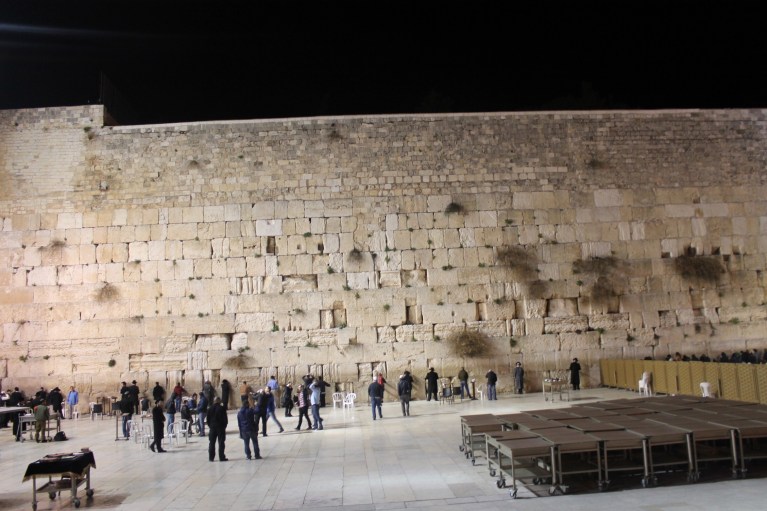
I have been to Israel twice on pilgrimage now and both times I have been utterly blown away by the power of the Western Wall. It is simply the scrap of a foundation wall that the Romans left behind because they didn’t think anyone could ever care about it, but oh how wrong the Romans were. Today, almost two thousand years after they destroyed it, it still remains one of the holiest sites in the world. Day in and day out people flock there to pray, to mourn, to celebrate, to remember, to dream. It is a place of laughter and of tears. Each time I go am amazed by the fact that this ugly ruin, just a few old stones sitting on top of each other, can be one of the most beautiful things in the world. Yes, if you want to see human sinfulness it is all over too: it is a place of division and fighting and pain and brokenness, but if you can look beyond that you will also see that it is a gateway into another world. The temple still has its power because it still directs people to God, and that was its true purpose all along.


We live in a world of uncertainties. Wars and fighting, famines and disease, these things have been more or less constant throughout history. And throughout that same history there have always been individuals going around saying: “I am he.” I am the one that can save you from all of this. Believe in me and I will protect you from all of that uncertainty. Follow me and honor me and I will give you the riches of the world. That is the world we live in and that is a world that desperately needs temples.


We need temples to remind us that nothing we can build on this earth can outshine or outlast the glory of God. We need temples to remind us that we humans are not the ultimate and final authority in this universe. We need temples to remind us that God still dwells with us. We need temples to give us hope, guidance, courage, humility, faith and perseverance. We need temples to remind us that although we live in this world and in this country and place, that we are also called to be citizens of another kingdom. We need temples because our hearts will always need to be directed to worship something other than ourselves.


What do you see when you look at this church?


Do you see pretty stones and woodwork? Do you see gilding here and there? Memorials from ages past?


Do you see an aging structure in need of ongoing repair? Do you see light bills and water bills? Do you see an office with a fussy copy machine? Do you see a social hall? A school with a chapel attached? A community services organization?


Or do you see a temple?


Because that is, in truth, what every church is. This is a temple. This is first and foremost a place where God is to be worshiped. This place stands as a symbol to the community that God still lives here among his children. It is a window into another world; an outpost or embassy of another kingdom. It is a place where we proclaim that in the midst of this tempestuous and uncertain world there is still a rock that we can stand on; that there is still shelter for the broken and the weary and the downtrodden. It is a place where we remember that God is the source of all that is holy, not Herod. It is a place of comfort, of humility, of hope and of prayer. This is a place where people come to meet God, and nothing you do, no ministry, no service is more important than that. If you have any doubt about that just look to Jerusalem. Herod is long dead and the pretty buildings are long gone, but people still flock there because they still find God in the ruins.


If this place is a temple where God is worshipped, which I believe it is, then it must also be a place where sacrifice is made. Now the supreme sacrifice of the church always has been and always will be the sacrifice of Christ on the cross. That is the sacrifice that only he can offer and it is that same sacrifice that we remember each and every time we celebrate the holy mysteries at the altar, but we are called to make sacrifices too.

This temple should be a reminder to us that this world, and all of its pleasures and pains is not the end of the story for us; it is not our ultimate destination. So if we are people of faith, then we need to look at everything we have, our lives, our finances, our time and we need to recognize that without God we wouldn’t have any of it. And without God we wouldn’t have the hope that we have for the future. We have the immense privilege to be citizen of the Kingdom of God, and heirs of salvation. Our lives should reflect the importance of God and when we gather in his temple we are called, I believe, to look at all that God has given to us, and to offer something back. Not as repayment, for we could never do that, nor as pay for play, nor as an attempt to buy our way into the kingdom, but as a sincere gesture and statement of the importance of God in our life. That is what sacrifice has always been: offering God something that is precious to us, recognizing that he has already given us so much more.


Now you may be wondering, and should be asking yourselves, how much God is calling me to give this year. That is ultimately a question that only you can answer. I can tell you that the biblical standard in the scriptures and throughout most of Christian history has been 10%. Some of you may be gripping your seat at this point. This is one of those moments when it is great to just be a guest preacher. I can say the difficult things knowing that if you don’t like it I am wearing shoes I can run in. Of course, all clergy recognize that for some people that may be a stretch, and for others it could just be a starting point, but how ever much you give, let it be significant to you. Let it represent an actual sacrifice and not just something you can spare.


I’ll be honest with you. I have wasted a lot of money in my life. Bought things I shouldn’t have. Invested in things that I shouldn’t have. I am amazed at how much can be spent on totally meaningless things. I regret those wastes, but I can tell you I don’t regret giving any of the money I have ever given to God or his church. Because I know that this is a temple, and that at the end of the day that money isn’t just about balancing budgets and paying bills, it is about building the kingdom of God.

The kingdoms of this world, they come and go. Our rulers come and go and our fancy buildings come and go. Herod is dead and everything he built lies in ruins, but Jesus is alive and his kingdom is still going strong. So let us not grow weary in doing what is right. Let us not go following after every worldly leader that promises us security in an insecure world. Rather, let us see each struggle as an opportunity to testify to our faith in the only King that truly saves us.

God doesn’t throw away tarnished silver

Standard

Sermon given on November 2nd, 2016 at the requiem mass for All Souls’ Day.

Therefore, my beloved brethren, be ye steadfast, unmoveable, always abounding in the work of the Lord, forasmuch as ye know that your labor is not in vain in the Lord.


In the name of the Father, and of the Son, and of the Holy Ghost. Amen.


Father George D. Carleton in his magnificent book about the Christian Faith called “The King’s Highway” wrote that:

“There seems to be no argument that can be brought forward against praying for the dead that would not equally be against all intercessory prayer…and indeed the Church, in encouraging prayers for the dead, has only given its sanction to what is a powerful instinct in the heart of man. The loving heart cannot but desire good for the loved ones within the veil; and every earnest desire of a Christian heart in union with Christ is prayer, even if it not be expressed in the form of prayer.”


Father Carleton was writing in 1924, at a time which was what one could call the height of the Anglo-Catholic revival within the Anglican churches. It was a time when the church sought to reclaim some of its ancient practices that had in many cases been abandoned or misunderstood by much of the church since the time of the reformation. That movement resulted in the creation of such societies as the Guild of All Souls, which was founded to witness to the church and to the rest of society that we Christians not only have the ability to pray for those who have died, it is, in fact, a part of our Christian duty.


If we believe in the power of intercessory prayer; if we believe that there is some good to be had from praying for each other as we struggle through this life, then why would we think that death somehow makes that invalid?


Saint Paul says in his letter to the Romans:

“For I am convinced that neither death, nor life, nor angels, nor rulers, nor things present, nor things to come, nor powers, nor height, nor depth, nor anything else in all creation, will be able to separate us from the love of God in Christ Jesus our Lord.”


Nothing in life or death is going to separate us from the love of God in Christ Jesus. If we, as Christians have been united to him in baptism, then we are joined to Christ in a bond that death cannot break. That is why Paul can go on and say to the Corinthians: “Death, where is thy sting? O grave, where is thy victory?” Our relationships do not end in death. Just as we remain united to Christ, we remain united to each other. Death can no longer separate us. The church is one family, not just this parish or this diocese, or even of every Christian walking the earth right now, but everyone who has ever been sanctified by the waters of baptism, and if that is so then why should our care and concern for those we love suddenly cease at the gate of death? Baptism unites us to Christ and to each other in a bond that death cannot break.


But the church has for a very long time recognized that while those waters of baptism may unite us to Christ, they don’t make us perfect. There are some individuals whose witness to the faith and lives of holiness leave us no doubt of their sanctity, those people whom we generally refer to as saints, but for the vast majority of us, when we reach the point of death we will do so as very imperfect people. The idea of purgatory, is perhaps one of the most misunderstood in the history of Christianity, both by Catholics and Protestants alike. It is not meant to be some extra punishment inflicted on believers after death, the escape from which to be made available at a price. It is not a harsh doctrine, but is in fact a witness to the grace and mercy of God. Most of us will die as individuals that haven’t figured everything out: we will not have repented of every sin, or even recognized every failure in our lives. We will, in short, not be quite ready to see God face to face. But we have faith that God has not given up on us. Imperfect as we may be, we still share in the life of his very perfect son. What the doctrine of purgatory is meant to say is quite simply that we do not believe that God throws away tarnished silver.


Through baptism are souls are transformed into a very precious metal, but sin and life has a way of tarnishing that. We try as hard as we can to keep it polished, but still we are likely to enter the next world with plenty of stains. Its ok. God’s mercy abides. If we allow him to continually wash us, and polish us, we will eventually be found gleaming around his throne.


One of the prayers in our prayerbook states:


Into thy hands, O Lord, we commend thy servant, our dear brother, as into the hands of a faithful creator and most merciful savior, beseeching thee that he may be precious in thy sight. Wash him, we pray thee, in the blood of that immaculate lamb that was slain to take away the sins of the world; that, whatsoever defilments he may have contracted in the midst of this earthly life being purged and done away, he may be presented pure and without spot before thee; through the merits of Jesus Christ thine only Son our Lord. Amen.


And another:


Remember thy servant, O Lord, according to the favor which thou barest unto thy people; and grant that, increasing in knowledge and love of thee, he may go from strength to strength in the life of perfect service in thy heavenly kingdom;


Being washed in the blood of the lamb; being purged of our defilements, and growing in strength and knowledge. That is our hope as we pass from this life into the next one. We don’t know exactly what it will be like, or how long it will take; time ceases to have the same meaning when you leave this world. What we do believe though, is that through it all we are still part of the church. We on earth are the church militant; those that are still being polished by God are the church expectant; and those that are shining around the throne are the church triumphant, but we are all one church, united in baptism, united in love and united in prayer.


There is a great lie that is often perpetuated about funerals. We are told, and we tell ourselves, that the funeral is really about the survivors, the family, and what they need. For most modern funerals that has largely become the focus: keeping the family comfortable. What this usually entails is distracting the family from the reality of death by trying to mask it. Funerals become “celebrations of life” that focus solely on happy memories. But by trying to ignore the painful, present reality of death we create something that is far more depressing: we create services that only look backwards and not forwards. We create the impression that the deceased person only has a past and not a future, and that is hardly the Christian faith at all.


We believe that in Christ we do have a future, and that our “life is changed not ended” as the preface of the mass says. So we live in the hope that our best days are always ahead of us. And we live in the hope that our loved ones have glory ahead of them too. We may not be able to do much for them right now, but we can do this. We can pray. We can hold them up before God, trusting that in his mercy and grace he will wash them of their sins, strengthen them and complete the good work that he began in them at their baptism. Our labor here is not in vain. God doesn’t throw away tarnished silver.