Some of you know that part of the focus of my doctoral work has been on the writings of a priest from the 19th century named John Keble. In addition to being a priest he was actually quite an accomplished poet in his day. One of his poems is a hymn in our hymnal, hymn number 10, New every morning is the love. The hymn ends with what I might call a burn. You know what a burn is; a burn is when you cleverly or subtly, or maybe not so subtly, call someone out on their behaviour, usually pointing out their hypocrisy, but do so in a way that is not mean spirited but loving. The words kinda burn a little. Now Keble was a Victorian, so he’s very subtle, but I think he makes a point if you are paying attention.
The hymn ends:
Help us, this and every day, to live more nearly as we pray.
Those words should sting just a little bit because of what they imply: we don’t always live as we pray. What we say we believe, or what we pray with our mouths does not always line up exactly with how we live our lives or what we demonstrate with our actions. Basically, Keble is saying that we are hypocrites, and his prayer in this line is “Lord, help us to be a little less hypocritical today.” Help us this day to live more nearly as we pray.
Keble was not the first person to realize that Christians don’t always do a good job of living the faith that they proclaim. If you ever get frustrated with Church, the best thing you can do is go and read or study some of the epistles. You’ll learn really quickly that hypocrisy is nothing new.
James does not mince words in his epistle this morning.
My brothers and sisters, do you with your acts of favoritism really believe in our glorious Lord Jesus Christ? For if a person with gold rings and in fine clothes comes into your assembly, and if a poor person in dirty clothes also comes in, and if you take notice of the one wearing the fine clothes and say, “Have a seat here, please,” while to the one who is poor you say, “Stand there,” or, “Sit at my feet,” have you not made distinctions among yourselves, and become judges with evil thoughts? Listen, my beloved brothers and sisters. Has not God chosen the poor in the world to be rich in faith and to be heirs of the kingdom that he has promised to those who love him?
James throws the sermon on the mount right in people’s faces: “Blessed are the poor in spirit, for theirs is the kingdom of heaven.” Did you believe Jesus when he said that? Is basically what James is asking. When Jesus says forgive, when he says love, when he says judge not…do you believe him? James is pointing out to folks that they aren’t living the way they pray. Their beliefs and their actions are not lining up.
James finally comes to the ultimate question: if your faith doesn’t change your life and the way you live, then what good is it? What good is it to say that you follow Jesus if you never pay any attention to what he actually says? What good is it to say that you believe in a God of mercy if you never actually show mercy yourself?
There is a difference for James between living faith and dead faith. A living faith is one that is truly aware of just how much grace and mercy we have received from God and is always prepared to show that grace and mercy to others, even if imperfectly. A living faith always seeks to draw nearer to Christ, each and every day. A living faith is a faith the desires to respond to what God has done. And dead faith? Well a dead faith is a lot like an honorary degree: it is a title without necessarily having the knowledge that should go along with it. Christians need to have a living faith, not just a title, a t-shirt or a bumper sticker.
We Christians, we have some powerful beliefs and prayers, we have a high calling as followers of Jesus Christ, but we are also always at least a little prone to being hypocrites, every one of us. It is a part of the human condition and it has always been a part of life in the church. Don’t worry…if you keep reading scripture I promise you, Jesus or one of his apostles will call you out on it. Sooner or later, God will have a little burn for you, a loving reminder that you still need work too. We all need a lot of help in our day to day lives to actually follow Jesus and not just give lip service to being Christians.
So Lord,
Help us, this and every day, to live more nearly as we pray.
It is important to remember when you hear St. Paul speaking in his letter to the Ephesians, it is important to remember, that he is in prison. Paul got into trouble with some of the Jewish authorities in Jerusalem for his preaching, he was arrested, and because he was a Roman citizen he requested and got a change of venue to Rome where he spent the last two years of his life imprisoned. So this man who fought with the Jewish authorities and was kept in chains by the Roman authorities, this man who we know suffered in his body, writes to the Christians in Ephesus and says:
“our struggle is not against enemies of blood and flesh, but against the rulers, against the authorities, against the cosmic powers of this present darkness, against the spiritual forces of evil in the heavenly places.”
Wait a sec…Paul, who is being physically held captive by the Romans, says that the struggle is not against enemies of blood and flesh? You mean to tell me that Paul thinks that the real enemy is NOT the Romans or the Jews? Yes, I think that is precisely what Paul is saying. Our struggle, as Christians, as people who have allied ourselves with the son of God, is really against the rulers, the authorities, the cosmic powers of this present darkness, as Paul says, or the spiritual forces of evil. That is the real enemy: the powers of darkness and the forces of evil. Our struggle as Christians is with them. We may have physical enemies in this world, we may suffer and be oppressed, but those struggles are secondary to the spiritual struggle. We are easily distracted sometimes by the enemies of blood and flesh, but the bigger and more important battle is the spiritual one. Essentially what Paul is saying is that we should not get so distracted by these little side battles that we lose focus on the real war that is actually going on. But it is easy for us to get distracted, even for people of faith.
You know, there have been a lot of arguments in the past, especially among some historical and critical scholars of the bible over whether it was really the Romans or the Jewish Temple authorities that are really responsible for having Jesus crucified. But don’t you see, no matter which side of that argument you come down on, you are missing the real conflict that is happening here! This isn’t about a struggle between Jews and Romans. This is about the fight between good and evil. This is about the struggle between God and the forces of darkness. This is a spiritual battle that involves flesh and blood, but is about so much more than one man’s life. You know, when Jesus was arrested he said to those who were putting him in chains: “this is your hour, and the power of darkness.” The powers of darkness were responsible for having Jesus crucified, and yes it was darkness working with and through human beings, but don’t go thinking that you can just blame Pontius Pilate or Caiphas for this and let it go, like they are the only ones who ever leant the powers of darkness a helping hand. The spiritual battle that is happening on the cross affects all of us; we are all a part of it.
The crucifixion is a historical event, but the cross represents a battle that transcends place and time as we know it. The cross is about the cosmic struggle between darkness and light, good and Evil, or God and Satan that is taking place in every age, in every country and society, and even within every person. The cross is about a struggle that is happening right now in all of our lives, and I will let you in on a little secret or insight…if you look at the cross…without the eyes of faith or the knowledge of God’s power, if you look at this symbol and don’t know what happened three days later, if you don’t know about Easter, then it is always going to look like the darkness is winning. Always.
But what if you do know how the story ends? What if you knew that this man was victorious in this fight? What if this is a reminder to you that in this cosmic battle between light and darkness that evil only ever appears to have the upper hand, but in the end is always defeated and thrown down and trampled underfoot by God? Could that change how you live? Could that give you some perspective on who the real enemy is in this world and which battles are more important? Would that change how you look at suffering?
Well it did for Paul. Paul could sit in prison and realize that his real struggle wasn’t with his captors. His real struggle was with darkness. The powers of darkness. That is how Paul, earlier in his ministry when he had found himself in jail was able to minister to and even convert his jailor. As much as he was being oppressed by this man, Paul knew that he wasn’t the real enemy. And here’s the other thing Paul knew, Paul knew that you don’t have to be sitting in a jail cell to be struggling with those forces of evil. Everyone is assaulted by them. It may come in different forms, but man or woman, young or old, rich or slave, we are all going to have to struggle with evil in some form. So what is the best way to fight it? What is the best way to defend ourselves against the real enemy in this world? Well, first off, make sure you are dressed for battle. Paul gives the Christians in Ephesus some very practical advice by way of a metaphor: put on the whole armor of God. Paul encourages these Christians to think about spiritual weapons like pieces of a soldier’s armor:
He says fasten the belt of truth around your waist. Lies only serve the devil. Those who worship God must worship in spirit and in truth. Jesus said I am the truth. Remember that the person in the gospel that questions the importance of truth is Pilate, the man who ordered Jesus to be executed. Truth is a spiritual weapon.
And the next is righteousness. Paul says “put on the breastplate of righteousness.” Now I hasten to add here that Paul is not talking about self-righteousness; he’s not talking about being puffed up and conceited and arrogant. Paul is talking about guarding your hearts, like a breastplate, with the motivation of goodness. Are you seeking righteousness? Not have you lived perfectly, but are you trying to do the right thing in all your actions? Are you seeking to live a moral life? Do you believe that right and wrong truly exist? That is righteousness.
The next thing Paul says is you need shoes that will make you ready to proclaim the gospel of peace. Telling other people about the peace that only comes from knowing God; telling the gospel story, telling people how this really ends, that is a powerful weapon.
But of course, Christians need to be prepared for the resistance that the darkness is going to throw back at them. The devil isn’t going quietly, so you need a shield of faith, a helmet of the knowledge of your salvation, and a sword that is the word of God. Knowing the word, reading the word, listening to God speak through the word that is your best defense against the powers of darkness in this world. Just be sure that you have a good grip on it and aren’t just dabbling in verses here and there, because you know, the devil can quote scripture too.
Finally, Paul adds, pray. Pray at all times. Yes, there is real physical work to be done, but it must always be accompanied before and behind with prayer. Prayer is a powerful reminder that no matter what our circumstances are, the real battle that we are fighting is a spiritual one, and therefore we need to make sure that we are properly equipped with spiritual weapons.
Now maybe you don’t like Paul’s militaristic metaphor and imagery, maybe it makes you a little uncomfortable, but when I look at the world around me, when I reflect on what is going on in the lives of the people I know, and when I think of what has happened in my own life, the only conclusion that I can come to is that spiritual warfare is real. Yeah, we all have some material and physical problems from time to time, maybe even all the time, but our real problems are the spiritual problems. Yes, the enemies of flesh and blood can hurt us, but that kind of pain and oppression is nothing compared to despair, or hopelessness, or anger, or hatred. So fight the spiritual battles first.
Every day there is a spiritual victory to be had. Every day there is joy to be had, and hope and grace and love to be shared. Every day there is a reason to give thanks to God. If you know how this story ends, then you have a reason to rejoice today, no matter what enemies of flesh and blood you may have. But remember that there is nothing the devil wants more than to so consume you and distract you with what he is doing, that you lose all sight of what God is doing. Satan wants you to be so obsessed with all the pain and suffering in this world that you feel guilty for even being happy. The devil wants you to be so overwhelmed by all the junk you see that you just want to give up and give in. That is the spiritual battle that we are fighting every day in our world and in ourselves. But as our final hymn today confidently proclaims: “Hell’s foundations quiver at the shout of praise.” Nothing threatens the devil more than joyful, thankful Christians. We are not phony or blind to the suffering in the world, but we know that there is victory beyond it. We can be joyful, even when getting dressed for daily spiritual battles, because we already know how the war ends.
Onward, then, ye people, join our happy throng, Blend with ours your voices in the triumph song; Glory, laud, and honor, unto Christ the King; This thro’ countless ages we with angels sing.
Before I really begin my sermon this morning there are two fancy theological terms that I want to make sure we are all acquainted with: anthropology and Christology.
Anthropology is the study of human beings.
Christology is the study of Jesus Christ.
In the church world, your anthropology is your view of the role of human beings in history. How willing and capable are human beings to do good things, to change themselves, and to make a positive impact on the world?
Your Christology on the other hand is your view of the role of Jesus Christ in history. Was he a cool and clever teacher that just came to teach us how to help ourselves and then was put to an untimely death, or was he God incarnate, the savior of the world, who offers his life as a sacrifice for our sins?
I am sure that I have mentioned this before, but I have what you might classify as a low anthropology, exceedingly low actually, snake belly low. What that means is, that I basically think human beings are pretty awful creatures. We have neither the will, nor the capability to be consistently good or smart. Now I want to point out here that I didn’t come to this conclusion from reading the Bible, or at least the Bible isn’t first place where I saw evidence of humans being bad and dumb. It was history. I was a student of history before I was a student of the Bible. And what history has taught me, is that throughout time, human beings have NEVER been consistently good (magnanimous, self-giving, compassionate, loving, caring, honest, trustworthy), we may have breakthrough moments, but we have never been consistently good, AND we have NEVER been consistently smart (and by smart I mean ‘wise,’ using our brains and making decisions based on good evidence). We have never done these things consistently. Never, never, never. Yes, we can, and have accomplished amazing things, we can build amazing buildings, we can treat and cure lots of diseases; and we can, at times, be very noble, we can sacrifice our lives for the lives of others, we can be giving and loving. But we have never, not in the thousands of years of recorded history, we have never proven ourselves capable of being consistently good and smart without fail.
Now you may start to object and say that this is a very pessimistic, negative view. You may think that this sounds depressing and hopeless, but it’s not at all. In fact, this low anthropology of mine is the key to the joy, the peace and the hope I have in this world. Granted, I don’t emote a lot, and I may not very often jump up and down and squeal with glee, but I do have great joy and I have a powerful hope, but they don’t come from my anthropology; my joy and my hope don’t come from any expectations I have for my fellow human beings. My joy and my hope come from that other fancy theological word we just heard: my Christology. I have a high Christology. My joy and my hope come from God. Specifically, my joy and my hope come from what I believe that God has done and revealed in Jesus Christ.
Human beings have consistently, throughout time acted in selfish and self-destructive ways, and God has shown us in the life of his son Jesus Christ, that that is NOT his will for us or our lives. Jesus calls us to forsake sin, to repent and change our lives, BUT he also still loves us enough that he is willing to die for us while we are still these sinful, awful creatures. Jesus commands us to love God and to love our neighbors, and he knows darned well just how incapable we are of doing either one of those things with great consistency. How is the devoted follower of Christ supposed to live with this tension?
You know, I think the Apostle Paul gives some great practical advice sometimes. Paul is well aware of this tension between our sinful selves and what God is calling us to be. Sometimes Paul describes it as the difference between the Old Adam and the New Adam. In his letter to the church in Ephesus that we heard a portion of this morning, Paul is distinguishing between the Old Man and the New Man. And he makes the point, that while we are often inclined to do one thing, what we need to do, as followers of Christ, is the exact opposite.
Do you remember that Seinfeld episode where George came to the realization that his life was such a mess that he should try to always do the exact opposite of what he would normally do? I think that is what Paul is sort of trying to suggest here. The old man in you is inclined to do this; why don’t you try this for a change? Instead of lying for your own sake, why don’t you try telling the truth for someone else’s sake? Instead of stealing, why don’t you try working and not just working for your own benefit, but working so that you will have extra that you can share with others? Working for someone else’s sake. Instead of using your words to tear people down, why don’t you try using them to build people up? Instead of being bitter and angry all the time, why don’t you try being forgiving? Try doing the opposite. This is important advice, because NEWSFLASH, human beings are not always naturally inclined to do the right thing. We are complex creatures with a whole range of emotions and motivations for why we do what we do, but what history has proven, beyond a shadow of a doubt in my opinion at least, is that we are not capable of being consistently good or consistently smart.
If your worldview is such that you need other people to be good or smart in order for you to find some peace and joy in the world, well I’m sorry but you are setting yourself up for a life of frustration and misery. You are expecting humans to be something that they are not. If your daily happiness is contingent on everyone else around you doing what they ought to do, showing care and concern for others, or being simply competent or rational or reasonable, then I hope you like being miserable, because you’re going to be. If your hope is based upon the belief that humanity as a whole is going to someday wake up and be consistently good and smart, well I guess I just don’t see much hope in that. If you think that human beings are just going to wake up one day and start being nice to one another and sensible in all their decision making, then you believe in miracles even more than I do, and I believe in the resurrection!
Now that doesn’t mean that I don’t think there is room for anger when people do selfish and stupid things. Oh no. Of course there is room for anger and disappointment, but you have to find a way of letting go of the anger and getting past it, or it will eat you alive. Anger isn’t sinful in itself, but it can become its own sin real quick if you don’t watch it. It can become resentment and despair and hatred. And you know what happens when you let yourself hate something? You become it. You will become the very thing you hate. If you go around resenting people for being sinners, you’re going to become the worst sinner of all, I guarantee it.
You know, living through all this covid stuff, I am remined on a daily basis how much we humans are neither consistently good nor smart. Yeah, we can be amazingly compassionate and clever sometimes, but we can also be selfish and dumb. All this time I find myself stuck here in the middle between folks who can’t be bothered to take the most basic and reasonable precautions, not only for their own sakes but for the sakes of others, and then on the other side are the hand wringers who either live in constant perpetual fear of every sneeze, or who think that if we keep people from living that we will somehow be able to keep them from dying. Fear and resentment on this side; fear and resentment on that side.
You’ve got the people that don’t want to pay any attention to science at all, and then you have the people that think science must have the answer to all our problems. You’ve got the people who don’t think we should bother trying to fix anything, and then you’ve got the people who think we can fix everything.
And here I am, stuck in the middle, I’m sure with a whole bunch of other sensible folks just like myself. Naturally I think that I am sensible and that anyone either to the left or the right of me is foolish, but there we are. Do I get angry? Yes, but I’m not going to let the fact that humans insist on doing what humans have always done steal the real joy and hope from my life. You know, if it weren’t covid, there would be some other reason for you to be annoyed with how other people are behaving. How they vote, how they drive, what color they painted their house…people are going to continue to make bad decisions and sometimes, sadly, those decisions are going to have a direct effect on you. But it has ALWAYS been this way, ever since our ancestors started building their mudhuts next to each other. You can’t get 4 chapters into the Book of Genesis before you find humans getting annoyed with one another and even killing each other. If my hope, as a Christian, were based upon humanity’s ability to make good decisions it would be a very flimsy hope indeed.
But you see, that’s not where my hope resides. As I said, my anthropology is low, but my Christology is high. My hope and my joy come from Jesus. Now that doesn’t mean that I think Jesus is just going to fix everything for us; it’s not that simplistic. Someday God’s kingdom is gonna be fully realized on earth, but that will be the last day and it will be a day that comes in God’s time, not ours. But until that day comes, Jesus has shown me a better way to live; it is a way that frequently involves doing the opposite of what I am inclined to do. But even when I fail to do that, even when I fail to live the way that God wants me to live, even when I fail to be good and wise…there is still love and there is still forgiveness. That is why Paul says “be kind to one another, tenderhearted, forgiving one another, as God in Christ has forgiven you.” I am reminded that no matter how sensible I think I am today, at some point in my life I have not been good, I have not been smart, and I have needed forgiveness. That is the way humans are. My hope and my joy are not based on the unreasonable expectation that humans on this side of glory are ever going to be anything else. My hope and my joy come from knowing that each and every time we fall, God is there to forgive us and pick us back up again. Yes, I think God wants us to make good decisions, but I know that he still loves us when we make bad ones. That is good news, that is true joy, that is real hope. And that my friends it doesn’t come from anthropology; it comes from Christology.
I am taking the long road in my sermon this morning, but please come along with me. I promise, I do have a point and I will eventually get to it.
Many of you know that when I was an undergraduate, I did a summer term at Oxford University in England. That experience is actually part of how I became an Episcopalian, but that is another story. But while I was there studying, and mind you this was my first time outside the United States, while I was there I started to have cravings for a biscuit. Now I know that this is New York and y’all think a lot of your bagels, and yes, I can appreciate a really good bagel, but I will never love them or crave them in the same way that I do biscuits. Biscuits were a staple for us. Grandma always had them on the table, maybe not at every meal, but at most of them. They are a part of my culture. Now here is something that you need to know if you don’t already know it: biscuits are not really a part of British culture. I love England. I have lots of friends in England. And the English have some wonderful food, but they don’t really have biscuits. They have the word “biscuit,” but the word biscuit in England means a cookie, not the fine, flakey quick-bread that we make with shortening and buttermilk and flour. Now I wasn’t going hungry, but for some reason I just really wanted a biscuit. So in-between studying and exploring churches and castles, I was also looking for a biscuit. I figured maybe their McDonald’s would have a sausage biscuit, but no. No biscuits. Then I tried KFC. Surely if they sold fried chicken they would also sell biscuits. No luck. No biscuits there either. This was getting serious. I remember at one point trying to explain to some of my lovely English hosts what an “American Biscuit” was because they had no idea what I was talking about, and I said “well, it’s kind of like what you call a scone, but it’s usually lighter and fluffier and buttery.” “Huh” they said, and just kinda shrugged it off. It didn’t really mean anything to them.
You know, at the time I thought I was just having a strange craving, but looking back now I realize that it wasn’t just my stomach I was trying to fill. I wasn’t just longing for a fluffy piece of bread, I was longing for a symbol.
I think sometimes we misuse or misunderstand the word “symbol.” We talk about symbols like they aren’t real things or aren’t important. I myself have used the expression “just a symbol.” But symbols are real things, and they are powerfully important. Symbols are little things that connect us to much bigger things. They are physical things that connect us and reconnect us to memories and stories. And symbols show up all the time in everyday life. In fact, that is when they are the most powerful. Think about bread for a second. Growing up we would buy sliced bread or yeast bread from the store for things like sandwiches, but we never made that at home. At home, the everyday bread that we made was either cornbread or biscuits. As I mentioned, my grandmother loved them. I can remember watching her make them when I was little. She would bring out this giant green Tupperware bowl from under the counter that she kept her flour in, make a well in the center with her fist, pour in some milk and oil and start to work it with her hand, drawing in little bits of flour as she gets it to just the right consistency, then shaped it into biscuits, and baked them off. Whenever the family gathered you can be reasonably sure that there would be biscuits on the table. So to me, a biscuit isn’t just a piece of bread, it is so much more than that. It is a symbol of a whole world of relationships: it reminds me of the South and my family and my grandmother, and my aunts and uncles and cousins in South Georgia. It reminds me of a dialect, and of values, and my faith. All those stories told over the dinner table and all the while this little piece of bread was there, just absorbing it all. A biscuit is about so much more, to me at least, than just a piece of bread. I didn’t realize that when I was on my first trip to England, but I do now.
This all became more clear to me very recently when I discovered Ms. Brenda Gantt. Now if you don’t know who Brenda Gantt is, I will share with you a link to her Facebook page and some of her videos. Brenda Gantt is a grandmother in South Alabama, who about a year or so ago started recording videos with her phone, standing in her kitchen teaching folks how to cook. She now has over two million followers I believe, and the video that really turned her into something of an internet sensation was one of her showing how to make biscuits the traditional way. Well you know I had to watch. Ms. Brenda takes her big bowl of flour, makes a well in it with her first, pours in the buttermilk…I think you are beginning to get the picture. She was doing almost exactly what my grandmother did. In so many ways she was reconnecting me with my grandmother who died several years ago: through some of her words and phrases and mannerisms, but most importantly in the food she was cooking. Food just has this amazing symbolic power to connect people. It is a connection that isn’t just happening in your head either, your whole body is a part of it. So naturally I have been watching Ms. Brenda just about every day, not just for recipes, but also because when you watch her you just feel like you are hanging out with her in the kitchen. She talks about what she did today, and what her family is doing, and very often she will talk about her faith or even read from the scriptures. You get the sense that this has very much become a ministry for her. And you know, watching her, and seeing the love that she just pours into her followers and into the food she is making for her family, I at least feel very ministered to. In one video, she invites a pastor friend over and the celebrate communion right there on her chopping block. There was another video, and I forget what Ms. Brenda was making, but while she was cooking she grabbed this very long dish towel that was clearly designed to be worn around the neck. Now I haven’t seen that type of dish towel before, it looks kind of handy, but when she put it on and stood before her big chopping block island in the middle of her kitchen, well darned if she didn’t look a lot like a priest saying mass with a stole on. Now to my knowledge Ms. Brenda is not ordained and in any event she is a Baptist and Baptists don’t usually wear stoles, so I don’t think the she was trying to look like a minister, she was trying to fix supper, but for me as a good Episcopalian who loves traditions and signs and symbols, well for me it caught my eye as if God was trying to get my attention and say “pay attention now, because there is something important going on here.” Maybe Ms. Brenda isn’t ordained, but the act of pouring your own life and your own love into some food that is then going to give life and joy to others, that is a priestly act. It is a sacrificial act. And it is an act that Our Lord himself performs.
Jesus feeds people. Not just spiritually or metaphorically. Jesus literally feeds people. And this is not a one-time thing in the gospels; it happens over and over again. Feeding people is important to Jesus. Even after the Resurrection, Jesus tells Peter, “if you love me, then feed my sheep.” In today’s gospel reading that you heard just a minute or so ago, Jesus had just been feeding the five thousand, and people are still following him and looking for him. And Jesus says to them, right now you are following me because you are hungry. “You are looking for me…because you ate your fill of the loaves.” But Jesus offers us more than just a piece of bread that fills you up one minute and is gone the next. What he is really offering people, through his food, is relationship with him. That is the food that leads to eternal life: bread that is more than just flour and water, but that is a symbol or our relationship with God. Bread that is a reminder of God’s love and care for his children, just like the fine, flaky manna in the wilderness. Bread that is life-giving in a way that includes the body, but that is really about so much more than a cure for hunger. Bread that feeds us with God’s own life. Bread that connects us to others that we love. Bread that reminds us of stories, and values, and expressions, and physical actions. Bread that is really a little piece, a little taste of a whole other world.
Is that too much to ask of a little piece of bread? Well, I don’t know. If grandma or Ms. Brenda can do that with a simple biscuit, what can the Lord of all creation do with a little dough? If this flaky piece of bread can reconnect me to my past and remind me of who I am; if this can feed me both physically and spiritually, and I just baked it this morning, then what can the bread that Jesus gives me do?
Jesus says in the gospel today that “I am the bread of life. Whoever comes to me will never be hungry, and whoever believes in me will never be thirsty.” When Jesus gives us bread, he isn’t just giving us a snack to tide us over. It is his own life that is offered. He isn’t just giving us a piece of bread. He is offering us a relationship, an eternal relationship with him. In this church, right before we receive communion, we say the Prayer of Humble Access, which many of you know is my favorite prayer in the entire prayer book, and right at the end of that prayer we say: “Grant us therefore, gracious Lord, so to eat the flesh of thy dear son Jesus Christ, and to drink his blood, that we may evermore dwell in him, and he in us.” Whenever we participate in the Lord’s supper we are renewing our relationship with Jesus Christ. We are re-inviting him to be a part of our lives and asking him to be a part of his. And we believe that in that whole act of drawing us together, uniting us with his life, and uniting us to each other, and recalling stories, and values, and God’s love…we believe that Jesus is really and truly present in that act. Sure Jesus is present in our lives in other ways, but he is especially present in this way. And the symbol of his presence, is a little piece of bread that points to a whole world of relationships.
That is why we treat the bread of communion with so much reverence and respect here. Because we believe that Jesus is touching our lives in a very special way through it. It isn’t just a reenactment of something that happened a long time ago; we aren’t just using Jesus’s recipe here, we are asking him to be the chef. It is God’s heavenly feast that we are invited to be a part of. We don’t always understand exactly how God is working through communion, and maybe we shouldn’t try to over-define it and just take Jesus at his word: this is my body; this is my blood. “Whoever eats my flesh and drinks my blood abides in me and I in him.” It is a mystery and it is miraculous, and I am ok with that. I want to be a part of this meal, because I want to be a part of Jesus’s life and the life of his people.
Whenever I eat a biscuit, I am reminded that I come from biscuit eating people, and I become a biscuit eating person once again. And not that there is anything wrong with scones and bagels, they can be lovely, as can the people that eat them, but I have no doubt that I will die a biscuit eating person, and until that day comes I will try and spread the good news about biscuits to the non-biscuit eating world, much like Ms. Brenda is doing and I pray for God’s blessing upon her.
But as much as this bread means to me, there is another piece of bread that means more to me than a biscuit, and it is far more important that we all spread the good news about it. Because it’s not just a piece of bread. It is a symbol of the heavenly feast. It is a little piece of another world, that God has given us here. It isn’t just bread; it is a relationship with the saviour. We treat this bread with a lot of reverence here, because really, what could be more precious than a relationship with Jesus?
Here is the link to the Cooking with Brenda Gantt Facebook Page:
I wish I could say that these were my words of wisdom, or a grand epiphany that I had, but they are not. They are the words of a priest in the Church of England, a Father Bill Scott, who passed away just last year.
Love makes the beloved see beauty within himself. When someone loves you, when you experience that love, you are reminded that you are in fact lovable. Despite all the evidence to the contrary; despite your failures and your sins, and your bad habits, and all those bits of yourself, whether they are moral, mental or physical that you consider to be unattractive, despite all of that, here is evidence that there is beauty within you, because somebody else sees it. Someone else can help you see beauty within yourself that you don’t see, and it is a miraculous thing.
This doesn’t just happen in romantic relationships. All loving relationships do this. Mother or Father to Child. Friend to friend. It can even happen between strangers on the street. When someone loves you, and shows you love, one of the first things that changes, is how you see yourself. And that can change your entire world. This happens in our relationships with one another, but think about when it happens in our relationship with God. What happens to us when we realize that we are beloved of God?
That really is Paul’s challenge to the Church in Ephesus in the epistle this morning. Paul wants these Christians to know, really know, the power of Christ’s love because that is going to change how they see themselves and it turn it will also change how they see everyone else in the world.
“I pray,” he says “that you may have the power to comprehend, with all the saints, what is the breadth and length and height and depth, and to know the love of Christ that surpasses knowledge, so that you may be filled with all the fullness of God.”
Knowing the love of Christ is not just an intellectual exercise. It is an experience. I don’t think that Paul means “comprehend” in the sense that you understand exactly how God’s love works, or how love works in general. I think Paul uses “comprehend” to mean knowing that you don’t know. Knowing that there is a reality here that “surpasses knowledge” as he says. We can’t really know how big the universe is, but we can look up at the night sky in awe and wonder at the vastness of it. We can experience the limitlessness of it. It is one thing to say that the universe is big, but it is another thing to look up at the stars. Paul wants people to approach Christ’s love with mystery and wonder. Because this love, doesn’t just say something about the God that we worship; this love says something about us too. Despite all of our flaws and failures, God still sees something in us that is loveable and beautiful and worth saving. Worth dying for in fact.
Experiencing that love MUST change us. How could it not?
We have not earned God’s love. The scriptures make it very clear that God’s love for us was there right from the very beginning. God’s love is WHY we exist. It was God’s love that created us in the first place. And it was God’s love that saved us through Jesus Christ. Paul says earlier in Ephesians:
“For by grace you have been saved through faith, and this is not your own doing; it is the gift of God, not the result of works.”
In other words, God has a love for you that has nothing to do with your own sense or worthiness or accomplishment, or for that matter, your own sense of unworthiness or sinfulness or failure. Paul is praying for these Christians to really know and experience that love, because if they do, that should change everything for them. Not only how they see themselves, but also how they see other people.
If Christ loves me so much that he was willing to die for me, then there must be something within me that is, in fact, loveable. There must be something beautiful, even if I sometimes have trouble seeing it. And if I believe that Christ loves you so much that he was willing to die for you, then something within you must also, in fact, be loveable. There must be beauty within you, even if I sometimes have trouble seeing it. God’s love challenges us to see beauty where it is sometimes hard to find.
Immediately after the verses from Paul’s letter that you heard this morning, Paul goes on to say that “I beg you to lead a life worthy of the calling to which you have been called.” If we actually believe what we say about God’s love to be true, then that should invite a response from us. We didn’t earn this love of God, but we may certainly respond to it. Part of this response that Paul lays out in his letter is learning to love and respect each other as the beloved of God. We are challenged by God’s love to see beauty within ourselves, and to see beauty within each other.
When we talk about love, we are not talking about some warm and fuzzy sentimental feeling. What we are really talking about, is a way of looking at the world through the eyes of God. We are talking about learning to see beauty in unlikely places, in the eyes of our fellow human beings, and even within ourselves.
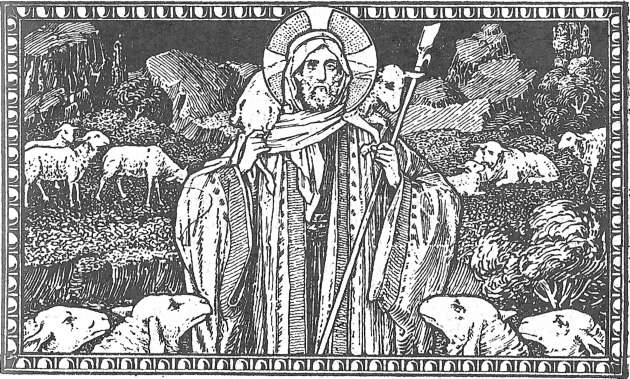
Jeremiah has some harsh words for the shepherds of Israel this morning, and rightly so. Because the people have gone so far astray through terrible, inept and unholy leadership, there are hard times coming to God’s people. I don’t have time this morning to go through the whole Book of Jeremiah, but let me just say that through much of the book, the Prophet Jeremiah paints a very dark picture about what is about to happen in the land. It’s a tough read, and Jeremiah has some tough words for faithless shepherds. But in the midst of these dire warnings and tough words is a promise.
God says to the shepherds: YOU may have failed, but I will not. Not only will I appoint new shepherds for me people, but I myself will be a shepherd. I will shepherd my people. I will look for the lost. I will gather people in. I will appoint new shepherds.
Do you remember last week how I said that our God reveals himself to us? Well, he is doing that today in this passage. God is giving us a glimpse here of who he is. God raises up and appoints shepherds, that’s true, but it is only to share in his work, because it is really God that is the shepherd.
Some shepherds fail, yes that’s true, but God does not abandon his people. If you read the rest of Jeremiah you will see how God is sometimes abandoned by his people, but God is never the one that walks away. God’s people may get lost; God never does. And people are never so far gone that God can’t find them. There are tough words from Jeremiah about the present state of affairs, but within those words is the promise that God is prepared to do something about it.
When Jesus looked out on the great crowd, what did he see? Sheep without a shepherd. People that were lost and suffering. People that had likely put faith in leaders that had led them astray. People that were oppressed and mistreated. Jesus saw all of this and he had compassion on them. He taught them. He laid hands on them and healed them. And…he appointed some new shepherds, his disciples, and he sent them out with instructions to do the same.
That is our God at work folks.
No matter what valleys of death our faithless shepherds may lead us into, we always have a good shepherd who will lead us right back out of it. God hasn’t just done this once, or twice. Our God has done this many times, because this is who our God is.
If we keep reading in Jeremiah this morning, the prophet goes on to say:
7 Therefore, the days are surely coming, says the Lord, when it shall no longer be said, “As the Lord lives who brought the people of Israel up out of the land of Egypt,” 8 but “As the Lord lives who brought out and led the offspring of the house of Israel out of the land of the north and out of all the lands where he[a] had driven them.” Then they shall live in their own land.
What Jeremiah is saying there is that the days are coming when we won’t just look back on God saving us from Egypt, we will also look back on God saving us from this. Whatever this is. The God who led our ancestors out of Egypt is going to lead us out of this too. The God of Moses is the God of Jeremiah and that is the same God that we believe was incarnate in our Lord Jesus Christ. When Jesus’s followers looked back on Jeremiah’s words they thought “surely this is the righteous branch from David” that Jeremiah was talking about. Surely this is God shepherding his people again.
We believe that’s true. God was shepherding his people in Jesus. And God is still doing it. Because that is who God is.
There was an Episcopal priest in Connecticut at the end of the 19th century, who died a very young man, just 35, but before he died we wrote this poem about how we often don’t experience God shepherding us until we are in the deepest valley or the darkest night. His name was Robert Clarkson Tongue and the poem is called “When the tale of bricks is doubled.”
I really could just end my sermon right here, because that is the main thing I want you to take away from the scriptures this morning, particularly the Old Testament and the Gospel.
We cannot shut God up. But we sure like to try.
Now before I elaborate on that, let me say that we, as Christians, fundamentally believe in a God who reveals himself to us. We believe in a God of revelation. What we believe about God or what we know about God, is based on what we believe God has revealed to us. We do NOT believe that God is just some idea that we concocted, or that our knowledge of God is something that we have come to through our own brain power. We haven’t figured God out, God has shown things to us. We believe in a God that wants to be known, that wants to live in relationship with us; we believe in a God who speaks. God speaks through Holy Scripture, through sacred tradition, through priests and prophets, through angels, through the Holy Spirit, through miracles, through nature. God speaks to us in so many ways.
But here is the problem with that: we don’t always like what this God of ours has to say.
Now it is great when God “walks with me and talks with me and tells me I am his own” like we sing in that hymn “In the Garden.” And don’t get me wrong; I believe that is true and I love that hymn. God does having loving words for us that affirm that we are his beloved children. But that is not all that God has to say to us. God regularly challenges us. God calls us out on our hypocrisy. God knows about that thing you did. And God has forgiven you for it, but that doesn’t mean that God doesn’t have something to say to you about it. The scriptures can be challenging sometimes, and it’s not when I don’t understand them that they are the most challenging, it is when I DO understand them. Because that is when I hear God calling me out on my junk; pointing out to me those times when I have not been as faithful as I am called to be. Now this isn’t to condemn me; not at all. You don’t discipline children because you hate them. You discipline them because you love them and want them to have a good life. And that is what God wants for us. God wants us to have a good life, but in order for that to happen, sometimes God has to point out to us where and when we have gone wrong.
But very often, we don’t want to hear it. As a matter of fact, we find all sorts of ways to drown out God’s voice so we don’t have to hear anything negative God has to say. I hasten to point out that this is NOT a modern phenomenon. We’ve been trying to shut God up for years.
Consider the Prophet Amos. Now Amos was from the South in the land of Judea and he was sent by God up to preach to a bunch of Northerners in the land of Israel. And poor Amos, God gave him a tough message to deliver. God was sending Amos to call out that kingdom for all of its unfaithfulness. They were not being true to their calling. They were being unjust. They weren’t treating each other like they were all children of God. They were getting into some idol worship, and one of the idols that they were worshipping was money. They were using debt to enslave people. I could go on and on. Amos ends up telling the Northern kingdom that because of their faithlessness, their kingdom is going to crumble, their king will fall and they will in fact, become slaves.
As you can imagine, people didn’t like that. They didn’t want to hear what Amos had to say. Even their priest didn’t want to listen to this message from God. So the priest said to Amos: “Get out of town.” No, literally, get out of town. Off with you! Go back down South where you came from. So Amos heads back down South.
And you know what eventually happened? The Northern kingdom fell just like Amos predicted, and all of its people were hauled off into slavery. You can silence a prophet, but you can’t shut God up. God always has the last say. And you would think that after hundreds and thousands of years that we would learn that lesson, but we don’t.
You remember John the Baptist? He got into trouble, because he called out Herod for marrying his brother’s wife, which he wasn’t supposed to do. Now Herod was just trying to ignore that part of John’s message, but his wife Herodia was infuriated. This was publicly embarrassing. So she figured out a way to shut John up by having him killed. Had his head cut off. Did that spare Herodia further embarrassment? Well, no. Because here we are today, thousands of years later, not only still talking about her unlawful marriage, but what is far worse, the despicable way that she tried to cover it up.
You know, sometimes I wonder if God laughs or cries when we try to ignore him. Maybe it is a bit of both. We so foolishly think that we can silence God. We tell God’s prophets to shut up. If that doesn’t work, we have them killed. We cut out or skip over the scriptures we don’t like, or we just shut the Bible altogether. Now I’m not saying that every quack out there with a Bible in one hand and a megaphone in the other is a legit prophet with a message from God. There have always been false prophets, God promised us that there would be. But just because some people spread untruth, that doesn’t mean that the truth has stopped talking. God never stops talking to us. Sometimes his message is sweet. Sometimes it goes down a little rough. We may think that if we don’t listen to what God says then we won’t have to deal with the message, or the truth that it contains. But we’d be wrong. It seems to me that Ol’ Pontius Pilate also thought that he was done with this pesky man Jesus when he had him killed and washed his hands. But he was wrong. No matter how hard we try and silence him, God always has the last word. You cannot shut God up.
In each of the gospels Matthew, Mark and Luke, at some point somebody comes up to Jesus and asks him: “what is the greatest commandment?” And each time Jesus responds: “You shall love the Lord your God with all your heart, and with all your soul, and with all your mind. This is the greatest and first commandment.” And then Jesus adds: “and a second is like it: you shall love your neighbor as yourself. On these two commandments hang all the law and the prophets.” Now y’all are familiar with this because I repeat it at the beginning of almost every mass here, but I want to talk about it a bit this morning, because understanding the order of these two commandments is important for doing the ministry that we are all called to do in this world.
Jesus says that the first and greatest commandment is loving God. That comes first. That is the most important. The second command is to love your neighbor as yourself. It is related to the first command, Jesus says it is like it, but Jesus does not say that these two commands are exactly equal. They can’t be, and I’ll explain why they can’t be.
In order for a command to have any meaning or power, the person giving the command, the commander, needs to have some authority, or needs to be someone that you love or respect. If Jesus was just some dude on the street telling people to “love thy neighbor” we could just walk on by and say “well, that’s just like your opinion man.” And keep on going. But we don’t do that. We have recorded those words in our scriptures and we have enshrined them in our worship. Why? Because we believe that the man who said it is the Son of God. Those words are a command from God, so our love for God, our respect for God, our fear of God even, that is what makes those words so important. The first commandment is what makes all the other commandments possible or meaningful.
If I don’t care about God or believe in God, then why should I give a hoot about any divine commandments? Why bother? Why not just do what I want? Some of this stuff that Jesus tells us to do is flat-out hard. Just look at the gospel today. Jesus gives his disciples authority over unclean spirits, well that’s fun, but then he says, don’t take anything with you. No bread, no bag, no money, keep your clothes simple, oh and by the way, whenever you get to where you’re going, some folks won’t listen to you or accept you. You’ll be rejected. Oh fun! Sign me up! You know from the original twelve that are mentioned in today’s gospel: Judas killed himself and John died in old age, but every other one was killed for doing what Jesus commanded them to do. It was a similar situation for the prophet Ezekiel. God sent him on a mission to preach his word and call people to repentance, knowing that some people would refuse to listen; knowing that this was going to be hard work.
There are blessings that come with doing God’s work and doing ministry, that is absolutely true, but there are also challenges and trials. The Apostle Paul in his letter to the Corinthians today talks about someone that he knows that had amazing visions of heaven; things he couldn’t even describe. What did Paul get? A thorn in the flesh. We don’t really know what the thorn in the flesh was, but we know it tormented Paul, and we know that Paul asked God to remove it from him and the Lord didn’t do it. Paul wanted to be strong and healthy and successful in ministry; Paul wanted to have it all, but the Lord’s response was No. My grace is sufficient for you, for power is made perfect in weakness. Paul’s ministry was a response to God’s grace and in the end that grace had to be sufficient, because there’s no guarantee of miraculous visions, there’s no guarantee of comfort or safety, there’s no guarantee of having the big church on the corner, there’s no guarantee of a private jet. In fact there’s no guarantee that people are gonna like you or even listen to you. They might even try and kill you. All that we are promised is God’s grace. That alone has to be enough. That has to be the reward. It has to be our love of God that compels us to serve God’s people.
And I mean all of us, not just ordained ministers. Jesus’s command to love God and love thy neighbor, they are given to all of us. We are all called to some ministry in this world. And undoubtedly some people will say: well can’t serving or loving my neighbor draw me into the love of God? Can’t I find God in the face of God’s children? Well yes, of course. Serving others can draw us deeper into the mind and heart of God, but I think we underestimate how much loving God makes loving our neighbors consistently possible. Because here is a big revelation:
People are not always loveable.
I’m not; you’re not. Nobody is. People can be incredibly unlovable. People do and say hurtful things. They don’t think like us; they don’t act like us. That love thy neighbor commandment is the harder commandment, and it would be so great if we could just make that the optional extra Christian add-on, but we can’t because if we are really following that first command of loving God, then that first command binds us to the second command, because it is the same God that is giving both. I love God, some days I’m less sure about my neighbors, but Jesus keeps pointing me back to them and saying “they’re my kids too. ”So God never lets us give up on loving them, tempting as that may be.You see, it is an abiding love for the Lord that makes the Christian life possible. There is no substitution for the first and great commandment. Loving God with heart and soul and mind, that has to be the primary motivation behind all that we do. That relationship is the horse that makes the whole cart go. The Christian life is a response to God’s grace and at the end of the day the day, God’s grace is its only reward. We cannot expect anything else. God’s hasn’t promised us anything else. Just his grace. And that is enough.
The woman with the hemorrhage in today’s gospel had been trying for 12 years to find a cure. 12 years this woman was sick and bleeding, and it’s not like she just sat around and did nothing about it. She had been to one doctor after another. She had tried this cure and that cure. She had spent all her money trying to get well; trying to find a cure. But nothing. She was still sick; still bleeding.
You know, I think of all the people in our world right now suffering from long covid. Living their lives, thank God, and yet still not well. Still suffering. And we don’t know how to fix it. And it’s only been a little over a year. Imagine 12 years or longer. Some of you don’t even have to imagine. Some of you know what chronic health issues are like. You know our medical science is an amazing and wonderful thing, and I thank God for it, and I thank God for all the doctors and nurses and healthcare professionals that do everything they can to try and help people, but there always comes a point where we reach the end of what we know, or of what we think we know. Doctors and nurses can’t fix everything, and they don’t know everything. They are human. We have gotten so good at fixing things that sometimes it can come as quite a shock when you come up on something that you can’t fix. But we get reminders every now and then of just how much we don’t know.
The woman in today’s gospel has done everything that she can do and it hasn’t been enough. I want you to just sit with that for a minute, because it’s a really horrible place to be in. This woman has spent all her money looking for a cure, and now she is at the end of her rope. We don’t know how much pain she was in; I don’t imagine that bleeding constantly feels very good, so I am willing to bet that she was miserable. There is no trying harder for this lady. She has done everything that she can do, and her doctors have done everything that they can do, and it hasn’t been enough. It’s not enough.
But someone had told her about Jesus. Someone told her about Jesus. I don’t know what they said about him, but they told her she should go and see Jesus. And when she gets to Jesus she realizes something really profound: Jesus doesn’t have the answers. Jesus is the answer.
Jesus is the answer. She didn’t need an audience with him. She didn’t need his attention. She didn’t need to question him. She just needed to touch him. Just touch him. She said even if I just touch his clothes, that will be enough. All of those people crowded around Jesus looking for answers, when THE answer was right in front of them.
But you know, that’s what people do, they go to Jesus looking for the answers, and sometimes they miss the fact that he is the answer. In his very being. A poor woman who was at the end of her rope, who had tried as much as she could try, she could see that, why couldn’t everyone else? She could see his power, but they couldn’t.
I wonder if it was because they were able bodied, or healthy or comfortable. You know the people that struggle the most with Jesus in the gospels are the people that have a little money and power. I’m not talking about the super rich folks like Herod. I mean the everyday comfortable folks: the scribes and the lawyers and the tradesmen, the folks who have a few shekels in their pocket and generally take care of themselves from day to day. I’m not saying these are bad folks, certainly not, many of these people become Jesus’s most devoted disciples, but still they struggle with him in a way that this poor lady with the hemorrhage doesn’t. They like Jesus, but they often misunderstand him and they struggle with what it means to follow him, and they don’t always realize what he has to offer.
Pay attention, whenever you are reading the gospels, pay attention if somebody calls Jesus “teacher.” Now this means you will be paying attention a lot, because lots of people call Jesus “teacher.” Jesus even refers to himself as “teacher” on a few occasions, but pay attention when you see that, because throughout the gospels a lot of people, when they see Jesus, that’s all they see: a teacher.
When the little girl died in the gospel this morning, the folks gathered around said: “why trouble the teacher any further?” There’s nothing more he can do. And if Jesus had only been just a teacher they would have been right. But they were wrong.
Please don’t make the same mistake. Jesus isn’t teaching moral lessons in the gospel today. He is healing the sick and raising the dead. Jesus doesn’t just have answers; he is the answer. We do not have the power or the know-how, or the resources, or even frankly the will to fix everything in our lives and in this world, but if there’s a lesson in the gospel this morning, it’s this: God can fix what you can’t.
If you have come to Church today hoping for Jesus to give you some good advice, you may walk out the door sorely disappointed, but if you have come to hear about and to touch a savior that has the power to tell the dead to get back up, well then have I got good news for you.
Job was a good man. Righteous, honest, worshipped God, did all the right things. Followed the rules, obeyed the laws. Job did everything right, and yet what we find in scripture is a man suffering beyond belief. Job has lost his wealth, his health and his family. The only thing that Job has left are three friends, and you know the old saying that “with friends like these, who needs enemies?” Well that pretty much describes Job’s friends. Because at first when Job is suffering they just sit with him and mourn with him, and if they could have just left it at that they would have been good friends indeed, but they don’t. They can’t keep their mouths shut.
Incidentally, as an aside, I spent years in hospice and hospital chaplaincy, and I have spent a lot of time doing what we call Clinical Pastoral Education, reflecting and learning about ministry to the sick and dying, and I think I can sum up all the wisdom I gained from that experience and those years in ministry in four words: KEEP YOUR MOUTH SHUT. When you encounter someone who is in pain, who is sick, suffering or grieving, the best thing that you can do is just be there with them. Stand beside them, sit beside them, bring them a casserole if you want, but just be with them. Obviously, if their suffering is something simple, and you have the power to do something to help them you do that. But a lot of the time suffering isn’t simple, and helping them isn’t as simple as fetching someone a pill or a glass of water. There is no pill that will make the pain of death or grief go away. And sometimes sickness isn’t easily diagnosed or treated either. Some things are chronic, and some pain, especially emotional pain, goes deep. The best thing you can do is just be with people that are suffering. Be with them. Don’t let them suffer alone. Listen to their cries; listen to their story. If you try to explain or explain away someone’s suffering you are likely just to cause more pain. There are not magic words in ministry, but there is presence. You can just be with people, and that is a powerful thing.
If Job’s friends had just sat with this poor, suffering man, listened to his cries and his stories, and witnessed his pain, they would have done a good job. That would have helped him. But they couldn’t keep their mouths shut. They had to come up with or explain a reason for his pain. So one by one, Job’s friends each suggest that Job must have done something wrong. If God is a God of justice, if God is fair, then you Job must have done something along the way to deserve this. Some friends right?
Job knows that he is innocent of all that his friends accuse him of, but their constant prodding, and their constant insistence that God is a just God and that therefore Job must be guilty of something, this leads Job to the point of despair and he starts to question God and God’s goodness, and that is when God speaks to Job out of the whirlwind and that is where our first reading begins this morning. And God begins by saying that all of this talk is “words without knowledge.” Words without knowledge. And maybe Job hoped in that moment that God would lay the knowledge on him and answer his questions, but God doesn’t do that. Instead God asks Job a question:
Where were you when I laid the foundation of the earth? Where were you Job, when I created the world?
The response stings a little bit, but maybe it needs to. Because we should never approach God with anything but humility. God certainly isn’t threatened by our anger and he isn’t hurt by our questions, but we need to remember, whenever we approach God, whether it is in joy, or in suffering and anger, we need to remember that God is God and we are not. We NEVER, never know the whole story. We are prone to using words without knowledge. If that phrase doesn’t sum up the age we are living in right now, I don’t know what does. Words without knowledge. Talking without listening.
God doesn’t give Job a simple answer. We may wish that he had. We might want God to give us simple answers about all the suffering in the world, but God doesn’t do that for Job, and he doesn’t do it for us either. Instead, God shows Job the whole majestic world: he shows him mountains and oceans and clouds and stars and little goats and deer giving birth and giant creatures in the sea. And God says, I made all that. I run this.
And Job says, you’re right. I spoke too soon. I don’t understand how all this works.
And then God says to him: oh and by the way, your friends are stupid and they don’t know what they are talking about. God isn’t nearly as upset by Job’s complaint as he is by the nonsense Job’s friends have been spouting. And Job’s health and wealth and family are restored, and Job lived to see his grand-children and he died old and full of days.
You know the Book of Job is one of the oldest books of the Bible. We actually have no real idea when it was written, and maybe that is as it should be, because it is a reminder that there are real limits to human knowledge, and that is a truth in every age. There is so much about this world we live in that we just don’t know. The Book of Job asks the quintessential human question: why do bad things happen to good people? It asks God the big question, and God doesn’t give a simple answer. The reality of the universe is just too much for us to grasp. The Book of Job doesn’t give us a simple answer to a complex question, but the story of Job presents us with a difficult question instead: when you encounter a suffering person, when you see someone who is grieving or in pain or sick or down on their luck, when you encounter a suffering person how do you respond? Are you quick to look for someone to blame? Do you shell out cheap advice to the suffering person? Do you try and help them figure out where they went wrong or what mistakes they must have made? Are you quick to open your mouth or can you just sit and listen? Can you listen to someone cry and just let them cry? Can you sit in dust and ashes with someone?
The lesson that I take from the Book of Job is that it is not up to us lowly humans to determine who deserves what in this life. That question is way above our paygrade. To tell the truth, I’m not sure that anyone deserves anything. At least, not in the way that we often use that word. Deserve is a loaded word. Justice is another word that I think we misuse. Human justice and divine justice are very different things, and we need to remember that whenever we start throwing the word Justice around. Maybe it isn’t possible for us to know who deserves what in this life, but what we can do, what we have the power to do is to identify the people that are suffering and to go and be with them. Just do that: when you encounter someone that is suffering, go and be with them. Listen to them. Cry with them. Hear their story.
The Book of Job is 42 chapters long, and most of that is taken up with Job’s friends trying to convince him that he must have done something wrong, but in chapter 2 we read that: “when Job’s three friends heard of all these troubles that had come upon him, each of them set out from his home. They met together to go and comfort and console him…..
They should have just left it there. They should have just kept their mouths shut.
You must be logged in to post a comment.