Oriented Towards Giving

Standard

Sermon for November 17th, 2019

Readings:

Malachi 4:1-2a
Psalm 98
2 Thessalonians 3:6-13
Luke 21:5-19

So I brought a little friend with me this morning. I don’t often preach with props, but today I just couldn’t resist.


This is the Apostle Paul. I had this doll special made for some classes that I am teaching for the Diocese. I had to have him custom made, because, and you may find this hard to believe, there isn’t a huge demand for Apostle Paul dolls. For some reason, when people think of cuddly Christian figures, the Apostle Paul is not someone that quickly comes to mind. I just don’t get it.


Maybe it is because this man said things like: anyone unwilling to work should not eat. Maybe it is because he said things like: we command you beloved, in the name of our Lord Jesus Christ, to keep away from believers who are living in idleness and not according to the tradition they received from us. Maybe it is lines like “some of you are living in idleness, mere busybodies, not doing any work.

Actually I totally get it. Paul can be hard for some people to take. He isn’t always burdened by a sensitivity to people’s feelings. I have a deep love for the Apostle Paul now, but it is a love that was hard won. Paul says some difficult things sometimes. He can be blunt, he can be gruff. He is kind of an equal opportunity offender. At some point, in one of his letters he is likely to say something to offend you. Stick with him though, because Paul very often will say things that we need to hear. Sometimes we need someone to call us out and remind us of things we have forgotten.

It is important to remember that Paul was a convert. Now all of the disciples were converts of a sort, but Paul came late to the game. Paul was a persecutor of the church before he was a member of it, so as a convert; he has a unique perspective and a missionary zeal that people that were raised in the church or people that have been longtime followers of Jesus don’t always share. When you have been working in the church for a long time, it is very easy to lose the enthusiasm you may have once had. Frustrations and setbacks and personalities, they can all wear you down, and you can forget what a treasure you have been given. It is easy to become weary in doing what is right. Sometimes you need someone to remind you of what this thing called church is all about, and converts, adult converts are usually the best ones to do that, because they haven’t learned to take anything for granted yet. For them Christianity isn’t just an old habit, for them it is an active choice.

That is one of the things that makes Paul so great; he is a convert to the church. And when he wrote letters to churches, he was usually writing to remind them of something vital they seemed to have forgotten. I have learned to love this man, because despite his flaws and his personality, so often when I read him, he reminds me of things that I am liable to forget. And sometimes, he can be very blunt about it.

In his epistle today Paul says: anyone unwilling to work should not eat. When I hear Paul say that there is part of me that rejoices and part of me that cringes. The part that rejoices is the part of me that is a workaholic. It is the part of me that appreciates how much we rely as a church on the labors of a core of dedicated people that are committed to this place and that this church could not survive without.

The part that cringes is the part of me that wants to be welcoming and gracious and understanding. Paul just sounds insensitive here. I wouldn’t stand up and say something like that at the potluck supper. Its tempting, but I wouldn’t do it. But even though Paul’s words might make us squirm a little, I think we need to hear them, because believe it or not, he isn’t just talking about some idle people in one parish centuries ago; he is addressing something that is an important part of who we are as Christians now.

Paul’s underlying point is this: Christians must be people that are oriented toward giving. Giving must be a fundamental part of who we are. If we don’t understand that in the small things; we won’t understand it in the big things. That is why Paul warns the church to stay away from people that are just looking for what they can get. Beware, he says, of people that only want to take from the community and don’t want to give back. Because that is not the example we have been given. Not by Paul, and not by Jesus.

We give, because of what we have been given. Salvation has been given to us; forgiveness has been given to us; communion with God and eternal life these things have been given to us, and we are here to share them with others. Giving must be a fundamental part of who we are as Christians. So giving is a spiritual act.

And it is important to remember that we aren’t giving just to keep the lights on or the altar richly adorned. Temples, all temples, serve a purpose. They are places where we gather, where we share, where we learn, and where we grow, but they are always a means to an end. They are tools to be used to proclaim the gospel, but they aren’t idols to be worshipped. There will come a day when temples will be no more. There will come a day when we will stand before the Lord and all that will matter will be our relationship with him.

We don’t need to be worried about that day or live in fear of it. It will come when it will come. But in the meantime, we have work to do. We have people that need to be encouraged and comforted. We have a world that needs to hear about forgiveness and grace. We have people living without hope, and we have people that have placed all their hope on the wrong things. Our faith reminds us about how much we have been given by God, and our work is to share that faith with others. It’s ok if we convert a few adults like Paul along the way. Sometimes we need the zeal and the insight of a convert to give us a good kick in the pants and to remind us of the importance of the work we are doing.

The Passing Bells

Standard

Sermon for Sunday, November 10th, 2019.

Remembrance Sunday

Readings:

Job 19:23-27a
Psalm 17:1-9
2 Thessalonians 2:1-5, 13-17
Luke 20:27-38


There was a miniseries produced by the BBC a few years ago called “The Passing Bells.” The title was based on a line from a Wilfred Owen Poem called ‘Anthem for Doomed Youth.’ “What passing-bells for these who die as cattle?” The miniseries followed the lives of British and German soldiers during the First World War. It was a pretty good series, but whoever made the last five minutes, well God bless them. You don’t even have to watch the whole show, but if you watch the last five minutes you will see a vision that will break your heart wide open. Let me try and paint the scene for you:


It early November 1918, they last days of the First World War, the most horrific battle the world had ever seen. Millions are dead; millions of lives destroyed and families ruined. It’s the last day of the war. In a distant city, the distinguished leaders are trying to hammer out the terms of the armistice, working out the details to make it all end neatly on the eleventh hour of the eleventh day of the eleventh month. Meanwhile in the trenches, men are still fighting and dying. On one side is a young British soldier that we have been following throughout the war; on the other side, his young German counterpart. They both get drawn into a one-on-one battle in no-man’s land. They are wrestling back and forth while their friends on either side watch in the distance. Just then a wire comes through that the war is over. Hostilities have ended. Only word can’t get to our two young men fighting it out between the trenches. They are each fighting for so many things: for their loved ones, for their countries and for their own lives. They are both determined and brave and strong, and in the last moments of the struggle one grabs a knife and the other his gun, and just as the knife hits its target, a trigger is pulled, and both soldiers lie dead on the ground, and the war is over.


Two bodies lay side by side in the bloody mud. But then, the camera focuses on two little red poppies growing up in front of the two dead bodies. The bodies become a blur all you can see are the poppies. And then, there is movement in the background. Our two soldiers get up and embrace each other. And then one by one you see all these other soldiers getting up, the British and the Germans and they are all standing up, the entire field, as if the director had just yelled cut and the actors were all heading home. They get up and they laugh and smile and they begin to walk off in the distance arm in arm. And the field is full of little red poppies. And then the scene changes and the poppies turn into a field of little white crosses, a war cemetery, a field of graves of young soldiers who still lie in wait for that glorious day.


I must admit, that scene turns me into a weeping mess. But it isn’t just sadness or despair that I feel; it is also hope, and joy. It’s like I feel everything at once, because whether they knew it our not, whoever made that scene created a powerful vision of my faith. When I see that field of crosses it is like I am standing in the valley of dry bones, and I can hear the words of God to the prophet Ezekiel asking “Can these bones live?” God shows Ezekiel the answer: yes. These bones can, and will, live again.


There is this crazy belief that shows up again and again in ancient scriptures; it is the belief that there will be a future day, when the dead will rise again. Not in some creepy, spooky way as ghosts or zombies, but as bodies that are given new, restored flesh; the image of all that God created them to be. No more pain or suffering. Called from their graves and called to stand before their creator. Ignorance and hatred and animosity, all gone. Nothing left but truth. People can finally see each other for what they really are.


Now you could say that this was just a nice way for the filmmakers to put a happy ending on a terrible story. You could say that the dead are just dead and that there is little or no meaning to the tragedy and struggle of human life. You could say that, plenty of people do. Plenty of people think that the only thing that matters is what happens right here and right now. But I’m not so sure.


In the Book of Job, probably one of the oldest books in the Bible, Job, who is a good and righteous man, suffers in body, mind and spirit, yet as he is suffering he has the power to say:


For I know that my Redeemer lives,
and that at the last he will stand upon the earth;

and after my skin has been thus destroyed,
then in my flesh I shall see God,


You have probably heard those words from the Book of Job before, only they might sound more familiar to you in the old translation:


I know that my Redeemer liveth, and that he shall stand at the latter day upon the earth; and though this body be destroyed, yet shall I see God; whom I shall see for myself and mine eyes shall behold, and not as a stranger.


Those words of Job are some of the first words we say as a part of our funeral service. Our funerals begin with the words of Jesus where he says: “I am the Resurrection and the life; he that believeth in me, though he were dead, yet shall he live; and whosoever liveth and believeth in me shall never die.”


Then we jump right back to those words of Job, words that no doubt Jesus knew very well:

“I know that my Redeemer liveth, and that he shall stand at the latter day upon the earth; and though this body be destroyed, yet shall I see God; whom I shall see for myself and mine eyes shall behold, and not as a stranger.”


There it is: this crazy belief. Dead bodies in some distant, blessed future day, coming back to life. What a hard thing to believe. To be able to look at a field of grave markers and see young men and women getting up; pulling themselves up out of the mud, holding on to each other again and standing in the sun. Is this just some director’s idea of how to end a tragic historical drama? Is this just an ancient myth, or is there more here?


The Christian answer, is that there is more here. In our creed, we say we believe in the resurrection of the body and the life everlasting. The resurrection of the body. I become a puddle when I watch those soldiers getting up in the field, because for me that is a vision of my faith. When I stand in the midst of a field of crosses I want to see bodies that are about to get up and stand in the sun again. Maybe that seems hard to believe; sometimes death is more real to us than resurrection. Maybe you are afraid to believe it; because people will think you are crazy, or make fun of you for believing something so impossible as dead bodies coming back to life. Sadly, there will always be those people that are all too prepared to mock you for this crazy belief. Even people that are otherwise faithful and good will think you are crazy for thinking that the dead will rise again.


In Jesus’s day, there was a whole sect called the Sadducees, that worshipped God, but didn’t believe in the Resurrection. They made fun of Jesus for believing in everlasting life. In our gospel reading today, they are making fun of Jesus, not asking a serious question about marriage. They are making fun of his belief by asking that if a woman has been married seven times, and then dies and then rises again, who will she belong to? Jesus’s answer is priceless. He says: she will belong to God. She will belong to God. Those who are raised up on that day, will belong to God. And God will do all the sorting. God will know who belongs to him.


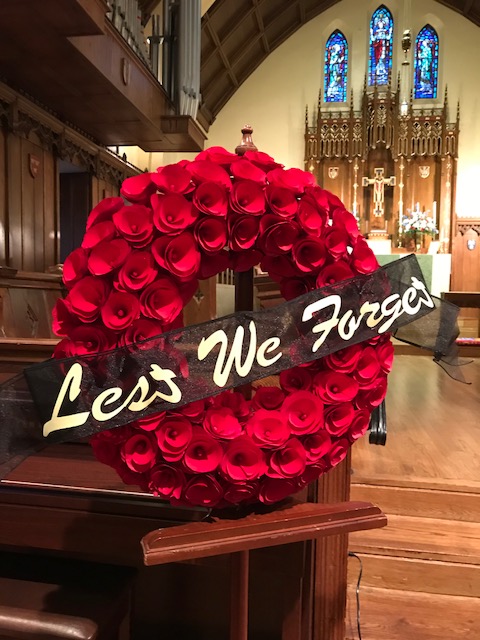
Today is Remembrance Sunday, and as is our custom here, we take this time to remember the men and women that have given their lives fighting for what they thought was right. We remember people who sacrificed everything for liberties that we so often take for granted. We remember them, and we should remember and give thanks for them, but we don’t do this just as citizens, we are Christians, and this is Sunday and this is Church. We need to remember them, but we need to remember them as people that gather to witness and proclaim the resurrection of the dead every week. God has not just told us, God has shown us what he is going to do with the dead in the Resurrection of Jesus Christ. And Christ has promised us, that he will never lose anything that belongs to him. We say it in our creed, we proclaim it at our funerals; the vision of that future day when the dead will be raised is not just the extra ending tacked onto the story, it is the story.


I am not here today, we are not here today, to just remember past tragedies and lives lost. We are not here to whitewash the pain and destruction of war and human sinfulness. We are here to give thanks to God, that human history is not going to end with soldiers lying dead in a field. Human history is going to end with God’s children standing in the sun once more and forever.


How are you responding to God’s grace?

Standard

Sermon for Sunday, October 27th, 2019

Readings

Sirach 35:12-17
Psalm 84:1-6
2 Timothy 4:6-8,16-18
Luke 18:9-14


“Give to the Most High as he has given to you, and as generously as you can afford.”


I’m willing to bet that this is not the sermon that anyone wants to hear the week after our parish fair and biggest fundraiser. We just spent months collecting donations, moving furniture, advertising, cooking and setting up displays. We spent two days of long hours with some people working in the heat while others worked in the cold. We saw old friends and welcomed new people. We spent money. We raised money. We did pretty well actually, and thanks be to God for it, because we need it. You know it takes a lot to make worship happen here on a weekly basis. It takes a lot to keep the lights and the heat on. Over $5,600 a week. That’s a lot, and I assure you we try and run a pretty slim organization. We are blessed to have a lot of dedicated and talented people that give of their time generously. We are and have been blessed.


But here, the week after the fair, after all that we have done and raised, I am going to stand here and tell you that it’s not enough. It’s not enough y’all. I warned you that this wasn’t going to be a sermon anyone wanted to hear. That’s why I made sure this morning that I was wearing shoes I could run in. But before you start sharpening your pitchforks, hear me out. I know that we’re good Episcopalians, we don’t like to talk about money. Money seems common and profane, and we don’t want to risk worshipping it, so we just avoid talking about it altogether. Money brings up issues with people. It can cause embarrassment and shame if you don’t have it. It can lead to pride and vanity if you do have it. What priest in his right mind wants to talk to his people about money? Best to avoid it and not offend people. Well lucky for you your priest isn’t in his right mind.


Your priest recognizes that there are two big problems with trying to avoid talking about money: the first is Jesus. Jesus actually talks about money quite a lot. It’s all over the gospels. Unless you want to take a pair of scissors to the words of Jesus (something which I don’t advise) then at some point you will have to confront what he has to say about money and our relationship to it.


The other big problem is worship. Now you may think that the worship of God is something that happens within your heart, and Lord knows I hope that is true. I hope that you are worshipping God in your heart in ways that are inexpressible and free, but the outward worship of God is costly. It always has been. Maybe it is supposed to be.


From the beginning of our scriptures worship has been tied to sacrifice. This isn’t just a Judeo-Christian thing though; this cuts across religions. Worshipping God and giving up something of value have always walked hand in hand. We cannot escape that. From the beginning of time worship has meant sacrifice. We give up something we value, because we value God more. We give, because we recognize how much we have been given. That is sacrifice.


Now maybe you are thinking: Great, why don’t we sacrifice this priest? After all he is one of our biggest expenses. That’s true. But the ordained clergy are kind of a necessary evil if you want to have mass and not just a community meeting. The expense of priests has always been a factor in the worship of God, it has been since Old Testament times, that’s not new.


The worship of God has always been costly. It costs money, it costs time. And for many people, it has cost their lives. Many of the saints of the church were martyrs…people who gave their lives to God….and we worry about talking about money?


So here is our dose of truth this morning: we raised about $40,000 at this year’s Friendship Fair and that is terrific and it is a testament to the dedication of this parish, but it is enough to keep this place running for less than 2 months.


The truth is the church does not, and cannot survive, much less thrive on fundraising. No church can. Churches that are thriving and growing, churches that have robust membership and ministries, and they are out there those churches, they aren’t balancing the budget by having bake sales every week. Churches that are thriving and growing are churches where the core membership understands that worship means sacrifice. They are churches where people are committed to giving to God. They are churches where people have such gratitude for what God has given them, that they are willing to joyfully and generously give back. Not to get something from God, not as some sort of bribe, but because of what they have already been given. That takes faith. And people when they visit churches like that can feel and experience that faith, even if they never look at the church budget.


When people come through those doors they can tell if this is a community that is committed to gratefully and thankfully giving back to God. They know. That is what attracts people. Nobody wants to join a church that when you walk in the door people just see a dollar sign or someone to serve on a committee. Nobody wants to be asked to pay for someone else’s faith. That’s not attractive. But you know what is attractive? When you walk into a place and you can tell that the people there have something precious that they are committed to and that they care for and they look at you and say welcome, would you like some too?


Friends we have such a treasure here. We are a blessed church. Our building is beautiful, and we have talented people, but most importantly we have the grace of God. We have our Lord’s presence in his body and blood. We have the story of God’s healing power of forgiveness and we have the hope of eternal life with those we love. Now that is treasure. And I think that when most people walk through those doors, they know that that is a treasure we are committed to caring for and sharing.


Yes, it is true that the fair helps us do that, but I remain convinced that the primary benefit of the fair is not the money it makes (no matter how much we may need it). The primary benefit of the fair is the connections it makes. We get to interact with the community and with each other. Visitors witness our commitment to this place and the worship here, and that speaks volumes. Now next year is not a fair year, for which many of us may be breathing a sigh of relief; however, stay tuned because I am going to be proposing soon a smaller one-day much simpler event for off-fair years. Why? Would a little extra money in off-fair years help with the never ending maintenance issues around here? You bet. But that’s not the primary reason to do it. The best reason is that it gives us another chance, as a community, to show others what this place is all about.


Fundraisers are great. They are necessary. But money from fundraising should never be more than the gravy on any church budget. The meat and potatoes, the substance of the meal comes from us. It comes from understanding that worship means sacrifice. It comes from looking at all that God has given you, and choosing to give back. I mentioned how much it takes to run this place, because you should know it, but it is important to remember that stewardship, sacrifice and tithing is not about paying the bills here. It really isn’t. It is about you recognizing how much God has given you and making the commitment to give back to the best of your ability. That is why the tithe in the bible is a percentage and not a specific amount. It is the benchmark for a level of giving that we are called to honestly strive toward, recognizing that the one who really knows how much we have been given, God, is the one that will ultimately be the judge. And you may wonder why 10%, what is so special about that number? It’s the biblical and traditional standard, but why? Well maybe it is because that is when it starts to hurt. That is when a sacrifice starts to be significant. Don’t believe me? When was the last time you went shopping at a 1% off sale? When have you ever seen a rack at the department store labeled “Big Sale! 2% off!”? Stores know that discounts start to get meaningful at 10%. That is when we recognize that it really means something to us and to them. If they offered us less, we wouldn’t take them seriously, because it wouldn’t be much of a sacrifice to them. 10% is where is starts to hurt. It is a serious commitment, but it should always come from the place of gratitude in our hearts, not pride.


Jesus tells a parable this morning about a Pharisee that was ranking himself in comparison to another man in the temple. And one of the things that he was proud of was how much he gave. He was giving the biblical standard, 10%, but that wasn’t the problem. The problem was his pride. Maybe he thought he was giving more than the tax collector. Maybe he thought that the tax collector was a lesser person because he gave less. Truth is we have no idea how much the tax collector gave, Jesus doesn’t say. But which one of them was really the most grateful for God’s grace? You see it’s not whether we are doing better or worse than the person in the next pew; it’s not whether you toss in a twenty folded just right so the usher can see it, or whether you have to let the plate pass you by because you gave online, or even because maybe you aren’t sure where your next meal is coming from. The question is not “are you doing better than this person or that person, or any other person?” The question is simply, “how are you responding to God’s grace?” How am I responding to God’s grace? That’s it. Maybe you really can’t afford to tithe, God knows that, but is your heart so disposed that you really do want to give God everything you’ve got? God knows that too. That is what stewardship is all about.


Today is NOT stewardship Sunday. I am not asking anyone today to make any financial commitments to the parish for the coming year. What I am asking you today is to think about that tax collector in the temple, the one that is so humbled before God he can’t even look up. What if, on his way home someone stopped him and said “Good news! God heard your prayer. He has forgiven you. He wants you to come home.” What in this world, would mean more to him than that little bit of good news? How might he respond to that news? How might you respond?


What will he find?

Standard

Sermon for Sunday, October 20th, 2019

Readings:

Genesis 32:22-31
Psalm 121
2 Timothy 3:14-4:5
Luke 18:1-8


Our faith is full of stories that can be a bit odd. Our sacred writings, our scriptures tell tales that are at times bizarre, perplexing. Even for people that devote their lives to scripture, who study its languages and its history, even for professionals, these writings can be a challenge. The great saints of our faith, many of them the most brilliant minds of their time, even they had to struggle with some of these stories.


So when you come across a story like the one we get in Genesis this morning, and you scratch your head wondering what is going on here, you are not alone. Do not be discouraged.


Jacob, is one of the patriarchs of the faith. He is the son of Isaac; the grandson of Abraham. Jacob has been moving around the middle East. Why has he been moving? Family problems.


Now you may think you have family issues, and you might, but Jacob has serious family issues. He is at war with his brother Esau over an inheritance. He has been fighting with his father in law. He has been fighting with his brothers in law. He has two wives, two maids and eleven children. This is not an uncomplicated family. And Jacob is not a paragon of virtue.


This same Jacob, as he is wandering with his dysfunctional family, ends up spending a night alone beside a stream in the desert. And while he is there alone under the stars he encounters this mysterious man, this stranger, and right out of the gate there is a fight. Jacob has to wrestle with this man. Jacob is holding his own, but the man won’t quit, until finally the stranger strikes Jacob right in his hip socket, down to the bone.


Sometime during that struggle though Jacob must have realized that this wasn’t just some man he was wrestling with, because as dawn was breaking Jacob says to the mysterious man: “I will not let go of you until you bless me.” We don’t know why Jacob started wrestling with this character; we don’t know how the fight started, but we know now that the reason Jacob won’t let go; the reason Jacob persists, is because he believes that this man has the power to bless him.


And what blessing does Jacob receive? He gets a new name; a new identity. No longer will he be called Jacob. Now he will be called Israel. And his children will be called the Children of Israel. And his name means one who has striven with God.


Striven. Struggled. Persisted. Fought. Wrestled.


Jacobs identity now is as someone who has struggled with God. And the struggle has changed him. He didn’t instantly become a better person. His family struggles didn’t go away. But he never walked the same way again. Before he had swagger…now he has a limp, and the difference between a swagger and a limp is pride and humility. Jacob, now Israel, has been humbled by struggling with a force far greater than himself.


But more than that, it isn’t just Jacob’s name that has changed. The way that Jacob sees the world has changed. He calls the sight of this mysterious fight Peniel, a name meaning the face of God. Jacob now recognizes that God is not just some generic higher power, but is a force active and alive in the world that he has dealt with face to face, and it happened here. A place becomes sacred because someone saw, and struggled with God there.


Jacob’s blessing, wasn’t instant virtue, easy money, it wasn’t artificial happiness or peace; Jacob’s blessing was a new identity (a new way of looking at himself) and a new way of looking at the world.


Such a short little passage of scripture. Just a few verses that don’t make a whole lot of sense if you take them out of context. It would be so easy just to pass over it, or to look at it for a moment and think “well this doesn’t make sense,” and then just go back to thinking about something else. You wouldn’t be alone. The problem with scripture is that sometimes its wisdom is obvious and its blessings come easy, but sometimes, many times, you really have to struggle with it.


But it is precisely because of that struggle that scripture is so valuable. It is useful for teaching, for reproof, for correction, and for training in righteousness because it causes you to struggle with God. The scriptures are an occasion for you to wrestle with your faith and your experiences and with the experiences of others. The scriptures will make you question yourself and your own righteousness; your own abilities. You’ll think you have things figured out; you may think you have found some answers and then some scripture story will come along and say nope, not so easy. You might be wrong there.


And then, after a long night of struggle, you get a glimpse of the face of God, and it was all worth it.


Faith is a struggle. It is supposed to be. If being a Christian comes easy to you, you are probably doing it wrong. If the Christian faith always makes complete sense to you, I hate to tell you, but there is a good chance that you don’t really understand it. Faith is a struggle. Sound doctrine doesn’t always go down easy like a piece of cake and neither does the truth. That’s why people don’t want to hear it. They want you to tell them what they want to hear; make them feel good. But what if, we are not supposed to live on a diet of cake all the time?


You know, a lot of times in life, things that are effortless are also very often worthless. You invest nothing and you get nothing back. We know that is how it works with diet and exercise, so then why do we expect faith to be different? We will persist and strive and struggle with the forces of this world, often all our lives and with minimal benefit, so why is it that when it comes to God, it is so easy to give up?


It is so easy to give up on God and the church. We say a prayer and it isn’t answered the way we wanted or hoped for, so we give up. We join a church and we encounter sinful, difficult people and we quit. We try to read the Bible and find a story that doesn’t make complete sense and we stop reading. We do this in other areas of our life to, but for some reason it is particularly easy when it comes to God.


We are more willing to strive with the forces of this world than we are with God. We will stand in line, we will wait, we will sit, we will listen, we will pay, we will have patience, we will keep trying, we will do all that for material things of minimal benefit to us, we will do it with the unjust forces of this world, but when it comes to God or church, if our desires aren’t met right away…we move on.


When the Son of Man comes, when the Lord returns either in glorious day or under cover of night, will he find faith on earth? Will he find Jacobs that are willing to hold on to him and wrestle with him? Will he find a Moses that is willing to follow and lead? Will he find prophets that can warn and rebuke? Will he find a Sarah or a Mary that can both question and believe at the same time? Will he find people willing to persist and strive with him? Will he find people willing to look past their own imperfections and the mess of their lives? Will God find people that he can rename and reshape and strike to the bone? Will God find people that can then look at the world and see his face in it?


If we find ourselves alone like Jacob under the starry sky and God comes to meet us, what will he find?


The Word in Chains

Standard

Sermon for October 13th, 2019

Readings:

2 Kings 5:1-3, 7-15c
Psalm 111
2 Timothy 2:8-15
Luke 17:11-19

One of the most amazing things about the Bible for me, is that even if you read it every day, even if you know some of its stories very well, it still reveals new things to you. You reread a story, that you think you know, that you have read many times before, and yet somehow, this time, you notice something that you didn’t notice before.


You know when Paul says that I have been chained but the Word of God is not chained, he’s not kidding. You may think that your imitation leather, red-letter bible can’t mess with you if its just sitting on the shelf on your bookcase, but you’d be wrong. Because the conviction of the church has been the same God that inspired these writers is the same God that created and runs the universe that you’re still living in, so the truth that is speaking in this book is alive in the world, you can’t shut it up just by keeping it on the shelf…so you might as well read it.


You won’t always understand everything, but that’s ok. I don’t understand everything that is happening in the world, but that doesn’t stop me from living in it.


You would think that after thousands of years, we would have figured out this book by now, but we haven’t. It reveals new things to us all the time.


Take the story of Naaman for example. Now it is buried down in the second book of Kings in the Old Testament, but it is a popular story, and I have heard it many times.


Naaman is a powerful leader of a foreign army. He works for the King of Aram, which was a kingdom to the North of Israel, around where Syria is today. Naaman was a powerful leader, but he had a weakness. He had leprosy, a terrible skin disease. His wife tells him that there is a prophetic healer in Israel that might be able to help him. So he asks his king for permission to go and seek help and his king sends him with a letter to the King of Israel. The king of Israel reads the letter from the King of Aram that basically says “This is my general, please heal him of his leprosy” and he is indignant. No one can heal but God. This King of Aram must be trying to pick a fight with me…this is a trap. But Elisha the prophet tells Naaman to bathe seven times in the Jordan river, he reluctantly does so, is healed, and is finally convinced that the God of Israel is THE God. God heals this foreign general and proves his power. God (the God of Israel) has the power to heal. End of story.


Only there is more to this story. There are parts of this story you might have missed, because I did the first several times I read it. Yes, it is the power of God that heals Naaman in the end, but how did Naaman hear about this God? Let’s go back to the story:


Now the Arameans, on one of their raids, had taken a young girl captive from the land of Israel, and she served Naaman’s wife. A young girl captive who is now a servant. You know, we have a word in English for a captive servant…they’re called slaves. This is an enslaved little girl that had been taken from her homeland and her family and now she is forced to work for the leader of her captors and she is the one who says to Naaman’s wife: I know who can heal your husband.


Let that sink in a minute. Why on earth would this little girl want to do anything to help her captors? You would expect her to be asking God to give Naaman a skin disease, not take one away, but here she is telling the man that enslaved her where he can go to be healed. It’s remarkable. Yes, it is God the heals Naaman, but it was this little girl that first led him to God.


So I went back to the story again and I started to pay attention to all of the servants. You know sometimes we get frustrated by the names in the Bible, names we struggle to pronounce, but you know, sometimes it is the characters without any names at all that are the most important. Most of the servants in this story don’t have names.


The nameless slave girl tells Naaman’s wife where God’s prophet lives.

Elisha the prophet, who is a servant both of God and the King, sends a nameless messenger to the King asking him to send Naaman to him.

When Naaman arrives, Elisha sends another nameless messenger out to meet him and to instruct him to wash in the Jordan.


But Naaman doesn’t want to be greeted by some lowly messenger. Naaman’s salvation and healing should come from on high: the mighty prophet of the mighty God should give him a mighty task to perform. But this guy expects him to listen to some lowly servant, and bath in some dirty little stream.


He storms off, but then who stops him and talks sense into him? His servants.


It is the lowly servants in this story that direct and redirect Naaman to the healing power of God. The two Kings and the mighty general, they look weak and powerless in this story. They look ridiculous.


It is the servants that know where true power lies. The lowly, the humble, the powerless…they are the ones that ultimately lead Naaman to God. They showed mercy and forgiveness and lead a man that for all intents and purposes was their enemy, to God. Naaman needed these nameless servants and messengers more than they needed him. In God’s eyes a dirty little stream can be more important than a mighty river.


When you discover in this Word the wisdom and power of the humble and often nameless voices; when you realize that it is the Samaritains and the servants and the slaves that truly know where God is to be found when he is revealed in this word, then you may be more prepared to listen to those voices when you encounter them alive in the world today. The word of God is alive and powerful, it is not chained, but sometimes its messengers are. The word of God is mighty and powerful, but it constantly reminds us that it is very often the humble and powerless that actually have the faith and the strength to share it.

Mercy on trial

Standard

Sermon for September 29th, 2019

Readings:

Amos 6:1a,4-7
Psalm 146
1 Timothy 6:6-19
Luke 16:19-31


Now we all know that Jesus is a storyteller. Jesus is a teacher, and one of the most important ways he teaches is by telling stories. We call his stories parables. They are short stories that are meant to make a point or to teach us something.


Well today we get a doozey. In today’s gospel Jesus tell a story about a man in hell.


That’s right.

The same Jesus who said to the woman caught in adultery “neither do I condemn you,”

the same Jesus who said “judge not, let ye be judged,”

the same Jesus who said “in my father’s house there are many mansions,”

the same Jesus who said to the thief on the cross “today you will be with me in paradise,”

the same Jesus who taught us to pray saying “forgive us our trespasses as we forgive those who trespass against us,”

this same Jesus who teaches us about love, and redemption and the power of forgiveness and who offers us the promise of eternal life and a heavenly kingdom, this Jesus is talking about a man in hell today.


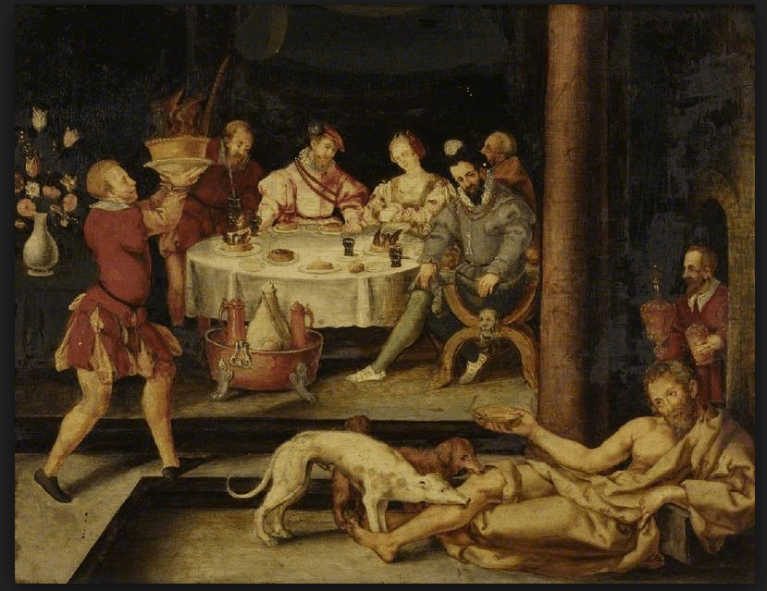
The man Jesus was talking about was a rich man. He had had fine robes, the best food. But all those comforts are gone now. Now he’s in agony. He begs for mercy. He needs help, but help is too far away. He calls out to father Abraham who is way off in the distance, caring for and feeding this poor man that he recognizes as someone that used to sit outside his gate. And he begs Abraham to send this poor man named Lazarus down to help him and show him some mercy. And in Jesus’s story Abraham says, “no, he can’t get to you.” Jesus is telling a story about a man that begs for mercy from a God figure, and a father figure, from Abraham, and doesn’t get it. Now it’s understandable if you are scratching your head and thinking that this isn’t the kind of story you like to hear Jesus telling. We don’t like to think of people suffering and condemned to hell. We don’t like to think of people begging for mercy and coming away empty handed. Surely if we believe in a God of forgiveness and mercy then this story Jesus is telling will make us a little uncomfortable, that is, until we realize that maybe Jesus isn’t telling this story to make us question the mercy of God; maybe he is telling it to make us question our own mercy. It’s not God’s mercy that is on trial in this story, it is our own.


And then you get more uncomfortable. Because you start to wonder about all the times you had the opportunity to show someone mercy and failed. Don’t think it doesn’t happen every day, to all of us. We have the opportunity to show someone kindness and mercy, and we don’t do it. It makes us uncomfortable. We find ways to avoid it. We make it someone else’s job; someone else’s problem. Or maybe we will say that it is the government’s problem to deal with. How many times in the name of mercy do we put up barriers between ourselves and people that actually need mercy.


You know you have to pay attention when Jesus is telling stories to what details he adds and what details he leaves out.


For instance, in all of Jesus’s parables, in every story he told throughout the gospels, he never gives his characters names. It is always a certain king, a manager, a merchant, a priest, a Pharisee, a widow, a rich man…he always uses generic terms for his characters, except for one time. Right here where he talks about a poor man named Lazarus who is carried away by angels to be with Abraham and to eat at his table. Even the rich man in this story has no name. But the poor man…he has a name. He might not have had much of an identity to the rest of the world; to the rest of the world he might have just been some bum on the corner, but to Jesus he has a name. He is known by God, even if the rest of the world passed him by.


Here’s another little detail that would be easy to miss: All Lazarus wanted was the scraps. He wasn’t looking for wealth or riches or revolution; he wasn’t trying to change the social order, or take the rich man’s robes….he just wanted the extra food that fell from the man’s table. The rich man couldn’t say that he didn’t have the ability to help this man. The help that this man needed was laying on his floor amongst his trash. If the rich man had treated Lazarus half as well as he treated his own dogs it would have been something. Even the neighborhood dogs had more compassion. The problem was not the rich man’s ability.


So what was his problem? Was he never told about the importance of recognizing the humanity of others? Had he never heard of the mercy of God? Was God’s will that we should care about what happens to others never made clear to him? No, it had been. He had heard the warnings of Prophets like Amos. He knew the Psalms that sang of God’s mercy, he knew the law that commanded the love of and care for his neighbor. So what was his problem?


And then, when the rich man cries out for help, why does he think it is Lazarus’s job to come and help him when he couldn’t be bothered to lift a finger to help Lazarus in this world. Why does he think, even in the bowels of hell, that Lazarus is supposed to be at his beckj and call to serve him and his family? Why does he expect more compassion than he shows?


Or maybe that’s the problem. This man is expecting more compassion than he is showing. Just like we expect more forgiveness from God than we are willing to show, despite the fact that we are always praying for God to “forgive us our trespasses as we forgive those who trespass against us.” Well maybe we are getting our wish. Maybe God is forgiving us, exactly the way that we are forgiving others. Just like the rich man is getting just as much mercy as he was willing to show.


Now mind you, I don’t think that we actually do get what we deserve in life. I am sure that God’s mercy and forgiveness are infinitely greater than ours, but then I have to remember that this parable isn’t about God’s mercy, it is about ours.


One more little detail that Jesus leaves out: Abraham says to the rich man that there is this huge chasm that is fixed between Lazarus and you. This huge division has been created and we can’t get to you and you can’t get to us. Jesus in his story says that a chasm has been fixed between the rich man and Lazarus, and this chasm is the reason why the rich man suffers, but what Jesus doesn’t say…is who put it there.


I’m willing to bet that it wasn’t God.

Where your power comes from

Standard

Sermon for Sunday, September 22nd, 2019

Readings:

Amos 8:4-7
Psalm 113
1 Timothy 2:1-7
Luke 16:1-13

Money is power.


It is power to pay your bills. It is power to buy food. It is power to go where you want. It is power to rest when you feel like resting. It is power to build what you want to build. It is power to buy what you want to buy. It is power to be independent.


Money is power.


You can do things with money. Money can give you confidence. Money can give you security. And money can disappear overnight.


I think of the stories of the Wall street bankers, who in a matter of hours in October of 1929, saw almost everything they had wiped out. All of their power, their influence, their security, their future, gone. It had all just been ink on paper in the end. Just numbers in someone’s ledger, that with the scratch of a pencil are crossed out of the banker’s book of life.


Now Will Rodgers famously quipped that in New York people had to stand in line to jump out of windows. The real truth was less dramatic and even less funny. There wasn’t quite the immediate rash of suicides on the day of the stock market crash that is often reported, but in the days and years to come, the despair over losing everything did lead to an increase in people taking their lives. They had nothing left to hold on to.


Growing up I used to chat with my grandparents about what it was like for them growing up during the Great Depression. But as sharecroppers in rural South Georgia, they never had anything to begin with, so this stock market crash in far away New York didn’t really change their lives much, at least not directly. The only stock they owned was livestock. They didn’t even own the land they lived on.


What they had they worked for. The only financial growth they could hope for was the cotton or the corn growing in the field, and even that was almost totally dependent on forces outside their control. A dry summer could spell ruin.


Now money was power for them too, but much like the power supplied by the Rural Electrification Administration, it was not power that you could depend upon. I can remember that it never took much more than a gentle breeze for my Aunt Ollie’s lights to go out, and that was less than 20 years ago. Electricity was great, and if you had it, it sure made life easier, but you still had to know how to survive without it. You couldn’t put your faith in it. The same was true with money.


Money was great, money was helpful. You could do things with money, but you couldn’t depend upon it always being there. You had to know how to survive without it.


The problem with money is that it seduces you into thinking that it is dependable and that you have more power than you actually have. It makes you think that you can live completely independently of others. It makes you think that you have control over your future. And when you realize that you can use money and power to get more money and power, oh that is a scary day indeed. Because it is so easy to tilt the scales isn’t it?


It doesn’t take much for us to realize we can use other people to get more money and power. I used to work in management; I know what it’s like to be told to be told to increase productivity while cutting 20% out of my budget. It isn’t easy. Someone eventually has to pay…and then sometimes you wondered where the money was really going.


Sometimes we knowingly make unfair decisions to get more money; sometimes we don’t know and don’t want to know. Does it matter who makes my shoes or how they are treated or what their life is like? Should I care about where my food comes from or who grows it? And what about all these companies that want to exploit my desire to do the right thing by charging me twice as much for something just for slapping the label “ethical” or “organic” on it? Every trip to the grocery store you are caught between an ethical and an economic dilemma: you only have so much money to spend, but righteousness doesn’t come cheap. You can’t save the world and save money at the same time. So what do you do? Which eggs do you buy?


And then you realize you are falling into the same trap again…thinking that money will save you. But we can’t buy the world out of the situation it is in. Money just doesn’t have that much power. Money doesn’t last. Money is not eternal. In fact, money has a pretty short life, and so does the power that money brings with it.


The dishonest manager in Jesus’s parable today learned this the hard way. He thought he was sitting pretty with his little scam until he was caught out, and his power evaporated pretty quickly. He realized then that he wasn’t quite as independent as he once thought. He needed his neighbors. He needed family and friends. He needed relationships. All this time he had been focused on the money, but it was the relationships that really mattered. Not just the relationship with those working under him, but his relationship with his master as well. That was where his security really was, not in the money.


Today’s gospel lesson will probably leave us with plenty of questions, but what comes across loud and clear at the end is that God and wealth are not the same thing. You are either serving one or you are serving the other.


Now the Bible was written long before we talked about all the economic isms: capitalism, communism, socialism, those are only things we have been talking about for the last couple hundred years. So the scriptures aren’t really concerned with endorsing whatever your preferred ism is. What we find in scripture is a call for a radical reorientation in our lives away from the powers and principalities of this world and toward the power of God. Where we get our power fron and what we do with it, that is what scripture is concerned with.  Power is not necessarily a bad thing in the Bible, God has power, and we are told to pray for our Kings and those in authority over us. We all have some degree of power in this world, even though it may not feel like it sometimes. It is not the amount of power that we have that matters, it is where that power comes from and what we do with it. And likewise, money isn’t necessarily bad; rich people are not necessarily forsaken, Jesus hangs out with them too, but he does observe closely where people store their treasures, because where your treasure is, there your heart will be also.


What matters to Jesus is where you get your power from, and what you do with it. Is your power, your strength and your hope resting on what is in your wallet or is it coming from someplace deeper? If your power comes from your money, well have fun with it while it lasts, but watch out. Judgment day may come sooner than you think.


But if your power comes from God and the strength of the relationships in your life, then you are blessed. Because you have power that will never fade away. You have power that no depression or economic downturn can take from you. If you have that kind of power, then you can survive when the wind blows and the lights go out. And when you have that kind of power, you will really know just how much money is worth and what things in this world are worth working for.


You can have money and be saved, but don’t think for a second that it is the money that is doing the saving. Money doesn’t have that kind of power. Only God does. But of course, it’s always tricky to remember that when we are trying to decide which one to hold on to.

Beauty is an act of rebellion against an ugly world.

Standard

Sermon for Sunday, September 8th, 2019

Readings:

Deuteronomy 30:15-20
Psalm 1
Philemon 1-21
Luke 14:25-33


Well as General MacArthur said after he waded on shore in the Philippines: I have returned!


After a summer of either academic study or the various adventures of my sabbatical, I am back home and back in the pulpit. Of course, I was here last week, but we were still on our summer schedule, so it wasn’t quite back to life as usual. But we are back now in full force, all of us, returned from our various travels and diversions this summer, and hopefully ready to meet the coming program year with renewed passion and energy.


And our gift from God on this Sunday, the Sunday of our collective return, our “welcome back Sunday” is this charming gospel passage, wherein our Lord Jesus Christ says:


Whoever comes to me and does not hate father and mother, wife and children, brothers and sisters, yes, and even life itself, cannot be my disciple. Whoever does not carry the cross and follow me cannot be my disciple.


So therefore, none of you can become my disciple if you do not give up all your possessions.


Sweet no?


Of course, I am being facetious. There is nothing charming about that passage. It is one of Jesus’s challenging, hard statements that people really struggle with.


Isn’t honoring our fathers and mothers a commandment? Shouldn’t church be a place where families are strengthened and supported?


And I am not going to even get into the whole idea of giving up our possessions….yet.


These are some hard words that Jesus has to offer his would-be followers. And if you only want Jesus for comfort, and not conviction, then his words today are going to be a real challenge.


I mentioned General MacArthur because when I think of someone making a grand return the picture of him standing knee deep in the water on the beach in the Pacific comes to mind. When I think of that image of General MacArthur, which I’m sure most of you are familiar with, wading on shore in the Philippines, it seems triumphant and victorious and encouraging, but I have to remind myself of what he was returning to: he was wading into a war-zone. There were bullets in the air, there was a battle going on; things weren’t going exactly to plan, his boat got stuck, which is why he had to jump into the water. Maybe he was supremely confident that the war would be won, but he also knew that at any moment it could cost him, or any one of his soldiers, everything. Returning isn’t always easy.


So as we return to our regular life of worship here on our “welcome back Sunday,” perhaps it is fitting that Jesus has some harsh, challenging words for us. Because we too are returning to a war zone…and I am not talking about the up-coming friendship fair and the bomb of stuff that has been dropped on the parish hall. No, this is a spiritual war zone and the front line of the battle is within each and every one of us. It is true when we are out in the world, but it is especially true here.


I saw a post online last week, it was a picture of a gorgeous chasuble, much like the one I am wearing, and it said something like “beauty is an act of rebellion in an ugly world.” I loved that thought. There is so much God-given beauty in our world, there is much man-made beauty, but I don’t have to tell you all that there is so much ugliness in it too. And the ugliness is insidious. It sucks us in before we know it. If you have ever gotten into a comments argument with someone online you know how fast it can happen. Even in person, it is almost impossible to have reasonable, rational debates anymore because we all get sucked in to these ugly emotional responses so quickly.


There is a battlefield within each one of us. Ugliness creeps into our soul. It affects how we treat God’s creation, how we treat each other and even what we see when we look into the mirror.


But beauty is an act of rebellion in an ugly world. Trying to live a beautiful life, trying to offer God worship that is sincere and beautiful, trying to treat others in a way that acknowledges the God-given beauty within them…these things are acts of rebellion in a world that would love to drag us down into despair and ugliness.


As Christians, we believe in the Resurrection. We believe that the death and Resurrection of Jesus Christ has already won this war. We believe that forgiveness has defeated sin; that life has defeated death; that beauty has defeated ugliness. The ultimate end to the last battle may be settled, but for each one of us, the daily battles still go on. The enemy doesn’t want us to know that Jesus has already won the war between good and evil. So the enemy distracts us, and discourages us, hoping that we will lose the nerve, the will or the energy to keep fighting; hoping that we will settle for something that is less than God. And sadly, many do.


Last week the Episcopal Church released its Sunday attendance figures from the past year, and I can tell you that they aren’t good. Now our parish is growing, and our diocese is holding steady too, we are bucking the trend, but for many places the numbers are extremely troubling. Now I can give a more extended analysis of the various reasons for decline; and I would be the first to point out the many mistakes made by church leadership, but still, we aren’t alone in this decline. In fact, almost across the board churches everywhere, of every denomination, are seeing decreased attendance. The real sad fact, is that people aren’t leaving to go to another church, they are leaving church altogether.


I do understand the temptation sometimes. Because Church isn’t easy. Following Jesus is not easy. Sometimes his words sting. He challenges our assumptions. He calls us out on our own hypocrisy, and then he tells us to do things that we simply don’t want to do. Finally, Jesus sums it all up by saying something like what he says this morning: following me must be more important to you than anything else on earth, anything else. More than your money, your life, your friends, your political affiliation, even your parents. I have to mean more.


So as tempting as it would be for me to find another career, or to do something else on Sunday morning, here I am. I keep coming back, because, ultimately, I believe this story we tell about Jesus to be true, and filing in behind him in this rebellion against ugliness is more important to me that a few more dollars in my pocket, a few more hours of sleep on Sunday and a few less headaches with plumbing issues and miss-sent emails.


And here you are, fighting many of the same battles. By now, some of your friends and family and co-workers may have decided that the cost of following Jesus is too great; that the battles aren’t worth fighting. I understand and I sympathize, but I’m not ready to give up the fight, and I’m guessing neither are you.

This story we tell about death and resurrection, sin and redemption, God’s good creation and the new heaven and earth, the new kingdom that he is creating; it is a beautiful story. I believe it is a true story. and beauty and truth are still worth fighting for. Beauty is an act of rebellion in an ugly world.

The cause is always best remembered by the effect.

Standard

Sermon for Pentecost Sunday 2019

Readings:

There was an extremely famous Baptist preacher in England in the middle of the nineteenth century named Charles Spurgeon. A huge number of his sermons were transcribed and published so they are readily available, even today. In one of his sermons on Pentecost, the feast which we celebrate today, he has one line which just stood out to me out as being quite profound. It could have been just a passing comment or a throwaway remark, but it gave me pause so I want you to hear it.


When talking about the Holy Spirit and the events recounted in the second chapter of the Book of Acts, which you just heard, Spurgeon says:


The cause is always best remembered by the effect.


The cause is always best remembered by the effect.


His words strike at the heart of a dilemma that I think all priests and preachers encounter whenever we have to talk about the Holy Spirit, and the Feast of Pentecost, more than any feast other is really an occasion when we must talk about the Holy Spirit. The Holy Spirit is a part of the Holy Trinity, which is the core of our faith. The Holy Spirit is an aspect, it’s a part of our God, it is God, but how do we talk about it? It is much easier to talk about our Lord in the person of Jesus Christ. It is even easier to talk about God the Father, but when it comes to the Holy Spirit, which we in our traditional manner often refer to as the Holy Ghost, how can we talk about that? It is so much more mysterious.


And the day of Pentecost, it is a bizarre story with mysterious sights and sounds. How should we remember that? Should we try and recreate rushing wind and tongues of fire? What is the best way to remember the Holy Spirit on this day?


Well according to Mr. Spurgeon, “the cause is always best remembered by the effect.”


What was the effect of the Holy Spirit on those apostles, because that is probably the best way to remember it? Well let’s look at Peter for a second. Fifty days ago, Peter would not publicly admit that he even knew Jesus. He was fearful of what would happen to him if people knew that he was a follower of this man from Galilee. And now, after being anointed by the Holy Spirit…Peter is standing in the public square and loudly confessing that Jesus is both Lord and Messiah.


The cause is always best remembered by the effect.


What effect did the Holy Spirit have upon Peter? It changed him. The Holy Spirit took a man that was scared and afraid and unable to witness to Jesus Christ and it transformed him into a man that would boldly proclaim the resurrection in front of any that would listen. The Holy Spirit gave Peter the words that he needed to witness to the power of God. It gave Peter the insight to see how Jesus had been proclaimed and predicted through the prophets of old. It transformed him into a man that would work miracles in Jesus’s name.


The cause is always best remembered by the effect.


What effect does the Holy Spirit have? The Holy Spirit can change people. It can change fear into boldness. If we want to remember the Holy Spirit today, we will best do it by remembering the effect that the Holy Spirit had upon those disciples, and not just the disciples, but on those who heard the disciples’ proclamation and witnessed the effects of the Spirit on the disciples’ lives.


The Book of Acts continues:


So those who welcomed this message were baptized, and that day about three thousand persons were added. They devoted themselves to the apostles’ teaching and fellowship, to the breaking of bread and the prayers. Awe came upon everyone, because many wonders and signs were being done by the apostles. All who believed were together and had all things in common; they would sell their possessions and goods and distribute the proceeds to all, as any had need. Day by day, as they spent much time together in the temple, they broke bread at home and ate their food with glad and generous hearts, praising God and having the goodwill of all the people. And day by day the Lord added to their number those who were being saved.


That is the effect of the Holy Spirit.

The cause is always best remembered by the effect.


How should we remember the Holy Spirit? Let’s look at the effect that it had on people. People’s lives were changed; they were converted; their priorities shifted. This resurrection, this promise of new life, this wasn’t just some nice idea that they agreed to in their minds, it was something that offered them transformation now. And what did that transformation look like? It looked like devotion to the word of God and the words spoken by Jesus; it looked like fellowship and prayer; it looked like generosity and selflessness; it looked like gratitude and praise. That was the vision that won people’s hearts and minds. That was the vision that converted the masses. That was the real effect of the Holy Spirit. Who cares if you can speak in Parthian or Elamite if you are still singing the same old song you always sang? If what you are saying isn’t good news I don’t want to hear it in any language.


The cause is best remembered by the effect.


The effect of the Holy Ghost descending upon those apostles is that their lives were transformed in such a way that people who witnessed that transformation wanted to know more. Tell me more about this God you worship that gives you hope in the midst of despair. Tell me more about this man who healed the sick and forgave sinners. Tell me more about how he was freed from death and promised to raise his followers up with him. I want to know about this God who shines a light into darkness.


The cause is always best remembered by the effect.


If we want to remember the Holy Spirit on this Pentecost Sunday then let’s talk about lives being changed by God, because that is the real effect of the Holy Spirit. This spirit gives us a new relationship with God, as Paul says: “Not a spirit of slavery or fear, but a spirit of adoption.” In other words this Spirit teaches us that we are loved and wanted by God. This spirit bears witness in our souls that we are children of God. This spirit has the power to transform us and how we live, that is its effect. In his letter to the Galatians, Paul spells out the effects of the Spirit. He says this: “The fruit of the Spirit is love, joy, peace, patience, kindness, generosity, faithfulness, gentleness and self-control.” Love, Joy, Peace, Patience, Kindness, Generosity, Faithfulness, Gentleness and Self-Control those are the effects of the Spirit. Those are the real languages it speaks. That is what we need to remember today. If people see the fruit of the Spirit growing in our lives, they will listen to what we have to say no matter what human language we say it in.


The cause is always best remembered by the effect.


You know I hear church leaders and Christians all the time lamenting that people don’t go to church the way they used to and people don’t listen to the church the way they used to, and numbers are declining. And some enterprising church leaders like to write books and develop programs they can market on how to grow your church. Everyone is looking for the silver bullet. Well I think part of the problem is that we have forgotten how the church was born. We say that Pentecost is the birthday of the Church, but that birth came through the power of the Holy Spirit, it wasn’t through the skill or the cleverness or the goodness of the apostles. It was an effect of the Holy Spirit. The church was born when God demonstrated his power to change people. It was God’s power that converted those three thousand people, not Peter’s. You know, I firmly believe that the secret weapon of the church is the Holy Spirit, but the problem is that it is so secret that most of the time we don’t even know we have it. But when Jesus told us that he would send us the Advocate, or the Holy Spirit, he said that it would be with us forever. So I reckon that it is still here, only maybe we have forgotten it. Maybe we have forgotten what it looks like. Maybe while we were looking for speaking in tongues and parlour tricks, the real Holy Spirit has been here working quietly in our midst healing, converting, convicting, comforting; maybe not speaking Parthia, Mede or Elamite, but speaking the languages of love, joy, peace, patience, kindness, generosity, faithfulness, gentleness and self-control.


How are we to remember the Holy Spirit? I think Spurgeon was right.

The cause is always best remembered by the effect.

A Tale of Two Cities

Standard

Sermon for Sunday, May 26th, 2019

Readings:


The bible begins and ends with a city. There are two important cities in the bible: one at the very beginning in the book of Genesis and the other all the way at the end in the book of Revelation. Whenever I see that kind of parallel structure in the scriptures I feel compelled to look at them together, (and mind you the scriptures love to do this. The scriptures love to create parallels across books, authors and testaments. Either by editorial design or divine providence, the bible is full of these wonderful parallels). So let’s look at these two cities that bookend our holy writings.


The first city we find in the bible, comes in Genesis chapter 11. Now this is after the Garden of Eden, after Cain and Abel, after Noah and the flood. After all those stories we are told about the first city that humans built: Babel. All the peoples of the earth were gathered together in that one city and there was one language…they didn’t just have unity, they had uniformity. So the first city the bible shows us is a place where all the people of the earth are gathered together as one: one language, one culture, they understand each other, they work together and they are smart. They start to figure out how to build things; in fact, they figure out that if you fire bricks in an oven they get a lot stronger and you can build bigger buildings. And so in the middle of this city they build a great tower as a symbol of their achievement. The city and the tower are built as a tribute to themselves…they say it is to make a name for themselves. These people are confident that their salvation lies in their ability to work together and build together; they are terrified of what may happen if they end up scattered across the earth. Their salvation is technology and uniformity and the great symbol of that salvation is this one great tower stretching up into the heavens. That is the first city in the bible.


The last city we see in the bible comes in Revelation, chapters 21 and 22, part of our scripture readings this morning. This city comes at the end of the story, the end of creation, the end of all time. This is the New Jerusalem, the new city that is a part of the new heaven and new earth. Now our passage this morning sadly cuts out a chunk of John’s description of this city, because its long and the lectionary thinks you might find it boring, and maybe you would, but what John describes is this massive glorious city with twelve gates, one for each of the tribes of Israel. So symbolically, this is a city where all of God’s people are coming together again, but they aren’t one…not the way that the people in Babel were one. These tribes have different names and are coming from different directions. These people are one, but they are not the same. There is diversity here, not uniformity. And the city isn’t built with manmade bricks. It is made of gold and jewels and precious stones, things only God can make. And the gates to the city, which never shut because the people don’t have anything to be afraid of anymore, the gates are made of twelve pearls (you’ve heard of the pearly gates, well this is where that comes from). And in the middle of this city, the source if its identity and unity is not a manmade tower celebrating human progress, not even a temple. In the center of this city is God himself. God, who has come down to live among his peoples. That is the last city we are shown.


In one city we have people focused on saving themselves and building a tower up to God. In the other city, what John sees is the heavenly city, a city made of stuff only God could create, coming down to earth, with diverse peoples gathered in it that feel no need to celebrate themselves or save themselves, but only want to celebrate the fact that their God has chosen to dwell among them. This is the parallel or the comparison that I think we need to look at this morning. I think it is a parallel that the bible or God speaking through the bible wants to show us. There is something in our human nature that the Bible wants us to see: a tension that runs through religious life and secular life and political life; the church is frequently getting mixed up in this tension because the church is made up of humans and human nature is what it is. And at the heart of the tension is this: humans like to think that they can build a stairway to heaven through their own good sense and accomplishment, and God stands back and laughs, because God is planning to bring heaven down to earth. The New Jerusalem in John’s vision comes down from heaven, it isn’t made by man. God comes down to dwell among his people, they don’t muscle their way up to him by being clever or even good. God comes down. We want to climb up to God, and we can’t. God wants to come down to us, and he can. That is what all of this is about. And in John’s vision of the New Jerusalem, humans are finally so aware of God in their midst that they can finally stop trying to be him. That is John’s vision.


But despite the fact that we have placed John’s vision as the culmination of all our scriptures, I don’t think that we are really ready to give up on Babel yet. We still desperately want to build that stairway to heaven. We still want to save ourselves and celebrate ourselves. You may know the musical Godspell. Great music…a lot of the lyrics come from our own hymnal, but there is this one song that was added later: “We can build a beautiful city. Yes we can, yes we can.” It’s a pretty song but when I hear it I always want to sing to myself: “no we can’t no we can’t.” Maybe God can build a beautiful city, the perfect city, but real humans? I don’t think so. Even Walt Disney couldn’t do it.


Some of you may know the story behind Walt Disney World, which I grew up not very far from. When we think of Disney World we think of Cinderella’s castle and Mickey Mouse and the Magic Kingdom and amusement parks, but building another Disneyland type amusement park was only a minor part of Walt’s vision for his Florida project. His main vision, the heart of his project, was this thing he called EPCOT…the Experimental Prototype Community of Tomorrow: the perfect city of the future that would not only celebrate the best of American industry, but would also celebrate the cultures of the world and serve as a vision, as a beacon of optimism and hope for how we might live in the future. The city of EPCOT was to show us how technology could transform how we live and create a better tomorrow and its symbol would be one great big tower stretching to the heavens. Sound familiar? You can still see the model Walt had built. But the city was never meant to be.


Walt died and those following after him realized for a moment at least the fundamental flaw in Walt’s plan: you can’t have a perfect city if you have real people living in it. Real people are a mess. Real people are unclean, real people practice abominations and falsehoods. It is hard enough dealing with real people as guests in the park, how on earth are they going to manage with them living there all the time? So that project was shelved and eventually turned into another amusement park: Epcot Center. The Disney company would try again though, the idea of building the perfect city is just too enticing I guess…they would try again to build a perfect town down the road, called Celebration, and that didn’t work out so well for them either. We never learn. We will keep trying to build Babel until the Lord returns and finally builds his own beautiful city. We will keep trying I am sure, but I am thankful for the vision that John and his Book of Revelation and the bible give me. I am thankful for the revelation that God is coming down to me and that I don’t have to claw my way up a ladder to heaven. I am thankful for the Good News that I don’t have to build the perfect city, because once in a while it actually gets through my head. Once in a while, I am able to put down the bricks and the trowel, to stop trying to build something and just rejoice in the beauty of God’s presence.


Walt’s vision was never built, but you know, Epcot Center, the park that was made, is my favorite of the Disney parks. If you have ever been there then you know that the first half of the park, future world, was built to be a celebration of progress and technology, much like Walt had envisioned, and the back half, World Showcase, was built to be an international exposition of different cultures and countries. The whole thing was envisioned as some sort of permanent World’s Fair. Well as a child I was fascinated by future world and all the technology, but as I have grown older my focus and my heart have moved to the back of the park, to the World Showcase, because what I have realized is that while my cellphone and my computer are useful, they don’t really add value to my life in quite the same was as listening to the Voices of Liberty sing in the American Pavilion, or having a croissant in the France Pavilion, or a beer in the German Pavilion. In other words, I have realized that culture and language and food, and the God given diversity of the peoples of the world means more to me than any piece of manmade technology. Sure, we can say that culture is something that humans are a part of and influence, but it is always bigger than any one of us and shaped by elements that are beyond our control. Culture and language are, in my opinion, a gift from God worthy to be celebrated. And what I love about Epcot now, the back of the park, is that for me it is a vision of what the real city of God might look like: a place where all the people of the world gather together, celebrating all the glory that God has given them and shown them and feeling no need to put their neighbor down in order to build themselves up. A place where God’s people can celebrate what God created them to be. A city where the sinfulness and dirtiness and messiness of this life has been washed away. A city where people are one, but they are not the same. A city that never gets old or outdated. A city where people aren’t afraid, because with God in their midst there is nothing to fear.


Now, I know Epcot is not all that. It isn’t made out of gold or jasper or pearl or carnelian…it is plastic. I know it. Still, I love it. For one thing it is a theme park and Lord knows I love a theme. But more importantly I love it because it is a reminder to me, that as I go through life I am often faced with a decision: I often find myself pulled between two cities, which really represent two philosophies or ways of life. I can either keep trying to build and update future world, always toiling and struggling to figure out how to build the next new Babel, just like Disney is struggling to figure out what to do with the front of Epcot which is outdated and doesn’t make sense anymore; or I can take a walk over to the Mexico Pavilion, sit in the sun by the water and have a margarita and enjoy the day God gave me. I think I know which one I’ll choose.