Putting God First

Standard

Sermon for November 4th, 2018

Stewardship Sunday

Readings:

Deuteronomy 6:1-9
Psalm 119:1-8
Hebrews 9:11-14
Mark 12:28-34


It is so hard to pay attention to any one thing for very long anymore. I used to think that I just had an attention span problem, or that I was easily distracted, like a dog seeing a squirrel, but I am beginning to realize that being constantly distracted has become a way of life for the society we live in, it’s not just me.


There is so much competing for my attention every moment of every day. I get regular messages from my body telling me: it’s time to eat; it’s time to go to bed; you’re getting older; the weather is getting colder; rain is on the way.


I have family and friends that need my attention: who is sick or in the hospital? who is having a baby? when is supper going to be ready?


And then there is work: who am I meeting with today? did the contractor for this project show up? when was that report due?


And there are so many things in the world that I should be paying attention to: who is on the ballot on Tuesday? How long is this coffee pod going to sit in a landfill? what countries are at war with each other? how many people were killed this week in another act of hatred and violence?


As I bounce from one issue to another, there are all these voices I must contend with: buy this and your problems will be solved! take this drug and your pain and troubles will be over! vote for me and I will fix the world!


Technology, which can be great, only makes this problem 1000 times worse. I don’t know what’s more frustrating anymore: not having internet access, or having it. I’m constantly having to check what is true and what is not. Is this supposed news article true, or is it all twisted and taken out of context? Should I share this meme? Should I be outraged over some nonsense issue that everyone else seems to be outraged over? This Facebook post says that if I don’t repost it, then I just don’t care and am a horrible human being, am I obliged to repost it?


So many things, so many people, so many issues and they all want my attention. They all want to be first in my life. What do I do? What really needs to come first? It is a question I have to ask myself countless times a day. I’m sure I’m not alone in that. In fact, I know I’m not alone.


In our gospel today, a scribe walks up to Jesus and asks him: which commandment is first? Jesus, with so many issues and causes and rules and laws and traditions, all vying for my attention at any one moment, how am I to choose between them? How do I know what comes first?

And Jesus answered him with a verse from scripture: Deuteronomy 6: 4-9. If there was ever any one verse of scripture that is the bedrock of faith for both Jews and Christians, it’s this verse. “Hear O Israel, the Lord is our God, the Lord alone” or “Hear O Israel, the Lord our God, the Lord is one.” That is the first and great commandment that Jesus is referring to in the Summary of the Law that I say at the beginning of almost every mass here. Jews recite it in their prayer services twice a day. If you enter a Jewish home, or even my home, you may see a little thing attached to the doorpost with some Hebrew letters on it. It’s called a mezuzah, and inside is a little scroll with that scripture verse written on it. “…write them on your doorposts and on your gates.” It is a physical reminder that as we go and come in this world, this world with all of its distractions and anxieties, one thing and only one thing should come first: God.


The God of Jesus and the God of Moses (they are the same God I assure you), that God has given us this commandment that nothing else in our lives should come before our relationship with him. Loving God with all our heart and all our soul and all our strength, that must always come first. Even before loving our neighbors as ourselves. That second command is like the first; it flows from it, but it still comes second. Hear this Episcopalians, because we have a bad habit of thinking that we can teach people to love their neighbors without first teaching them to love God. We love talking about virtues and values and justice and love, but we get real uncomfortable sometimes when we have to talk about the source of all those things. But God must come first. The love of God must always come first. It doesn’t work the other way around, at least not for very long.


There was a 20thcentury philosopher named Will Durant who wrote that: “conduct, deprived of its religious supports, deteriorates into epicurean chaos; and life itself, shorn of consoling faith, becomes a burden alike to conscious poverty and weary wealth. In the end a society and its religion tend to fall together, like body and soul, in a harmonious death.”


If our society is to survive, it must have people who know and understand and are committed to putting first the source of all that is good. We need people in this world that can boldly say no to all the other voices and concerns trying to distract them. We need people that are willing to sacrifice power, and money, and maybe even some of the respect of their peers, because they recognize that nothing is more powerful than God, nothing is more valuable, and no one’s respect is worth more than his respect. It is a tough call, but thanks be to God, in every generation there have been people who have risen to the task.


People like the prophets Jeremiah and Isaiah, urging their people not to put their trust in anything other than the power of their God. People like John the Baptist who understood that there is no greater danger than being separated from God. People like a little Jewish girl named Mary, whose life was so focused and centered on and open to God that he would find a home not just in her thoughts, but also in her womb.


Our tradition is filled with the stories of people who have had the guts to put God first. We are here today because countless ancestors heard and responded to God’s word to Moses. In a world filled with individuals and causes and philosophies and stuff, all pretending to be God, all vying for our attention, all trying to be first in our lives, there have been people that have been bold enough to say NO, I only have one God in this world, and that is the Lord. Everything else comes second to him. Everything.


Where would we be today without those people? If Paul had decided to just focus on his tentmaking and building his business, would we have heard about the resurrection? If Augustine of Canterbury had decided that Britain was just too dangerous or too scary, would we have heard about the God of Israel? What if Saint Cuthbert said that Scotland was too cold? What if Charles Wesley had decided that there was more money in writing secular songs and who would know what a Herald Angel was anyways? What if Fulton Sheen and Billy Graham had both decided that television was too expensive a medium to tell people about the love of God? or what if Sylvester Gildersleve and Francis Wilson had decided that other things in their lives were more important than trying to start a church in some country village outside of New York called Rockville Centre?


In every generation we need people that can say to their children and anyone else that will listen: we have only one God, and he always comes first. That is what you are being invited to do right now. You are being invited to put God first. To give God the first fruits of your labors, not your leftovers. You are being invited to recognize that God is the true source of everything good in your life and everything good in the world. We fill out our pledge cards in church today, in mass, because doing so is an act of faith. Giving to God here will mean that we will have to say no to some other things in our lives. The amount we give, well that is between each of us and God. God knows our hearts and God also knows our finances and circumstances. We give to God based on what he asks of us, not on what someone else is giving, or what we think our fair share of the electric bill here should be. We must always remember the widow whose one coin, was worth more than all the large sums given by those with great wealth.


Regardless of what numbers you write on this slip of paper this morning, know this: the most powerful thing that any of us can do to transform this world we live in or to shape the lives of our children or our children’s children, is to learn how to say no to all those other voices and distractions in the world and to say yes to putting God first.


Keeping Up Appearances

Standard

Sermon 10-21-18

Readings:

Isaiah 53:4-12
Psalm 91:9-16
Hebrews 5:1-10
Mark 10:35-45


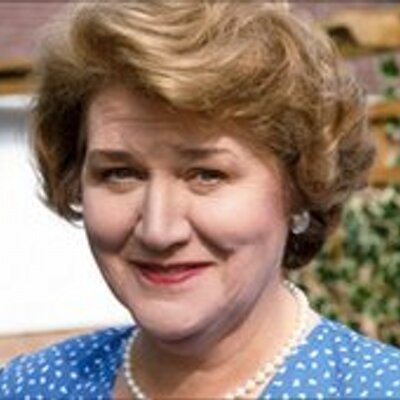
One of my favorite characters from all of British Television is Hyacinth Bucket. That’s spelled B-U-C-K-E-T, Bucket. Hyacinth is the star of a show called Keeping Up Appearances, and that title tells you almost everything you need to know about Hyacinth: her life is about appearances.


Hyacinth comes from a very humble background; she grew up poor and rather unsophisticated and her singular mission in life is to get as far away from her humble beginnings as she can get. Hyacinth wants to mingle and rub elbows with the aristocracy. She wants people to think that she is cultured and erudite and well bred. Most importantly Hyacinth wants people to think that she has money. Hyacinth has three sisters, but the only one she will speak of publicly is her sister Violet, the one with the swimming pool, sauna and room for a pony.


I was just watching an episode recently, where Hyacinth was excited that her husband gave her a home security system for their anniversary. She wasn’t excited because she was worried about her stuff being stolen; she was excited because now the neighbors might think she had stuff worth stealing. As the title implies, with Hyacinth, it’s all about appearances. If she can’t be rich, at least she wants to appear rich.


I love Hyacinth Bucket, but like the rest of the characters in the show, I wouldn’t want to live next to her. I love her, because I think I understand her, at least I understand the temptation to be her. I think it is great for people to want to improve themselves: to improve their education, their situation, their skills, their habits, their morals even. I share those desires. But the problem with Hyacinth is that appearances mean more to her than reality. She doesn’t understand that appearing great and actually being great are two very different things; and her obsession with appearing rich, sophisticated, well-connected, influential, virtuous and otherwise perfect is always drawing attention to just how far away from those ideals she really is.


Appearing great and being great are not the same thing. It’s a lesson that Hyacinth never learns.

It’s a lesson a lot of people never learn.


Two of Jesus’s followers, James and John, two brothers from a humble background, they have a special request for Jesus. You may remember that when Jesus first met James and John they were in the boat with their father Zebedee mending their nets. When Jesus called they quickly got up and followed him, leaving their father behind. Well now James and John they have a special request for Jesus. When Jesus finally comes into his kingdom, they want to be seen on either side of him, one on his left and one on his right. They want to be seen at the head table. They want people to see that they are close to Jesus. To be on either side of Jesus, that is the most visible place in the room. If they are seen there, then people will think that they are great, just like Jesus. There’s just one problem with their request: appearing great and being great are not the same thing.


In fact, in Jesus’s kingdom, appearances don’t count for much at all. Jesus didn’t come into this world to appear holy. He didn’t appear to pray; he didn’t appear to care for the sick or the poor; he didn’t appear to forgive sins; he didn’t appear to serve others. He didn’t appear to suffer and die; he didn’t appear to rise again. He didn’t appear to do any of those things, he did them. Jesus didn’t appear great, he was great.

Appearing great, and being great are not the same thing. Jesus was great.

We are not great. We can and should try to improve ourselves; we should seek to grow in wisdom and virtue; we should try to serve others as Jesus instructed us to do, but we must accept that we are not truly good or great, not like he was. Pretending to be otherwise only highlights how far we are from Jesus, not our closeness to him. Our lives are tainted with sin. All of our lives, even the most noble among us. We are not great. That is what makes Jesus’s willingness to bear our sins and burdens such an astounding thing: We are not great, we are ignorant and wayward, and yet our great high priest still deals gently with us. In the end, when Jesus is lifted up on the cross in his moment of ultimate sacrifice, the two individuals closest to him, the one on his right hand and the one on his left, were two sinners; criminals that Jesus died to save. And to the one that admits that he is not great and in need of Jesus’s mercy, that is the one that Jesus invites into paradise.


Jesus knew that James and John were a mess when he called them. Jesus knows what a mess all of us are when he calls us to follow him. He knows that we’re not that great. And yet he calls us, and is willing to die for us anyways. We are always going to be tempted with appearing great though. There will always be this voice in our heads saying: “If people see you sitting next to Jesus, maybe they won’t notice what a sinner you are. Maybe they will think you are great too.” We tell ourselves: as long as people think I’m great, they won’t realize what a mess I truly am. Maybe I’ll forget too.


It’s a dangerous temptation. Anytime the church as an institution, or we as individuals opt for keeping up appearances, rather than being real, and getting dirty with Jesus in the messy world of real service and sacrifice, we risk doing great damage. We have done great damage. Hyacinth is loveable and benign, but make no mistake, caring more about appearances than truth is a dangerous game. Wanting to be seen next to Jesus, without actually wanting to serve him, is the devil’s playground.


Jesus called two humble fishermen to follow him, he knew who James and John were when he called them. Getting prime seating at the banquet, or getting a good selfie with Jesus, is not going to change who they are. Their request to be seen next to Jesus, only highlights how far away from him they actually are. Jesus did not come into the world to create a phony public relations campaign; he came to offer himself as a true servant and a real sacrifice for real sinners. Appearances don’t count much for Jesus.


Hyacinth proves it over and over again: the more you try to keep up appearances, the more you prove how far you truly are from being the real thing.

Not a teacher, but a savior

Standard

Sermon for October 14th, 2018

Readings:

Amos 5:6-7,10-15
Psalm 90:12-17
Hebrews 4:12-16
Mark 10:17-31

You lack one thing.


That is what Jesus said to the man with many possessions: You lack one thing.


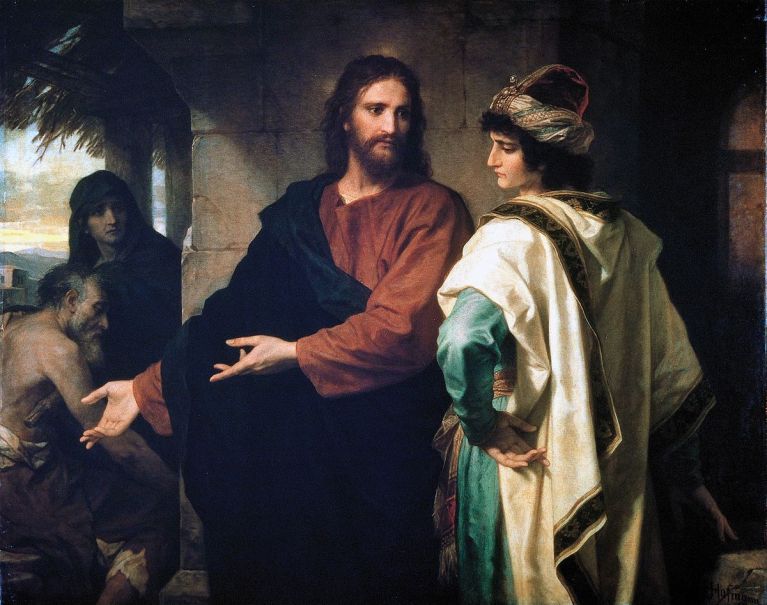
We don’t know much about this man. We know that he was a good man by most standards; he kept the commandments, or at least he says that he did. I suspect that he probably has broken some here and there. I am inclined to think that anyone who says they’ve never done anything wrong is either Jesus or delusional. But still, this man, he’s probably a decent human being. He’s very respectful to Jesus as a good teacher; he’s humble and kneels before him. We know that he has been somewhat successful in life, because he has many possessions. And we know that Jesus loves him. The bible tells us so.


But despite all of that we also know that something is missing in his life. This man lacks one thing. Deep down I suspect that he knows it. Why else would he go running up to Jesus asking him what he must do to inherit eternal life? If he had been confident that he had it all and had it all worked out, he wouldn’t have gone chasing after this Jesus. But he does. Something inside him keeps telling him that there is more. There is more to be had; there is more to be done. There is something missing in his life and his soul is restless until he can find it. There is a hole in his life that he is looking to fill.


Now I suspect that this man has been trying to find this one thing that he lacks for a very long time. Fortunately for him, he has been somewhat successful in life. He has had the luxury of seeking fulfillment in things. He has the money and the means to acquire possessions. Other, less fortunate, souls might have had to try to fill the hole with food, or wine, or drugs, or sex, or violence; but not this man, he has the great fortune of having wealth. And with that wealth he has tried to fill the void in his life; he’s gotten pretty good at it, but deep down, something is still missing. There is one thing he lacks: a living relationship with God.


Now make no mistake, this man has a relationship with the law; he has a relationship with the teachings of God; with the commandments. And by his account it is a good relationship; he says he’s never broken them, but I can’t help wondering: what if he’s not quite right about that? What if his relationship with God’s law isn’t as pristine as he makes it out to be? It seems to me that this man has two options: either he can try to convince himself that he has the power, the skill, the resources and the righteousness to achieve eternal life on his own (he can try to convince himself that he is good), or he can admit that forgiveness, salvation and eternal life are things that he cannot attain by himself; they are things that he can only receive as a gift. He can admit that only God can fill that empty space in his soul through an act of mercy.


This man wants a teacher, but what he needs is a savior. He wants a God that he can own just like all of his other possessions, not a God that owns him. He wants eternal life, but he is so used to being in control of his earthly life that he thinks the Kingdom of God is something that he will attain by his good choices. He says: “what must I do to inherit eternal life?” What must I do? He thinks that eternal life is something that he is going to win for himself. He can’t imagine that it is something that is going to be given to him as a gift, because of something that God did in Jesus Christ. He still thinks that he can save himself.


And here’s the saddest part of this story: this man walks away from Jesus. He only lacks one thing. It is the thing that he has been searching for his whole life. It is the hole that he has been trying to fill through good works and through material possessions. Here it is at last right in front of him, and he can’t have it, because it isn’t something he can buy, and it isn’t something he can do. It is someone that he must follow. It is a gift that he must be able to receive. It’s not a teacher; it’s a savior.


People hear this story and they get caught up on Jesus asking the man to give away his money and possessions, they get hung up on that, but I don’t think that is the hardest thing that Jesus asks this man to give up. Jesus is also asking this man to give up his sense of self-righteousness. He’s asking him to give up control over his life. He’s asking him to give up on the idea that he can save himself. Those things are even harder to let go of than money.


Even in church, I can’t tell you how often I hear Christians talking about what we doing in the world and how we are following God’s commandments and doing all this work to build God’s Kingdom, and not talking about what God has done for us. You think it’s hard to get people to let go of their money? Try getting them to let go of their self-righteousness. It is hard to get people to let go of money and possessions, but it is even harder to get them to let go of trying to save themselves.


But if you can, if you can let go of trying to save yourself, letting go of everything else gets a lot easier. When you realize that the god-shaped hole in your life can only be filled by a relationship with God, trying to fill it with more stuff becomes less tempting. When you realize that the size of your bank account doesn’t impress Jesus as much as how you live your life and how closely you follow him, then it becomes easier to invest in the things that really matter. When you realize that salvation comes from God alone, trying to hold on to anything but God seems really pointless. When you realize and accept that only God is truly good, then you will realize that all that self-righteous talk is just a bunch of hot air.


Our life as Christians is meant to be a response to what God has done for us in Jesus Christ. A response. We cannot buy eternal life, or buy our salvation, or buy goodness. We can only respond to what God has already done for us and to Jesus’s call to follow him. I expect that that response will mean that we will feel called to leave some things behind in this world. I expect that we will want to follow God’s commandments as best we can, not because we think we are all that good, but because he has shown such love to us that he will forgive us, even when we break them. I expect that we will feel called to let go of some of our stuff too, including yes, our money. I expect that we will willingly and gladly sacrifice from our own goods and possessions, because we will recognize the supreme and ultimate value of his sacrifice. We have seen the goodness of God. Now our life of faith is meant to be a response to that. We have found the one thing we lack and it isn’t a teacher, it’s a savior.


Is it hard to follow Jesus and let go of your self-righteousness, and your control, and even your possessions? You bet. But entering the Kingdom of God on your own…well, that’s impossible.


Are we working for union or division?

Standard

Sermon for October 7th, 2018

Readings:

Genesis 2:18-24
Psalm 8
Hebrews 1:1-4; 2:5-12
Mark 10:2-16

It is not good that man should be alone. That is what God declares after shaping Adam from the dust of the earth. It is not good that man should be alone. Our Bible begins with the book of Genesis and the book of Genesis begins with the story of how God created the heavens and the earth and all the animals on the earth. And after God created each thing he declares that: “it is good.” But here for the first time God declares that something is: “not good.” Everything that God created is good, but for this last creature, the creature formed in the image of God, there is something that is not good and that is to have a solitary existence, to be alone. Man needs a partner. None of the other animals that God has created are suitable as a partner for Adam; they are all too different. As much as Adam may love all the dogs and the cats and the monkeys, he can’t experience real companionship with them, not really, because he doesn’t see them as equals. Adam has not yet met his match.


So God causes a deep sleep to come over Adam and he takes a part of him, a piece from his side, and he crafts that into woman, Eve. And when Adam sees the woman he says: “at last! bone of my bones, flesh of my flesh. This is the missing piece of me.” This was not an inferior animal, but an equal partner and companion. They were not to be in competition with each other but were to come together and work as one. Two separate souls that recognize in each other a missing part of themselves. Two individuals that can stand before each other naked and unashamed.


That is Genesis chapter 2 and what a wonderful world it would be if the story of humanity just stopped there. But it doesn’t. We know that that is not the world that we live in now. Genesis has a chapter 3. And in chapter 3 the world we now know comes in like a bolt of lightening: Adam and Eve are tricked into trusting the serpent more than they trust God. They disobey God and their relationship with God, and with each other changes forever. Women and men start blaming each other and resenting each other; equality is gone, shame and domination enter in; competition and jealousy enter in, and not just between men and women. Brother will rise up against brother, tribes and nations will form and they will be set against each other. Women and children will become property; relationships will become transactions and business arrangements. In the beginning, God recognized our need for partnership and companionship and love, God recognized that we needed to be joined together, but our own sinful desires tore us apart. God wanted union, but what we decided to pursue instead was division.


We still live in that fallen world. We live in the world of Genesis chapter 3. There is no denying that or getting around it. From almost the beginning of human history, our relationships have not been exactly as God designed and desired them to be. People talk about how marriage has been redefined lately, but I’ve got news for you, we have been redefining marriage for a very long time, all the way back to when Adam first blamed Eve for his bad choices. We live in a world of hardened hearts. We live in a world of abuse and inequality and pain and brokenness. We live in a world where it is easier to divide people than it is to join them together. We cannot pretend to be living in the Garden of Eden anymore, because we no longer live in that world.


None of our relationships are exactly as God intended and created them to be. Not one of them. Not our relationships with our spouses, not our relationships with our parents or our brothers and sisters, not our relationships with our neighbors. There is not one relationship in your life that is not in some way stained by human sinfulness. And sin is divisive. Sin likes to add division to division, always pushing people further and further away from each other. For thousands of years people have been divided over whether divorce is possible and on what grounds. People today have divided opinions about what does or does not constitute a marriage. We live in a divided world and we have for a very long time, and the divisions keep multiplying.


The questions for us, as people who worship a god that has declared partnership and companionship good, and division and separation not good, is: “what side are we actively working for?” Are we working for union or division? In word and thought and deed, are we working to draw people together, or are we working to further divide them? If someone has gone through a painful divorce do we remind them that Christ knows the pain of being broken and hurt? Do we tell them that his forgiveness is greater than our sinfulness? Or do we add division to division driving them further away from the community? Should we deny communion to the people who probably most need to be reminded of the unifying power of God’s love? Lord, I hope not.


We are called, as Christians, to bring people to Jesus, not to stop them. We don’t have to call divorce good to recognize that sometimes it might be the least worst option. It could be better than forcing people to live in toxic or abusive relationships that just lead to further division and worse pain. Since Genesis chapter 3, division exists in our world, we can’t get away from it, but we don’t have to work for it; we don’t have to be servants of it. I really don’t care what the issue is whether it is remarriage, or gay marriage, or who is called to leadership in the church, or whatever else, if we are trying to use God’s law to separate people from each other or to separate people from God, then we are misusing it, plain and simple. God’s law is there to draw us closer to him and to each other, not to drive us further away.


We no longer live in the world of Genesis chapter 2. We can’t go back; not on our own. Sin and divorce and division and disagreement are a part of our world, and no matter how many good decisions we make, or how many good or bad relationships we have, we are all going to need the grace and mercy of God to enter into his kingdom. But the good news of our faith is that we have it. Jesus Christ is God’s solution to the third chapter of Genesis. His life and death, his suffering and resurrection and ascension are how God is dealing with the brokenness, sin and division in our world. We would be wise to listen to his teachings and to pattern our lives after his behavior, but in the end his life is about so much more than just teaching us to make good decisions. Jesus reminds us that God desires to hold and bless his children. Jesus wants people to be drawn together, not torn apart. Living in a broken and divided world we must always ask ourselves: am I drawing people closer to Christ or pushing them further away? Our role as Jesus’s disciples is very simple and he is very clear about it: Let the children come to me, and DO NOT STOP THEM! We can leave the rest to Jesus.

There are some things the doctor just can’t do for you.

Standard

Sermon for September 30th, 2018

Readings:

Numbers 11:4-6,10-16,24-29
Psalm 19:7-14
James 5:13-20
Mark 9:38-50

I don’t know about you, but when I go to the doctor I want him or her to fix my problem. Diagnose my problem, tell me what’s wrong or why I am sick, give me the proper medication or schedule the surgery or procedure and let me get on with my life. That is what I am paying you for, isn’t it? You’ve got the education, the credentials, the prescription pad and the scalpel, so please use them and make me feel better.


What I find irritating (and maybe some of you do too) is when I go to a doctor and they look at me and say “this is what YOU need to do to get healthy. You need to lay off the dairy, cut back on the salt, drink less, exercise more, take a multivitamin, take control of your desires and impulses, etc..” Or worse yet, the doctor will tell you that you just have to wait for this to pass or for your body to heal. No, I want a doctor that will fix my problems, not one that gives me homework. But doctors do it all the time, you go to them for their expert advice, and time and time again they send you away with a list of things that you need to do. It’s very irritating; I wish they’d quit doing that.


But of course, we know they can’t. Doctors can do things for us in moments of great crisis, but when it comes to our day to day health, we are the ones that have to do the heavy lifting. Doctors can give us advice and direction and expertise and wisdom, but they can’t exercise for us and they can’t eat our vegetables for us. We know that. We may get a little frustrated that our problems don’t have easy fixes, but deep down I think we understand that there are necessary limits on what a doctor can do for us. If we really want to be healthy, at some point we must take responsibility. A good doctor will help us take responsibility for our own health. There are some things the doctor just can’t do for you.


We understand that when it comes to our physical health; but I don’t think we always understand that when it comes to our spiritual health.


In our passage from Numbers today, Moses is at the end of his rope. He is ready to quit. He has heard one complaint too many and it is a complaint that he has already heard: “We’re hungry! We want meat! We used to have meat when we lived in Egypt! There is nothing here to eat!” And on and on and on. Moses has heard all this before. They complained about not having food before and Moses prayed and God gave them Manna. They complained about not having water and Moses struck the rock and there was water. Each time there was a crisis, the people complained, Moses prayed, God sent a miracle and the problem was solved.


But this time is different.


This time is different, because unlike those other times when the people complained, this time there is no crisis. The people aren’t starving. There is no mention of a lack of water. They don’t have Pharaoh’s army on their heals. They have plenty of food; they have the manna from God, which they don’t even have to work for, they just have to pick it up. And the Bible says that they made it into cakes that tasted like rich cream. I have to tell you, I don’t have a huge sweet tooth, but if I had to survive by eating cake every day, I would persevere.


There is no real crisis here, the people just do not want to control their own desires. They don’t want to endure or adapt. They don’t want what God has given them. They want to make it to the promised land, but they want Moses to carry them there crying all the way. Moses can’t do it. It’s not that he doesn’t want to. He simply can’t. Just like a doctor can’t force us to eat right, Moses can’t force people to eat the food that God has given them. He can intercede on behalf for the food, which is what he did before, but now that the food is all around, he can’t make them eat it. These are God’s children, and God’s children have free will. As long as God’s children have free will neither God nor any of his prophets and servants can force them to do anything. They can only lead. It’s like the only saying you can lead a horse to water, but you can’t make them drink. Moses has lead the Israelites to food, but he can’t force them to eat it.


God shows Moses that a different type of leadership is called for now. Moses isn’t just called to intervene anymore, now he is called to empower. He is charged to raise up leaders within the community. He learns that he need to help others to take responsibility for the spiritual health of the community, and ultimately he realizes that each and every individual has to take some ownership over their own walk with God. He can still provide direction, but getting to the Promised Land will require them to put one foot in front of the other themselves.


In James’s epistle this morning he says: “are any among you suffering? They should pray. Are any cheerful? They should sing songs of praise.” In the gospel this morning Jesus says if you find something in your life that is a stumbling block to your walk with God, then you need to remove it. A priest or pastor can pray for you, but no priest or pastor can do YOUR praying for you. We all must take some responsibility for our community life and for our own walk with God. Yes we still need leaders, just like we still need doctors, for wisdom, guidance, expertise, direction and even for intervention in times of crisis. James also said, that if you are sick (that is, in times of crisis), you need to call the elders of the church, but when it comes to our day to day spiritual health and our walk with God, there comes a point where we have to take responsibility for receiving what God has given us.


When it comes to our spiritual health, just like our physical health, there are some things the doctor just can’t do for you.

Gehenna: The Opposite of the Kingdom of Heaven

Standard

Sermon for Sunday, September 23rd, 2018

Readings:

Jeremiah 11:18-20
Psalm 54
James 3:13-4:3, 7-8a
Mark 9:30-37

On the Southwest side of the old city of Jerusalem, just down from Mount Zion is a little valley with a very dark past.


While the entire city of Jerusalem has seen more death and destruction than any of us could possibly imagine; even in Jesus’s time, this one particular valley just outside the city walls was synonymous with death; its very name had become a euphemism for a place of death. Not just death though; this was a place where the wicked dead would be punished.


It’s called the Valley of Hinnom or Gehenna. Now that name may not be very familiar to you, but you have heard Jesus talk about this place quite a few times. Whenever Jesus uses this name though, our bible translators substitute a name that you are more familiar with: Hell. When Jesus talks about Hell, he uses the word Gehenna. That little valley had been for so long associated with death and suffering and wickedness, that in Jesus’s time it’s very name was used to symbolize the place that is the exact opposite of the Kingdom of Heaven.


Now why? Why was this place considered so cursed?


We find the answer in the book of the prophet Jeremiah. In our passage today, Jeremiah is speaking to himself and to God and he is lamenting the evil deeds of his people, but what are those evil deeds? To find the answer you must look back a few chapters to chapter 7. Jeremiah famously storms into the Temple and excoriates the people gathered there for worshiping their God in word but not in deed. They break all of his commandments and then come to make offerings to God like nothing ever happened. Jeremiah asks the question: “Has this house, which is called by my name, become a den of robbers in your sight?” Words which Jesus himself would echo many years later when he entered the Temple and drove the money-changers out.


Jeremiah is angry at many things that he has witnessed, but one of the things that troubles him the most, is what he has seen going on down in the valley, within view of God’s temple. There, in Gehenna, the Valley of Hinnom, the Judeans had built another altar to a different God. Not the God of Israel that had saved them from slavery, but a foreign God, the God of Baal. And what was being offered on that altar? Children. Sons and daughters were literally being burned as an offering. They were being used to appease some foreign God. This was not what the God of Israel had commanded. This was the opposite of what God had commanded. That is why Jeremiah is so upset. And henceforth, the name Gehenna becomes synonymous with the opposite of the Kingdom of Heaven; it becomes the name and the image of Hell.


In the gospels Jesus uses the name Gehenna, Hell, repeatedly to indicate the place, or the state of being that is the opposite of being united to God. Last week we heard James use the word in his Epistle when he warns us about the dangers of our tongue; he says it is a world of iniquity that is itself set on fire by Gehenna, Hell. Next week, Jesus will use the word in the Gospel when he advises us that if our eye, or hand, or foot causes us to stumble, that we should remove them, rather than have two eyes, hands or feet and be thrown into Hell, Gehenna.


Hell is the opposite of Heaven. The Valley of Hinnom, where Baal is worshiped, is the opposite of Mount Zion, where the God of Israel is worshiped. Gehenna is the opposite of the Kingdom of God. But opposites can be useful sometimes when we want to see or understand something more clearly. Maybe it is by taking a close look at Hell, that we can really appreciate what Heaven is supposed to be. James tells us in his epistle to resist the devil and draw near to God, but first we must be able to tell them apart. What is Gehenna (or Hell) like?


In Gehenna, the weak are sacrificed to serve the needs of the strong. In Gehenna, a child is a sacrificed to serve the needs of the parent. In Gehenna, man’s life is sacrificed to serve the needs of God.


Well if that is Hell, then what must Heaven be like? Jesus helps us see the contrast in today’s gospel:


In Heaven, the greatest are willing to serve the needs of the least. In Heaven, children are so precious that to welcome a child is like welcoming God himself. In Heaven, God sacrifices his own life to serve the needs of man. The Kingdom of Heaven is the opposite of Gehenna, and we need to be able to recognize the difference.


There is a scene in the movie Schindler’s List, where some Jewish children are being pulled by a Nazi officer from the long lines headed into the work camps, and being forced onto a separate line and onto a separate train. A train that we know is headed directly to a death camp and to the gas chambers and the ovens. And in the midst of this disturbing scene, Oskar Schindler, a German industrialist, a munitions manufacturer and a member of the Nazi Party, steps forward and stops the officer from loading the children onto the train bound for certain death.


He grabs a little girl’s hand, holds it up in front of the officer’s face and says: “This is a skilled munitions worker. Do you see these fingers? How else am I supposed to polish the inside of a 45mm shell casing? These children are essential.” The Nazi officer relents, and Mr. Schindler is allowed to take the children back with him to his factory. Mr. Schindler pretends to be using these children as his slaves to further the war effort, but we know that what he is actually doing is saving their lives. He is actually serving them.


In that brief moment in the film I think you get a glimpse of the Kingdom of Heaven and Gehenna at the same time; side-by-side as polar opposites. The Nazi officer sees the girl as a sacrifice; someone whose life is to be offered and used to serve his needs. Schindler sees the girl as a child of God, someone whose life he must protect, even if it means risking his own.


A dramatic movie, yes, but so much more than that, because we know that the story is true. The little girl that Schindler saved is still alive. Her name is Eva Lavi and she still talks about that moment when Schindler confronted the officer and saved her life.


In later years, after the war when Schindler was struggling and bankrupt, it was some of these very children that would support and save him. The first become last and the last become first. When Schindler died he was buried in Jerusalem; in a cemetery that is just opposite the Valley of Hinnom, opposite from Gehenna, but Schindler’s body is planted on Mount Zion.


Only God knows what became of that Nazi officer.


Accept No Substitutes

Standard

Sermon for September 16th, 2018

Readings:

Isaiah 50:4-9a
Psalm 116:1-8
James 3:1-12
Mark 8:27-38

My apologies, but there is no audio file this week due to a technical problem.

I was skimming through my regular online news magazines this week when I came across an article that had a headline that was just too good; I had to read it:

Goat yoga is a poor substitute for religious observance.

Who wouldn’t want to read that? Well as it turns out, the author, who is Jewish, was lamenting the fact that many reformed or liberal synagogues, in an attempt to lure young people to worship, had begun promoting these “non-traditional” services. Many of these services were shaped around one or more political themes or incorporated elements of ritual such as glow sticks or goat yoga (whatever that is) into their celebration of the high holy days. The author, who I hasten to point out is very young, younger than me probably, was responding to an article that he saw in the Wall Street Journal describing these synagogues. He also very rightly pointed that many liberal churches have resorted to similar tactics to try and draw in new members.

Well as soon as I clicked away from that article to take a scroll through my Facebook feed, I saw an online video posted by a friend of an interfaith service at an Episcopal Cathedral in another diocese, with giant tree people processing down the aisle (if you saw Guardians of the Galaxy, they all looked like Groot). I thought to myself: “Oh Lord, Have mercy.” But I wasn’t surprised. It’s the kind of stunt I have come to expect from some of our churches, and I understand why some churches do it. It’s because actual religious observance can be a really hard sell sometimes. Stunts are more exciting than regular prayer and scripture study, and they usually get you more free publicity.

It isn’t always easy to get the average person on the street excited about fasting, or daily prayer, prayer that is about giving honor to God and not just petitioning him for something. It is so much easier to get people worked up over the latest political buzzword or scandal than it is to get them to be actually in love with God. People will use Jesus’s name to try to promote their own agendas; they will follow him if they are convinced that he is headed in the direction that they already want to go, but convincing people to listen to him simply because he is he Messiah, the son of God, that’s a lot harder.

But here is what the author of the goat yoga article points out: those churches and synagogues that are resorting to stunts and that only find purpose in political activism, they are in fact struggling to survive. Many of these publicity stunts and liturgical theatrics are being done as an act of desperation; they are being done because those communities desperately want to seem relevant to the world outside; they desperately want to be the cool kids on the block.

Well, here is what I remember from school: the cool kids were never the ones that desperately wanted to be your friend no matter what; the real cool kids, the ones people really did want to be friends with were the ones who had this quiet confidence in themselves; they were the ones who did their own thing and didn’t feel the need to be popular. Desperation to be popular is never a good look on anybody. It’s not a good look on a religious community either. Stunts may attract attention, but it is actual religious devotion and observance that gains followers.

It is easy to appeal to people’s worldly interests in an attempt to bring them in to church, but in the end if the church isn’t directing their thoughts and their devotion toward God, then what do people need it for? People may show up to a stunt out of curiosity, and they may get worked up over one particular cause or another, but we humans, we can’t stay angry or excited all the time. When the stunt is over and we have moved on to the next crisis or cause, where is the room for God in our lives then?

There was a professor of Jewish Mysticism, Abraham Heschel, who said: “religion is an answer to ultimate questions. The moment we become oblivious to ultimate questions, religion becomes irrelevant, and its crisis sets in.” If you just want to hang out with people that vote the way you do, you don’t need to come to church. If you just want to make a difference in this world, I could direct you to any number of institutions that do a better job than we do; but, if what you desire is to live in relationship with the creator of this world; if it is the answers to ultimate questions that you seek, that is when religion has the answer; that is when the Church has the answer.

Peter had the answer.

When Jesus asked him “who do you say that I am?” Peter had the right answer.

“You are the messiah,” he said. And he was right. But the moment Peter heard that this would mean Jesus’s suffering and rejection, he didn’t want to hear anymore. Peter wanted Jesus to be a solution to his problems, he didn’t want him to add to them. Peter didn’t want to see Jesus die, and he certainly didn’t want to face death himself. Peter rebukes Jesus; he pulls him aside and he probably said to him: “look Jesus, nobody is going to want to follow us if you keep on talking this way. You need to change your message and focus on the issues that they are concerned about.”

Jesus’s response to Peter stings: “Get behind me Satan! For you are setting your mind not on divine things, but on human things.” Had anyone else said those words to Peter, he probably would have just walked away; he could have gone home and gone on pursuing his own interests and causes, but because those words came from Jesus, he couldn’t. As strong as Jesus’s rebuke was, Peter can’t just turn and leave. He stays and he follows, because he recognizes that this man is the messiah. Maybe this messiah isn’t telling him what he wants to hear, but his devotion and love for him won’t let him walk away. He has a relationship with the son of God, and that in the end means more to him than a simple solution to any of his problems. It means more to him than just being right about one issue or another.

Peter would go on to do amazing things in this world. He heals the sick, is a powerful preacher, he helps to organize the early Christian communities and founds probably the most powerful organization in the history of the world; he is able to do all of this because he was willing to put his devotion to Jesus, before his own sense of self-righteousness. He was able to hear Jesus’s rebuke and not turn away. He was able to let Jesus change him and his way of thinking.

Devotion to God should absolutely affect the way we look at and treat the world he created. Our love for God should absolutely influence our love for our neighbors. The Epistle of James was spot on last week when he questioned if the community was really devoted to Jesus if they were willing to ignore what he said and taught, but the ability to recognize that Jesus has the answers to the small questions, the ability to recognize his authority, comes from recognizing, like Peter, that he is the answer to the big question; the ultimate question.

Causes and stunts can never and will never be a substitute for genuine religious observance and devotion, because genuine religious observance and devotion are an answer to the ultimate question. They are what allow God to change us and shape us and to live in relationship with us. You can go and feel self-righteous anywhere, but here, in church, our challenge is to know and appreciate the righteousness of God. Our challenge is to follow Jesus so closely, and with such respect, that when he inevitably rebukes us for setting our mind not on divine things, but on human things, our love for him will not let us walk away.

Stunts and gimmicks may get you attention, but when it comes to making followers of Jesus Christ, there is no substitute for genuine devotion.


Before we know how to speak, we must first know how to listen.

Standard

Sermon for September 9th, 2018

Readings:

Isaiah 35:4-7a
Psalm 146
James 2:1-10, [11-13], 14-17
Mark 7:24-37

Before we know how to speak, we must first know how to listen.


There is a reason why the man that Jesus heals in the Gospel this morning is both deaf and mute: it is because our ability to speak and our sense of hearing are tied together. We learn how to speak by listening and by mimicking, repeating the things we hear. Children that are born deaf often have great difficulty learning how to speak. They can learn, but it isn’t easy because we learn how to speak by listening to others and repeating the sounds they make. That is why we have regional accents; we repeat sounds and we pronounce words the way that we hear others speaking. Before we know how to speak we must first know how to listen.


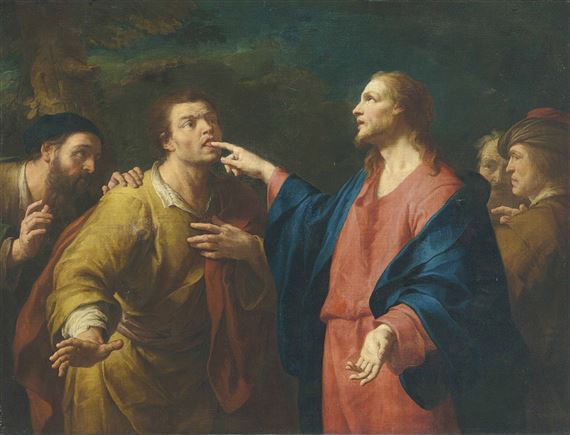
When Jesus heals the man in today’s gospel, first he touches his ears, then he touches his tongue. And Jesus says: “be opened,” and his ears are opened, and then his tongue is released.


Before the man is able to speak, he must first be able to listen.


That’s the way we are designed, but isn’t it interesting how often we try to make it work the other way? As babies we listen first and then we speak, but at some point along that journey to adulthood we decide that we no longer need to listen anymore. If we are polite we might wait for our turn to speak, but how often are we actually actively listening to what others say? How often are we just waiting for someone to finish talking so we can say what we want to say? Sometimes we do listen, in our finer moments, I will grant you that, but I think it’s a dying art. And if we can’t listen or don’t listen, or can’t hear, how can we expect to have our own words understood? How can we expect to know what to say? How can we expect to be heard even when we do speak? We need to learn how to listen first.


You may be wondering about the end of our gospel passage today: when Jesus tells the disciples that witnessed this miracle not to speak. That might seem odd to you, because didn’t this same Jesus send his disciples out into the world, commanding them to make disciples of all nations and to preach the Gospel to the ends of the earth? Aren’t we supposed to be evangelists; sharing the news of Jesus with the world? Why would Jesus tell them to be silent?


Well it’s true, eventually Jesus does commission his disciples to be evangelists to the world, but early on in his ministry, time and time again he tells them not to start preaching yet; not to tell others what they have seen. Christians have scratched their heads at those comments for years, but I think Jesus recognizes something very important: that his disciples are human with very human flaws, one of which is that the moment we start talking we stop listening. Jesus has more to share with his disciples; he has more to teach them; there is so much more about God that they need to learn and understand. If they start running around telling the world about the one thing they saw Jesus do, they are likely to miss everything else that he is saying and doing. There will come a day when Jesus will send them out into the world to preach and proclaim, but first they must listen. When Jesus was teaching his disciples, he repeatedly says to them: “Let anyone with ears to hear listen!” and “pay attention to what you hear!”


Before we know how to speak, we must first know how to listen.


Of course, they don’t listen to him. They are so intent on sharing this great story, that they can’t even hear his command not to tell. And while what they say is true, he does make the deaf to hear and the mute to speak, that is not the beginning and end of his ministry. Jesus’s life was about so much more than just a few miracles and healings. But the disciples weren’t ready to listen, or they thought that they were done listening.


Part of being a person of faith, part of being a Christian, a follower of Jesus Christ, is sharing that faith with others. It is not just the clergy that are charged with sharing the Good News, all of us are, but that is incredibly intimidating for some people. Talking about God or talking about our faith can be a very scary thing, so we shy away from it. We find ways to avoid it. We don’t know what to say; but I think we learn to talk about our faith the same way we learn to talk period, by listening.


Yes, I may spend a few (and it really is only a few) minutes each week talking about God, but if I didn’t spend a considerable amount of time listening to God every day, I don’t think I would have much to say. I couldn’t do this. Before we know how to speak, we must first know how to listen.


And there are many ways in which we may listen to God; it can’t just be an hour on Sunday morning, it needs to be all the time. Most importantly we listen to God through daily prayer and scripture reading; but there are other important ways as well: through spending quiet time alone; through observing nature; through listening, actually listening to the stories of others; through reading the profound thoughts of the saints and sages through the ages that have spent their lives listening to God. We need to be willing to listen to God first, even if what he has to say to us is hard to hear.


And that means learning to hear, to listen to the tough words of God too. If we close our ears when we hear Jesus say something that makes us uncomfortable, like his initial refusal to the woman in today’s gospel, then we will also miss him saying “the demon has left your daughter.” If we close our bibles when we read something like the Epistle of James that convicts us all of sin, then we will also miss the message that our sins have been forgiven. If we stop praying when we encounter the words “we are not worthy” then we will also fail to proclaim that our Lord’s property is “always to have mercy.” When we learn to listen to all that God has to say to us, the good and the bad, what a story we will have to tell.


God will not tell you that you are always deserving; he will not tell you that you are always good; he will not tell you that you are always right.

But here’s what he will tell you: he’ll tell you that you are healed; he’ll tell you that you are forgiven; he’ll tell you that you are loved. But in order to hear that, we must be willing to listen to him, even when he challenges us.


There is a world out there that needs to hear about the faith we have, and we need to learn how to tell it, but before we know how to speak, we must first know how to listen.

Lord, lay your hands upon us and open our ears before you release our tongues, so that when we do speak, we actually have something to say.

We do not lose heart – Beverly Lewis Memorial

Standard

Sermon delivered at the funeral of longtime Ascension parishioner Beverly Lewis

We do not lose heart.

That is what Saint Paul said to the Corinthians. In moments of pain, in times of suffering, when we groan under our burdens, when the world presses us down, when we are afflicted, when our bodies fail us and we struggle for every breath…we do not lose heart.

We do not lose heart, because as Christians we know that God has planted something within our hearts that cannot be destroyed. There is something within us that is not completely at home here in the world. There is something within us that is more powerful than death. We do not lose heart because God’s love is within our hearts and God’s love never fails; God’s love is never broken. God’s love never gets tired.

Paul goes on to say in his letter that “if anyone is in Christ, there is a new creation: everything old has passed away; see, everything has become new!” To be in Christ, to invite Christ into your heart and to unite yourself to his body, is to be eternally new; reborn with a life that belongs to God; redeemed with a heart that is restless, as Saint Augustine says, until it rests in him.


We do not lose heart, even when we must say goodbye to someone we love so dearly, but our hearts do ache. Even when we know and have faith that we are only saying goodbye for a season; even when we are confident that this person has been made new in Christ and is going from strength to strength in the life of perfect service in God’s heavenly kingdom…our hearts still ache.


It is on days like today when I am reminded of how important hymns are to our life of faith. Beverly was a great lover of music and I think she would have understood how music can speak to our souls in ways that the spoken word just can’t. In particular the hymns of our faith, many of which I would argue are divinely inspired, they can give us the words to express the hope and the sorrow that we feel on days like today. Sometimes they give us an image, a glimpse into heaven, where we can imagine the glory that awaits us there.


In a few minutes you are going to be asked to open your hymnals and sing one such hymn: at the offertory we will stand to sing hymn number 657, Love Divine, All Loves Excelling. It is one of the triumphs of Charles Wesley first published in 1747. But I want you to really hear the words that you will be singing. I want you to see the image that Charles Wesley is painting.


First he begins by asking that love of God which comes from heaven; that love which was incarnate in Jesus Christ to enter into our hearts:


Love Divine, all love excelling,
Joy of heav’n, to earth come down;
Fix in us Thy humble dwelling,
All Thy faithful mercies crown.
Jesus, Thou art all compassion;
Pure, unbounded love Thou art;
Visit us with Thy salvation,
Enter every trembling heart.


Then Charles invites us to look up and to long for that day when Christ will return, when he will raise the dead to life, set the world right, and where we will join the heavenly host in a life of unending praise:


Come, Almighty, to deliver,
Let us all Thy life receive;
suddenly return, and never
Never more Thy temples leave.
Thee we would be always blessing,
Serve Thee as Thy hosts above,
Pray, and praise Thee without ceasing,
Glory in Thy perfect love.


But it is the last verse in this hymn that really gets me. It asks God to finish the new creation that he began when he first entered our hearts:


Finish, then, Thy new creation;
Pure and spotless let us be;
Let us see Thy great salvation
Perfectly restored in Thee;
Changed from glory into glory
Till in heaven we take our place,
Till we cast our crowns before Thee,
Lost in wonder, love and praise.


What an image. Changed from glory into glory, till in heaven we take our place. Where we will cast our crowns down at the feet of God; where our earthly riches and accomplishments will mean nothing to us, compared to an eternity of basking in wonder, love and praise. As family and friends and loved ones, we mourn today for Beverly, but our faith reminds us that Christ has placed a new life within us, a life that death cannot conquer, and that someday we too can join Beverly in that heavenly choir, lost in wonder, love and praise.

Such a wonderful hymn, but there is an extra verse that isn’t in our hymnal. I discovered it this past week as I was reviewing this hymn and I instantly thought: “ah! That’s Beverly!”


You see, on my last few visits with Beverly, she struggled to breathe. Her illness made her short of breath and dependent on oxygen, but still even with the struggle she had such a light within her. She always had that wonderful smile. In the time that I have known Beverly, even through her struggles to care for Rodger, she always had this spirit within her. Looking at some of her old pictures, I still see that spirit, that light in her smile. And then I think of what obstacles she must have encountered in her life. How much did she have to overcome? How far did she come and bring her family with her? Where did she find that strength? Now I should add that if you followed Beverly on Facebook then you know that she wasn’t always upbeat about politics, but still she had strength and determination. When I read this missing verse, I thought “yes, this is a prayer for Beverly,” maybe it is a prayer for all of us.

Breathe, O breathe Thy loving Spirit
Into every troubled breast;
Let us all in Thee inherit,
Let us find the promised rest.
Take away the love of sinning;
Alpha and Omega be;
End of faith, as its beginning,
Set our hearts at liberty.


Whom shall we serve?

Standard

Sermon for August 26th, 2018

Readings:

Joshua 24:1-2a,14-18
Psalm 34:15-22
Ephesians 6:10-20
John 6:56-69

The first five books in our Bible, as many of you know, are known as the Five Books of Moses: Genesis, Exodus, Leviticus, Numbers and Deuteronomy (they are also known as the Torah or the Pentateuch). Although Leviticus and Numbers can be something of a tough read, I’m willing to bet that most of you have some familiarity with the stories in Genesis and Exodus. Adam and Eve, Cain and Abel, Noah, Abraham and Isaac, Joseph and his brothers, and of course Moses leading the Children of Israel out of slavery and into the Promised Land; these stories are a familiar part of our faith and even our Western culture. Movies, musicals and countless works of priceless art have been crafted around these stories.


The Book of Joshua, which we read today, is a continuation of the story after the death of Moses. It details the events that happened to the Children of Israel once they arrived in the Promised Land. It is the “now what?” book, if you will. In other words: now that you have witnessed God’s salvation, now that you have been delivered from slavery and death, now that you have reached the promised land…now what? How are you going to live from this point forward? That is really the question that Joshua wants to ask the assembly in the part that we just heard this morning that comes from the very end of the Book of Joshua.


And just before Joshua asks this all-important question (in the part of the story that we didn’t read today), Joshua retells almost the entire story of the Children of Israel’s deliverance. Beginning the Abraham, Joshua reminds them how every step of the way God was with them. Joshua reminds them of how God sent Moses and Aaron and the plagues, and how he had delivered them from the Egyptians, through the Red Sea, fed them in the desert, led them through the Jordan, and allowed them to take possession of the Promised Land. Joshua reminds them of what God had done for them, and then he asks them: whom are you going to serve?


Well of course the people say: we will serve the Lord! How could we not?! They were just reminded of what God, the God of Abraham, Isaac and Jacob, had done for them; how could they possibly even consider serving any other gods? Well this sounds great; They made a good good decision; now on to living a blessed life in the Promised Land, right? Public affirmation of faith made, now on with their lives.


Well Joshua was smart, because after the whole community promised that they would follow the God of Israel and no other, after they promised that they would serve the Lord, he not only wrote it down, he also set up a large stone in that place as an ongoing reminder, or memorial, of the promise they had made. Joshua was justifiably a bit skeptical of how capable these people were going to be of keeping and remembering this promise. No doubt, because Joshua remembered just how easy it was for the Children of Israel to forget what God had done for them. Think back to the Exodus story for a moment. How many wonders had the Hebrews seen by the time they reached the Red Sea? And still the Children of Israel complained against Moses and wanted to turn back. Then after they had been led safely to the other shore, been miraculously fed in the desert, and made it to the foot of Mount Sinai, how long did it take them to grow impatient, forget the miracles they had just witnessed and turn to worshipping other Gods? Not very long. Joshua knew that these people would need to be reminded, and reminded frequently, of what God had done for them, because he knew that the temptation to turn to other gods is always present. And we are always liable to succumb to it. At some point we are bound to, and we will always be in need of something to draw us back to the worship of the true God.


I don’t think human nature has really changed one bit since Joshua’s time. We are still always being tempted to serve other gods. We still forget what our God has done for us; we grow impatient and before we know it we start looking to other gods for answers; we start serving other gods. It’s easy for us to do too, because we don’t call our gods by proper names anymore, we don’t even think of them as gods, so we don’t realize that we are worshipping or serving an idol; we don’t think that we have turned away from our God, we might even convince ourselves that we are serving the true God when we serve one of these idols, but I wonder sometimes, I really do.


Think of all the –isms in our world that people are attached to (or have been attached to): nationalism, socialism, communism, fascism, liberalism, conservatism, capitalism…some of these start out as great ideas or good things, but once they move from being an idea to an ideology; once they become something we are devoted to; when they are no longer a means to an end but the end itself…that is when they become a false idol. They become another god that we are serving. We gradually forget the true God. We forget what he has done for us. We forget the promises that were made. We all do it. All the time. These other gods have a very sneaky way of distracting us, dividing us, and drawing us further and further away from the God that actually has the power to save us.


We humans are weak. Our God is a jealous God; he wants us to love and serve him only; but he knows that we are weak. He knows that we are constantly being tempted to forget his mercies and strength; we are constantly being tempted to serve other gods. So time and time again, God establishes rituals and prayers and he sends leaders and prophets like Joshua to remind the community and to build physical reminders of God’s presence in our midst. There is a reason why Jesus in his Last Supper commanded his disciples to “do this in remembrance of me.” It is because God knows how easy it is for us to forget. He knows that we need constant, daily reminders of what he has done. That is why the creed is so important, and the scriptures are so important; That is why many of our prayers, including the prayers we say at the altar, don’t just ask God to do things, but also retell the story of what he has already done; We need these reminders. We need them because each and every day we are faced with the same question that Joshua put to the Children of Israel; each day, each moment we have to decide whom we shall serve.