A Million Tiny Battles

Standard

Sermon for August 11, 2024

Readings:

1 Kings 19:4-8
Psalm 34:1-8
Ephesians 4:25-5:2
John 6:35, 41-51

In the Book of Kings this morning we find the prophet Elijah sitting by himself under a tree and having a pity party. 

Elijah is exasperated; ready to quit; ready to die. The leaders of the land have had their values all screwed up, he tried to correct them, and they didn’t take too kindly to it. There is a part of me that doesn’t blame Elijah for being frustrated; but then there is another part that wants to say to Elijah, “well, what did you think was going to happen?” Did you think that human beings were all of a sudden going to just open their eyes one day and start behaving? I want to ask Elijah, “why did you think you were better than your ancestors and the prophets who came before you?” That is foolishness. Do you not know your own history? 

If you sit down and read the Book of Kings sometime you will see that things had been bad for a very long time before Elijah came along. One horrible leader after another. It’s funny, the Book of Kings is really all about how bad kings are. And I say this as someone who you all know is a big monarchist. “King” is not a dirty word for me. But I can certainly recognize that some kings are better than others, some rulers or leaders are better than others, and all of them, at some point, are going to disappoint you. 

Just as a side note here, I am going to save you all some grief right now. Whoever you are planning to vote for in November, prepare to be disappointed! He or she is going to disappoint you!

Anyways, the Book of Kings points out just how disappointing leaders can be. Even wise old Solomon and good King David, they had major flaws, and made major mistakes. And now, in Elijah’s time, after a trail of bad kings and wars, the old kingdom of David has been split in two. Society has been split in two. The laws, and the values and the traditions that people used to care about have been forgotten. The King and the Queen where Elijah is living, in the North, are corrupt politicians that have made all sorts of shady foreign alliances. They brought in prophets that worship different Gods than the God of Israel and have different customs and traditions. Why have one God when you can have lots of Gods? 

And you may think, so what? Big deal! That’s like living in New York. That’s just multi-culturalism and diversity, right? Well diversity is great when you have some common values that make living together possible. But what if those values disappear and it just becomes every man and woman for him or herself? Diversity is great when you have a strong unifying core; when you have commonality. But without that strong core, diversity just becomes division.

Elijah is looking at a kingdom that has been divided over and over. It wasn’t a community of people with a common goal and purpose; it was just a collection of individuals all looking out for what is in it for them. He, Elijah, wants them to return to the worship of the one true God. The God of Israel was that unifying core that had been holding the kingdom together. Elijah wants to revive and restore the worship of God. But it’s not an easy task. How do you refocus people on God? How do you restore those “common values?”

You know, the Book of Kings spends plenty of time talking about King Solomon’s faults, but it spends even more time, way, way more time actually, talking about the good thing that Solomon did. And the greatest thing that Solomon did, that outshined his many faults, was build the temple. It was the greatest thing he did, because not only did it give glory to God; it also brought people together. It was a focal point of unity, even for the folks who didn’t live in downtown Jerusalem. It meant so much, but now, during Elijah’s time, the temple was in a different Kingdom altogether that had split off. And all around the North were these shrines and high places and altars to other Gods, particularly a Canaanite god named Baal. The prophets of Baal, many of whom had been brought in by that shady Queen Jezebel (and yes, that is where that name that we associate with wanton women comes from), those prophets were going around selling a lie. Pay us money and Baal will protect your crops, give you good weather, make you fertile with strong children, and on and on. And Elijah knew this was a lie, and he challenged those prophets to a duel or a contest to prove which god was real, and Elijah won and people saw it. The story of the contest is a great story, but I’m not going to tell it now. You will have to go home and look it up if you don’t know it, but let’s just say there was undeniable evidence that Elijah was telling the truth, and that the God of Israel was alive and well. So why is Elijah running for his life now instead of leading the nation in a giant act of repentance and renewal? 

Because no one likes to admit that they were wrong. Our relationship with truth as human beings has always been very selective. There are instances of communal repentance in the bible. People CAN change, communities can change, and renewal does happen, the Holy Spirit does work, but it rarely happens on our timeline. Elijah must have thought that it was going to be one and done. Win one battle and the war is over, but sadly life just isn’t that way. It’s like trying to keep this building going. Fix the steps today and tomorrow the air conditioning will break. Recover from covid and then hurt your back mopping the floor. Life brings with it new struggles every single day. Progress is never a one-way street, and if that is true for physical things, then it is especially true for less physical things like human nature. 

We cannot be naive about human nature. Elijah came to the realization that he was no better than his ancestors and it came to him like a slap in the face, but it doesn’t have to come to you that way. Don’t be naïve about human nature and human sinfulness. It is never a one and done battle. We may get a little better about one sin while we let ten more run rampant. We may shuffle the deck on our sins every generation, but we still hold all the same cards. We are still sinful. Don’t set yourself up for disappointment, humans don’t always embrace the truth. 

If you read through the Book of Kings, society doesn’t just get better from one King to the next; it gets worse a lot of the time. Good king, bad king, good king, bad king. Elijah thought that he could call on God and it would all just be settled. Well, he did call on God, and God answered, but he still had a new battle the next day. And when Elijah complained to God, what was God’s response to Elijah’s moment of despair?

Get up and eat. 

Seriously, that was the angel’s message to Elijah. Get up and go eat something. It was such good advice, he gave it twice. Two times the angel said to Elijah, get up and eat something. Perhaps Elijah was expecting a more profound, sympathetic response from God, since he was God’s servant, but that is the response that he got. Get up and eat. 

Don’t underestimate that advice though. God understands human nature better than we do. God knows what we need. God knows that our lives aren’t just one big battle and then peace and happiness. Our lives, human lives, are a million little battles, one after the other. From one king to the next, from one generation to the next, from one moment to the next. A million little battles. We don’t get to just give up and die, like Elijah wanted to do. God’s instruction was to get up and go on. Get up, have a cookie, and move on to the next battle. God knows that Elijah isn’t going to finish the job. God isn’t asking Elijah to save the whole world. God is simply telling Elijah to get up and go on to the next battle. That is what victory looks like: resilience. And eat something. The answer to your prayers might be right in front of you and it very well might be a cookie. God’s grace comes in many forms and sometimes that form is food. 

All human beings have to eat in some way. And every culture has its special and unique foods. Many faiths have foods that have particular religious significance. But for Christians, food has a place in our most sacred rituals. Jesus referred to himself as bread; something that nourishes and feeds us on a daily basis. He made a reference to bread in the central prayer of our faith, the Lord’s Prayer. He fed people in miraculous ways. The bread that he blessed at the last supper, he said was his body. And we believe that there is real, spiritual power and grace in the food that we receive at the altar today, only please don’t call it a cookie. We believe that Christ meets us there to share his life with us and to give us grace to go on and fight the next battle. It is, and always has been, central to our life as a community. It is one of our common values. Just like the Jewish community in ancient times was focused on the altar and the worship of the temple, the early Christian churches were focused on the table and Christ present among them in the breaking of the bread. And boy was that community diverse. Read any of the New Testament, especially Paul’s letters, and you will see just how diverse the Christian community was, but for that community to hold together, people would have to learn to hold on to the core beliefs, values, and behaviors that would keep diversity from becoming division. Paul understood that. He knew that Christians learning to hold on to God and hold on to each other, would have to fight a million tiny battles and that is as true today as it was in the first century, or indeed, even in Elijah’s time. 

Sometimes the battle is listening, sometimes it is forgiving, sometimes it is speaking with grace and sometimes it is shutting up…with grace of course. Following God, being faithful to God is not a one and done decision that you make, it is a million tiny battles. Some of them you win, many of them you lose, but you get up and go on to the next battle. Resilience. That is the victory of faith, and that is what God is feeding us for here. God gives us the strength, and the grace, that we need to get up and go on to the next battle.

Plumb Line

Standard

Sermon for July 14, 2024

Readings:

Amos 7:7-15
Psalm 85:8-13
Ephesians 1:3-14
Mark 6:14-29

Sometimes the problem we face isn’t all that new. Sometimes the solution isn’t all that new either.

In the town of Guedelon, France, which is somewhere South of Paris, there has been an interesting project going on for about the past 25 years or so. A bunch of archeologists and laborers have been building, from the ground up, an entire castle using only the tools and techniques available during the 12th and 13thcenturies. I first learned about this through watching a British documentary television show, which focuses on a group of people trying to understand and recreate the lives of people living in different periods. I am fascinated by these shows.

Anyways, one of the things that is fascinating about this castle program is that many of the tools and techniques that builders were using in the 13th century were thousands of years old even then. So you had very sophisticated buildings being built with very simple and ancient tools; tools that had remained effective and useful across thousands of years, some of which are still in use to this day. You know the modern world often likes to sneer at our ancestors and their beliefs and methods, but I hasten to point out that the reason these archeologists in France can build this castle using ancient methods is that there are still many, many buildings, cathedrals and castles from the 11th, 12th, and 13th centuries still standing. Meanwhile, we are rebuilding and renovating our front steps that are a mere 7 years old. We might make things faster now, but we don’t necessarily make them better. The old ways aren’t always wrong. Our ancestors still have a lot to teach us.

Well, one of the tools that they demonstrate using in this documentary about the castle in Guedelon, is a plumb line. A plumb line is an incredibly simple tool. It is just a weight on a string that is held against the stones of a wall to determine if they are “plumb” or rising purely vertically. It’s the simplest thing, but it is brilliantly effective. As long as the weight hangs exactly the same distance from the wall, the wall is rising vertically. If there is any variation, then it means that the wall is starting to tilt one way or another. It is a critical measurement and has to be done constantly during building, because when you are building a tower, the tiniest variation at the bottom can become a huge variation at the top resulting in the building collapsing. The slightest tilt matters, not necessarily for the stone that was just laid, but for the many, many stones that will rest upon it. A builder needs a constant reference point for what is straight up and down, and that is what a plumb line does. 

Our Old Testament passage from the prophet Amos this morning is clear evidence that plumb lines were in use LONG before the 13th century. Amos was writing some 500 or more years before Jesus was born, and plumb lines were old technology even then. Amos has a vision. God shows him a plumb line, and God says “see, I am setting a plumb line in the midst of my people.” I am holding up a gauge to see what is crooked and what is straight. And what does Amos see? He sees the whole thing tumbling down. Not just God’s house; not just the walls of Jerusalem, but God’s holy people are not upright anymore. The whole society is crooked. And those at the top, the priests and the politicians and the leaders of society, they are the most crooked of all. They are so far from plumb, so far from true, that they are about to pull the whole building down with them. But it’s not just their fault. As master masons know, little problems at the bottom of the wall lead to big problems at the top. That’s what the plumb line is for. Amos is looking at a whole society that is not straight; not upright. He warns people, but naturally they don’t want to hear it. The priest Amaziah, the king Jeroboam, they don’t want to hear how far they have strayed from God’s standard. They tell Amos to go and preach somewhere else. And Amos basically says “hey look, I’m just the messenger. I’m no one special. I am just doing what God told me to do. He sent me to his people to remind them of the true standards that he gave them.”

That is what the plumb line is. It is the standard. The line by which things are judged to be straight or crooked. For God’s people that standard was the law. God’s law. The commandments about what should be worshipped and how. The rules and standards of behavior in how we should live our lives and treat each other. Basic ideas of right and wrong. It is amazing how many non-believers and atheists will appeal to ethical standards and ideas of right and wrong, without really appreciating why such standards should even exist. This is a part of C.S. Lewis’s argument in Mere Christianity: there seems to be an external moral standard by which we judge things. Where does this standard come from? Well, the faithful answer is that it comes from God. 

It is God who sets the plumb line in the midst of his people.

Now you may think that the prophet Amos was writing to a certain group of people at a certain place and a certain time, and that’s true, but when I look around I don’t see a world all that different from the one Amos was living in. Human beings haven’t changed all that much. Sometimes our technology may change, but our nature doesn’t. We still don’t live up to the standards of right and wrong that God has given us. Next to the plumb line that God is holding we are all a little crooked. Now you may think to yourself: I’m not so bad. I haven’t killed anyone. I make sure my parents are cared for. I haven’t had any affairs with my neighbor’s wife. Compared to some people, I’m doing pretty good commandments-wise. I’m not THAT far off the mark. 

But you see, as I have learned, the reason that builders use a plumb line is because they understood that little mistakes grow into big ones. If this stone is a little off, the next stone is going to be ever so slightly further off, and the next further off still and on and on until the wall falls down. What happened yesterday is, I think, a clear example of what happens when we ignore little things (little faults or sins or inaccuracies). We may have witnessed the heinous act of one individual, but we can’t say that it came out of nowhere. Is there anyone in here that can honestly say they have never said something about a politician or a political party that wasn’t completely fair or true? I don’t think there are many people in here who have never had a laugh at the expense of a politician we didn’t like. Most of us have probably launched into hyperbole from time to time; exaggerated our opponent’s faults; blamed them for things that we knew weren’t their fault. These aren’t big sins. We all do them. But the problem is sins grow. You might be content to just make nasty comments online, but someone else might want to take it further. Your nasty comment leads to someone else’s nasty comment. The anger and fear and resentment grows, until someone, or even a bunch of people, decide to turn their anger into actions. That is how we have gotten to where we are in this country. Obviously, there is much that we still don’t know about what happened in Pennsylvania yesterday. We don’t know much about the shooter’s motives or even mental state, and yes, the man who pulled that trigger was responsible for his own actions, but we all need to recognize how sin and hatred and fear and anger grow. We all have some responsibility for the temperature of political discourse in this country, the problem isn’t just with the stones at the top of the wall. We all need to recognize that next to God’s plumb line, there ain’t none of us that are standing perfectly straight.

And that is why grace and forgiveness is such a critically important thing to understand. God has given us standards of behavior that even the best of us don’t meet. God has given us a standard, but God has also given us grace and forgiveness. We are told that in Jesus Christ, God is still gathering up all these crooked stones, and loving them as his adopted children. We are told that God’s love for us is not contingent upon us being perfect, or perfectly fulfilling the law. Christ loves us even when we are so crooked that we topple over. But the law is still there. We still need the standards, even when we don’t meet them. They are a perpetual reminder to us of how much we all need grace and forgiveness in our own lives, both in receiving it and in showing it. And that is what we need in this world and in our country, now more than ever. The problem of sin and hatred isn’t a new problem, and neither is the solution. We need to show each other a little more grace and forgiveness; we need to trust that while God may be holding the plumb line in one hand, he is busy picking us up and holding us with the other. 

I don’t have easy answers for the times we are living in, and I certainly wouldn’t trust anyone that does. My faith is in God, not in countries or elections, or political parties or leaders, and my faith is certainly not in violence or attempted murder as a solution to anything. My faith is in God. As people who have faith in God, the best thing that we can do right now, in addition to praying for our country and our leaders, including the former president and those who have been injured or killed, is to show people what it looks like when you put more faith in God’s righteousness than you do your own. It always amazes me in this parish how people of just about every political stripe can come together, day by day, week by week. We live life as a community and most of the time we get along. What makes this place work is the conviction that I think most of us have, that we all stand in need of perpetual grace and forgiveness. We can live together because we recognize that God is holding the plumb line, and not us. God is the master builder, not us. That is good news that we can share with the world. Grace and forgiveness and personal restraint may not be new tools, but they still work. Despite all of the talking heads and headlines, the problem we face in our world and in our country right now may not be all that new, and the solution may not be all that new either. 

The God who meets us

Standard

Sermon for Trinity Sunday. May 26th, 2024

Readings:

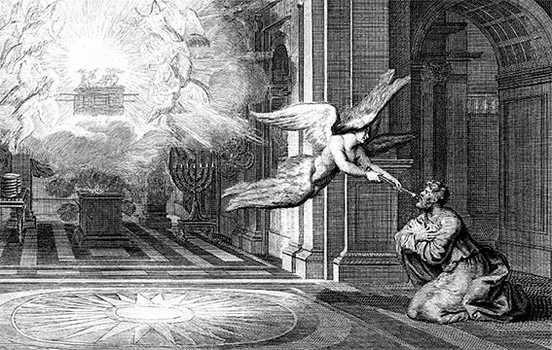
In the year that King Uzziah died, I saw the Lord sitting on a throne, high and lofty; and the hem of his robe filled the temple. Seraphs were in attendance above him; each had six wings: with two they covered their faces, and with two they covered their feet, and with two they flew. And one called to another and said:

“Holy, holy, holy is the Lord of hosts; 
the whole earth is full of his glory.”

The pivots on the thresholds shook at the voices of those who called, and the house filled with smoke. And I said: “Woe is me! I am lost, for I am a man of unclean lips, and I live among a people of unclean lips; yet my eyes have seen the King, the Lord of hosts!” 

This morning, we begin by hearing the story of Isaiah’s encounter with God. “In the year that King Uzziah died, I saw the Lord sitting on a throne.” 

You probably don’t need to worry too much about who King Uzziah was right now. We could talk about that in Bible study sometime. What you should understand though, is that King Uzziah was old. He had been on the throne for 52 years, so his death would have been one of those moments in time that people remembered. It is very much like when Queen Elizabeth died a couple years ago. It didn’t matter who you were, or how you felt about her, it was a moment in history that was significant. It was a point in time, in our collective lives, that we remember. It is a time marker. It’s funny how you can remember one thing, because of something else that happened at the same time. That is a time marker. Our lives are often filled with time markers. The bible is filled with them too. 

And it came to pass in those days, that there went out a decree from Caesar Augustus that all the world should be taxed.(And this taxing was first made when Cyrenius was governor of Syria.) 

You know that time marker. You hear it every year on December the 24th. It is how Luke begins the story of Jesus’s birth. The story isn’t about Caesar or Cyrenius; the story is about the Son of God, but this, Luke says, is when it happened. 

There was another time marker that you heard last week from the Book of Acts: “when the day of Pentecost had come.” Pentecost was an established Jewish feast, but it also happens to be when the Holy Spirit descended upon the disciples. The feast helped the disciples to remember when this encounter with the Holy Ghost happened.

These time marker details can seem insignificant. They can seem like a distraction from the story, but they aren’t. They are a reminder to us that the God we meet in the bible, is a God that we encounter in real time, our time. Human time. We have met the eternal God in human time, on this earth. The little details are there to say: this happened. This is when it happened. This is a moment, where we encountered God, in our lives and not just in our imaginations.

In the year that King Uzziah died…In the year that the old king, King Uzziah, the King of Judah, died, Isaiah says that he saw the true king, the heavenly king, the Lord, alive and sitting on his throne. Isaiah has this encounter with God. He sees a reality that is impossible to comprehend, much less explain. Strange creatures with six wings. And there were clouds of smoke, and the Lord wore a glorious robe, and the creatures around the throne were saying: “Holy, holy, holy, is the Lord of Hosts, heaven and earth are full of his glory.” It was a magnificent, wondrous vision. If that happens to sound a little like a mass to you, then GOOD! That image is what all of this is meant to invoke. We are meant to feel, like Isaiah, that we are in the presence of a transcendent God, who is both right here in front of us, and at the same time bigger and more glorious than we could ever imagine. We are meant to recognize that the God of eternity has come to meet us at this time and in this place.

That is what Isaiah saw: God coming to meet him. And he can’t even imagine why this is happening. Why him? “I am lost,” he says, “I am a man of unclean lips, I come from people of unclean lips.” Who am I? Isaiah is saying, who am I? Why should I be having this vision? I don’t have all the fancy words to go out and tell people what I just saw. Who would believe me? I’m not that holy or special. I am not worthy to share this vision or talk about this encounter. And just then, one of those strange creatures grabs a coal from the altar, flies over to him and he touches that burning coal to Isaiah’s lips, and he says to him: now you are! Now you are worthy. God has cleansed you of your sins. God has made you worthy. God has made you holy. And then Isaiah hears God ask the question: “whom shall I send, who will go for us?” And Isaiah says, “Here am I, send me.” Isaiah probably still isn’t sure how he is going to talk about this glorious God to an unbelieving world, but he’s willing to do it. He is willing to tell the story, no matter how unbelievable it seems. That is what having an encounter with God can do to you; it can make you get over yourselfit can send you out into the world with an unbelievable story on your lips.

Incidentally, there is a traditional and old prayer that is a part of the Latin mass that some priests still say before proclaiming the gospel, or at least I do. If you ever wonder what I am saying at the altar before I proclaim the gospel, it is this prayer:

Cleanse my heart and my lips, O Almighty God, Who cleansed the lips of the Prophet Isaiah with a burning coal. In Thy gracious mercy deign so to purify me that I may worthily proclaim Thy holy Gospel. Through Christ our Lord. Amen.

The prayer is a little reminder that the God that Isaiah encountered, is the same God that the disciples encountered in Jesus Christ, the God that the gospel reminds us “so loved the world that he gave his only son, so that everyone who believes in him may not perish but may have eternal life.” The gospel also reminds us that that is the same God that countless, countless faithful people have encountered in at times subtle and at times dramatic experiences of the Holy Spirit. Encounters that give us the chance to be born again, born anew, born from above. The prayer is a reminder that the God that Isaiah saw seated on the throne, is the same God of the Gospel that we proclaim.

And likewise, all those time markers that we find in scripture and sometimes casually skip over as if they were unimportant details in the text, they are reminders that the God of the bible is a God that is encountered. Our God is a God that is encountered in this world. Sometimes in very real and physical things. Our God is not a God of logical theory or human design; We would never invent something as impossible to grasp or explain as the Holy Trinity. We talk about God as Father, Son and Holy Spirit, because that is the God that we have met in this world, that is the God that we have encountered, not just in thoughts and ideas but in real time and in real places. This isn’t a God that always makes sense, or that is easy to understand, but this is the God that we have met. This is the God we believe in. 

Our God may be transcendent and glorious, and impossible for us to fully explain or grasp, and yet, our experience of this God has taught us that this is a God who longs to live in a close and intimate relationship with each one of us. This is a God who loves. This is a God who forgives and purifies. This is a God who calls, and this is a God who sends. 

Do we want a God that is less than that? Do we want a God that is a product of the human mind or of human philosophy, or do we want a God that walks with us, and meets us, in this world, in encounters that happen in human time, in human history? What would be the point of having a God that looks good on paper, if we never actually get to meet him? 

I’m not here to try and explain the Holy Trinity to any of you this morning, for which you may all breath a sign of relief, but I do want you to have an encounter with the God who is Father, Son and Holy Spirit. I want you to know that this God is alive and well, and that this God still has saving love for you. Now, you may not have a vision like Isaiah did, but the Lord who was sitting on the throne when King Uzziah died, was still sitting on the throne when Queen Elizabeth died, and is still sitting on the throne today, even in this moment. So let us gather for a few moments and place ourselves before the throne with the countless throngs of the faithful, with prophets and saints from every age, let us join our voices with theirs in giving thanks and praise to the God who comes to meet us. And then, when we have offered God our praise, and we hear God ask who will go into the world to tell the story of his love, faithfulness and forgiveness, may we join our voices with the prophet Isaiah and also say: “here am I, send me.”

A God who Keeps

Standard

Sermon for May 12, 2024

Readings:

On the night before Jesus died, he prayed. I know that it may seem odd now that we are well past Easter, and even past Our Lord’s Ascension into heaven, it may seem odd to jump back in our gospel readings to the night before Jesus was crucified, but that is where we go this morning.

 I guess in a way it is only natural, because after the disciples had witnessed Jesus’s Resurrection and then his Ascension into heaven, their minds certainly would have gone back to retrace all their steps over the past few months. They would have looked back with newly opened eyes to reexamine everything Jesus ever said or did, and the things that had happened most recently would naturally have stood out more prominently in their minds. So, this morning we go back to Maundy Thursday, we go back to the evening of the Last Supper, to after dinner was over, and we hear Jesus’s own post-communion prayer. 

“Holy Father, protect them,” he says. Jesus’s prayer is about his disciples. He is about to die, but his primary concern here is for his disciples and THEIRprotection. Their lives are his concern. “Protect them in your name that you have given me, so that they may be one, as we are one.” Protect them. Some other translations of this scripture, including the King James Version, use the word “keep” instead of the word “protect.” I think that is a better word actually because “keep” doesn’t just meant protect, but it also implies possession and belonging. If you keep something you hold on to it. Keep emphasizes the fact that these disciples BELONG to God. Their protection is directly linked to the fact that they are God’s treasured possession. Keep them, Jesus says, keep them. Keep them safe; keep them together; keep them in the truth and keep them united to us and to each other. Keep them.

There was a minister in England writing near the end of the 1600s named Matthew Henry who wrote an extensive commentary on the bible. And his comment on this passage is an extension of Jesus’s prayer and plays on this use of the word “keep.”

He writes:

Keep their lives till they have done their work; 

keep their comforts, and let them not be broken in upon by the hardships they meet. 

Keep their interest in the world, and let it not sink. 

Keep them in their integrity, keep them disciples, keep them close to their duty. 

Keep them for your name’s sake. Keep them in the knowledge and fear of your name; 

keep them in the profession and service of your name, whatever it costs them.

Keep them in the interest of your name, and let them ever be faithful to this. 

Keep them in your truths, in your ordinances, in the way of your commandments. 

Keep them by your own power, in your own hand; 

keep them yourself, undertake for them, let them be your own.

Keep them from evil. Keep them from Satan as a tempter that either he may not have leave to sift them and keep them from him as a destroyer that he may not drive them to despair. 

Keep them from the evil of the world and of their tribulation in it.

Keep them. Now those are Matthew Henry’s words; that is his expansion of Jesus’s prayer, but I think his use and repetition of the word “keep” meaning to hold, possess AND protect is really in keeping with (it is holding on to) Jesus’s original prayer and meaning. Keep them. Like a parent tucking their kids in at night, Jesus’s prayer before he leaves his disciples is that God will hold them tight. Now I lay me down to sleep, I pray the Lord my soul to…what? Keep! All at once it means to embrace, to own and to defend. That is what Jesus is asking God to do for these disciples. Keep them God.

And I think that it is important that we recognize and emphasize that the person who is being asked to do something in this prayer here is God. God is the one who is being asked to act. It is God who is being asked to keep, to hold, possess, and protect. It is easy to forget for a moment that Jesus is addressing God in the gospel today. He is so often talking to us. But this is his prayer to God that we are eavesdropping in on. It is so like us humans to always want to take center stage and make everything be about what we do or don’t do; and yeah, I think the things we do in this world matter and there are plenty of scriptures that talk about that, but I don’t think that this scripture is one of them. This scripture is about what God does. 

God keeps. God holds on to the people that belong to him. He gives them his word, his joy and his truth. Now God’s people don’t always hold on to God, but God is always willing to hold on to them. God keeps because that is who God is and what God does, but that is in contrast to what the world does. God keeps, but the world casts aside. The world throws away. In the eyes of God human life is precious; in the eyes of the world it is expendable. God keeps, but the world casts aside. God keeps his covenants; the world breaks them. God brings people together; the world drives them apart. God sanctifies truth; the world sanctifies lies. God raises up a human body to glorify it; the world raises up a human body to murder it. God’s ways, and the world’s ways are very different.

Now the Gospel of John is very clear about the fact that God created the world, but it is also clear, right here, that not everything in the world is OF God. There is a difference between God and the world. God keeps, but the world casts aside. But we are OF God. Jesus’s prayer reminds us that we are OF God. Jesus might not be telling us to do anything in this prayer, but his words should affect our actions nonetheless because they remind us of who we are and who we belong to. We belong to God, not the world. We are in the world. God wants us to be in the world. Jesus sends us into the world. There is work for us to do here and there are blessings for us to receive here, but we don’t belong to the world. We belong to God. We belong to a God who keeps.

Love is a commandment

Standard

Sermon for May 5, 2024

Readings:

You know, I am tempted to stand up here every Sunday and just flip through any newspaper and talk to y’all about how everyone has just lost their darned minds lately. And I could do it too, because I have lots of good and sound opinions about things and I would love nothing more than to demonstrate my superior opinions by standing here and talking about why everyone else is just crazy. But I’m not gonna do that, as fun as it sounds, and it does sound fun. Few things are more enjoyable than feeling righteous. 

But rather than pick on everyone else this morning, I will pick on myself. I heard someone recently say that there is a difference between gossiping and witnessing: gossiping is talking about what someone else is experiencing or going through; witnessing is talking about what you are experiencing or going through. So instead of just gossiping this morning, I am going to witness for a few minutes. The truth is, I don’t really know what everyone else experiences or is going through, but I can talk about my experience with some authority.

So here goes: It is a good thing that I know, love, and fear the Lord and that he has commanded me to love my neighbors, because I have to confess to you that sometimes that is the only way it is going to happen. Because to put it mildly, people are annoying. People are not always loveable. I don’t go driving around saying things like “oh bless you, BMW driver for almost sideswiping me on the parkway.” Nor do I say “thank you Lord, for putting this person in front of me that has not noticed that the light turned green some time ago.” Obviously, I don’t sit and read the paper and say “thank you God, that you have filled the world with people who lack the capacity to think and read critically! I am so glad that people feel comfortable having strong opinions about things that they don’t understand and can’t be bothered to learn about. Praise God!” I do not find it easy to love my neighbors. I especially find it difficult to love people who talk about love all the time like it is just some simple thing, and that we can all just live together peaceably like the whole world is just some idealized hippie commune. I’m sorry, but I just don’t think love is that easy. I have a hard enough time loving people on the highway, or loving my neighbors when they have their late-night and loud Saturday night party once a year, so I can’t imagine how hard it would be for me to love them if they had hurt or killed a loved one of mine, or stollen something that belonged to me. I like to think of myself as basically a decent person/nice guy, but I know for a fact that love does not always come easily for me, especially when it is trying to love people that are being unloving themselves. 

There is part of me that blames the internet and social media. I think we are just too much in each other’s business and we interact with each other in ways that are simply inhuman. I think it has become a megaphone for human sinfulness. But it is only part of the problem.

I think the bigger problem is that for all of our talk about love, we can’t help but think about love as a feeling and we forget that it is a commandment. A commandment. If love were simple a peaceful, easy feeling, then God would never have had to command us to do it. We would just do it. But it is a commandment. And, my experience at least, is that the commandments aren’t always easy and they don’t always feel good. Commandments are something that you obey or disobey.  I notice that in John’s epistle this morning, when he is talking about love and God, he uses the word “obey.” Obey. Obedience isn’t about just doing what you want to do, or saying what you want to say. Obedience is frequently just the opposite. Obedience is learning to reign in our emotions and impulses, not give in to them. Obedience means recognizing that there is a higher authority than you, your emotions, your opinions, your impulses. Maybe y’all find it easy to just love folks all the time, but I’m here to tell you that I don’t. My witness to you this morning is that sometimes, many times, for me at least, love is a matter of obedience to a commandment and not just a simple response to an emotion. Now John says that God’s commandments are not burdensome. Well, I don’t know about that. I have to think that what John means here is that these commandments are not an impossible burden. I don’t think he is really suggesting that love is easy. I think he is saying that because this commandment comes from God, we will have God’s support when we truly try to obey it. Love is not a burden we bear by ourselves; it is a burden that God shares with us. God knows, better than we do, just how unloveable we can be sometimes. God’s spirit can give us the grace to love, even when it is the last thing that we want to do. God’s grace can give you the power to love people you don’t like. God can help you love the unloveable. And there is real power in that. There is power and there is joy. 

I could easily stand up here read the paper and talk about how everyone has lost their minds, but with God’s grace that would cause me to lose my mind too. I just don’t understand why people can’t act right, and it’s crazy making. But then my faith reminds me that for some reason, the creator of the universe, loves these unlovable creatures that don’t act right. And that at least gives me pause to say, OK God, maybe you know something I don’t about these creatures you created. You looked at humans at saw something worth dying for, I can at least bite my tongue, or restrain my fingers from typing that stinging comment. Maybe I can give that car in front of my 10 more seconds before I blow my horn…maybe. 

Of course, commandments only work when you have love and respect for the commander and that I suspect is a deeper problem. The commandment to love our neighbors comes from God. If people don’t know, love, or respect God, then why would they care about any of God’s commandments. The love of God comes first. We need to feel and experience the love of God first, before we can truly show it to others. I’m not a child psychologist, but I have heard people argue that babies learn to smile but looking at us when we look at them. In other words, the joy that we feel when looking at our children, the joy that is written on our faces, gets reflected back to us in their smiles. They smile at us, because we are smiling at them. If that is true, then I think it must be true for God as well. We learn to love, because God first loves us. In some mystical way we experience God’s love and joy for us, and by seeing God’s love we learn to imitate it and show it. 

I don’t know about your experience, but my experience of living in this world filled with people that have bad opinions (meaning of course opinions that are different from my own), and my experience of living side by side with people that just don’t act right, is that love is hard. It is the hardest commandment God gives us. For me at least, a lot of times loving my neighbor is a matter of pure obedience to the Lord. A lot of times, knowing the Lord and loving the Lord, and knowing his love for me is the only thing that makes it possible. Sometimes it is the only way I can read the newspaper and not lose my own mind.

Power in Jesus’s Name

Standard

Sermon for April 14, 2024

Readings:

Preachers like to think that we are clever and that we have much to add to the reading of God’s word, but sometimes we really don’t. Sometimes we just need to let you hear the story and then mostly get out of the way. You heard a portion from the Book of Acts this morning, but you didn’t get the whole story and I really want you to hear the whole story. First let me set the scene:

After Jesus rose from the grave on Easter Sunday, after he ascended into heaven, and after the Holy Spirit had come down on Pentecost 50 days later, the disciples were in Jerusalem still worshipping God in the temple, and still trying to make sense out of everything that they had just witnessed. Miracle after miracle that had just turned their understanding of the world upside down. They had witnessed Jesus crucified and then three days later rise from the dead. They had seen him in the flesh, not some ghostly vision, but in the flesh. They had eaten with him. This was an experience of God’s power like no other, and before this resurrected Jesus ascended into heaven he said to his disciples: YOU will receive power from the Holy Spirit. You will receive power and you will be my witnesses. And Jesus ascended into heaven. And yes, we know that 10 days later another miracle occurred, the miracle of Pentecost, and that the Holy Spirit did come down on those disciples. The disciples received power from that Holy Spirit. And shortly after that they were headed back into the temple to pray, because of course it doesn’t matter how much Holy Ghost power you have or you think you have, you still need to pray and pray regularly. 

Anyways, that is where our story from Acts this morning really begins, after Pentecost, with the disciples headed into the temple to pray.

Now Peter and John were going up to the temple at the hour of prayer, the ninth hour. And a man lame from birth was being carried, whom they laid daily at that gate of the temple which is called Beautiful to ask alms of those who entered the temple. Seeing Peter and John about to go into the temple, he asked for alms. And Peter directed his gaze at him, with John, and said, “Look at us.” And he fixed his attention upon them, expecting to receive something from them. But Peter said, “I have no silver and gold, but I give you what I have; in the name of Jesus Christ of Nazareth, walk.” And he took him by the right hand and raised him up; and immediately his feet and ankles were made strong. And leaping up he stood and walked and entered the temple with them, walking and leaping and praising God. And all the people saw him walking and praising God, 10 and recognized him as the one who sat for alms at the Beautiful Gate of the temple; and they were filled with wonder and amazement at what had happened to him.

11 While he clung to Peter and John, all the people ran together to them in the portico called Solomon’s, astounded. 12 And when Peter saw it he addressed the people, “Men of Israel, why do you wonder at this, or why do you stare at us, as though by our own power or piety we had made him walk? 13 The God of Abraham and of Isaac and of Jacob, the God of our fathers, glorified his servant[a] Jesus, whom you delivered up and denied in the presence of Pilate, when he had decided to release him. 14 But you denied the Holy and Righteous One, and asked for a murderer to be granted to you, 15 and killed the Author of life, whom God raised from the dead. To this we are witnesses. 16 And his name, by faith in his name, has made this man strong whom you see and know; and the faith which is through Jesus[b] has given the man this perfect health in the presence of you all. 17 “And now, brethren, I know that you acted in ignorance, as did also your rulers. 18 But what God foretold by the mouth of all the prophets, that his Christ should suffer, he thus fulfilled. 19 Repent therefore, and turn again, that your sins may be blotted out, that times of refreshing may come from the presence of the Lord, 

You see, once you hear the whole story, I don’t really think I need to add much more to that. Peter and John had power, but they knew where it really came from. All of our power, as Christians comes through Jesus and the Holy Spirit. In a moment, we will all stand and affirm our belief in the resurrection. We celebrate it at every mass, but of course especially at this time of year, in Eastertide. But if Jesus can do that, if Jesus can come back from the dead, then what can’t he do? Is faith in this Jesus just some fond hope of heaven, or is there real power, in this world, that can be had by calling upon his name? Can the power of Jesus really heal people, change people? Obviously, unbelievers question whether or not there is any power in Jesus’s name to actually change anything in this world, but it is surprising sometimes how much believers question it too. There are a lot of Christians who think that it is really up to us to fix this broken world of sin and suffering through our own enlightened choices. But the whole story from Acts this morning, makes it very clear that Peter and John recognized that there was real power in calling on Jesus’s name. It is power that comes from God, not from ourselves or our own piety or moral perfection. The power we have as the church is the same power that healed the man outside the temple that morning. It is the most precious thing we have to give anyone. It is still something worth more than silver and gold. 

Supernatural Hope

Standard

Sermon for Easter Sunday 2024

Readings:

Alleluia! Christ is risen!

The Lord is risen indeed! Alleluia!

Well, excellent! That’s my job done for this morning. 

If it is the preacher’s job to proclaim the resurrection and to get you all to proclaim the resurrection in return, then I’ve just done it. We can move on with this service. I know that that will come as a tremendous relief to some of you, because I am know that some of y’all are thinking, “Lord, I hope he doesn’t go on too long.” Don’t you worry. I promise this won’t take any longer than 20 or 30 minutes. I’m kidding. 

Fortunately for me, the church and our tradition have made my job a lot easier this morning, because you all have prayer books and bulletins, and you know that when I say “Alleluia! Christ is risen!” That you are supposed to say “The Lord is risen indeed! Alleluia!” That is very helpful for me. It is also helpful that on Easter the church looks its most respectable and our proclamation looks the most reasonable. We are scrubbed up and clean. We pull out the best silver and put on our best clothes and our biggest hats. We welcome visitors and out of town family members. The music is joyful and upbeat. For a weekend at least, church seems like a perfectly natural and reasonable thing to do. The sanctuary is filled with beautiful flowers that remind us of warmer weather and sunny days spent outdoors playing in God’s beautiful creation. Who doesn’t want to celebrate the earth springing back to life again? Seems perfectly natural to me. The flowers and the springtime make our Easter proclamation of the resurrection seem so much easier. Almost reasonable and respectable. Who doesn’t appreciate the beauty of the world bursting into color again?

I love all the flowers. In fact, whenever I see daffodils, which are all over this time of year, whenever I see them, I am reminded of the first spring that I saw the rectory here. For any of y’all who may be new or may be visitors, the rectory is not the little house right here, but is about a mile away. The first time I saw it would have been when I was interviewing to be the rector of the Church of the Ascension. In any event, I remember the rectory in spring and there were these gorgeous bunches of daffodils growing right in the front garden. And they were so beautiful, but there was one little problem. They weren’t symmetrical and even; they weren’t distributed evenly along the garden border; they were concentrated in a few glorious clumps. After I became the rector and moved in, and after the daffodils had gone dormant again, I set about fixing that problem and breaking the clumps of bulbs up and distributing them all more evenly, like God himself would have done if he cared about things being neat and orderly. Well, the result of all that back breaking work is on full display at the rectory right now if any of you should happen to pass by. 

There is not a daffodil in sight! 

Not one. There hasn’t been for years. They’re all dead. You know, we decorate with lilies and daffodils and tulips at easter because they seem to die and miraculously come back every year, but I’m here to tell you that’s not true. These plants don’t die every fall and come back to life in the spring. They just go dormant. They go to sleep if you will, but they are still very much alive. Unless of course some fool messes with them. Then they might die. Daffodils can die. Trees can die. Lilies can die. A dormant plant can come back again and again and again. That’s natural. But a dead plant isn’t coming back. That’s natural too. It’s been twelve years, and I can assure you that my daffodils aren’t coming back.

My daffodils are dead. Dead things don’t come back to life. 

And Jesus was dead.  Jesus was dead. Don’t let the flowers fool you, because there is nothing natural about the resurrection that we proclaim here today. The lilies and the daffodils, they may seem to make our proclamation reasonable and respectable; they may make the story we are telling here a little easier to swallow, but in a few minutes when we ask you to stand and affirm the church’s creed, you will be proclaiming a belief in something that as far as our understanding of the world is concerned, is completely unnatural. Dead things don’t come back to life.

Dead flowers don’t come back to life. Dead bodies don’t come back to life. The women who were headed to the tomb that Easter Sunday morning, they knew that. The disciples who were huddling and hiding in the upper room, grieving their Lord, they knew that. The people who had casually followed Jesus, who had liked his preaching, who had hoped that he would be the one to save them, but then had seen him publicly crucified, they knew that. They knew he wasn’t coming back. 

But the stone was rolled away. Jesus’s body wasn’t there. Just this figure dressed in white with this impossible, unbelievable message. He has been raised; he is not here. Who could believe that? Flowers may seem to come back to life, but dead bodies don’t. So, when the women came back from the tomb of course they were afraid to tell anyone what they had seen. Mark says that they didn’t say anything to anyone because they were afraid. Of course they were afraid. Dead bodies don’t come back to life. That is not a reasonable thing to say or believe. 

You know it is one thing for me to say “Alleluia! Christ is risen!” in here, when I know how you will all respond. But the women didn’t know how people would respond to this proclamation that Jesus is alive. Why on earth would anyone believe that? And the women didn’t believe it as first. Mary thought someone had taken Jesus away. The other disciples didn’t believe it at first. John believed when he saw the empty shroud lying on the floor, but most of the disciples didn’t believe until they saw the risen lord. It’s not an easy thing to believe. It’s not reasonable. It’s not natural. And yet this single event is the heart and soul of the good news. This event is what inspired the disciples to record the details of Jesus’s life and teachings. This event is what gave them the courage to face death, in most cases execution or martyrdom, rather than to deny what they had witnessed. And when the early church gathered to define what was our core belief, the heart of the Christian proclamation to the world, it was Jesus’s death and resurrection, this event. Our creed, which you will proclaim in a moment, that hinges on Jesus’s death and resurrection. But this has always been a hard thing for the world to accept. 

The consensus of almost everyone on Easter Sunday morning was that Jesus was dead. It fell to just a handful of women to give the minority report, the dissenting opinion to the judgement of the world, that Jesus was alive again. It takes courage to do that. It takes courage to go against the wisdom or the popular opinion of the world. It takes courage to believe the unbelievable, even when the evidence is staring you in the face and calling your name. The women were scared at first but eventually they found the courage to go and tell the other disciples. Once the other disciples had seen the risen lord, they too were afraid to talk about what they had seen, but eventually the spirit moved them to go out into the world and to proclaim the news that nobody wanted to believe. That Christ was alive. After Peter received the anointing of the Holy Spirit, he went out into public and proclaimed: you know who Jesus of Nazareth is. His way of life, his deeds of power, that you know. His death and crucifixion, that you saw. But of his resurrection, we are witnesses. We are here to witness to this most unbelievable part of his story. That he was raised from the dead. That proclamation turns everything upside down. People resisted it then, as they resist it now, because accepting the resurrection means accepting that the world is not the reasonable, rational, predictable place that we thought we understood. It means accepting that there is a living God that has real power in this world and that we can encounter in the most unexpected ways. Some people are just not read to make that leap of faith. When Paul first preached to the people in Corinth, when he got to talking about the resurrection people scoffed at him; most people rejected his message, but a few people, a few people, said tell us more. 

Maybe you are one of those people here today. Unsure of the truth of this story, but willing to listen and to hear more. If that is the case then I thank God that you are here, and I pray that in some mystical way you will have an encounter with the risen Lord and that his grace will flow through you and give you the courage to believe this most unbelievable, unreasonable, unnatural story. 

Because this story changes everything. If this story is true, then the universe is more spectacular than we ever imagined. If this story is true, then God has the ultimate say over life and death. If this story is true, then everything else Jesus said is true, including his promise of preparing a place for us, so that where he is, there we may be also. That is a powerful hope, but it is an unnatural or a supernatural hope.

Despite my best efforts, or because of my best efforts, my daffodils are dead and they’re not coming back. Maybe there’s a daffodil heaven, I don’t know. But what I do know is that there’s a heaven for me. I know that because Jesus rose from the grave, came back from the dead, as the firstborn of a new creation that I get to be a part of. That is a supernatural hope that goes way beyond the joy of spring. That is a hope worth sharing, even at the risk of being the only voice proclaiming this good news. 

So Alleluia! Christ is risen!

The Lord is risen indeed! Alleluia!

Now go out and tell someone that doesn’t know it. Be a witness to the resurrection. You never know how someone might react. Some people may scoff at you, but others may say: “tell us more.” So, tell them more. Share your supernatural hope.

At the cross

Standard

Sermon for the Fifth Sunday in Lent

March 17, 2024

Readings:

Why do the Greeks in this morning’s gospel passage want to see Jesus? 

That has been the question that has been running through my head this week as I have been reading and rereading this passage. What do these people want from Jesus? Why do they want to see him? We don’t know. The bible doesn’t tell us. 

You know, sometimes I think that the things we don’t know about the Bible are just about as interesting as the things we do know. There’s a lot that we doknow about the bible and the stories and people that are in it, but there is also a lot, a whole lot, that we don’t know. Sometimes those things we don’t know can be pretty interesting.

Today is a good example. We don’t know who these Greeks are that come up to Philip asking to see Jesus. They might not have been ethnically Greek, like Toula Portokalos in my Big Fat Greek Wedding, they might not have been from Greece, they might have just spoken Greek. We don’t really know. 

They might not have been Jewish. In fact, they probably weren’t. We know that they were at the temple for Passover. But these could have been Greek-speaking gentiles that found the Jews and their God fascinating and compelling. There are lots of those people in the bible; people that are sometimes referred to as God-fearers. Maybe it was them. Plenty of gentiles were moved by what they were told about this Hebrew God, but they just didn’t completely convert because…well they probably had their own reasons. I imagine that many of the men just didn’t make the cut. Yes, that’s a bad joke, but I’m not going to explain it further. Anyways, these people might have been gentiles worshipping the Jewish God. It’s a good theory. We don’t know.

We also don’t know where these Greeks actually came from, but the gospel writer is pretty clear that they aren’t locals. These are outta town folks. Strangers. That we do know. These Greeks are strangers. They are strangers that want to see Jesus. 

But why do they want to see Jesus? The Bible doesn’t tell us why they want to see him, so we are left to wonder. Are these just tourists in to see the big city for a week and hoping to score the ultimate backstage pass? Do they want to see Jesus just because he is a celebrity? We don’t know. Everyone that wants to see Jesus in the scriptures has some reason, but they are often very different reasons. Think about all the people who wanted to see Jesus in the Bible:

Think of short Zacchaeus, the rich man. He wanted to see Jesus. He climbed a tree to get a glimpse of Jesus. He had heard that this man eats with tax collectors and wanted to know more. He probably didn’t know that Jesus was going to ask to come dine with him though.

Or, the woman who had been bleeding for twelve years. She wanted to see Jesus. She was desperate for relief from this sickness. She didn’t ask to be presented to Jesus, she just wanted to touch him as he passed by. She was convinced that that would be enough to heal her. And it did.

Or, the Roman Centurion with the sick servant. He wanted to see Jesus. We often talk about the Romans as the bad guys, the oppressors, but this centurion had actually helped to build a synagogue in the village. But his servant was sick and he was desperate. He didn’t even need Jesus to pay a visit. Speak the word only. Just say the word and my servant shall be healed. And he was.

Or, the Caananite woman who came crying out to Jesus, pleading for help because her daughter was possessed by a demon. We like to think of demonic possession as being the sort of crisis that is only fit for Hollywood and special effects. But demons are probably more mundane and more common than you think. This woman’s daughter was struggling with a demon and she wanted to see Jesus. Some of Jesus’s disciples just wanted this woman to go away and stop bothering them. But she doesn’t give up. She wants to see Jesus. And she does, and her daughter is healed.

There was another rich man that wanted to see Jesus. Ran up to him and asked him what he must do to inherit eternal life. He was following the commandments, but it turned out that his attachment to his money and his stuff was just a little too strong for him to really become a follower.

Who else wants to see Jesus?

Blind Bartamaeus? He would love to see Jesus. He would love to see anything. He can’t see Jesus, but he hears about him. He cries out for mercy, and is healed. 

There are other people who want to see Jesus that are even more desperate. Someone they love has died or is very near death. In each case, once the person dies, the people are convinced that Jesus can do no more. They just want answers. Where were you Martha asks? Where were you when we needed you? 

Some people who want to see Jesus have hard questions for him, like where were you? Why? Why the suffering? Why death? I wonder if these Greeks in today’s gospel had some hard questions for Jesus. Did they just want the first century equivalent of a selfie with a famous rabbi, or were they looking for something far more important? We don’t know. We don’t know why these Greeks want to see Jesus. And in the end, we don’t even know if they actually get to look in Jesus’s eyes or shake his hand. We don’t know if they got to see him the way they hoped to.

What we do know, is that Jesus tells his disciples that his ministry is about more than just clinging onto life in this world. When he hears that people want to see him, he points his disciples to the cross. He talks about his own death. The people who want to really see Jesus, they will see him, they will meet him, at the cross. When I am lifted up, he says, there I will draw all people to myself. He’s talking about his cross. That is where people who really want to see Jesus will meet him. At the cross. There is no other way to understand who Jesus is and what he’s about, than seeing him through the cross. 

The cross and resurrection are how Jesus is glorified. If we want to see Jesus, if we want to know him, if we want to understand what he is about and the deeper meaning behind everything he says, that is where we have to look: at the cross and the empty tomb. They are only a few steps away from each other. We often think of following Jesus as being some long, arduous journey, but serving Jesus and following him is really just about making those few steps from the cross to the empty tomb. That is where Jesus says we will meet him. That is where he says he is drawing all of us together. We come together at the cross, at the place where pain and desperation seem to have all the power, and from there Jesus takes our hand, and walks us to the empty tomb.

Some people think that if they just dig deep enough, if they push through all the religious hocus pocus, and legends about dead bodies coming back to life, that then they will actually be able to see the real Jesus. The historical Jesus as he is often called. Despite the fact that the people who go on these quests, and the documentaries that share their stories like to present themselves as being edgy and ground-breaking, they are nothing of the sort. For centuries there have been people that have wanted to separate the historical Jesus, the rabbi of social justice and practical advice, from the Jesus of faith, the saviour of the cross and empty tomb. It is a fruitless and impossible quest though. There is only one Jesus. Everything that Jesus said or did, was written down after that first Easter Sunday, after people had seen the cross and empty tomb. Everything we know about Jesus has been handed down to us from the people who saw his risen body. The Jesus of faith IS the historical Jesus. You don’t need an inside connection to see him or meet him. You don’t need secret knowledge. And it doesn’t matter why you want to see Jesus. 

That’s the thing about the Greeks in today’s gospel: I like to sit around and wonder why they want to meet Jesus; what are their motives? Do they want answers? do they want healing? do they want their broken hearts mended? do they want hope for new life? There are so many reasons why these Greeks, the strangers, these outta town folks might want to see Jesus, but he doesn’t seem to care what their reasons are. Maybe the bible doesn’t tell us, because it doesn’t matter. Maybe it doesn’t matter why we want to see Jesus; maybe it only matters where we go looking for him. I am going to be lifted up where everyone can see me, he says. If they want to come to me, to know who I really am and what I am really about, send them there. We don’t know why these Greeks want to see Jesus, but we do know where he says they will see him: at the cross. 

Respect for God can be contagious

Standard

Sermon for March 3, 2024

The Third Sunday in Lent

Readings:

In the year 63 BC (so more or less 60 years before Jesus was born), the Roman general Pompey laid siege to the city of Jerusalem. Sadly, this was a scenario that Jerusalem had already experienced many times in its history and would experience many times more, even unto our present day. Well the city put up a good fight, but eventually Pompey and his troops figured out that if they tried to fight the Israelites on the sabbath day, they would indeed fight back, but if they didn’t directly fight them, but instead spent time building bridges and ramps to get over Jerusalem’s fortifications (in other words, doing the work to support the invasion), then they would be left alone because the Israelites would only break the sabbath if their lives were immediately at risk. So, Pompey used this to his advantage and eventually broke into the city. 

And when he came in, of course the first place he went was the temple mount. He wanted to understand what power this temple and this God had over these people. He wanted to know what it was that they were sacrificing to and that they were willing to lose their lives to protect. No doubt he also assumed that there would be untold riches inside as well. So, he strolls into the temple, walks right past all the priests who are begging him and pleading with him not to go any further. He pushes them aside and marches right into the temple building itself. And when he goes into the temple, the first thing he sees in the outer room is the golden lampstand, and an altar of incense, and a table with bread on it, a few nice things, but he assumes that the real wealth of the temple must be in the inner room, the Holy of Holies that is just beyond the veil. Only the high priest was ever allowed in there and then only once a year. 

So, Pompey pushes the curtain aside, walks in…and discovers an empty room. The holiest place in the world for these Jewish people, the thing that they were dying to protect, was an empty room. Now Indiana Jones fans, I am sure you are thinking “But what about the Ark?” The Ark of the Covenant, which contained the stones that the ten commandments were written on, that was in the sanctuary of the First Temple, the temple that King Solomon built. But that temple was long ago destroyed by the Babylonians and the Ark had ever since been missing. So, in the Second Temple, the Temple that Pompey walked into, and the Temple that Jesus would know some decades later, there was no Ark. The Holy of Holies was just an empty room. 

Pompey was completely perplexed at this. These Jews, he thought, were a strange people. Not only were they unwilling to do any work one day a week unless their lives were immediately at stake, but also the holiest place at the center of their faith was not a great golden statue of a God carved with human hands, but an empty space. An empty space that these Jews claimed, belonged to God. Pompey didn’t understand it. He certainly understood sacrifice. Pagans sacrificed THINGS all the time, but these Jews were sacrificing time and space. They were sacrificing their own creative powers. It was odd. Pompey didn’t understand it, but he saw something in it that he respected. He could have torn the temple down, but he didn’t. He could have looted the temple of its wealth, but he didn’t. Jerusalem would lose its freedom and become a Roman province, that was trueBut Pompey let the worship in the temple go on. He didn’t understand this Hebrew God, but he understood the power of respect. He saw the respect that the Jews had for this empty room, and something about that was compelling. So, he let the priests go back to work. Respect for God can be contagious. But then again, so can disrespect for God. Both can creep up on you, you know. 

When Jesus entered the temple some decades later what he witnessed was a creeping disrespect for God. The Holy of Holies was still there and set aside as sacred, as God’s space, but the areas around it, in the temple precinct outside, were becoming more and more profane. God had become big business for many of the temple authorities. And you may know that business and busyness in our language come from the same root word. People were busy. There was a lot of human activity going on. People were busy making things: making transactions, making a buck. For many people, God was their business, and I say that fully recognizing that I am a priest, who is also paid to do this work. God is my business too, so I can say with good authority that priests often get distracted by the business of worship and the business of church administration and are prone to forgetting that at the heart of our faith is time and space that belongs to God and no one else. There were a lot of people there in that temple in Jesus’s day that were more focused on monetizing God than on worshipping him. They weren’t worried about what belong to God; they were worried about what belonged to them. It had happened before in the time of the Prophet Jeremiah; it happens now in our own day. Disrespect for what belongs to God can creep in. Inch by inch, the money changers get closer and closer to the Holy of Holies. 

I assure you that God knows that we are like this. God created us in his own image, and a part of that image is the power to be creative. We can imagine things, and create things, and that is a God-given gift, but you see in order to remember that this gift is God-given, we must remember that we were created by God. A man can create many things, but he cannot create himself. All of us were created by something, or someone, else. None of us called ourselves into being. We get so caught up in our own creative powers that we forget that. We forget that we are creatures. So, God reminds us. 

Think about some of the commandments that we recited and heard this morning. Think about the commandment to keep the sabbath day holy. How does God command us to keep it holy? By filling it with activity? No. Just the opposite. By keeping it empty. Empty. Rabbi Jonathan Sacks says that we keep the sabbath day holy “by renouncing our own status as creators. On Shabbat, all melakha, which is defined as “creative work,” is forbidden. On Shabbat, we are passive rather than active. We become creations, not creators. We renounce making in order to experience ourselves as made. Shabbat is the room we make for God within time.” 

And likewise, the Tabernacle that the Israelites make in the wilderness, the holy tent, which in time becomes the Temple and the Holy of Holies. It could have been filled with the wonders of human creation, with golden statues carved by human hands, but no. It was God’s space, not ours. The more we filled it with human stuff, the less room there would be for God. “The Tabernacle is the room we make for God within space,” Rabbi Sacks says. He goes on to say that “Holiness is the space that we make for the otherness of God – by listening, not speaking; by being, not doing; by allowing ourselves to be acted on rather than acting. It means disengaging from the flow of activity whereby we impose our human purposes on the world, thereby allowing space for the Divine purpose to emerge. All holiness is a form of renunciation.”

Renunciation. To say that this isn’t mine, it belongs to something or someone else. That is what holiness is all about. Holiness is recognizing that something belongs to God and not to you. Giving God more space and not less. Doing the opposite of what the money changers in the temple were doing: not filling God’s space with our things. Leaving space in our lives and in our world for God. Obviously, this is something that God knows we need to be commanded to do, and continually reminded to do, because from day one humans have been prone to taking things that don’t belong to us. We don’t just steal from our neighbors; we steal from God too. 

We steal from God when we fill every moment of our waking lives with productive activity. Brothers and sisters, I confess to you that I love to make daily to-do lists, and I love crossing things off of those lists. I get a little high when I feel like I am being productive, like somehow I am worth more to God now that I cleaned that closet out, or wrote that letter, or got that thing crossed off of my list. I like to be productive and I like to be creative, but sometimes I need to remember that I was created. I need to remember that I was precious to someone before I could do anything for myself. I need to remember that this world was created and existed long before I was in it. I need to leave space in my life for God. In need an empty room that God can fill. We all do.

That means learning to do less sometimes, and NOT more. It means putting busy-ness, aside. It means emptying ourselves of all the stuff that just creeps in so that God has some space in our lives that belongs to him. The pagan world has never understood sabbath, and in case you were wondering, it is still a pagan world out there. But even those of us who know the commandments and have asked God to write them on our hearts, even we need to be reminded that God still makes claims to time and space in this world that he has created. We still need sabbath. And keeping sabbath is just as much a commandment of God as not stealing, not committing murder, and not coveting your neighbors property. 

Some things still belong to God. There is time that belongs to God. There is space that belongs to God. And there are people that belong to God. That is what makes them holy. Later in John’s gospel Jesus tells his disciples that the “will of him who sent me, is that I should lose nothing of all that he has given me, but raise it up at the last day.” Jesus’s body was God’s body. It was holy. We tried to take it from God, but God took it back. He raised it up again. It was a temple like no other. And it belonged to God. But there are other temples in this world still. There is still time, there are still places, and there are still people that are called to be holy. And not only is God watching how we respect that which belongs to him, so are the people who don’t know our God. So how we treat holy things matters. Disrespect for God may be contagious, it may creep up on us, but respect can do that too. Respect for God can be contagious. 

The ark of Christ’s Church

Standard

Sermon for February 18, 2024

The First Sunday of Lent

Readings:

I have here the first prayer book I ever bought. I bought this at the gift shop in one of the Oxford University colleges when I was a student there one summer and I have had it with me ever since. I even have some of the flowers pressed here that were growing outside of the Exeter College chapel. This is the 1662 version of the Book of Common Prayer, not the version we use here in this church, but this is still the official Book of Common Prayer in the Church of England, although many of their churches nowadays use more modern, alternate rites. Regardless of how often it is regularly used anymore in worship, it is still one of the most important books in the English language, right alongside the King James Version of the bible. Some of us have been reading a book on the history of the Book of Common Prayer, so I have been looking through this version again and remembering how wonderful it really is. 

There is one prayer, that is a part of the baptism service that I want you to hear this morning:

ALMIGHTY and everlasting God, who of thy great mercy didst save Noah and his family in the ark from perishing by water; and also didst safely lead the children of Israel thy people through the Red Sea, figuring thereby thy holy Baptism; and by the Baptism of thy well-beloved Son Jesus Christ, in the river Jordan, didst sanctify Water to the mystical washing away of sin: We beseech thee, for thine infinite mercies, that thou wilt mercifully look upon this Child; wash him and sanctify him with the Holy Ghost; that he, being delivered from thy wrath, may be received into the ark of Christ’s Church; and being stedfast in faith, joyful through hope, and rooted in charity, may so pass the waves of this troublesome world, that finally he may come to the land of everlasting life, there to reign with thee world without end, through Jesus Christ our Lord. Amen.

I have to say, there are many wonderful prayers in our 1979 Book of Common Prayer, but nothing in our modern baptismal rite has improved upon that prayer right there. Listen to it again, this time we will make the baby a girl:

ALMIGHTY and everlasting God, who of thy great mercy didst save Noah and his family in the ark from perishing by water; and also didst safely lead the children of Israel thy people through the Red Sea, figuring thereby thy holy Baptism; and by the Baptism of thy well-beloved Son Jesus Christ, in the river Jordan, didst sanctify Water to the mystical washing away of sin: We beseech thee, for thine infinite mercies, that thou wilt mercifully look upon this Child; wash her and sanctify her with the Holy Ghost; that she, being delivered from thy wrath, may be received into the ark of Christ’s Church; and being stedfast in faith, joyful through hope, and rooted in charity, may so pass the waves of this troublesome world, that finally she may come to the land of everlasting life, there to reign with thee world without end, through Jesus Christ our Lord. Amen.

There is so much wonderful imagery in that prayer. Praying that the child may be “received into the ark of Christ’s Church.” And the marvelous line which follows: being stedfast in faith, joyful through hope, and rooted in charity, may so pass the waves of this troublesome world. 

Passing the waves of this troublesome world. I have a new aspiration in life. That is going to be my new motto. To be steadfast in faith, joyful through hope, and rooted in charity that I may so pass the waves of this troublesome world. It is a beautiful aspiration, but I know, and I suspect most of you know, that it isn’t always easy. Faith, hope, and charity can be hard to hold on to at times. You look around and see so much of the world drowning in despair, drowning in this troublesome world, not passing over the waves. We are tempted every day to give up on faith, hope and charity. We are tempted to see them as antiquated, quaint, inefficient, naïve, a waste of time. We are tempted by the waves of this troublesome world, we are tempted to believe that we are destined to sink. We are tempted to believe that God isn’t there, or we are tempted to believe that God doesn’t care. We are tempted to abandon God or we are tempted to believe that God has abandoned us. We are tempted to turn away from God. But this temptation is nothing new. God’s people are always tempted. God’s people are always tested. Sometimes we fail. But God never does.

Today is the First Sunday in Lent, and on this Sunday we always hear the gospel story of Jesus being tempted in the desert. Well we are tempted too. We are tempted to forget who our God is. We are tempted to forget who we really belong to. We are tempted to forget our God’s love AND to forget our God’s power. Worst of all, we are tempted to believe that we must, and that we can, save ourselves. We are tempted to forget the good news. 

Jesus’s mission is not only to tell people the good news about this coming kingdom of God, but also to make a way for them to be a part of it. God doesn’t just teach us through Jesus Christ; God saves us. That is what our God does. Our God is always trying to make a way for us to get back to him. God may give us a boat, or God may split the sea, but God will make a way. I think one of the reasons that I love that prayer so much that I was just quoting is that it says not just to the child being baptized, but to all the baptized, that you belong to a God who saves. The God who saved Noah, the God who saved the children of Israel, the God of Jesus who rose from the dead, that is your God, that is who you belong to. Nothing in this troublesome world is more important than that. That is a powerful prayer right there. That is a powerful image. The image of an ark.

The church isn’t a pleasure cruise; it’s not a warship; it’s an ark that is carrying precious cargo to a new world and there is always room on board for more. Take a moment, if you will and look up. Look at the roof over your heads. Ignore any dust, cobwebs, or peeling paint please and just look at the architecture of this roof. It kind of looks like a boat turned upside down over your heads doesn’t it? Use your imagination for a second. The top of the roof could almost be a keel couldn’t it? Well this part of the church out here is called the nave and it comes from the latin word for ship. The church is a ship. The church is an ark. God brings us through rough and stormy waters, through the waters of death, into a new life to reign with him. 

It never ceases to amaze me how one little prayer can say so much. Prayers like that are so wonderful, because when I am tempted to despair about the world I am sailing through, I read that prayer and I am reminded not only of who my God is, but I am reminded of who I am too and where I am headed.