Sermon for Maundy Thursday 2016
Readings:
Exodus 12:1-14
1 Corinthians 11:23-26
John 13:1-17, 31b-35


Sermon for Maundy Thursday 2016
Readings:
Exodus 12:1-14
1 Corinthians 11:23-26
John 13:1-17, 31b-35
Sermon for Palm Sunday, March 20th 2016
Readings:
Isaiah 50:4-9a
Philippians 2:5-11
Luke 22:14-23:56

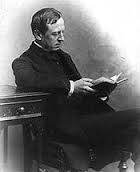 In 1870, less than five years since the end of the American Civil War, William Reed Huntinton, then rector of All Saints Church, Worcester, Massachusetts, wrote a treatise entitled: The Church Idea, an Essay toward Unity. In his essay, Huntington argued that just as the Union forces had needed a “definite and tangible centre, around which to rally” so too the churches of Christendom, at least those that claimed some element of catholicity and did not exist as some separatist sect, also needed to identify what the core of their faith was.
He writes:
“…whenever any social organization has become dispersed, or thrown into solution there is needed for its re-collection a firm core or nucleus about which the returning parts may group themselves.”
Huntington, as an Episcopal priest, set out to identify what the core principles of the Anglican Church are, in the hope that other churches would rally around those shared principles.
He continues:
When it is proposed to make Anglicanism the basis of a Church of Reconciliation, it is above all things necessary to determine what Anglicanism pure and simple is. The word brings up before the eyes of some a flutter of surplices, a vision of village spires and cathedral towers, a somewhat stiff and stately company of deans, prebendaries and choristers, and that is about all. But we greatly mistake if we imagine that the Anglican principle has no substantial existence apart from these accessories. Indeed it is only when we have stripped Anglicanism of the picturesque costume which English life has thrown around it, that we can fairly study its anatomy, or understand its possibilities of power and adaptation.
Huntington goes on to describe what he discerns to be the four principles of the Anglican Church, or as he also calls it the “’quadrilateral’ of pure Anglicanism”:
Huntington’s proposal was transformed into a resolution from the House of Bishops of the Episcopal Church (passed in Chicago in 1886), stating that unity with Christians of different communions would be sought based on those principles. Two years later, in what was only the third international gathering of Anglican bishops (the 1888 Lambeth Conference), the bishops approved the same four principles stating that they supplied “a basis by which approach may be by God’s blessing made towards home reunion.”

These four principles have since become known as the Chicago-Lambeth Quadrilateral and they can be found printed on pages 876 and 877 in the back of the Episcopal Church’s Book of Common Prayer. I think that it is a great pity, that in the life of our Anglican Communion at least, that is where they seem to stay.
During the past couple of weeks, as I have been watching the Anglican churches wrestling publicly with each other, I have wondered to myself: “Whatever happened to the Quadrilateral?” Are we unwilling to show our fellow Anglicans the same grace and latitude that we have in the past proclaimed that we are willing to show to any church? Have we lost all perspective as to what are the core principles of our church and now seem intent on dividing over issues that in the history of the Church, never rose to the level of core doctrine?
How is it possible that the Episcopal Church’s change to its canon on marriage is a greater threat to Anglican unity than the Columba Declaration (which is an agreement between the Church of England and the Church of Scotland that would allow Presbyterian clergy, which do not have the Episcopate, to serve in Anglican churches)? Or how is it possible that a gay bishop can create a more significant division in the Anglican Communion than bishops that openly and publicly denounce elements of the creed?
Perhaps the solution to our disunion within the Anglican Communion is the same solution that Father Huntington saw to disunion within Catholic Christendom: a deep understanding and commitment to our core principles and the ability to accept diversity in everything else. We need to renew our focus on what unites us, not what divides us. Maybe it is time to dust off the old Quadrilateral and start using it among ourselves.
Fr. Huntington concludes:
The first step toward finding a remedy for our ailments is to acknowledge that we are sick. Christendom, with a very querulous voice, is beginning to do just this. Then there is still further encouragement in the fact that all over the world religious thought is concentrating itself more and more every day upon the Person of our blessed Lord. Believers and unbelievers are alike agitated with the question, What think ye of Christ? This is a sure precursor of renewed efforts after unity. The more clearly our holy religion is seen to have its centre in Him whose name it bears, the more will those who love him in sincerity feel that the Church must be one.
The full text of William Reed Huntington’s essay can be found here.

Sermon for the Second Sunday of Epiphany 2016.
Reading: John 2:1-11
When people talk about the story of the wedding at Cana they usually focus on one of two things: the wedding or the wine.
Well I am here to tell you that those things don’t interest me very much in this morning’s gospel.
Despite the fact that our marriage service in the Episcopal Church tries to extract great meaning from our Lord’s presence at a wedding, the truth is, it is just a simple detail of where Jesus happens to be. The gospel writer doesn’t spend much time explaining it; we shouldn’t either. The wedding doesn’t interest me.
The fact that Jesus can turn water into wine doesn’t interest me much either. As a believer in miracles, as a believer in the Incarnation and Resurrection, I believe that Jesus is one with the creator of the universe. To quote the beginning of John’s gospel: “All things were made by him; and without him was not anything made that was made.” I believe that Jesus can turn death into life, so it really comes as no surprise to me that he can turn water into wine. The wine, frankly, doesn’t interest me.
What does interest me greatly about this morning’s gospel and our Lord’s first miracle in Cana is how it comes about. I find it fascinating that the first person mentioned at the wedding is not our Lord himself, but his mother.
On the third day there was a wedding in Cana of Galillee and the mother of Jesus was there. Jesus and his disciples had also been invited to the wedding.
Mary is the first person mentioned in the story. Mary is the first to learn that the wine has run out, though whether she observed it herself, or whether it was made known to her by the servants at the wedding seeking her assistance we don’t know. What we do know is that Mary’s response was to go to her son immediately and seek his help. Mary knew that her child was special. She might not have predicted how he would solve the problem, but she knew he would have the solution.
So Mary goes to Jesus and it is she who tells him that they have no wine.
Jesus’s response to her is puzzling: He says to her: “woman, what concern is that to you and me? My hour has not yet come.” Now that sounds rather harsh to us, but Jesus isn’t actually being rude to his mother. He is simply saying to her: but it’s not time yet. This is going to happen in God’s time.
Mary’s response is perfect. She doesn’t get angry or impatient with her son. She doesn’t box his years or yell at him. She doesn’t give up and try to fix the problem herself and she doesn’t lose faith in her son’s ability. She simply goes back to the servants, points back to her son and says: “do whatever he tells you.”
The relationship between Jesus and his mother in this morning’s gospel is of great interest to me, because it is the perfect example of what intercessory prayer is all about and because it clearly illustrates the role that Mary plays in our life of prayer.
Perhaps one of the most fundamental misunderstandings that many people have about the Catholic tradition is the belief that we pray to the Blessed Virgin Mary. We don’t actually (and when I say we, I refer to all catholic Christians Romans and Anglicans) we don’t actually address our prayers to the Virgin Mary, at least, not in the same way we pray to God or to Christ.
Listen to the words of the most famous prayer to the mother of Jesus, the Hail Mary:
Hail Mary, Full of Grace, the Lord is with thee.
Blessed art thou among women, and blessed is the fruit of thy womb Jesus
Holy Mary, mother of God, Pray for us sinners now and at the hour of our death.
Pray for us sinners. Our request here is for Mary to pray for us. We aren’t requesting for her to change things for us, she doesn’t have the power to do that. What we are requesting is to be among her prayers. We are requesting for her to bring our needs to Jesus. It is the sort of thing that we do for each other all the time. We pray for our loved ones and we ask them to pray for us. That is what intercessory prayer is all about: petitioning God on behalf of someone else; acting as a mediator, serving as a bridge or connector between Jesus and someone that is in need. We do it for each other all the time, so why do people get so uncomfortable about asking the mother of Christ to do the same thing? or any other saint for that matter?
Surely we don’t see death, which our Lord conquered by his own death and resurrection as some barrier to prayer between those who have gone to glory and those who yet await it?
No. The prayers of the departed are just as valid, if not more so than the prayers of the living. If we are serious about prayer here, how much more so will we be when we get to the other side?
Mary is so important to the catholic tradition and such a fundamental part of our spirituality, because through her we have the first, and perhaps most perfect, example of what it means to be a faithful, prayerful Christian and what it means to connect people to Jesus.
Mary hears about a problem this morning and the first thing that she does it take it to Jesus. She makes sure that he knows that someone is in need. And when he doesn’t grant her request or seem to solve the problem instantly, she remains faithful. She makes the connection between the servants’ dilemma and the solution to their problems. She points them to Christ and says: follow him. Do what he says.
If we take our life of prayer seriously, if we believe in the power of prayer to change things, and if we feel called to intercede on behalf of others, then we have a lot to learn from Mary.
We need to learn to keep our eyes and ears open to the needs of people around us; to keep our hearts open to their pleas, to be moved with compassion toward them.
We need to learn first and foremost to carry those burdens straight to Jesus. Not to try to fix them ourselves first, not to try to carry the burden of the world’s suffering on our shoulders, but to take the world’s problems from the trivial to the monumental, straight to him.
We need to remember that ultimately he is the one that has the power, not us.
We need to learn that when our prayers and petitions are not answered in the way we want, or in our time, that we are called to be faithful, remembering that God’s time and our time are not the same.
Most importantly, we need to learn to keep pointing people back to Jesus; to encourage them to follow him; to listen to what he says, and to do it. In the end, our life of intercessory prayer should connect people to Jesus.
That is what Mary does in our life of prayer: she points us to Jesus. She isn’t worshiped, she is venerated; she is shown the greatest respect because she, as the mother of Christ, still has so much to teach us about him, and about what it means to follow him.
No the remarkable thing about this morning’s gospel isn’t the wedding or the wine; the remarkable thing is that here, even before Jesus has performed his first miracle, his mother is showing the faith that she has in him and is fulfilling her call of interceding for others and connecting them to him.
May we have the faith to do the same.
Turn then, most gracious advocate,
thine eyes of mercy towards us,
and after this our exile
show unto us the blessed fruit of thy womb, Jesus.

If the Devil is good at anything, it is at distracting us from the things that really matter.
A remarkable thing was announced today in Canterbury. The Archbishop or Canterbury, Justin Welby, announced that representatives from the Roman Catholic, Eastern Orthodox, Anglican and Coptic churches would be meeting in the next few years to discuss fixing one universal date for Easter. Currently Easter is a feast that moves according to the first full moon of Spring and it is usually celebrated at different times by churches in the East and in the West due to the use of different calendars. Fixing one date for Easter would heal a division that has existed in the church for over 1000 years. In fact, one of the first great divisions between Christians in England was between Roman and Celtic missionaries over the date of Easter. Now we are looking at the very real prospect that in 5-10 years the major branches of Christ’s Church will be celebrating his resurrection on the same day for the first time in many centuries.
This Is Huge.
This is a huge announcement, but unfortunately most people missed it because they were too distracted by all of the hype that has been generated around the issues of same sex marriage and whether or not the various Anglican churches, which disagree about this issue, can remain together. One astute reporter at today’s press conference asked the Archbishop to speak more about this (he was my hero for the day for doing that), but most other reporters just wanted to focus on the divisions and disagreements within the Anglican Communion.
On the one hand, we have deep disagreement between Christians about how to honor and serve the lives and relationships of Gays and Lesbians, something which has been a matter of debate for the past 30 years or so.
On the other hand, we have news of a potential agreement between the major Christian churches on settling a division that has existed for over 1000 years, and directly pertains to our proclamation of the death and resurrection of Jesus Christ.
Which one of these issues should really be getting the most press and attention?
Personally (traditionalist that I am when it comes to liturgy), the idea of setting one immovable date for Easter doesn’t thrill me, but it would be a small sacrifice to make for the possibility of having all Christians come together at the same time to proclaim with one voice the death and resurrection of Jesus Christ. That would be a liturgical change worth making. And while the divisions in our church over the issue of same sex marriage matters to me personally, I refuse to let that one division distract me from doing what I and the church are really called to do.
The take-away from this morning’s press conference, if you ignore all the distractions that the Devil tries to throw in the way, is that there really is always hope for Christians to overcome our divisions, no matter how old they are and no matter how deep they run. The key is of course to maintain perspective and to keep our attention on that which is of supreme importance: our proclamation of the death and resurrection of Jesus Christ.
All the other drama is just a storm in a teacup.

Sermon preached at The Church of the Resurrection, New York
for The Feast of the Epiphany 2016
In the year 614AD, a Persian army invaded Palestine and in the course of its pillaging and plundering took possession of the two most important churches in all of Christendom: The Church of the Holy Sepulchre in Jerusalem and the Church of the Nativity in Bethlehem.
The Church of the Holy Sepulchre, the site of Our Lord’s death and Resurrection, was quickly set fire to, but when the commander of the Persian army entered the church of the Nativity, so the story goes, he saw depicted there in mosaics that told the story of the Birth of Our Lord, three interesting figures: they were Magi (or wise men) that had come to honor this special child and what was most remarkable, they were dressed as Persians.
The commander of the Persian army realized then and there that whatever had happened on this spot, whatever had caused these people to build a shrine on this site, involved his people too. Here were his own people bringing gifts to this Jewish child. Whatever all of this was about, he might not have known, but what he did know was that he, as a Persian, had a place in this story.
So he ordered the building to be spared. And there it still stands today.
I love that story. It is hard, of course, to know just how much of the story is historical and how much is legendary, but that doesn’t really matter, because the truth in this story is about more than just one moment in time. The truth is this: that building survived because someone from the outside realized that the birth of Jesus Christ had significance for him too. He was an outsider, and yet, he was a part of the story.
I must admit I have always loved and been fascinated by those three wise men. The scriptures don’t give us very many details. Tradition may give us their names: Gaspar, Melchior and Balthazar, but not much else. So we are left to wonder: where might they be from? How might they have traveled? Would they have trekked on camelback down the king’s highway through exotic places like Petra? Could one have even travelled from even farther away India or Africa (perhaps riding an elephant as your nativity scene so beautifully depicts), or even China maybe? In the movies and in artistic depictions, the wise men are always in the most exotic and foreign dress and they are almost always depicted as being from different races. They are foreigners, they are outsiders, they have nothing to do with the race, religion or culture that Jesus is born into, and yet there they are right there at the heart of the story; there they are in almost every depiction of his birth.
The manifestation of Christ to the gentiles, or the Epiphany, which we celebrate this night is about more than commemorating one moment or episode in the life of Christ. It is about celebrating the truly miraculous fact that we, who are outsiders, are invited to participate in the life of Christ and the worship of God through him. It doesn’t matter what culture we are born into, what class we are born into, what race, what country…no matter how foreign we think we are, no matter how much of an outsider we may feel, there is still within Christ’s story, room for us.
The fact is: we are all of us outsiders here, or at least at some point we were. Nobody is ever born a Christian.
While it is true that many of you may not remember a time before you knew the church and its teachings, and that is a blessed thing I am sure, but you were not born into this religion. Nobody has a birthright to the grace offered through this holy child.
You can be born a Jew, you can be born a Muslim, but you cannot be born a Christian. To be a Christian you must convert. You must look at the story of the birth of Christ, and no matter how foreign or different you may feel, you must find yourself within it. You must realize that his birth, no matter how distant and far away it seems, has implications for your life.
Now your conversion may have taken place at a very early age. It is likely that many of you do not remember your baptisms, but that is of no importance. What is important is that at some point your parents or your Godparents wanted you to be a part of Christ’s story. Well done.
Still, no matter how faithful your parents were and no matter how much they wanted you to live a Christian life and to know the blessings of our Lord, you were the one who had to be converted. You were the one who had to be made part of the body of Christ through the waters of baptism. And whether you came to those waters early in your life or late, you must never forget that everyone begins their journey of faith as an outsider. The miracle that we celebrate here tonight, is that no one need remain an outsider.
This church was the first place that I ever encountered the tradition of blessing chalk on the Epiphany for the purpose of marking our doorposts with the year and initials of the three wise men. I am happy to say that in the past 10 years I have seen this practice increasing among churches and among the faithful, perhaps with a little help from social media. It is an excellent way for us to be reminded of our faith during our daily comings and goings and it is an invitation for our lord to bless our homes during the coming year, but I would put to you that this little symbol can be more than just a sign of blessing made in some mysterious code.
I would put to you that the symbol we mark on the outside of our doors with this chalk can be a reminder to us, that we, like those wise men, all began our journey on the outside, as foreigners to the household of God; as people, who through some miracle given by God and not through any merit of their own, have been given an invitation to enter and who have found themselves to be a part of this story.
Let that symbol remind us of all those who seek God and as yet have not found him. Let it remind us of all of the outsiders in our midst: the foreigners, the outcast, the unloved and the lonely. Let it remind us that just as we have found a place for ourselves within this story, that there is still room here for yet more. Indeed part of our charge as Christians is to help others cross that threshold; to find here a home for themselves as well; to find in Christ’s story a part of their own story.
In our world of countless distractions, it is a miracle that people still seek God at all. In the Magi, we have the model of the religious pilgrim: the journeyer, the seeker, the person who risks much, and leaves much behind in order to search for God. Perhaps the greatest gift that the Magi had to offer Jesus was their attention and devotion: the very fact that they sought him to begin with was undoubtedly worth more to Christ than the Gold, frankincense and myrrh. I imagine it is still so today: Christ honors those who seek him. We must honor those who seek him as well.
Our faith survives because people on the outside still realize that the birth of Christ has significance for them too. There is no reason in this world why the birth of a Jewish child in Palestine should be of any concern to wise men from Persia or anywhere else, and yet miraculously it was of concern. Great Concern. There is equally no reason why it should be of concern to us living some 2000 years later, and yet miraculously here we are, taking the time to end our celebration of his birth, by celebrating the moment that those on the outside realized just how significant it was, and were welcomed into the story.
This parish was founded 150 years ago as a mission to those who were on the outside. This neighborhood, was then outside the city limits, and its residents were at the time in no sense a part of New York City’s elite or genteel society. But the founders of this parish believed that the people that lived here were a part of Christ’s story as well, and thus the Church of the Holy Sepulchre (later the Church of the Resurrection) was begun. But despite the fact that this church has for quite some time now, been well within the city limits, it is still very much in the mission field. Outside of these doors are a vast multitude of souls that do not have the connection to Christ’s story that you have; that are disconnected from the traditions of his church and unaware of the spiritual witness of countless saints and sages, who were also born outside of Christ’s kingdom, and yet found a place for themselves within it. As we leave here tonight to hurry home and mark our doors with the symbol of the Magi, may we give thanks to God that we who were born outsiders have been reborn as a part of this story, may we give thanks for the witness of this parish, which exists to retell this story, and may we always remember those who are still on the outside, looking to get in.
Sermon for Christmas Eve 2015 at The Church of The Ascension, Rockville Centre
Readings:
Isaiah 9:2-7
Titus 2:11-14
Luke 2:1-14(15-20)
In the name of the Father and of the Son and of the Holy Ghost. Amen.
This year represents the 50th anniversary of a Christmas tradition that I am sure is near and dear to the hearts of many of us here. I, like many of you, grew up watching the Charlie Brown Christmas special, and although it is a part of secular Christmas, something of which I am usually very skeptical, there is a timeless quality to that short little cartoon that makes it stand apart from the countless other Christmas specials that those of us that grew up with television have been subjected to.
If you haven’t watched it in a while, let me just remind you of how it begins. Charlie Brown, your average boy in an average American town has a problem. He isn’t happy. It is almost Christmas and all of his friends seem to be in the Christmas spirit and Charlie just isn’t. What is more, to all of his friends, that Christmas spirit seems to be primarily concerned with a joyful expectation of what gifts they will get on Christmas morning. Everyone is busy filling out their letters to Santa, telling him all the things they want; although to be fair, Lucy does admit that she never gets what she really wants: real estate.
Think about this for a minute. Think about how much in our world and in our lives has changed in the last 50 years, or for that matter, in the last 30, or 20, or 10. So much has changed in the last 50 years, and yet even then, Charlie Brown’s biggest complaint is how commercial Christmas had become. No computers, no internet, no cell phones, only 3 television channels, and even then there was an underlying disillusionment with the celebration of Christmas, so much so that we would create a children’s cartoon television special to talk about it.
Were the makers of the Charlie Brown Christmas special simply being prescient in their portrayal of Charlie Brown’s dilemma? Were they being prophetic about how commercial Christmas would become? Or, were they perhaps touching on something that has been a perennial problem for Christians throughout the ages: namely, how do we remain focused on the birth of Christ, when the world seems to be trying to draw our attention elsewhere? Maybe Charlie Brown’s observations about Christmas are not so much a reflection on what Christmas was like 50 years ago, but about what Christmas has always been like and maybe that’s why his Christmas special still seems timely and relevant, when so many others are dated.
So I decided to do a little research. I took a look back at portrayals of Christmas through the 20th century and before. Since I have always been a fan of old movies, it was not an onerous task. Think of some of your favorite Christmas films…the classic ones. Miracle on 34th street for instance. That film is about the conflict between the material secular world and its commercial Christmas, and the real Santa Claus, who is far more concerned with what is in a child’s heart, than in what is under their tree.
Or take one of my favorites: The Bishop’s Wife, about an Episcopal bishop who spends more time at Christmas worrying about building his cathedral, than he does tending to the emotional needs of his family. Or take a look at one of the darker films of the genre: It’s a Wonderful Life…about a man driven to the brink of suicide because the material pressures of the world have blinded him to the true importance he has had for the people around him. Film after film, story after story, at Christmas time we find people who’s interior life is in conflict with the world around them. Even in Charles Dickens’s beloved Christmas carol, we have Ebenezer Scrooge who cannot see the deeper meaning in Christmas festivities, but only frivolity and waste. It didn’t start with the Victorians either…the Puritans were so disgusted by the outward celebration of Christmas that they outlawed it, which was of course not the greatest of their religious errors, but a grievous one nonetheless.
What my very informal and unscientific research has shown me is that at Christmas time we become acutely aware of a conflict. It is a conflict that is always there, but we are usually able to ignore it. Throughout most of the year it is very easy to go about ignoring any tension between our physical wants, desires and inclinations and the interior spiritual longing which we all possess, but not so at Christmas. At Christmas people are on their worst behavior, while at the same time singing and proclaiming their greatest ideals. People will walk on top of each other…kill each other…in order to get a material gift, which they will then give in a supposed celebration of Our Lord’s birth. Of course Christmas unsettles us, because it is then that we have to confront the fact that we humans are incapable of living up to our own ideals. We have been singing “Peace on earth, good will towards men” for thousands of years now and it still hasn’t happened. No matter how hard we have tried, and I do think we have tried, we just have not been able to solve the problem of human nature. Our technology has changed, our clothes have changed, our hair styles have changed, but on the inside…people are still the same. Let’s not mince words and just call it what the church has always called it: sin. Who God calls us to be, and who we actually are, are in conflict. We do not live up to our ideals; we cling to the wrong things, we choose lesser goods and momentary gratification. It was ever this way, we just usually ignore it, but at Christmas it is harder to do that.
Now you may be beginning to feel a bit Charlie Brownish yourself. You may be feeling a bit depressed and want to run off to the nearest person dispensing psychiatric help like Lucy, and question why we cannot just be happy, and why we cannot just fix ourselves and our world while we are at it. Well psychiatric help is excellent, and I think many people would benefit from it, but Lucy doesn’t have the answer for Charlie Brown. She can’t help him fix his problem. Only Linus can.
Linus proclaims to know what Christmas is all about and what people are celebrating. So he steps out on stage, calls down the lights, and begins to tell a story. It is a story from the bible, and for those who may question whether children can relate to and understand traditional liturgy, I always hasten to point out that Linus recites from the Authorized or King James Version. Linus proclaims the birth of Christ to Charlie Brown, and he says this is what it’s all about. All of that conflict that you are feeling between your hopes and your dreams and your reality…this is the answer. The war between our ideals and our sins…this is how it is going to be won: not by any device or scheme of our own, but by something that God has done. Perhaps it is no accident that Christmas is such a trying time, for so many people, because it is in that struggle, it is in standing in that place between who we are and who we want to be that we realize just how much we need Christ. My sisters and brothers this is what the incarnation is all about: how God conquers the problem of sin and heals our broken world, and our broken souls.
Anyone can look out at the world and get exasperated at the sins of man, but it is the person of faith that knows that God has already done something about it, and in that knowledge rejoices. That is what we are celebrating at Christmas. Not what we give each other, but what God has given us.
I have watched that Christmas special so many times that I thought I knew it as well as Linus knew the Gospel of Luke, but last week someone pointed out a little detail to me that I had completely missed. I am going to venture to say that a lot of you probably missed it as well. You may want to go home and re-watch it, because it really is a lovely little detail.
We all know that Linus is forever attached to his blanket. It never leaves his hands. It is his security in a world that can be dark and scary. It is a material thing that gives him comfort that he clings to with all his might, but as Linus begins his recitation of Luke’s gospel and the proclamation of Jesus’s birth watch what happens: he drops his blanket. That material thing that Linus loved most, that represented his protection from the scary world and all of his fears, for a few moments it winds up as merely a rag on the floor, dropped by Linus as he is caught up in the awe and wonder of what God has done through the birth of Jesus and the real meaning of Christmas. With Christ he no longer needs to be afraid of this world, with Christ he no longer needs to cling to the material things of this world for comfort and protection; God has given him everything he could ever need or ask for.
It is a little detail, easy to overlook, but there it is: Christ separating a little child from his fears. Linus picks the blanket back up at the end of his speech, but watch what happens later: when he discovers that Charlie Brown’s Christmas tree needs it more than he does, he lets go of it again…uses it to wrap the tree in the love that it needs to shine. What was once a thing to cling to has become a tool to love and support something that needs it more.
If the knowledge of Christ’s birth and what God has done to fix our broken world and our broken souls can transform the lives of children in a cartoon Christmas special, what can it do for us? Can we let go of our fears? Can we find in the proclamation of the birth of Jesus the answer and the antidote to the anxiety and the stress and the unfettered materialism of this season? Can we let go of anything that we are clinging to more than we cling to Christ? Can we for a moment just stand in awe and appreciation, recognizing that God has done for us what we could never do for ourselves? And can we walk away changed…ready to use those possessions that we formerly coveted to help others who need them more?
Sisters and brothers that is our challenge tonight…but not just tonight. As Christians that is our challenge each and every day: to relate to the world differently; to be transformed by the knowledge of what God has done in Jesus Christ; to be subjects of the king that was born that night in the manger in Bethlehem, and to be the heralds of his kingdom.
In the end it doesn’t matter if it is the 1960s, the 1860s or the 1660s, people are still the same; human nature and human sin has not changed, but we can be changed. We can be transformed by knowing what Christmas is really all about. That has not changed. Not in 50 years, not in 200 years, not in 2000 years.
For a moment tonight, be Linus. Let go of whatever you are clinging to and simply hold on to Jesus. You will most certainly pick them up again on you way out, just as Linus did his blanket, but maybe, just maybe you will cling to them less tightly. Maybe you will learn like Charlie Brown, that this is the only part of all this Christmas stuff that actually needs to be taken seriously.
N.B. part of the inspiration for this sermon comes from an article that I shared earlier this week which can be found here.

Sermon preached at The Church of the Ascension on December 6th, 2015.
When I was little we used to take regular trips up to Georgia to visit the extended family. I can remember once sitting in my Aunt’s kitchen, when my uncle leaned over to me and said: “you know Kevin, this here table is very famous, cause all the world’s problems have been solved over this here table.” What he was referring to, of course, were the many discussions that took place at that table during every family gathering. I use the word discussions somewhat jokingly. Arguments would be more to the point, perhaps even ranging on downright fights. This table had seen them all. Religion or politics were quite often the topic of conversation. You could never be sure if the discussion of the moment would end in any sort of agreement, but you could bet your life on the fact that it would end with a piece of cake.
Most of you know that I grew up in a Southern family, but what you may not know, is that I grew up in a mixed family. No, we were not racially mixed, but some of my family was Republican and some were Democrats. Some voted for Carter and some voted for Regan, but at the end of the day they ended up at the same table, discussing the same news. The table might have seen plenty of heated discussions, but it also saw plenty of meals shared in love. Family members did not agree on all the issues, but they still talked and they still broke bread together.
I used to groan to myself whenever one of those discussions started. I used to think “ why can’t we just avoid talking about these things that we don’t agree on?” Now I realize just how precious those moments were, because they don’t really happen anymore, not just in my own family, but I would venture to say in most others as well. We have all isolated ourselves into like-minded cliques. We all have multiple choices for the news, so whether it is television, print, internet or radio we get our information from sources that support our world-view. We only listen to voices that agree with our own; that don’t challenge us. Our Facebook community becomes more and more homogenous and pretty soon we forget that there are reasonable, rational people in the world that completely disagree with almost everything we believe. But the greatest tragedy in all of this, and I would add, the most dangerous for both the future of humanity and our personal salvation, is that now with tailor-made news feeds and friends that only agree with us, we never have to admit that we are wrong.
We don’t even have to admit that we might be wrong. Why should we? It is so much easier to just decide what we want to believe or what makes us feel good and then go online and find someone that agrees with us. No long heated discussions, no having to say you are sorry or admitting you might be wrong: just a world filled with good smart people that agree with us, and evil stupid people that don’t. That is so much easier than having to examine our own beliefs and our own actions, but living a life in which we are always convinced of our own righteousness is not the life we are called to as followers of Jesus Christ.
Self-righteousness is a barrier to God. It is a barrier to our salvation. If you are over-confident in your own righteousness, then you don’t think you need anyone else and ultimately in truth, you don’t think that you need God. When the prophet John the Baptist came to prepare the way of the Lord his primary task , his primary mission, was tearing down those walls of self-righteousness. John challenged everyone he came across to examine their own lives and he called on them to realize that not everything they did or believed or said was right. He called on people to recognize that they are sinners and ultimately all that really means is recognizing that you are not always right.
You may think that self-righteousness is just about someone being smug and holier than thou, but that is really the most benign example of self-righteousness. These people who plot and plan acts of terrorism and mass murder, these people are utterly convinced that they are right and others are wrong. The idea that they in their thoughts and beliefs and actions might, just might, be wrong is completely outside their worldview. If there is no question in your mind that you are right, then there is likely no limit to what you would do to defend your worldview. Hatred, violence and terrorism are ultimately signs of our inability to question our own beliefs and motives.
We cannot fall into the trap of thinking that this is merely other people’s problem and not our own. That, of course, was the very mentality of the scribes and Pharisees and hypocrites that John the Baptist and Jesus were confronting in their ministry. It starts with each and every one of us hearing the cry of John the Baptist. It starts with us hearing the call to repentance. It starts with the realization, not just paying lip service, but the actual realization and belief that we are sinners. That we sometimes believe the wrong things and sometimes do the wrong things. It doesn’t mean that we are evil to our core, it just means that we need help. It means that we need to look for righteousness outside of ourselves. The message of John the Baptist is that that source of righteousness is coming into the world and we need to prepare for it by getting rid of our own false sense of self-righteousness.
It begins with a very simple action. Recognize that in the past you have been wrong. Listen to what other people have to say, discuss your ideas with them, but always bear in mind that you might, just might, be wrong again. Spend time with people that disagree with you. Listen to people who’s worldview is not your own. Something so simple that I witnessed growing up, but sadly see so little of now. I used to think that those discussions in the kitchen were a disruption of the peace…now I realize that they were the source of it. Maybe my uncle was right after all…maybe the world’s problems can be solved around a dinner table.
But then again…I could be wrong.

Then Jesus said to them, “Do not be afraid; go and tell my brothers to go to Galilee; there they will see me.” -Matthew 28:10
In response to our new Presiding Bishop’s call to evangelism, the Acts8 Blogforce has posed the following question: “Where is your Galilee?” Where is it that Christ can be found? Where does Christ still need to be proclaimed?
Rather than write a traditional blog post, my response is the poem below:
My Galilee
I have gone to the shores of Our Lord’s Galilee,
and stood beside the sea.
I have gone to the towns where Jesus preached
to set the captives free.
I have heard the command of the risen Lord,
telling his disciples to “Go.”
I have seen the remains and walked the green fields,
where the Good News first started to grow.
But that Galilee is not my Galilee,
though equally I have been sent,
to go into the world and proclaim the Lord’s story
to preach of his death, resurrection, ascent.
My Galilee has looked a bit different:
it hasn’t been fancy, exciting or new.
My Galilee has been in the shadows
in the places where people thought God was through.
My Galilee is in the valley of death,
with a man who is breathing his last;
holding out grace of forgiveness and life,
when all of the suffering has past.
My Galilee is in burying a child,
beaten by unloving hands,
and standing beside a cold, unmarked grave
mourning where no family stands.
My Galilee is with the aged and infirm,
locked up, confused and ignored
Listening and laughing and singing old songs
and finding life’s meaning restored.
My Galilee is the emergency room,
soaked with the blood of the slain
with the survivors and loved-ones and medical staff,
faced with life’s greatest pain.
My Galilee is the poor urban church,
kept alive by the faith of the few
the overlooked gem, without press or praise
that does not pretend to be trendy or new.
My Galilee is the affluent suburb,
with commuters and families and such
that chase after jobs or possessions or wealth
and still find their lives lacking much.
My Galilee isn’t one place or one people,
it isn’t one class or one race
it is preaching the Good News to all of God’s people,
My Galilee is in every face.


Sermon for the Fifteenth Sunday after Pentecost
September, 6th 2015
Readings:
Proverbs 22:1-2, 8-9, 22-23
Psalm 125
James 2:1-17
Mark 7:24-37
In the Name of the Father and of the Son and of the Holy Ghost. Amen.
The woman in this morning’s gospel does not deserve Jesus’s attention. Let’s just start there. In the first place, she is from a different race and religion. Now we tend to think of race and religion as separate things, but in the ancient world they often would have been looked at as the same or at least closely related. This woman isn’t Jewish: not in her faith, and not in her ethnic origin. Jesus came first and foremost to preach to the Jews and she’s not Jewish. In the second place, Jesus is looking to get away from some of the public attention for a while. He’s trying to lie low, and this woman won’t leave him alone.
It is true that she is suffering…or at least her daughter is. And because she is suffering from some demon, we might assume that her suffering was not self-inflicted. She is innocent. But in a world that is filled with innocent people suffering, what makes this woman and her daughter special? Why should she get Jesus’s attention? If there are so many of his own people suffering and in need why should he be spending his precious time on this foreigner?
This seems to be what Jesus is saying to her isn’t it? “Would this be fair?”
The woman’s response is profound. She doesn’t come up with some long line of reasoning as to why this would be fair. She doesn’t claim that she is seeking justice. She doesn’t make some argument as to why Jesus should pay any attention to her, because deep down she recognizes that there is no good reason why Jesus should acknowledge her at all. She says to him: “Sir, even the dogs under the table eat the children’s crumbs.” Her statement is not a claim for justice, it is a plea for mercy. She knows that she doesn’t deserve God’s grace and blessing, but she asks for it anyways and is ready to accept even the crumbs he is prepared to give.
Jesus grants her request. He heals her little daughter. Did he do it because it was the fair thing to do? No. Did he do it because she proved herself to be more deserving than others? No. He did it because he is merciful and is one with the merciful God. You see there is a big difference between Justice and Mercy. Justice always involves someone making a judgment about right and wrong or fair and unfair. When we say someone is a just person we mean that we believe they are a fair person; when we say someone is unjust we mean that they are unfair or make decisions or judgments unfairly. Justice always involves someone making a judgment, and as you are all aware, humans don’t always make the best judges when it comes to right and wrong or fair and unfair. There is only one in this universe capable of being a righteous judge and that is God.
Mercy, on the other hand, isn’t about making a judgment at all. Mercy is about being moved by love, not by judgment. If justice is having a gun and knowing when it is right or wrong to pull the trigger, mercy is about deciding to put the gun down even if you know you are right. What we need in the world is more mercy, not more justice.
The woman in this morning’s gospel asks for mercy from Christ and that is what she receives. If he only gave her what was fair, or what she deserved, the story might have ended quite differently, but Christ shows us what Saint James later proclaims in his epistle: “Mercy triumphs over judgment.”
You won’t hear me use the phrase social justice very often. It is very popular among many in mainstream Christian denominations, especially in our own, but I dislike it greatly. I dislike it because whenever we start talking about justice we get distracted by making judgments about who is right and who is wrong and we separate into factions and parties and then start trying to control each other; first through arguments, then through insults and finally by brute force. With mercy there is no need to be distracted by worrying about who is right or wrong. With mercy we are all wrong. We are all sinners, underserving and unworthy of God’s love, and yet we are shown that love anyways. That Syro-Phonecian woman’s daughter is healed not because she deserved to be, but because God is merciful. If we are honest with ourselves, truly honest, we will admit that most of the blessings in our lives have come to us, not because we are better people, or more deserving, but simply because God is merciful. I know that it is certainly true in my life.
There is so much suffering in this world and, like the people who champion social justice, I believe that we as Christians have a special role on this earth of trying to alleviate that suffering. Like them, I am also fond of the quote from the prophet Micah where he says: “What does the Lord require of you but to do justice and love mercy and to walk humbly with your God?” But I don’t believe that those three things can be separated. I think in order to do justice we must first love mercy and walk humbly with God.
If we are lovers of mercy then we need to be able to show that love whenever we see people suffering. We don’t need to distract ourselves with questions about whether or not these people deserve our help, whether they caused their own problems, whether their problems are our concern. We need only remember the many times when we were each that Syro-Phonecian woman, receiving grace that we didn’t deserve and then be prepared to share that grace with others.
This week I was moved to tears by the images of refugees fleeing the war-torn middle east, seeking safety anywhere they can find it across Europe and across the world. Perhaps the most heartbreaking image was that of a toddler who’s lifeless drowned body had washed up on the beach in Turkey. I don’t think that it is any coincidence that one of the central figures in our gospel this morning is a woman from Syria pleading for her child…that is after all what Syro-Phonecian means…that she’s from Syria. I can offer no concrete solutions in the context of a short sermon to so much complicated suffering in the world, but I can only hope that Christians will remember that we, like that woman pleading with Christ, have received more mercy from God than judgment. May we be able to offer others who are suffering in this sinful world the same. Amen.
 Inwardly Digest
You must be logged in to post a comment.