Sermon for March 1st, 2015.
The 2nd Sunday in Lent.
Readings:
Genesis 17:1-7, 15-16
Psalm 22:22-30
Romans 4:13-25
Mark 8:31-38

Sermon for March 1st, 2015.
The 2nd Sunday in Lent.
Readings:
Genesis 17:1-7, 15-16
Psalm 22:22-30
Romans 4:13-25
Mark 8:31-38

Sermon preached at the memorial mass of Alice Mary Roggenkamp. February 22nd, 2015
Alice Mary Roggenkamp liked to hold on to things.
It wasn’t because she had an unhappy or an impoverished childhood, because she didn’t. Alice Mary was raised by loving parents on the upper east side of Manhattan. Her childhood was a happy one growing up around her father’s confectionary shop, and although she was an only child, she had friends and family and pets and much joy. Alice Mary held onto things because it was a part of who she was. As a woman who spent her life working as a librarian, perhaps it was her stock-in-trade, or perhaps Alice just valued things differently than we do.
For so many of us, life has a way of taking from us the things we fight so hard to hold on to. Our vocations, our possessions, our independence, even our loved ones; life has a way of stripping these things from us as we grow older. So it was with Alice Mary as well.
After losing most members of her family, retiring from her career, having to let go of her possessions and her independence, Alice Mary could seem to most of us, as a person that lost everything, but she wasn’t. The thing that Alice Mary treasured the most, then thing that gave her life the greatest joy and meaning, was the one thing that she never had to let go of; it was the thing she held onto until the end: her faith.
You see, this service that we are having here today; many of the details of this service were planned by Alice Mary herself. She was a woman who had lots of opinions, particularly about her faith, which was most important to her, so this service wouldn’t be just left to chance. As a woman who spent so much of her life working in and around the Episcopal Church, she naturally thought that her funeral should be presided over by a bishop…and a priest…and a deacon…and a monk.
Sadly, we were unable to fulfill some of those requests. But I am happy to say that we were able to include all of the music that Alice requested:
Alice wanted “I sing a song of the saints of god”, a song which for many conjures up images of Sunday School (which of course Alice Mary taught), but for her the last verse was important:
They lived not only in ages past, there are hundreds of thousands still, the world is bright with the joyous saints who love to do Jesus’s will. You can meet them at school, or in lanes, or at sea, in church, or in trains, or in shops, or at tea, for the saints of God are just folk like me, and I mean to be one too.
Alice Mary meant to be a saint. She dedicated her life to cultivating holiness in herself and in others. She loved to sing about her faith, so she asked to have the hymn “Holy, Holy, Holy” sung because it begins with the line:
Holy, Holy, Holy, Lord God almighty, early in the morning our song shall rise to thee.
Alice Mary’s song of faith did rise to God. Continually. And Alice Mary’s faith was a very traditional one. She was a member of the Guild of All Souls, an organization centered on saying requiem masses and keeping departed loved ones in prayer, which is why the color of our vestments today is the traditional black for requiem masses. Alice Mary was also associated with a number of monastic communities, specifically, the Sisters of the Holy Nativity, which is why we will be singing “Silent Night” in a few moments, and the Order of the Holy Cross, which is why we will be singing “Onward Christian Soldiers, marching as to war, with the cross of Jesus, going on before.” Despite what some people often think about this song, it has nothing to do with going out into the world and fighting non-Christians. It is about fighting the spiritual fight against evil, which we are all called by our baptism to fight. It is about treading where the saints have trod; it is about knowing that we are a part of the church, over which the gates of hell cannot prevail. That was Alice Mary’s faith. She was absolutely a soldier in God’s army. She always had the cross of Jesus before her.
I was warned, by more than one person when I arrived at Ascension, that Alice Mary liked for the entire Eucharistic prayer to be said for her when you visited her. She didn’t just want a quick communion service. She wanted it all. As a member of the Confraternity of the Blessed Sacrament, communion was very important to Alice Mary. For her it was truly the body and blood of Jesus and it meant the world to her. Most of you know that just a few days ago on Ash Wednesday, Ruth and I went to visit Alice Mary, to impose the ashes on her and to giver her communion. She received the ashes, she prayed the Our Father with us, she received absolution and communion, and then a short while after we left, she passed away quietly in her sleep. Alice Mary had to let go of a lot of things in her life, but the one thing she held onto until the end, the thing she never had to let go of, was the thing that was most important to her: her faith. The one hymn that Alice Mary didn’t request, but that I included was the one we just sang: Faith of our Fathers. “Faith of our Fathers, Holy Faith, we will be true to thee till death.”
Alice Mary was true to her faith until death. So at the end of a life lived in faith and devotion, what can one say? In the commendation we say the words that “All we go down to the dust; yet even at the grave we make our song: alleluia, alleluia, alleluia.” The last request that Alice Mary had was that we include Handel’s Halleluia Chorus in her service, so our postlude will be just that. Alice Mary had to let go of a lot in this life, but in the end she held onto the thing that mattered the most. To that what more can be said than Halleluia.
Sermon for the 1st Sunday of Lent
February 22nd 2015
Readings:
Genesis 9:8-17
Psalm 25:1-9
1 Peter 3:18-22
Mark 1:9-15
Sermon for Ash Wednesday 2015
Readings:
Joel 2:1-2,12-17
2 Corinthians 5:20b-6:10
Matthew 6:1-6,16-21

The Last Sunday after the Epiphany
February 15, 2015
Readings:
2 Kings 2:1-12
Psalm 50:1-6
2 Corinthians 4:3-6
Mark 9:2-9
Sermon for the Fourth Sunday after Epiphany
February 1st, 2015
Given before the Annual Meeting of The Church of The Ascension
Readings:
Deuteronomy 18:15-20
Psalm 111
1 Corinthians 8:1-13
Mark 1:21-28
“…for us there is one God, the Father, from whom are all things and for whom we exist, and one Lord, Jesus Christ, through whom are all things and through whom we exist. It is not everyone, however, who has this knowledge.”
So says Saint Paul in his epistle to the church in Corinth, which we heard this morning. We know, he says, that there is really only one God; one God that created everything, and for whom we live. And we know that there is really only one lord, Jesus Christ, through whom we are given a new life, but he goes on to warn them, not everyone knows this. Not everyone has the knowledge of God as the creator of the universe; not everyone has the sense of a divine being that is active in their lives; not everyone has a knowledge of Jesus Christ and what he actually taught and did; even fewer know about his Resurrection and the promise of forgiveness and new life that that gives us.
So because not everyone has this knowledge, and because you do, what you do matters. What you do matters, because the people who know less or are perhaps weaker in the faith are watching you. They are watching you to see if this so called knowledge that you possess actually makes a difference in your lives. Does this faith which you profess have any power to it? Can it change you? Can it change others? Are you more generous? Are you more caring? Do you live your life as if you actually had a real hope for the future? Do you have a joy in your life that others can see and feel? Does this Christ exert some power over your life or are you just like everyone else?
Now the issue that Paul is talking about in his letter this morning, that of eating food sacrificed before idols, that specific issue I won’t go into detail on this morning. It is a better discussion for a bible study than it is for a Sunday Sermon and at the end of the day the issue being discussed really has more to do with the Christians living in Corinth at that time than it does for us. But the principle that Paul upholds here IS a very important one for us. And that principle is this: that we Christians have the obligation to live out our faith in such a way that builds the members of Christ’s body up and not that pushes them down. We who claim to know something about God should be ruled first and foremost by our knowledge of his love for his people and not by our own inflated conceit. We should be always mindful of those who are weak in the faith or who may have no faith at all, and we should make sure that those people can see in us living examples of the power of Christ.
We are called here in this little outpost of God’s kingdom to be a place where God’s transformative power is on full display. We are called to be a place where people who are weaker in the faith are strengthened by the witness they see in the lives of those who are stronger. We are called to be a community that doesn’t just know things about God, but who uses what they know to transform their own lives and the lives of others around them. Knowledge puffs up, but love builds up, and as important as knowledge is, it is love that actually builds the church.
There are plenty of people who supposedly know things about God and you wonder what difference it makes. There are plenty of people who profess Christianity and exhibit none of its virtues. There are plenty of people who are comfortable knowing Christ, but don’t actually want to be changed by him.
When Jesus entered the synagogue in Capernaeum, people were amazed at how he taught and at how he seemed to understand the mind of God. It wasn’t just correct knowledge, but it was the power and the authority that he had that astounded them. And still, one person from the congregation called out to him and said: “What do you want with us Jesus of Nazareth? I know what you want, you want to change us. You have come here to change us, to destroy us. I know who you are. You are the Holy One of God.” The man wasn’t wrong. He knew who Jesus was. He had the correct knowledge, but he didn’t want to be changed by him. Not everyone who professes Christ actually wants to be changed by him. There is an old saying that some people may be singing “standing on the promises” while they are really only sitting on the premises. This man was one of those. And what does Jesus do? Does he kick the man out? Does he expel him from the community? No. Jesus casts out the demon and not the man. Jesus shows that he has the power to change someone who doesn’t even want to be changed and the people are amazed.
There are always gonna be people among us who may profess to know who Christ is, but don’t really want to be changed by him. Its ok. Christ has love for them to, and he has proven that he can be a powerful influence in their lives, even when they are resistant to it. But for the rest of us, for those of us who know Christ and who want to be changed by him, we are called to show the world just how powerful he truly is. We are called to display the wonderful knowledge we have of God through the love that is in our hearts and the grace that is in our lives. We are called to use that love to build up the people of Christ wherever they are, and at whatever stage they are at.
This little corner here at the intersection of North Village Avenue and Quealy place, this is a corner of God’s kingdom. It is an outpost that belongs to him, and not to us. We are merely the caretakers for a time. Hopefully what we do while we are here, the actions we take, how we live and what others see in us will all be things that build up the church of God, that will cause people to be stronger in the faith, and help people not only to know who Christ is, but encourage them to let his power truly work in their lives.
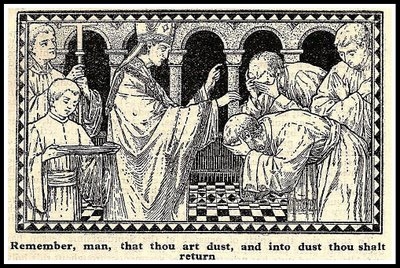
People make sacrifices every day. Sometimes the sacrifices are minor: a momentary suppression of desire. Sometimes the sacrifices take everything we have, even our own lives. We are born with wants and needs that sometimes exert a powerful control over our actions, and yet, we also exhibit this powerful capacity to ignore those wants and needs if we perceive a greater need or a greater good. Parents do this all the time. Parents go without sleep, without food and without many of the opportunities that they might otherwise have had, because they find in their children a love and a joy greater than their own desires. For the average parent, the desire to see your children safe and happy far outweighs your own individual needs. You have found something more precious than your own sleep or hunger.
Sacrifice isn’t just about losing something, it is about finding something. It is about finding something more precious to you than your own wants and needs. It is about finding something that you love so much, that you are willing to let go of everything else just to hold onto it. Sacrifice is a natural byproduct of loving deeply.
In the Gospel of Matthew, Jesus tells his disciples that the Kingdom of Heaven is like a merchant seeking fine pearls, who when he discovers the finest pearl in all the world, sells everything that he has in order to obtain it. In his letter to the Philippians, the Apostle Paul stated that he regarded everything else as loss in comparison with the surpassing value of knowing Christ Jesus. Both the merchant in Jesus’s parable and the Apostle Paul had to sacrifice much, but those sacrifices were nothing compared to what was found by each of them. It is much easier to let go of the things you like once you have found something that you truly love.
For us as Christians, the Kingdom of Heaven, living in relationship with our creator and our redeemer, is the finest pearl. It is the thing in our lives which should bring us such unrestrained joy, that we gladly sacrifice our lesser wants and needs just to possess it. The story of Christ is, in part, a story about how much God is willing to sacrifice in order to hold on to us. The story of Christians, on the other hand, is often about how much we are willing to sacrifice in order to hold onto him.
As we enter the holy season of Lent and as we contemplate making small sacrifices in our daily lives to draw us nearer to Christ, and a deeper understanding of his supreme sacrifice, let us bear in mind that at its root, sacrifice is an act of love. Sacrifice is not about punishment or penance; it is not about creating needless pain or suffering. Sacrifice is simply about finding one thing of supreme value and letting everything else go.
The Sacrifices of Lent
Lent is a time for growing deeper in our faith and in our relationship with Christ. It is a time for making intentional sacrifices: letting go of things that harm us, distract us, or on some level draw us further away from communion with God. Some of these sacrifices are very traditional: abstaining from flesh-meat on Fridays is an ancient Christian practice. While some people may try abstaining from things that would have been completely unknown to our ancestors (e.g., Television or Facebook). Either way, the point is that we do something to set this time apart to serve as a reminder to us that we should be focusing our thoughts and energies on our relationship with God and not allow ourselves to be distracted by all the busyness of everyday life. Take some time before Ash Wednesday and consider the ways in which you might observe Lent this year.
Here are some suggestions:
Prayer: Consider saying Morning or Evening Prayer as a regular part of your Lenten discipline. Join the Society of Mary on the 3rd Sunday of the month to recite the rosary, or perhaps say the rosary at home on your own.
Fasting: Abstain from meat on Fridays. Consider skipping one or two meals a week and using the money for buying food for those in need or some other good purpose. Try abstaining from a particular food which you may indulge in too often.
Almsgiving: Make regular donations to our food pantry collection. Consider cutting some of your expenses during Lent and giving the money to charity or directly to an individual in need.
Study: Try joining either our Sunday morning book discussion group or our Tuesday morning or Wednesday evening bible study groups. Considering reading the Bible at home, or try some other spiritually edifying book.
The sacrifices that we make during Lent are things that we do willingly as a sign of our love and devotion, not because we are told that we have to; therefore, the preceding list should be seen as recommendations for ways to begin a Holy Lent. Many will doubtless find ways to observe this holy season that are more reflective of their personal faith journey. May it be a blessed time to all, however it is observed.
Sermon for the 2nd Sunday after Epiphany
1/18/15
Readings:
1 Samuel 3:1-10(11-20)
Psalm 139:1-5, 12-17
1 Corinthians 6:12-20
John 1:43-51
 Sermon for Christmas Eve 2014
In the name of the Father, and of the Son and of the Holy Ghost, amen.
If you ever happen to be passing through Queen’s college at Oxford University at Christmas time, you may encounter a very strange custom. In that college there is a tradition of having a very special feast at Christmas. The feast begins with torchbearers entering the dining hall, accompanied by a herald who sings a once famous Christmas Carol, and the chef who bears in his hands the evening’s piece-de-resistance: a boar’s head.
The carol that the herald sings, and in which the guests join in singing, is known as the boar’s head carol. It is quite old, and was once quite popular, just as the boar’s head feast was quite popular and held in many places throughout England. But I am willing to guess, that unless you are someone who studies obscure traditions, or unless you are from one of the few places where this tradition is maintained, you have probably never heard of this carol.
You aren’t going to hear it on the radio, or in the stores, and it isn’t likely to be found on any new recordings of Christmas music. If you manage to look it up, or if you actually find an old recording of it these are the lyrics you will find:
The Boar’s head in hand bear I,
Bedecked with bays and rosemary;
And I pray you, my masters, be merry,
Quot estis in convivio.
Caput apri defero.
Reddens laudes Domino.
The boar’s head, as I understand,
Is the bravest dish in all the land;
When thus bedecked with a gay garland,
Let us servire cantico.
Our steward hath provided this,
In honour of the King of Bliss;
Which on this day to be served is
In Reginensi Atrio.
You may be wondering to yourself: what on earth does that carol have to do with Christmas? and you should be. The tradition that it describes and celebrates is something very foreign to most of us: unless you go to a luau in Hawaii, or a pig-picking down South, you probably are not accustomed to eating an animals head, much less of associating that with Christmas, and yet, for Christians centuries ago, this type of feast was as much a part of their idea of Christmas, as shopping for presents is for us today. They would have recognized this song as a Christmas Carol, because its lyrics celebrated part of their Christmas celebration.
For most of us now this song is merely a curiosity. It has died as a popular carol, and the reason it has died is not because it is old. There are plenty of even older carols that are still sung today: No, the reason it has died is because it no longer has any meaning to us. The song celebrates a tradition: it celebrates the Christmas Feast and the food and the decorations; it celebrates the customs of Christmas, but what barely gets mentioned, in one momentary allusion at the end of the song, is the reason why the feast is being celebrated: in honor of the King of Bliss. The song’s primary purpose is to praise the celebration of Christmas, not the birth of Christ, but because our manner of celebrating has changed so much, it is hard for us to connect with, or to get much meaning from.
I began reflecting on this carol this year as I was doing my Christmas shopping, and like many of you was inundated by the constant blaring of holiday music in the stores and on the radio. As I was listening these songs, it occurred to me that our holiday music has become more and more about celebrating Christmas the season or Christmas the holiday, and less and less about celebrating Christ the man. Like the Boar’s head carol, so many of these songs celebrate customs or traditions that are meaningful to us in our own age, but I wonder how many of them will be meaningful 100 or 200 years from now. Will future generations, generations whose customs may be far different from our own, will they look back on our holiday music and wonder: “What on earth were they singing about?”
Customs and traditions come and go. The world we all live in changes everyday. The way we celebrate Christmas changes too, and that isn’t necessarily a bad thing. Personally I would love to go to a boar’s head feast, but I am willing to guess that many of you would be less enthusiastic. Many of the traditions that are dear to us as a part of Christmas now, were really only begun within the last 150 years or so, and we can only imagine what Christmas may be like for our grandchildren, or their grandchildren. In every age, the way we celebrate Christmas changes, but the story of Christ does not. We think of secular Christmas music as being a modern phenomenon, it is not. The word secular just means “of the age,” it doesn’t mean the music is bad, it can be quite fun, what it means is that the music belongs to a certain place and time, and when the age has passed, much of the music does too. The Boars head carol and the boars head feast belong to a certain place and time, and now that that time has passed, those traditions have little relevance to our lives.
There is an expression that is used over and over again in the latin mass: in saecula saeculorum. It comes from the same root word that our word secular (or age) comes from and it means “in the age of all ages”. The phrase is used over and over again as the ending to our important prayers: we usually translate it as “forever and ever” or “throughout all ages.” It is a reminder to us that the story we are telling here, not just tonight but at every mass, it is a reminder that this story is not just about our own age, or about something that happened long long ago: It is a story that is about and concerns all ages. There is a reason why songs like the Boar’s Head carol have mostly passed away, and other songs like Adeste Fideles or Of the Father’s love begotten have remained popular. One song celebrates Christmas, the other songs celebrate Christ. One type of song has meaning in one age or era, the other type has meaning throughout all ages.
Tonight we are not here to celebrate Christmas, we are here to celebrate Christ. It doesn’t mean that we shouldn’t participate in the holiday celebrations that are secular or “of the age,” what it does mean is that we should never lose sight of exactly what it is that we are celebrating. In the prayer book we pray that we “may so pass through things temporal, that we finally lose not the things eternal.” After the food has gone cold, the company has outworn their welcome, the gifts have been opened and the garland has dried and wilted, what will we have left of Christmas? We will have the one thing that doesn’t just belong to this age, but belongs to all ages. We will still have Christ, and he is after all, the only part of Christmas that we ever needed in the first place.
In the name of the Father, and of the Son and of the Holy Ghost.
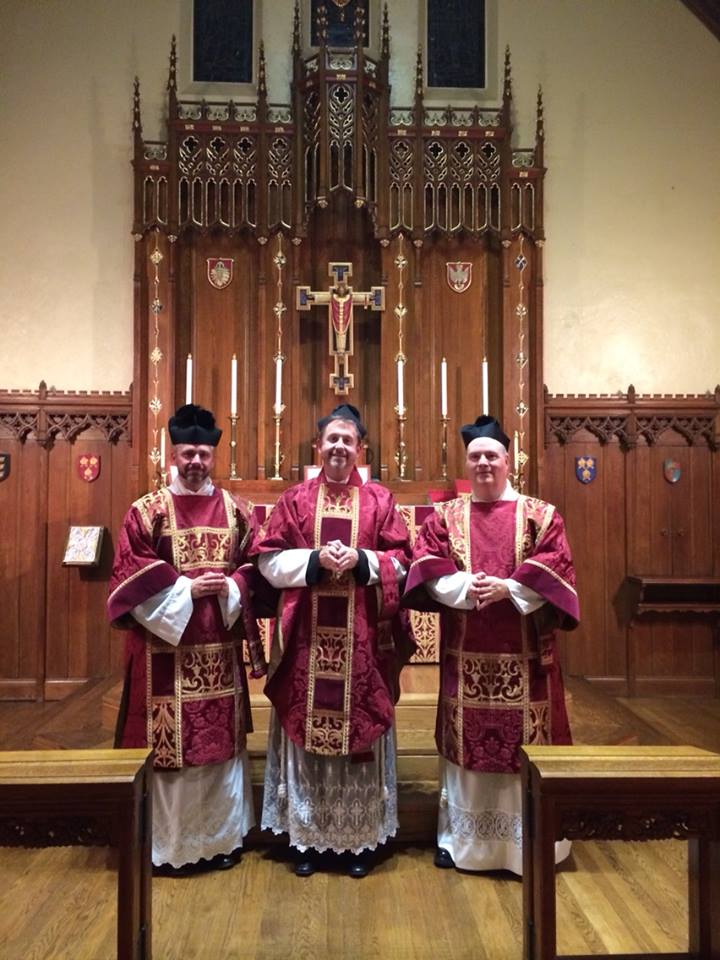
Sermon preached on the Feast of Saint Andrew, November 30th, 2014. My 10th anniversary of ordination to the priesthood.
 Inwardly Digest
You must be logged in to post a comment.