Sermon for Good Friday 2026
Readings:
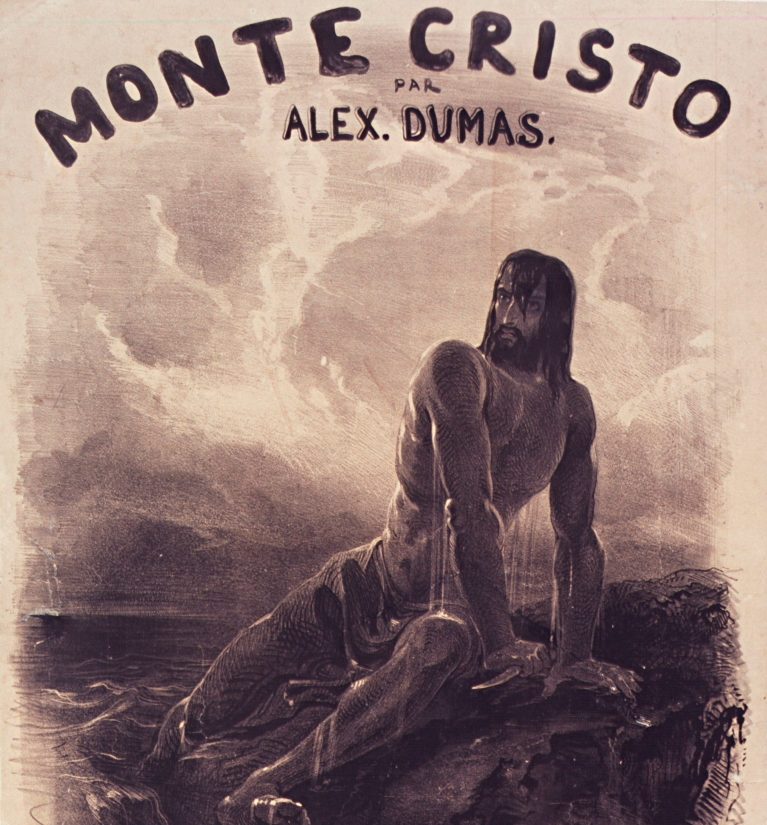
Before we talk about the passion of our Lord this afternoon, I want to talk about another more recent, and quite different story of death and new life. The Count of Monte Cristo by Alexandre Dumas. If you haven’t read it, it is quite a story. A bit long, but very compelling. If you don’t feel up to the challenge of reading it, there is a very good adaptation right now on Masterpiece Theater on PBS that I would recommend. But here for my purposes today is a very short synopsis of how the story begins.
Edmund Dantes is a sailor that has just returned to his home port of Marseille and hopes finally to marry his beautiful fiancé. He is a decent, upright guy, but a number of evil actors around him conspire to frame him for espionage and have him thrown in prison. The prison is the notorious Chateau d’If, which is a real place out in Marseille harbour, sort of like an Alcatraz. Not a place you would want to go and not a prison you could easily escape from. Year after year after year he is there, imprisoned in a dark dungeon. He is treated cruelly; he loses hope and wants to die. Until one day he notices a tapping or a scratching coming from the wall. Then he hears a voice of another prisoner. Eventually the prisoner tells him to stand back and he pushes some of the stones in the wall out of place and crawls into Edmund’s prison cell. This mysterious other prisoner, we discover is the Abbe Faria, an imprisoned old priest who has been trying for years to tunnel himself out. The Abbe encourages Edmund to follow him, keep working and digging and he assures him that they will eventually get to freedom. Naturally Edmund follows him, because this is his only hope, so they continue to dig together. But it isn’t easy and it isn’t simple. It takes years.
When they are not digging, the Abbe Faria tutors Edmund. We learn that the Abbe Faria is a gifted teacher who has memorized volumes of books, on so many different subjects. He spends countless hours teaching Edmund everything he knows: theology, physics, languages. This education is such a gift to Edmund. It expands his mind and gives him hope for what he might do someday when he is free, but he is still imprisoned. The education is worthwhile; it is making Edmund stronger, but he is still a prisoner. No amount of Latin is going to tear down that prison wall.
And then one night the Abbe Faria dies. Edmund can hear the prison guards cover up the old priest and sew him into a shroud. Then they say they will come back and get the body later. Edmund realizes that this is his chance. He manages to switch places with the body of his dead friend. He sews himself up into the shroud, and when the prison guards come, it is Edmund that is taken out and thrown into the sea. Then he breaks out of the shroud, swims to shore, and begins a new life. It’s a great story, and that is just the beginning of it. You will have to do your own research to find out how it all ends, if you don’t already know. It is, I hasten to add, a very different story from the passion of our Lord. The new life that Edmund lives after his escape is very different from the new life that Christ promises us. But I couldn’t help but notice some similarities to the story we tell today, here on this Good Friday. There are, in that story, symbols of our Lord’s passion. It is a story of death and new life.
It was the old priest’s death that sets Edmund free. That was what opened the door. Literally. Edmund spent 15 years trying to dig his way out, but the tunnel never really got him anywhere. The education and the teaching of the Abbe were wonderful and of immense value to Edmund, but they didn’t set him free either. I imagine it is sort of like the gyms and the libraries in prisons today. The self-help and the self-improvement is good for you, but it doesn’t make you free. After years of digging, Edmund is much more educated, but he is still a prisoner. It was a death that freed Edmund. The Abbe Faria died and his death gave Edmund new life. If the old priest had just been a teacher, then his death would have been in no way good for Edmund. But the priest was more than a teacher, he was a savior.
That’s the part about Christianity that many people just don’t get, especially non-Christians. It’s why our observance today is hard for even many Christians to understand. If you think of Jesus only as a teacher, a philosopher, or a moralist, then his death could in no way be called good. We may take inspiration from how he responded to the circumstances around his death, but his death itself would be bad. But from the very beginning of the church, that is not how Christians have seen the death of Jesus. Because, for us, Jesus is not just a teacher. He is a savior. His death is something that we remember and lament, but we have always held that it actually accomplished something. Something which for us is very good. It was the moment when the latch on the prison door clicked open.
From almost the beginning of creation humans have been enslaved by sin and death. The evidence is all around us. There are evil forces in this world which wish to do us harm, but then there is also the person in the mirror, who is often our own worst enemy. We are imprisoned, not by God, but by our own sinfulness. We were created by a loving God to be better than we are, but we turned away. We turned God’s good earth into a world of empires that hold onto power through the terror of death. That’s what the cross was: an instrument of an empire. A means of control.
But the events surrounding Jesus’s death convinced his followers that this was not just a death like any other. They had seen many crucifixions before, but this one was different. Something was different. Something was happening that they couldn’t quite comprehend. There were signs and earthquakes and darkness, and weird things happening like the temple veil being torn in two. And then three days later the ultimate sign, the empty tomb and the risen Jesus. In some ways his death was like any death, but in some ways it was not. What was happening on that Good Friday? How was Jesus offering us freedom? Why was his death special?
Christians have tried to explain exactly what happened on the cross since the moment Jesus died. We fumble around to explain things that are beyond our understanding. But here is my feeble attempt to explain it this afternoon. The one creature that death has no power over or claims against is the author of life. Our God, our creator is not bound to death in any way. Our God does not have to die. Our God is free. But his children are enslaved. So God enters into the prison with us. He crawls mysteriously into our cell like the Abbe Faria. He takes on our humanity in the person of Jesus Christ, and then he suffers our death and in exchange offers us his life. The mechanics of all of this are one of the mysteries of our faith, but the conclusion that Christians throughout time have come to, is that Jesus in his death, accomplished something for us that we could not accomplish on our own.
The emotions of Good Friday are complicated and it can be quite hard to perceive what is good about this day. But I want you for a moment to imagine Edmund Dantes, the Count of Monte Cristo, as he kneels next to the dead body of his friend and teacher the Abbe Faria. This was his teacher who has died, but through that death he now has the chance to really live again. The lessons the Abbe taught him were wonderful, but this was his greatest gift. The lessons that our Lord Jesus taught us, are of immeasurable value, but freedom and new life, that is his greatest gift. That is why today is good.
 Inwardly Digest