
Sermon for April 12, 2026.
Readings:
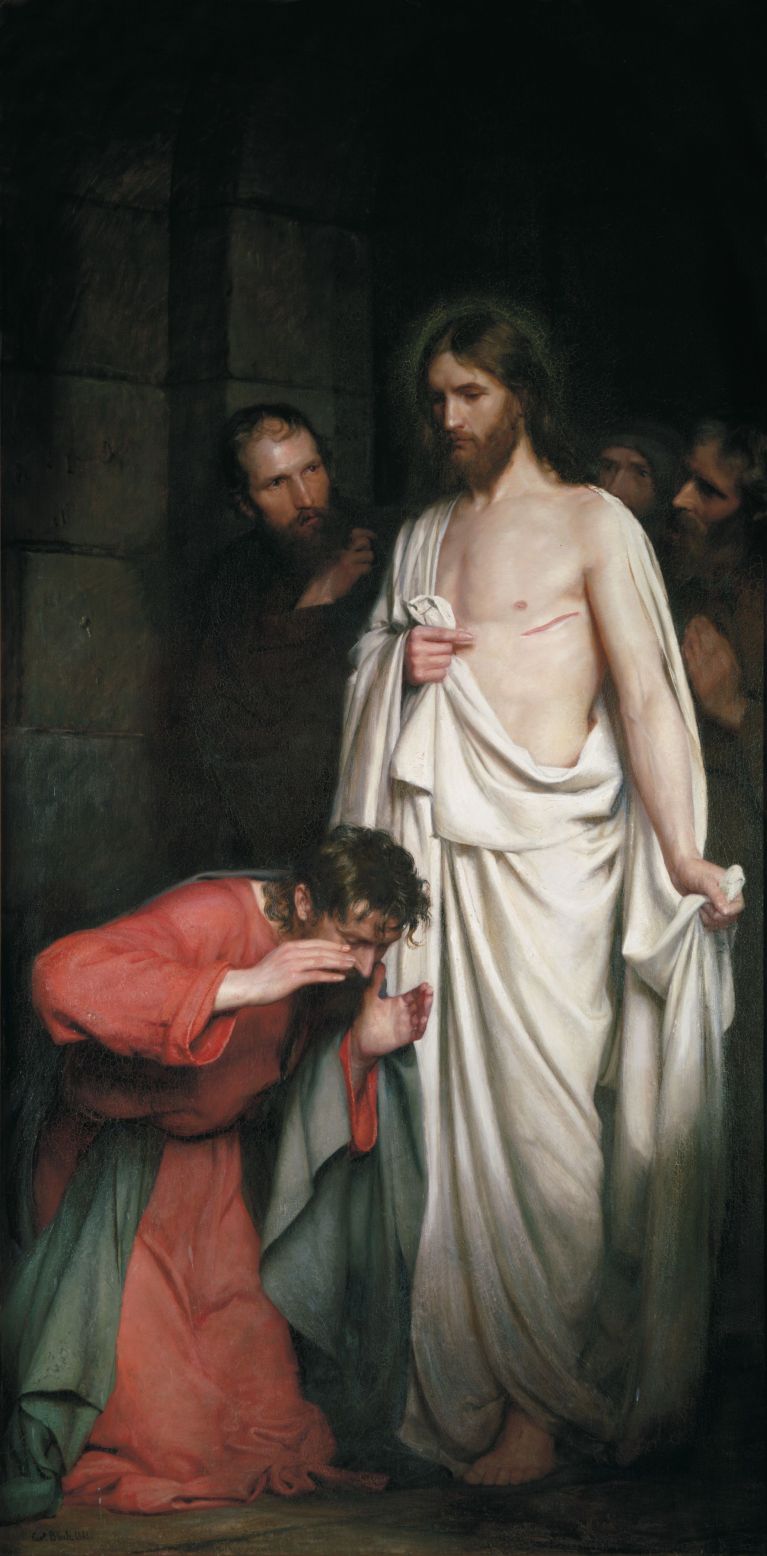
On that first Easter Sunday morning, the disciples had an encounter with the risen Jesus. Mary Magdalene, Peter, John, almost all of them saw Jesus, alive again, in the flesh. Their crucified Lord had literally risen from the grave and they all witnessed it. Except Thomas. For some reason Thomas wasn’t there. Maybe he ran out to get milk or something. Maybe he just decided to stay home on Easter Sunday. We don’t know why Thomas wasn’t there; it could have been a very good reason, but he wasn’t there. He shows up after this extraordinary thing happens. And when Thomas’s friends told him about the encounter they had with the risen Jesus, alive again, naturally he was skeptical. He struggled to believe the story they told, and you can’t fault him for that too much.
It is a fantastic story. A dead person coming to life again. Not just very sick, but dead, from the grave. That doesn’t happen. That goes against everything we know about the natural world. Ancient people were well aware that dead bodies don’t come back to life. Especially when those bodies had been brutally crucified. Thomas knew that Jesus had been speared in the side. He had been nailed to a cross. Those are not injuries that you recover from. So, Thomas has every reason to question the truth of this story that he is being told. But then something happens. Thomas has his own encounter with the risen Jesus and his perspective changes radically. From the same person that initially questioned the resurrection story, we also get the most complete and profound witness to who Jesus really is: “my Lord and my God” Thomas says. He is the first individual in John’s gospel to recognize Jesus as god. That’s something. But moments before he had been an unbeliever. That is the power of an encounter with this Jesus that we worship. That is the power of an encounter with God. It can change you when nothing else will.
Now, the story of Thomas is very likely a familiar story to you. If you have attended church regularly or for very long, then it is very likely that you will have noticed that there are some Sundays and other services throughout the year where the readings never change. In some instances, those readings may have been the same for that service for many hundreds of years, extending back well before the reformation and the creation of our Book of Common Prayer. Today is one of those Sundays. Low Sunday or the Sunday after Easter always has the exact same gospel reading from the Gospel of John. The reason for this will be pretty obvious: the setting. A part of this gospel takes place on the week AFTER Jesus’s resurrection, so it is only natural that it should be read on the Sunday the week AFTER Easter Sunday.
If you are here today, on the Sunday AFTER Easter Sunday, then it is likely you have heard this story before. It is possible you have heard it many, many times. It is the same every year for the Second Sunday of Easter. That can make it very challenging for a preacher, I can tell you. I actually dread it sometimes, because year after year you get the exact same texts but naturally you don’t want to stand up here and say the exact same thing about them. I mean, I’m not here to be entertaining, but I certainly don’t want to bore you to death either. I have been struggling with this all week. Actually, I have been struggling with it for years. What more can I say about this passage? One of the things that occurred to me this week as I was looking at different interpretations of this story, is that preachers and priests always seem to be looking for the moral of this story. I have been guilty of this too. We look at this story and want to figure out what it is telling us to DO. What is the life lesson for us to learn? Should we be less like Thomas? Should we be more like Thomas? What is the takeaway? What’s the lesson? I know that there is a strong tendency to approach every scripture reading looking for the moral lesson or a commandment from God, or something or other for us to DO as a response. I have come to realize that that is a part of the problem. Clearly some parts of scripture are meant to do that, but maybe not every story of scripture. Maybe some stories just are. Maybe some stories are there because that is the way they happened. Real life is like that. Maybe some scriptures just want to share a truth with us, without necessarily asking us to DO something in response. It could be that sometimes the bible is just showing us the way that the world is, and we can choose to accept that message and find peace, or reject it and beat our heads against the wall of reality that we can’t change.
I am beginning to wonder if today’s gospel might be just like that: a story about the way things actually happened, that simply reveals to us the way things actually are. Here is what I mean: Not everyone had the same encounter with the risen Jesus on that first Easter Sunday. Not everyone was there. Not everyone saw him. So from day one, the disciples have had to try to convey to others the mystery and the truth of the Resurrection. That has been a part of the Church’s calling. From the very beginning, a part of being a Christian has meant having to explain to others, why you believe what you believe. From the beginning, we have had to talk about mystical and sometimes deeply personal encounters and experiences, that are very hard to talk about. We have had to challenge common understandings of reality and what is or is not possible in this world. We have had to tell stories about events and occurrences that don’t even make sense to us. We have had to do all of this, sometimes with people that are our nearest relatives and dearest friends. And from day one, there have always been people who have rejected our testimony. From the very beginning we have witnessed to the resurrection of Jesus Christ and from the beginning there have been people that just could not or would not accept the truth of our story. Like it or not, that’s the way it is.
Is that because there was some defect in our testimony or witness to Jesus? Maybe, or maybe not. Maybe you did everything right, said everything right, and someone still could not overcome their skepticism or their doubts. You can beat yourself up trying to figure out how to convince people of the truth of the resurrection and they still aren’t going to buy what you’re selling. What’s the answer? Well I am beginning to think that the answer is that sometimes there isn’t an answer. Maybe this is just how it is. This is reality. We work hard to evangelize, to share the good news of God in Christ; we work hard to baptize and teach; we work hard to create and maintain a sacred and holy space for people to worship and hear these amazing stories of God’s grace. And some people are just not going to buy what we are selling. Some people are just not going to believe this story on our testimony alone. If Thomas wasn’t going to listen to Mary Magdalene, and the other Mary, and the other Mary, and Peter, and John, and all those disciples that either saw the empty tomb or the risen Jesus, then I probably don’t need to feel too badly whenever I encounter someone who isn’t convinced Jesus rose from the dead based on my preaching alone. Maybe the defect is mine, but maybe it isn’t. Maybe it isn’t your fault either. Maybe the lesson from this gospel isn’t that you need to work harder or do more. Maybe this is just the way it is. Sometimes it is up to God to intervene. Some people are only going to change when they have their own personal encounter with Christ. OK. We can pray for God to reveal himself to that person and just let it be. And the good news from today’s gospel is that those encounters do happen and people do change. That’s it. No fancy moral. No long list of things for you to do as you walk out of here today. Just a reality to accept. Tell your story. Share your faith. Talk about your encounters with God, especially when they seem unbelievable. It’s ok if some people don’t believe you. Some people won’t. But don’t worry. God can still work on them. You never know when someone will have their own encounter with the risen Jesus. You never know how some people can change.
 Inwardly Digest