Looking up, without looking down

Standard

Sermon for August 31, 2025

Readings:

Sirach 10:12-18
Psalm 112 
Hebrews 13:1-8, 15-16
Luke 14:1, 7-14

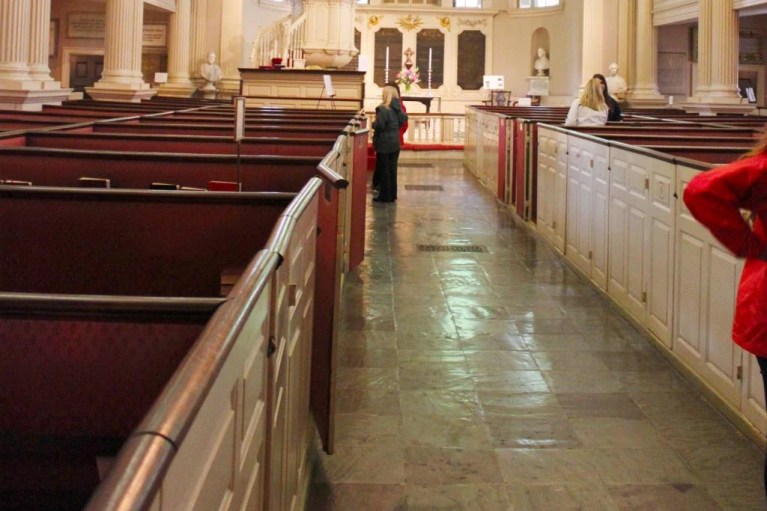
In 1885, when this church was founded, it was founded to be a free church. What that means, is that it was the intention of our founding families that this church would not charge pew rents, but instead would rely on the voluntary donations and pledges of the congregation. Many of you are aware that there was a period of time, especially during the 1700s and early 1800s, when churches had box pews with little doors that were rented. It’s how churches paid the bills. A lot of you have “your pew” that you always sit in now, but back then your pew really was your pew. You paid for it and nobody else could sit there. And of course, just like going to a Broadway show, the best seats cost you more. So if you wanted to sit down front where you could see and be seen, you would pay a premium for it. There were usually some free seats, but they were in the balcony or in the back. If you visit many historic colonial churches, you will find just this setup. 

It really was a disgraceful practice, especially in the light of the plain reading of the gospel, but for so many years it was so common that it really was unquestioned. You just assumed that the fancy, rich folks in church got to sit up front, and the poor folks would sit in back. One of the later reforms that came out of the Oxford Movement, which was a church reform movement in the early 19th century that was started by my hero, John Keble, was the movement away from this pew rental system. Our founders were influenced by that. I think that we may justifiably be proud of our parish, and our founders, for wanting to abandon this pew rent practice. It is a good thing to be proud of. The bible has lots of warnings about pride, but we need to remember that there is good pride and there is bad pride. There is a pride that is born out of love and gratitude, and there is a pride that is born out of self-righteousness and disdain. We can embrace one, hut we need to be very careful of the other.

It is good to be proud of our parish and our founders for wanting to abolish pew rents, but in being proud we need to remember that we weren’t the first parish to try that, not by a long shot. We weren’t the first; we weren’t the only ones; and there were times when we seriously considered implementing pew rents because finances were so tight. So, we can be proud of what our founders did accomplish while at the same time recognizing that they weren’t perfect. We can love our parish without having to feel that it is necessarily superior to every other parish that ever existed. That is healthy pride, good pride. That is pride that is born out of love. And I think that all humans need that sort of pride. It is a pride that makes you raise your head and look up. You raise your head and look up to people who might be a little better at this thing called life than you are. You raise your head and look up to elders, and heroes. You raise your head to recognize superior skill, superior values, and superior wisdom. You raise your head to recognize something superior to yourself. Healthy pride involves looking up, not looking down, and to look up you need to be able to recognize that there must always be someone or something above you. And if you can’t do that, then you can’t know God. That is when the other kind of pride gets in the way.

Negative pride, pride that is born out of self-righteousness and disdain, looks down. Negative pride is about feeling superior to others. This unhealthy type of pride is presumptuous, it takes the high seat at the table. It assumes that it must be the best, the greatest, the wisest, and therefore does not strive to be better than it is. That is why this type of pride is so deadly. It alienates you from God above and from everyone else below. You have no need for anything above you and you are too good for anything beneath you. Negative, unhealthy pride is isolating and it leads to destruction. That is the type of pride that the scriptures are talking about in the first reading this morning:

The beginning of human pride is to forsake the Lord;
the heart has withdrawn from its Maker. 

For the beginning of pride is sin,
and the one who clings to it pours out abominations. 

Therefore the Lord brings upon them unheard-of calamities,
and destroys them completely. 

The Lord overthrows the thrones of rulers,
and enthrones the lowly in their place.

Be very careful if you think the throne is yours or if you think the best seat in the house belongs to you. You may just find yourself turned out of your pew when the true owner of the house arrives. Take the lower seat our Lord advises. Assume that there are others that are better than you. Look up and show respect. Remember that you still have things to learn. We may think that charging rent for pews is a totally abhorrent idea that is contrary to the gospel, but 100 years from now there may be some practices that we simply ignore or take for granted that future generations may be scandalized by. We can be proud of our ancestors, we can look up to them, but we needn’t be self-righteous in doing so. We can look up, without looking down, if you know what I mean. 

The funny think about learning to always look up to those above you, is that in doing so you learn to hold your own head a little higher. Learning to respect others goes hand in hand with learning to respect yourself. So healthy pride, pride that is born out of love, pride that is born out of admiration for that which is good walks hand in hand with humility. We can be proud of ourselves and our accomplishments, we can be proud of our children and our families, we can be proud of our church, our country, our heroes, and we can be proud of our cultures. We can be proud of all these things and we can love them without thinking that they are superior to all others or completely faultless. Humility isn’t about looking down in shame; it is about looking up in admiration. When we learn to look up to others, our own status rises as well. Those who exalt themselves will be humbled, but those who humble themselves will be exalted. 

Keep Holy the Sabbath Day

Standard

Sermon for August 24, 2025

Readings:

Isaiah 58:9b-14
Psalm 103:1-8
Hebrews 12:18-29
Luke 13:10-17

Jesus was in the synagogue on the sabbath day, which should come as no surprise to anyone. Jesus was an observant Jew who took God’s laws very seriously. Jesus said he didn’t come to abolish God’s laws, he came to fulfill them. God’s commandments matter to Jesus. And in the fourth commandment we are told “remember that thou keep holy the sabbath day.” The Book of Exodus goes on to say: “six days shalt thou labor, and do all thy work; but the seventh day is the sabbath of the Lord thy God: in it thou shalt not do any work, thou, nor thy son, nor thy daughter, thy manservant, nor thy maidservant, nor thy cattle, nor thy stranger that is within thy gates: For in six days the Lord made heaven and earth, the sea and all that in them is, and rested the seventh day: wherefore the Lord blessed the sabbath day and hallowed it.”

The Book of Deuteronomy adds an extra little verse to this and says: “And remember that thou wast a servant in the land of Egypt, and that the Lord thy God brought thee out hence through a mighty hand and by a stretched out arm: therefore the Lord thy God commanded thee to keep the sabbath day.”

The sabbath day is a day of rest. The sabbath day is a day of freedom. The sabbath day is a commandment. Resting is a commandment of God. It is one of the top ten. When people talk about sin, they like to talk about the exciting things: adultery, murder, stealing, bearing false witness, but listed among those commandments is the commandment to keep the sabbath day holy and to rest. And freedom is a gift from God. God does not want us to be slaves to the powers of this world. God does not want us to be slaves to productivity. God does not want us to be slaves to the almighty dollar, or to the office, or to email, or to drudgery. God wants us to rest and God wants us to remember his promises of freedom. God wants us to remember the grace that we have been shown. So, work is prohibited on the sabbath, but worship is not; the study of his word is not. And Jesus is in the synagogue worshipping God, and reading and reflecting on his word. Jesus is obeying the commandment. 

And as Jesus is talking, he looks out on the congregation and notices a woman there. It’s amazing that Jesus saw her at all because we are told that she was bent over double. She couldn’t stand up straight. And what is more we are told that this woman has been afflicted this way for eighteen years. I want to focus on this unnamed woman for a minute this morning, because I think it is too easy to focus on the conflict between Jesus and the leader of the synagogue and not notice the incredible faith that she was demonstrating. This woman has been bent over for eighteen years. We can assume that she was probably an older woman if she has been sick that long. Now those of you out there that suffer from back pain, mobility issues, or know what it feels like to sit behind the wheel of a car for too long, or have been hunched over as desk for too long, those of you who know the pain that can come from bad posture…I think I have probably covered most of y’all at this point. Think about being doubled over in pain for eighteen years. Now let’s go back to a time before Ibuprofen, or hot baths, before there was air conditioning or sliced bread or any modern convenience that makes life easier, because that is the time that this woman is living in. Think about the pain and discomfort that she must have been in.

And she showed up in church that day anyways. She showed up to worship God. This woman had every reason to stay home in bed and nobody would have faulted her for it. She was sick. If I had been her pastor I probably would have told her to stay home; it’s fine. But she showed up. Somehow, she made it to the synagogue, got inside, managed to deal with people bumping into her because they couldn’t see her hunched over. And of course, you know most people in synagogue in those days didn’t get a seat. Those pews may be hard, but at least your sitting down. If she wanted to sit, she would have had to sit on the floor. She probably just had to stand though. But she showed up. Why? There are other stories in the gospel where people seek out Jesus for healing, but that’s not the case with this story. She doesn’t call out to him or ask him for anything. As far as we know, she doesn’t know who Jesus is and didn’t know he would be there. She asks for nothing. But her presence there on that sabbath day says something more than her words ever could. 

This is a woman of faith and she is not going to let anything keep her from worshipping her God and honoring and keeping holy the sabbath day. She is sick and in pain, but she showed up, not because she thought that she would be healed, but because she loved God and respected his commandments and intended to keep them as best she could. She didn’t come to get something; she came to give something. Jesus sees her. He sees her faith and without being asked, he sets her free from her affliction. 

And the leader of the synagogue…who would have had a nice comfy place to sit by the way…became indignant because Jesus supposedly did work by curing her on the sabbath. And Jesus calls him out and says “you wouldn’t treat your donkey that way!”

Jesus takes God’s commandment’s seriously. He isn’t dispensing with God’s laws; he is interpreting them in the light of God’s love. Our gospel today begins with Jesus worshipping God in the synagogue on the sabbath day as we would expect. He encounters many people there obeying the fourth commandment, but two stand out in this story: one is a woman who has suffered incredible pain and inconvenience to be there that morning and the only thing on her lips is praise for God; the other person is a man, an important man, the leader of the synagogue, a person with honor and position (and a chair), and all he can do is criticize an act of mercy. Which one of those two do you think did a better job of keeping the sabbath day holy? 

A matter of perspective

Standard

Sermon for August 17, 2025

Readings:

Jeremiah 23:23-29
Psalm 82
Hebrews 11:29-12:2
Luke 12:49-56

I remember one time when I was a little boy, we were traveling through the sugarcane fields of South Florida. If you go inland, away from the beaches, in the region around Lake Okeechobee, you will find miles and miles of sugarcane plantations. Or at least you could when I was little. I don’t know what it is like there now. If you have never seen sugarcane growing, it looks a lot like bamboo: thick growths of big, tall stalks that can be 10 feet high or more. When you are driving through it, it’s like there is a wall on either side of you that you can’t see through. 

Anyways, I can remember driving past these sugarcane fields, when I noticed that some of the fields were on fire. And I remember thinking, “that’s terrible! those poor farmers! All that sugarcane is lost!” And then, as we drove a little further, I was even more upset when I noticed some people walking alongside the fields with torches in their hands, actually setting fire to the sugarcane! How horrible. This wasn’t just an accident; this was intentional destruction. Well, at some point I expressed my dismay about all this, and someone in my family explained to me that they weren’t destroying the sugarcane; they were preparing it for the harvest. 

What I learned that day, was that THAT was the traditional way that sugarcane had been harvested for hundreds, maybe thousands of years. There are new harvester machines that do it differently now, but the traditional way is that once the cane is fully grown and ready to be harvested, you set fire to it. And the fire burns through the field, and burns away all the leaves, and the dead grass, and along the way it drives off all the snakes and other nasty creatures that might be living in there, and what it leaves behind is just the pure sugarcane stalk, ready to be harvested. The sugarcane itself, and the sugar within it, is unharmed. It’s all the bad stuff that gets burned away. 

I saw smoke rising from the field and thought it meant destruction; someone wiser than me knew that it meant it was harvest time. 

The image of those fields burning came to my mind this week as I was reflecting on this gospel. Jesus said that he came to bring fire to the earth. Jesus said that he came to bring division. To hear Jesus say those things, it really rubs against the popular image of Jesus the nice teacher. We are told that Jesus is the Prince of Peace, and that he is all about love and forgiveness, and living abundantly and sharing and being kind and caring, and Jesus IS all of those things, but he is also more. Our situation as humans is more complex than we sometimes want to imagine. We need more than just a nice teacher. We need more than good advice and a helping hand. We need a savior. We need rebirth and transformation. There is much good growing within all of us. God put it there. It is his image. But there is a lot of dead stuff clinging to all of us too. And there are snakes in God’s field as well. If we are ever going to have peace; if we are ever going to know true love and forgiveness; it we ever hope to live in God’s kingdom, then some of the stuff that is growing in us, around us, or on us has to go. There are things that we need to be divided from. I will say that again, there are things that we need to be divided from. There may be people that we need to be divided from. There may be attitudes that we need to be divided from. There may be substances that we need to be divided from. You might even need to be divided from your money and your material possessions. Division can be a good thing. Fire can be a good thing. And the bible often associates fire with God. There was the fiery pillar in the desert, and the burning bush on the mountain, then there was the fire of Pentecost. Fire is powerful. It can be uncontrollable. But fire is transformative. It can destroy things, but it can also make new things. Fire transforms, and God transforms, and we need to be transformed. There are things in this world, there are sins, that need to be burned away in order for God to gather us in and make us into something better than we currently are. We need God’s fire to change us and Jesus said that he came to bring fire to the earth. You can see that as bad news, or good news, it’s a matter of perspective.

If you are a snake in the grass, it is definitely bad news. If you desperately want to cling to old dead things in your life: material things, bad habits, old grudges, past hurts…it might be bad news. If you are content with this world as it is and don’t feel any need to change, or grow, or be transformed into something better…then God’s fire is probably bad news. But if you are ready to be transformed, ready to let go of some things, ready to be gathered into God’s arms in God’s kingdom, ready to let that which is sweet within you be divided from that which is bitter, then God’s fire is good news. 

You can see God’s fire and think that it means destruction, or you can see it and recognize it as a sign of God transforming a field and preparing it for the harvest. Again, it is a matter of perspective.

Mr. McBeevey

Standard

Sermon for August 10, 2025

Readings:

Genesis 15:1-6
Psalm 33:12-22 
Hebrews 11:1-3, 8-16
Luke 12:32-40

Many of you know that the Andy Griffith Show is one of my favorite shows of all time. I have preached about it several times. If you are a younger person and don’t know the show, go and watch it. You can stream it online. If you are an older person and grew up with it, it is worth watching again. The show is an intentional throwback to a different time and place, it is idealized and sanitized, but it is nonetheless a reminder of personal qualities and values that could use a revival. 

I think my favorite episode of the show is called Mr. McBeevey. Opie is out playing in the woods and he comes back to the sheriff’s office all full of stories to share with his dad, Andy, and deputy Barney Fife. He tells them that he met this man named Mr. McBeevey, who spends all day up in the trees, wears a fancy metal hat, jingles when he walks, and can make smoke come out of his ears. Andy and Barney naturally assume that Opie is telling a fantastic tale about a made-up friend as children sometimes do. And then Opie says, “and he gave me this quarter.” And as Opie holds up a real quarter, Andy’s demeanor changes. It is one thing to make up a make-believe story, but it is another thing to tell an outright lie, and Opie seems to be crossing the line. When Opie insists that he is telling the truth, Andy drives out to the woods with him to find this Mr. McBeevey, but of course there is no sign of him. Opie refuses to change his story though. Mr. McBeevey is real. Andy and Opie drive home and now Andy is getting very cross. Make-believe is one thing and that’s fine, but Opie needs to understand the difference between the truth and a lie. Andy is resolved that he is going to have to punish Opie. 

So Andy goes to Opie’s room for a father-son talk which is just one of the best scenes ever. He explains to him the difference between the truth and a lie and he tells him what the consequences will be if Opie persists with this Mr. McBeevey story. But Opie says (crying), but Mr. McBeevey is real, and if I said he wasn’t I would be telling a lie. Don’t you believe me pa? And you see this change come over Andy’s face. Before he had looked stern and disappointed, and now you could just see this sense of bewilderment and love. So Andy goes back downstairs. And Barney, who is always a little too eager to act in every situation, says to Andy: well, aren’t you going to punish him? And Andy says, no. Barney replies, you don’t mean to tell me that you actually believe in this Mr. McBeevey do you? And Andy says, no….but I do believe in Opie. No, but I do believe in Opie. 

I love that scene so much. Andy cannot comprehend the story that Opie is telling. It seems magical, nonsensical, unbelievable. Andy has serious doubts or questions about this Mr. McBeevey, what he doesn’t doubt though, is his son. Andy’s relationship with Opie and love for Opie his him the strength and the courage to say, I don’t understand this, I don’t know how this can be true, but I am going to trust you. My friends, that is faith right there. That is how faith works. Faith is not about certainty. Faith is not about seeing is believing. Faith is not about understanding. Faith is not as much an act of the mind as it is an act of the heart. Faith is a response to a relationship. It is an act of love. 

Our second reading this morning is the eleventh chapter of the Book of Hebrews. I remember once when I was in college I met a guy who had memorized the entire chapter and would perform it and I supposed if you are going to memorize a chapter of scripture this is an excellent choice, because it is all about faith. The passage talks about the faith of Abraham and Sarah, believing that God would do the impossible for them. There are a few verses missing there this morning that also talk about Abel and Enoch and Noah, and later we hear about Issac and Jacob. And we are told that “All of these died in faith, without having received the promises, but from a distance they saw and greeted them.” The great patriarchs and matriarchs of our faith, they had to trust in God and in their relationship with God, more than they trusted in themselves. Abraham and Sarah had doubts about where or not they would ever have a child, I assure you, but they trusted in God anyways. To be a person of faith means to be able to believe in things that you cannot yet see. To be a person of faith means to lean on love more than you lean on understanding or your own perceptions of things. 

You do not have to understand the meaning of everything Jesus ever said in order to love and follow him as the son of God. You don’t have to have a clear blueprint of heaven in order to believe in it. You don’t need to comprehend every single article of the creed in order to stand and say it will all of us every week. You don’t need to be able to explain why bad things happen to good people, or why good things happen to bad people. You ought to read the bible and pray, but you don’t need to be some great theologian to be a great person of faith. All you really need to be a person of faith is love. You need to love God and the more you are able to love God, the easier it will be for you to believe and trust in the promises that God makes to you. Love God, love Jesus, love whoever it was that first shared their faith with you. You don’t have to wait for a miracle or a sign to start loving God. You don’t have to see in order to believe, you have to love. When we stand every week and say the creed, we are not proclaiming things that we ourselves have seen: we weren’t there when God created the earth, we weren’t there when Jesus was born or when he suffered and died; we weren’t there when he rose from the grave; we may have encounters with the Holy Spirit, but we weren’t there when it spoke through the prophets, and so far none of us have seen Jesus come again to judge the quick and the dead, we have not experienced the resurrection of the body and the life of the world to come. Most of the things we proclaim in the creed have nothing to do with our own personal experience of God. It is the accumulated experiences and witness of countless generations of faithful people that have loved God, and experienced God’s love in return. The creed is a witness to the God we love and worship. We worship a God who creates. We worship a God who sacrifices and suffers. We worship a God who inspires and warns. We worship a God who judges, forgives and redeems. 

Living in relationship with this God means learning to use your heart as well as your mind. Sometimes love and relationship can open your heart to believe things that your mind cannot comprehend. At least, that is what happened to Andy when he decided that while he struggled to believe Opie’s story, he still believe in Opie. 

I guess I should add that at the end of that episode, Andy is wandering around in the woods trying to figure all this out, when he just utters the name “Mr. McBeevey.” Suddenly a voice from above says “Hello? Is someone calling me” Andy is completely startled and he looks up and down from the pole beside him climbs a telephone repairman with a metal helmet, and tools dangling from his belt that jingled when he walked. Andy was never happier to meet a telephone repair man in his whole life. Mr. McBeevey was real, and yes…he even had a trick to make smoke come out of his ears. 

Respect for God can be contagious

Standard

Sermon for March 3, 2024

The Third Sunday in Lent

Readings:

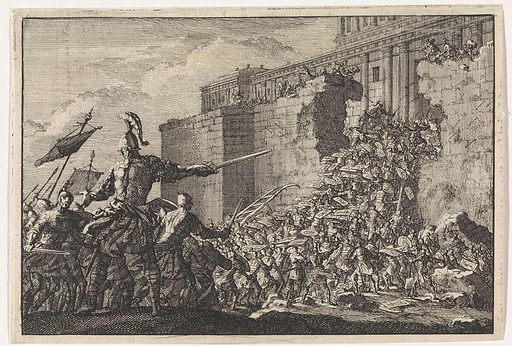
In the year 63 BC (so more or less 60 years before Jesus was born), the Roman general Pompey laid siege to the city of Jerusalem. Sadly, this was a scenario that Jerusalem had already experienced many times in its history and would experience many times more, even unto our present day. Well the city put up a good fight, but eventually Pompey and his troops figured out that if they tried to fight the Israelites on the sabbath day, they would indeed fight back, but if they didn’t directly fight them, but instead spent time building bridges and ramps to get over Jerusalem’s fortifications (in other words, doing the work to support the invasion), then they would be left alone because the Israelites would only break the sabbath if their lives were immediately at risk. So, Pompey used this to his advantage and eventually broke into the city. 

And when he came in, of course the first place he went was the temple mount. He wanted to understand what power this temple and this God had over these people. He wanted to know what it was that they were sacrificing to and that they were willing to lose their lives to protect. No doubt he also assumed that there would be untold riches inside as well. So, he strolls into the temple, walks right past all the priests who are begging him and pleading with him not to go any further. He pushes them aside and marches right into the temple building itself. And when he goes into the temple, the first thing he sees in the outer room is the golden lampstand, and an altar of incense, and a table with bread on it, a few nice things, but he assumes that the real wealth of the temple must be in the inner room, the Holy of Holies that is just beyond the veil. Only the high priest was ever allowed in there and then only once a year. 

So, Pompey pushes the curtain aside, walks in…and discovers an empty room. The holiest place in the world for these Jewish people, the thing that they were dying to protect, was an empty room. Now Indiana Jones fans, I am sure you are thinking “But what about the Ark?” The Ark of the Covenant, which contained the stones that the ten commandments were written on, that was in the sanctuary of the First Temple, the temple that King Solomon built. But that temple was long ago destroyed by the Babylonians and the Ark had ever since been missing. So, in the Second Temple, the Temple that Pompey walked into, and the Temple that Jesus would know some decades later, there was no Ark. The Holy of Holies was just an empty room. 

Pompey was completely perplexed at this. These Jews, he thought, were a strange people. Not only were they unwilling to do any work one day a week unless their lives were immediately at stake, but also the holiest place at the center of their faith was not a great golden statue of a God carved with human hands, but an empty space. An empty space that these Jews claimed, belonged to God. Pompey didn’t understand it. He certainly understood sacrifice. Pagans sacrificed THINGS all the time, but these Jews were sacrificing time and space. They were sacrificing their own creative powers. It was odd. Pompey didn’t understand it, but he saw something in it that he respected. He could have torn the temple down, but he didn’t. He could have looted the temple of its wealth, but he didn’t. Jerusalem would lose its freedom and become a Roman province, that was trueBut Pompey let the worship in the temple go on. He didn’t understand this Hebrew God, but he understood the power of respect. He saw the respect that the Jews had for this empty room, and something about that was compelling. So, he let the priests go back to work. Respect for God can be contagious. But then again, so can disrespect for God. Both can creep up on you, you know. 

When Jesus entered the temple some decades later what he witnessed was a creeping disrespect for God. The Holy of Holies was still there and set aside as sacred, as God’s space, but the areas around it, in the temple precinct outside, were becoming more and more profane. God had become big business for many of the temple authorities. And you may know that business and busyness in our language come from the same root word. People were busy. There was a lot of human activity going on. People were busy making things: making transactions, making a buck. For many people, God was their business, and I say that fully recognizing that I am a priest, who is also paid to do this work. God is my business too, so I can say with good authority that priests often get distracted by the business of worship and the business of church administration and are prone to forgetting that at the heart of our faith is time and space that belongs to God and no one else. There were a lot of people there in that temple in Jesus’s day that were more focused on monetizing God than on worshipping him. They weren’t worried about what belong to God; they were worried about what belonged to them. It had happened before in the time of the Prophet Jeremiah; it happens now in our own day. Disrespect for what belongs to God can creep in. Inch by inch, the money changers get closer and closer to the Holy of Holies. 

I assure you that God knows that we are like this. God created us in his own image, and a part of that image is the power to be creative. We can imagine things, and create things, and that is a God-given gift, but you see in order to remember that this gift is God-given, we must remember that we were created by God. A man can create many things, but he cannot create himself. All of us were created by something, or someone, else. None of us called ourselves into being. We get so caught up in our own creative powers that we forget that. We forget that we are creatures. So, God reminds us. 

Think about some of the commandments that we recited and heard this morning. Think about the commandment to keep the sabbath day holy. How does God command us to keep it holy? By filling it with activity? No. Just the opposite. By keeping it empty. Empty. Rabbi Jonathan Sacks says that we keep the sabbath day holy “by renouncing our own status as creators. On Shabbat, all melakha, which is defined as “creative work,” is forbidden. On Shabbat, we are passive rather than active. We become creations, not creators. We renounce making in order to experience ourselves as made. Shabbat is the room we make for God within time.” 

And likewise, the Tabernacle that the Israelites make in the wilderness, the holy tent, which in time becomes the Temple and the Holy of Holies. It could have been filled with the wonders of human creation, with golden statues carved by human hands, but no. It was God’s space, not ours. The more we filled it with human stuff, the less room there would be for God. “The Tabernacle is the room we make for God within space,” Rabbi Sacks says. He goes on to say that “Holiness is the space that we make for the otherness of God – by listening, not speaking; by being, not doing; by allowing ourselves to be acted on rather than acting. It means disengaging from the flow of activity whereby we impose our human purposes on the world, thereby allowing space for the Divine purpose to emerge. All holiness is a form of renunciation.”

Renunciation. To say that this isn’t mine, it belongs to something or someone else. That is what holiness is all about. Holiness is recognizing that something belongs to God and not to you. Giving God more space and not less. Doing the opposite of what the money changers in the temple were doing: not filling God’s space with our things. Leaving space in our lives and in our world for God. Obviously, this is something that God knows we need to be commanded to do, and continually reminded to do, because from day one humans have been prone to taking things that don’t belong to us. We don’t just steal from our neighbors; we steal from God too. 

We steal from God when we fill every moment of our waking lives with productive activity. Brothers and sisters, I confess to you that I love to make daily to-do lists, and I love crossing things off of those lists. I get a little high when I feel like I am being productive, like somehow I am worth more to God now that I cleaned that closet out, or wrote that letter, or got that thing crossed off of my list. I like to be productive and I like to be creative, but sometimes I need to remember that I was created. I need to remember that I was precious to someone before I could do anything for myself. I need to remember that this world was created and existed long before I was in it. I need to leave space in my life for God. In need an empty room that God can fill. We all do.

That means learning to do less sometimes, and NOT more. It means putting busy-ness, aside. It means emptying ourselves of all the stuff that just creeps in so that God has some space in our lives that belongs to him. The pagan world has never understood sabbath, and in case you were wondering, it is still a pagan world out there. But even those of us who know the commandments and have asked God to write them on our hearts, even we need to be reminded that God still makes claims to time and space in this world that he has created. We still need sabbath. And keeping sabbath is just as much a commandment of God as not stealing, not committing murder, and not coveting your neighbors property. 

Some things still belong to God. There is time that belongs to God. There is space that belongs to God. And there are people that belong to God. That is what makes them holy. Later in John’s gospel Jesus tells his disciples that the “will of him who sent me, is that I should lose nothing of all that he has given me, but raise it up at the last day.” Jesus’s body was God’s body. It was holy. We tried to take it from God, but God took it back. He raised it up again. It was a temple like no other. And it belonged to God. But there are other temples in this world still. There is still time, there are still places, and there are still people that are called to be holy. And not only is God watching how we respect that which belongs to him, so are the people who don’t know our God. So how we treat holy things matters. Disrespect for God may be contagious, it may creep up on us, but respect can do that too. Respect for God can be contagious.