
Sermon for Trinity Sunday 2026
Readings:
Sermon Trinity Sunday 2026
Over the past six months we have been on a journey as we have recalled in scripture and in the symbols and actions of our worship the life of our Lord Jesus Christ.
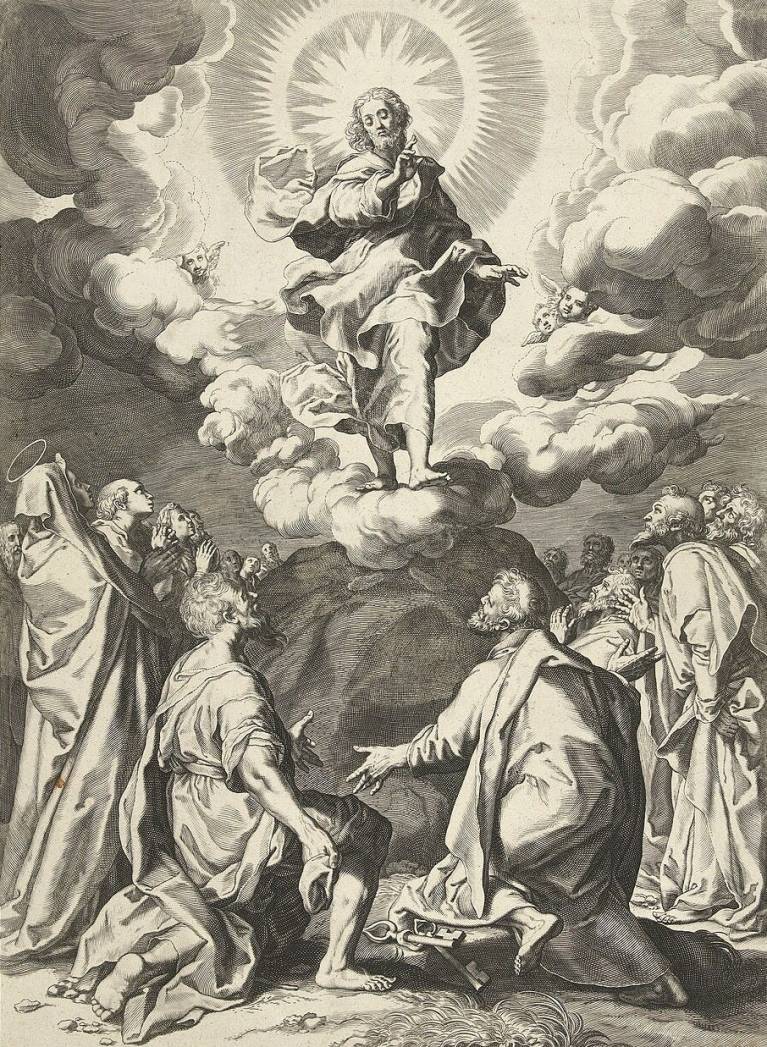
We began with the prophetic foretelling of his coming in Advent. We celebrated his birth at Christmas. We remembered those moments when it was revealed to us that he was not just an ordinary human being during the feast and the season of Epiphany. We have marked major milestones in his life: his circumcision as one born under the law, his presentation in the temple as a firstborn son, his baptism in the river Jordan. We celebrated his mother’s faith and willingness to serve God with her whole life by bearing his son at the Feast of the Annunciation. We celebrated his adoptive father who put others first ahead of his own interests on the Feast of Saint Joseph. We remembered Our Lord’s triumphal entry into Jerusalem on Palm Sunday as we began our Holy Week and entered with joy on the “contemplation of those mighty acts whereby God has given us life and immortality.” We sat with our Lord at his last supper, watched him celebrate God’s freedom by breaking bread and passing a cup of wine and giving the action new significance and meaning. We watched him wash the feet of his disciples. We heard him praying to his father in heaven. We saw him arrested and falsely accused. We were witnesses to his sham trial by the powers of this world, both Herod and Pilate. We saw him beaten. We participated in his condemnation, calling along with the crowd for him to be crucified. We followed him with the two criminals to the place called the skull, Golgotha, where he was nailed to the cross in a display of human justice. We heard his last words of anguish and forgiveness. We watched him die. We buried him. We waited. On Easter Sunday morning we went to the tomb with the women and found it empty. We saw the resurrected Christ, in flesh and blood, alive again. We questioned with Thomas whether it could be true. We met him in the breaking of the bread on the road to Emmaus. After 40 days we were witnesses to his Ascension into heaven, an event for which this church stands as a memorial. And then, just last week, we remembered the descent of the Holy Spirit on the disciples at Pentecost, 10 days after the Ascension.
In six months, we have journeyed through the major moments of a life of thirty-three years, and we do this every year. Every year from Advent through Pentecost, December through May or June, we cover this same ground and tell these same stories and remember this same history. And then we come to today, Trinity Sunday, which isn’t about a historical event at all. Trinity Sunday is not about a moment in the life of Jesus. It is a pause or a break, halfway through our liturgical year, and at the end of our retelling of all these major stories, it is an interruption to remind us of what these stories are really all about. God. All of this time these past six months, we have not just been talking about the life of one man…we have been talking about God. Jesus was not just a great guy, a do-gooder, a philosopher or a teacher. Jesus was God. He was one with the God that created the universe in the beginning, and he was one with the spirit that filled the disciples after his departure. He was a human like us, but also not like us. Our scriptures bear witness to a God who is not simply some caricature of a wise old grey-haired man in the sky, but is in truth a complicated being, beyond or comprehension and understanding, that nonetheless has embraced humanity in a very unique way. Our God has been revealed to us in the Father, and in the Son, and in the Holy Spirit. That is the Holy Trinity. That is our faith. That is the God that we worship here throughout the year, and we reaffirm this every time we stand to say the creed in mass.
On this Sunday, as we remember and proclaim the mystery of the God that we worship, our Gospel reading is Jesus’s last message to his disciples as it is recorded by Matthew. This passage of scripture is otherwise known as the Great Commission. These are Jesus’s final instructions to his disciples and to us.
“Go therefore and make disciples of all nations, baptizing them in the name of the Father and of the Son and of the Holy Spirit, and teaching them to obey everything that I have commanded you. And remember, I am with you always, to the end of the age.”
Go. Make Disciples. Baptize. Teach. Remember. Jesus’s last words. Go. Make Disciples. Baptize. Teach. Remember.
Jesus leaves us with hope for a life and a world to come, but he also leaves us with instructions, a commission, a mission, here in this world, in this life, in this place, on this day, half-way through this year. For six months we have heard and recalled the wondrous, miraculous events of our Lord’s life. We have remembered how our God was born and lived and died and rose again. Now, as we transition into what the church sometimes calls “Ordinary Time” that season after Pentecost or after Trinity, when the vestments are green, our focus shifts from the miraculous to the mundane. What does Jesus have to teach us about everyday life? We are proclaiming today, as we always do, that Jesus was far more than just a teacher, but he does teach us. He also commands us to teach others. There are still miraculous events recorded in our gospels in Ordinary time, but we also hear a lot of instructions that average ordinary folks like you and me can follow, even if imperfectly and inconsistently. This God that we have met in the Father, and in the Son, and in the Holy Spirit is not done with us.
For the last six months we have been looking up: to the star and the angels that heralded our Lord’s birth, to the cross and the dark clouds of his death. We looked up to see Jesus ascend into heaven, and we looked up as the spirit descended in tongues of fire. For six months we have been looking up, but now it is time to look down and around. There is still work to be done here on this earth in which we live. We might not be called to save it by ourselves. Maybe we can’t fix everyone or everything. Maybe we don’t even need to try to do that. God doesn’t expect us to do the impossible. But God, the mystery that is Father, Son, and Holy Spirit, does give us work to do.
Go. Make Disciples. Baptize. Teach. Remember.

