Readings for Sunday, June 22nd, 2014:
Genesis 21:8-21
Romans 6:1b-11
Matthew 10:24-39
Readings for Sunday, June 22nd, 2014:
Genesis 21:8-21
Romans 6:1b-11
Matthew 10:24-39
The following sermon was preached on Pentecost Sunday, 2014, immediately before our first Pentecost Sunday Gospel Brunch and Hymn Sing.
Today is the Feast of Pentecost. A day particularly devoted to the Holy Spirit, a powerful force that, like the wind, we cannot see or touch, but can only feel and observe the effect that it has. We remember on this day how after Jesus had resurrected from the dead and ascended into heaven, that it was the Holy Spirit that came and led the disciples, filled them with power and gave them the courage, the conviction and the skill to preach the gospel to the ends of the earth.
Every year we observe this festival, because it is from this point that the church is actually born, an institution that we hope and we pray continues to be led by the spirit. But whenever the Day of Pentecost comes up, people don’t usually ask me about that Pentecost Day 2,000 years ago; invariably I am asked about what I think of Pentecostals.
Are they really feeling the Holy Spirit, or is this show, delusion, suggestion?
When people ask me if some of these people are phonies, then my answer has to be yes, we know that there are religious phonies in every group; we know that there are people that are drawn to make spectacles of themselves in every group, we know that there are hucksters, false prophets, people pandering for money, evangelists trying to control people in every denomination.
I am the biggest cynic when it comes to religious frauds, and yet…
I have experienced miraculous healing
I have felt the weight of the Holy Spirit at my ordination
I feel the Holy Spirit every time I say the mass
It is as if the Holy Spirit has tried to say to me that yes, my people may sometimes be phony, but I am not. I am still here, I am real and I have genuine power to transform your life.
Part of the result of living in a modern society is that we live in a world of fake things: artificial lighting, coloring, flavoring, synthetic fibers, fake food. We know that fake things aren’t good for us: over time they damage our bodies, but when we encounter things like fake food, we don’t just stop eating. We just look harder for the stuff that is real.
We should do the same with religion: when we encounter fake people, we cannot just abandon faith altogether, we have to look harder, dig deeper, and grasp onto those experiences of faith which are authentic. As followers of Christ we are called to be authentic in our worship of him and in our witness to the power of the spirit, because in a world full of fakes, we are learning that the things that are genuine and true have the greatest value.
The Pentecost story is not about speaking another language, nor is it about miraculous visions or excessive enthusiasm in worship: if I witnessed a member of this church, stumbling, crying and speaking incoherently, I would probably be more inclined to call them a cab than to call them a prophet.
What the Pentecost story is about is God giving his disciples power to overcome barriers.
The greatest barrier the world has right now is often the belief that Christians are phony, hypocritical or deluded. Our challenge as a church is not learning to speak Spanish, or French or even modern English, our challenge is learning to speak to the modern world about an ancient faith, and to be authentic to both. The Holy Spirit gave the first disciples the power to preach the Gospel to the world they lived in, I have every confidence that it can give that same power to us as well.
Mary has a remarkable story to tell.
She came to her friends proclaiming that she had seen Jesus, their leader who had just been killed, and he was alive. It was a completely unbelievable story and in the Gospel of Luke the disciples don’t believe her at first.To the other disciples, the words of Mary and her companions seemed “as nonsense.” But there was something about the behavior of these women that Peter found to be compelling. Peter might have doubted Mary’s story, but he probably didn’t doubt that she believed it: her actions were evidence that she had witnessed something profound.
You might doubt Mary’s sanity, but you don’t doubt her sincerity.
Later on we know that Peter has an experience with the risen Christ himself, and he is compelled, just like Mary was, to proclaim it. You may not understand everything that Peter is trying to say in the Book of Acts this morning, but one message comes across clearly: “we are witnesses to all that Jesus did both in Judea and Jerusalem. They put him to death by hanging him on a tree; but God raised him on the third day and allowed him to appear. He appeared to us who were chosen by God as witnesses, who ate and drank with him after he rose from the dead.”
You may not understand everything that Peter is talking about, but you recognize that something has happened that has changed him: while our Lord was alive Peter was willing to deny him three times; now he is not only publicly claiming him, he is risking his life by doing so to the Gentiles. Peter could deny the Christ that Christ walked the Earth like you and me, but the resurrected Christ he could not deny: he was willing to die for him.
Then there is the Apostle Paul. A group of us got together this lent to read the letters of Paul, including First Corinthians. When you read his letters, you probably don’t agree with everything Paul says. You may not always believe that Paul is as humble as he says he is. Paul can be a difficult character and you may not even like the Apostle Paul; you may doubt his judgment, you may doubt his humility, you may even doubt some of his boasting about the great work that he is doing; but the one thing you do not doubt when reading Paul is that he believed that Jesus Christ died and rose again.
You don’t really know what else Paul knows about Jesus, you don’t really know what else he believed, but you know that he believed in the Resurrection; that one truth comes shining out of all that he wrote and probably all that he did. Paul may not be the most likeable guy, but you can’t help to see beyond all of his issues and see an individual whos life has been profoundly transformed by an event that he didn’t even believe the first time he heard it.
Mary and Peter and Paul were all real people. They had real problems and hang ups just like the rest of us. They all made bad decisions, they all made mistakes. Just because we now call them saints does not mean that they were flawless. What they have in common is that they were all witnesses to something spectacular that profoundly changed their lives.
We live in a time when everyone has an opinion about the church: some say it needs to be more conservative, some say it needs to be more liberal. Sometimes it seems like there is this tug of war going on and there are countless books written on the future of the church and the future of Christianity and faith in general. There have been times when I have tried to wade through many of these arguments and theories about the future of the church, but no more. Because the more of this stuff that I read, the more I question: what does this have to do with the Resurrection?
That really should be the litmus test for everything we do as the Church: does it in some way, point to or proclaim the Lord’s Resurrection? The church was built on this proclamation that Jesus, a Jewish prophet living 2,000 years ago, was put to death, and a few days later was alive again; not a vision or a fantasy, but a real human being, dead and restored to life. The church has not been full of likeable characters throughout its history; we haven’t always done the right thing; we haven’t always been good; we don’t always make sense. From that first Easter Sunday to this one: the one thing that gives the church its power, the one thing that motivates us, that makes people want to join our ranks, the thing that gives us hope and renews us is simply the proclamation that Mary and Peter and Paul all made this morning: that Jesus Christ wasn’t just a good teacher or a nice man, but that he died and came back to life.
He died and came back to life and promised his followers that he was preparing a place for them in the kingdom of heaven, and if that is true then what else matters?
What does it matter if our numbers dwindle?
What does it matter if people criticize us?
What does it matter if people say we are too liberal or conservative?
What does it matter if we are cast down?
What does it matter if we are sick or dying?
What does it matter if we are gay or straight or divorced or married?
What does it matter if we are black or white red or blue?
We as Christians are witnesses to the most unbelieveable thing in the history of the world: the power of the Resurrection is that if it is true, then nothing else really matters. That truth has the power to change our lives and transform us as a people. If it is true then we worship a powerful God that loves us and will not leave us in the pit of death. If it is true then we have a holy hope of immortal life with those we love in the heaven that Christ has gone to. If it is true then Christ has indeed given us the power to heal and forgive and to cast out the demons on this world. If it is true, then there is more power and mystery in this world than we ever imagined.
We come here today to stand in a long line of witnesses. Like Mary, and Peter and Paul we are here to proclaim that Christ has died, Christ has risen and that Christ will come again. Whether this is your first time here or whether you worship here everyday: this is what we are about: Proclaiming the Resurrection of Christ and trying to understand everything that that means in our lives. We are not a perfect people; we are not all good, sometimes we may not all be likeable. We aren’t here to make arguments about why the Resurrection could have or must have happened; and we aren’t likely to yell about it on the street corner. What we will do is try to live our lives as witnesses to the power of God working within us and the hope we have of eternal life in God’s kingdom. This is a nutty bunch, and it’s a quirky religion. There may be times when you will have good reason to doubt our sanity, but it is our hope that you will never doubt our sincerity.
Remarks made at the memorial for Gary Morris
In my church tomorrow we will be reading a passage from the book of Deuteronomy:
Deut 34:1 (NRSV) Then Moses went up from the plains of Mo’ab to Mount Ne’bo, to the top of Pis’gah, which is opposite Jericho, and the LORD showed him the whole land: Gil’ead as far as Dan, 2 all Naph’tali, the land of E’phraim and Manas’seh, all the land of Judah as far as the Western Sea, 3 the Neg’eb, and the Plain–that is, the valley of Jericho, the city of palm trees–as far as Zo’ar. 4 The LORD said to him, “This is the land of which I swore to Abraham, to Isaac, and to Jacob, saying, “I will give it to your descendants’; I have let you see it with your eyes, but you shall not cross over there.” 5 Then Moses, the servant of the LORD, died there in the land of Mo’ab, at the LORD’s command. 6 He was buried in a valley in the land of Mo’ab, opposite Beth-pe’or, but no one knows his burial place to this day. 7 Moses was one hundred twenty years old when he died; his sight was unimpaired and his vigor had not abated. 8 The Israelites wept for Moses in the plains of Mo’ab thirty days; then the period of mourning for Moses was ended.
9 Joshua son of Nun was full of the spirit of wisdom, because Moses had laid his hands on him; and the Israelites obeyed him, doing as the LORD had commanded Moses.
10 Never since has there arisen a prophet in Israel like Moses, whom the LORD knew face to face. 11 He was unequaled for all the signs and wonders that the LORD sent him to perform in the land of Egypt, against Pharaoh and all his servants and his entire land, 12 and for all the mighty deeds and all the terrifying displays of power that Moses performed in the sight of all Israel.
When I was reflecting on what I wanted to say to everyone and how I wanted to honor Uncle Gary the above passage kept running through my head, and this is what I would say if I were there:
Moses never made it into the Promised Land. It is important for people of faith to hear that and understand it. Moses who witnessed so many of God’s miracles; Moses who led the children of Israel through the Red Sea and out of the slavery they knew in Egypt; Moses who received the ten commandments from the burning bush; that same Moses who spent so much of his life leading his people into the land that they had been promised by God, never made it there himself.
I have stood on that very spot on the top of Mount Nebo and if you look westward, in the far distance you can see the spires of Jerusalem. There were no spires in Moses’ day, but I can imagine how he must have seen the tops of those mountains and wondered what wonderful land God was leading his people to. How sad it must have been for Moses to stand there and know that his life’s journey would end before he reached his intended destination. Those that he loved would be going on without him and he would have to settle for the brief glimpse that he had of the Promised Land.
Moses was the most honored prophet in Old Testament times, even though by our modern standards we would say that he failed to reach his goal. He was honored because he was willing to go on the journey. He kept going even when everyone else wanted to turn back. Moses’ entire life was about one great journey: from the moment he was dropped into the Nile, until his death near the banks of the Jordan, his life was less about where he had been and more about where he was going.
I think the story of Moses standing on top of Mount Nebo and looking across the valley to the Promised Land is inspirational whenever we talk about someone who dies before he gets to where he really wants to be. Some of us are fortunate enough to achieve many of our goals in this life, but many of us aren’t. I wouldn’t say that Uncle Gary had much in common with Moses, they both spent their lives wandering in a way, but after very different things; but when I think of a man sitting on top of a mountain looking off into the distance and pondering what his life could be and wondering what God has in store for him, I do see a connection.
After so many years of struggling and wandering, I think Uncle Gary finally got a glimpse of where he wanted to be shortly before he died. Just a few weeks ago he was talking about how he wanted to make his father proud of him. I have no doubt that he wanted to be a better husband, father, grandfather, brother, uncle, and musician as well. I think that he could look in the distance and see the direction that God was calling him, even though he didn’t completely make it there. Maybe one of the side effects of being a mountain man is that you are always looking into the distance and wondering what is just over the next hill. The truth is, we just don’t know. None of us would have guessed a few weeks about when we were gathered together to remember Papa that we would be together again this soon to remember Uncle Gary. Life has a way of speeding up as we get older, and no matter how much it may feel like death separates us from those we love, we have to on some level realize that it never separates us for very long. We never know how long we have, which is why we have to make each and every day of the journey count. We may never get to where we want to be; but the important thing to remember is that God honors us whenever we say yes to the journey, even if through our own faults or circumstances we are unable to realize all of God’s promises in this life.
I imagine that it must have been very hard for the children of Israel to leave Moses behind, but they had to. The only way that they could honor his life was by pressing on and moving into the land that Moses had longed for, but only got a glimpse of. They didn’t create a memorial or shrine to him, which is why they never knew where he was buried: his life wasn’t about building a tribute to where he got, but by always remembering where he wanted to go.
I don’t think that Uncle Gary ever completely got where he wanted to be in life, many of us never do, but I do think that he had hope for what he could become. He had said yes to the journey and was trying to head in that direction when God finally called him home. We can always remember Uncle Gary as he was, but we also should not lose sight of who he wanted to be. We should also continue to look into the distance and think about God’s promises to us and how we can continue to move toward them and live into them. We can honor him by continuing the journey that he started because we all have a father waiting for us just across the Jordan in the Promised Land, and it is never too late to make him proud.
Eulogy preached at the memorial for Omas Morris
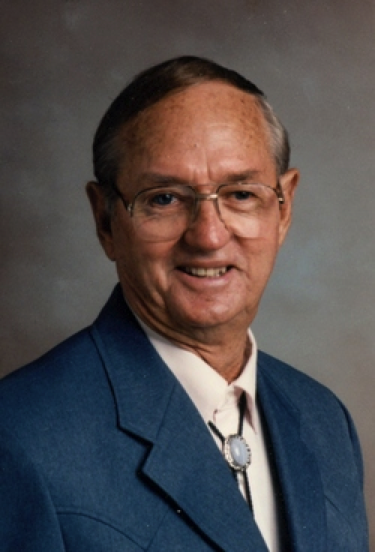
Popa was not always the easiest person to love. When I was very little I used to dread it when he came around because I knew he was going to pinch me, which he always did sometimes to the point of making me cry. I know now that it was just one of Popa’s unique ways of showing affection. He was a loving man, but we all know that he could be a bit obnoxious. He had a habit of saying the wrong thing, he could be temperamental, and he was incredibly stubborn. But despite his many faults he was a lover of many things in his life, including his friends and family, and he found ways to show that love even when he had trouble expressing it directly.
Popa loved his life very much and he really lived it on his own terms. Anyone that knew pop very well, knows that once he got it into his head what he wanted to do, that is what he was going to do. He might ask your opinion, but that never really seemed to make any difference. He was hyper-health conscious to the point of being neurotic, and in his later years he lived in constant fear of getting sick, but when he was younger he lived as if he were invincible and he bore the scars to prove it: one good eye, one good arm, one good foot. Going on road trips with him was something of an adventure, because you knew that he couldn’t see well and he drove accordingly. But despite all of his injuries and ailments, Pop still make a point to do the things in his life that he wanted to do. He had fun, and he was fun to be around. He traveled, he hunted, he fished and of course, he sang.
I think Popa found in his music a way to express emotions that he otherwise had difficulty talking about. I’m not sure if he loved country music because it reflected the life that he lived, or if his life was the way it was because of the music he listened to, but Pop’s life was very much like all those country songs he sang. I think it is what helped him to make sense of his life: he could sing about the green, green grass of home, he could sing about his momma’s love, he could sing about staying up all night in honkey tonks and we know that he could sing about finding love and losing it and finding it again, because that was his life and he could sing about it even if he couldn’t talk about it. I remember when Grandma Essie was aging and living in a nursing home going to visit her with Popa and the rest of the family on her birthday. Now if you knew Popa and Grandma Essie, you knew that they both got extremely frustrated with each other and bickered all the time, especially when they were living together, but in many ways they were very much alike and maybe that is why they butted heads. He wanted to read a birthday card to her that expressed how much he loved her, but he just couldn’t and he got so choked up that he just couldn’t read it. After she passed away he had a real hard time singing her favorite songs too. If Popa couldn’t even sing what he was feeling then you know how deeply he felt it.
Popa loved life and he really lived it. He always seemed to be on the go somewhere. When I was little we travelled around with him in the back of his camper van: going to the zoo, Lion Country safari, going to St. Augustine, visiting family in Georgia, singing music and stealing onions. When I was a little older he traded in the camper van and bought a boat and for a while he quit being king of the road and took up some ocean front property. For a man with one good eye, one good arm and one good foot he did pretty well fishing and driving the boat and swimming back to the shore every time he fell off the dock. After the boat got to be too much for him he sold that, bought the music trailer and became the honkytonk man. He was always on the go doing something, even if it was just taking the dog for a walk, and incidentally if you knew Pop, then you also knew how much he loved each of the dogs that he had. It was really only over the last couple years that Pop really visibly started to slow down and you knew that for a man who spent so much of his life on the go and singing, that for him not to want to do either meant that he was really declining.
Life has a way of pulling us apart from those we love. Our careers take us in different directions, our individual families fill our daily lives, our personal interests distract us, our health limits us, but no matter what separates us in this life I have to believe that God has the power to bring us back together. When life pulls us apart and separates us, God can pull us back together. If you knew Grandma Essie, then you knew that her favorite scripture passage was Romans 8:28: “remember that all things work toward the good to those who love God, to those who are the called according to his purpose.” It is a great passage, but if you keep reading there is what I think is an even more important passage to remember, especially on a day like today: Romans 8: 38: “For I am persuaded that neither death nor life, nor angels nor principalities nor powers, nor things present nor things to come, nor height nor depth, nor any other created thing, shall be able to separate us from the love of God which is in Christ Jesus our Lord.”
No matter what may separate us in this life, God has the power to bring us back together. I believe in a God that is merciful and loving and stronger than death and I believe that that God has reunited Pop with Grandma Essie, who I am sure never stopped praying for him even after her death. I believe that that same God can reunite the rest of us as well. When Grandma Essie died, my dad stood up at her funeral and read the lyrics to one of her favorite songs, which really expressed what would have been her last words to any one of us: “If we never meet again this side of heaven, I will leave this world loving you.” That of course was Grandma Essie’s song. I wanted to think of what Popa’s song would be and when I was thinking of all the songs that I associated with him there is one that stood out and when I reread the lyrics I realized that these weren’t Popa’s words to us as much as they are God’s words to him today. So for Popa’s sake I hope that God can do his best Jim Reeves impersonation today and sing this song to him:
Welcome to my world
Won’t you come on in
Miracles I guess
Still happen now and then
Step into my heart
Leave your cares behind
Welcome to my world
Built with you in mind
Knock and the door will open
Seek and you will find
Ask and you’ll be given
The key to this world of mine
I’ll be waiting here
With my arms unfurled
Waiting just for you
Welcome to my world
This was the first sermon delivered by Father Kevin Morris as 9th Rector of The Church of The Ascension, Rockville Centre
My favorite prayer in the entire Book of Common Prayer is the one that we say right before we receive communion. It is know as the prayer of Humble Access:
We do not presume to come to this thy table, o merciful Lord, trusting in our own righteousness, but in thy manifold and great mercies. We are not worthy so much as to gather up the crumbs under thy table. But thou art the same Lord whose property is always to have mercy. Grant us therefore, gracious Lord, so to eat the flesh of thy dear son Jesus Christ, and to drink his blood, that we may evermore dwell in him, and he in us. Amen.
As our prayers go, its not terribly ancient, Archbishop Cranmer wrote it in 1548, with the intention that it would be a private prayer of the priest, not something that was said by everyone. Part of his inspiration for this prayer comes from today’s Gospel. The woman who throws herself at Christ’s feet and begs for even a scrap from his table. Kneeling down and saying this prayer before we receive communion is meant to invoke that image of the this woman who had no reason to expect anything from this Jewish preacher.
She’s a Syrophonecian woman, she’s greek. Different race, different religion. No one really knew at this point that Jesus’s mission was to the gentiles too. As far as anyone knew he was just a prophet, a preacher and a healer within Judaism. She had no reason to expect that this man would want to have anything to do with her. But she was convinced that he was a holy man who had the power to cast out demons. She doesn’t trust in her own worthiness or deserving, she trusts in Christ’s mercy and grace. She shows to Christ that she is willing to accept whatever he is willing to offer her, even if it is just a crumb, and to do so gladly. It is that profound humility that she displays that so moves Christ to grant her request.
We say the prayer of humble access every week. It’s short, but it says so much about who we are as Christians, what we believe (or at least what we should believe), and how we approach Christ and his altar. I say what we should believe, because even though we say this prayer weekly, we say that we are not worthy, we say that God’s property is always to have mercy, we say that Christ dwells in us and we in him, we say all these things but what we actually believe is revealed more by our actions than what we say. No matter what we say before we approach the altar, what we truly believe will show forth in our lives. Children are particularly good at picking up on this: if what you say is inconsistent with what you do, then there’s a problem. But its not my problem or your problem, its a human problem. We are none of us consistently good or righteous all of the time, not now, not ever.
That is precisely the problem that James was addressing in the Epistle that we heard today. James is speaking to a group of Christians who are letting their own judgements get in the way of their faith in Christ’s love and mercy. James begins by questioning this church about what it really believes: “do you with your acts of favoritism really believe in our glorious Lord Jesus Christ?” it appears that they think that rich people are in some way more blessed than poor people; that is at least, what their actions seem to indicate. They give them preferred seating, they give them more attention, and for what? In the end they don’t turn out to be better people and in some cases, far worse, at least according to James. But James isn’t picking on rich people, that’s not the point of his letter.
He uses wealth as an example of how we often misjudge people and making judgements is the big problem in this letter. James says, in a sense, that you may think you have it all together, you may think that you are loving your neighbor, or that you aren’t committing adultery, or that you haven’t killed anyone or done anything really bad, but chances are there is some law that you are breaking, or something that you aren’t terribly proud of. We do well if we fulfill the commandments, and we should always strive to be just and holy people, but we must always remember that in some place in our lives and in some way we are bound to fall short; everyone, rich and poor.
The answer, is not judgment, but mercy. Mercy triumphs over judgment. It is more important for Christians to show mercy than good judgement. We may not be able to be consistently good, but we can be consistently merciful. It was not Christ’s good judgment that the woman in today’s gospel was appealing to, it was his mercy. And it was his mercy that moved him to grant her request, not her worthiness. The same is true for us. Each and every week we kneel down and acknowledge our unworthiness but more importantly we proclaim God’s mercy. The true joy in being a Christian comes from knowing that we don’t have to be worthy, we worship a God who is merciful. We do, however need to learn to receive this gift, this grace from God, so that we can then show it and give it to others. In that way our prayers will be consistent with our lives, and that way people won’t have to wonder, as James did, about what we really believe.
This is my first Sunday, and first sermon, as the rector of this fine church, and I am here to tell you today that I am not worthy of this calling, nor am I worthy of the priesthood, nor am I worthy to receive Christ’s body and blood at the altar. But before you begin to worry that you made the wrong choice, let me allay your fears: nobody else is worthy either.
Nobody is worthy of such great things. Who could be? If we were worthy or entitled to it it wouldn’t be such a great gift, now would it? It is all the grace of God. God’s love and mercy are free gifts, they are not things that we earn or buy. I give thanks to God for calling me to all of these things, to this church, to the priesthood and most importantly to the altar and Christ’s body and blood. It is the mercy and grace of God alone that allows us to evermore dwell in him and he in us. Thanks be to God.
Sermon delivered on Easter Sunday 2014
Sermon delivered on the Second Sunday in Lent 2014
Readings:
Genesis 12:1-4
Romans 4:1-5, 13-17
John 3:1-17
Sermon for Good Friday 2014
Last night we stripped the altar bare, removed all the fine linens and cloths and fancy fabrics, and washed and cleaned the altar. Of course, it’s really just a symbolic act. This altar never really gets dirty, most altars don’t. So it would be easy for us to overlook, or to forget, just how messy and dirty sacrifice can actually be.
Many years ago, when I was a seminarian at Christ Church in New Haven, the church produced a poster to advertise our Holy Week services. And on the poster was a painting of a lamb tied up and lying upon an altar. You may have seen it, the poster is in my office. We got a number of complaints about the poster from people that were horrified that a Christian church would depict a lamb being prepared to be slaughtered, and right at Easter. Our response was “well what did you think that the Jews were doing to the lambs?” They weren’t playing with them. The Passover lambs were slaughtered on the altar and it was bloody and brutal.
We have for too long allowed people to sanitize and sterilize our religion to the point where it is in danger of becoming nothing more than a philosophy of being nice: a bland milk-toast way of feeling good about ourselves and perhaps a little self-righteous. It makes us too uncomfortable if we have to confront what sacrifice is really about. We, like Pilate, don’t want any blood on our hands. We want to be good people without getting messy. We want to show up looking clean and pretty on Easter Sunday, without having to deal with the blood and gore of Good Friday. There are plenty of people who would love to sell you that religion. The stores see nothing inherently offensive or insulting about selling chocolate crosses and I assure you that if you go to the Holy Land theme park in Orlando, you will not see any lambs being slaughtered. We want the glory without the pain, but the truth is you can’t have one without the other. There is no Easter without Good Friday. There is no life, without death.
Perhaps we have been too insulated against death in our modern world. We buy our meat in nice little packages, all cut up so that it bears no resemblance to the animal it came from, so that we won’t have to think about the fact that this very food which gives us life, is there for us because of the death of another living creature. There aren’t many of us here that have had to kill our own dinner, and if we have, it was mostly likely for sport and not out of necessity.
We don’t want to think of death as a necessary part of life, it makes us uncomfortable. It causes our kids to ask us questions that we would rather not answer. So instead of dealing with reality, we whitewash it. But to do so only cripples our faith and prevents it from being very useful when we encounter pain, suffering, blood and death in the real world. Furthermore I am convinced that turning our faces away from the painful reality of sacrifice is not only an insult to our intelligence (because deep down we know better), but it is also an insult to our Lord.
It insults our Lord because it diminishes the significance of his suffering. If we want to act like death isn’t a big deal, or that sacrifice is a relatively easy thing, then what was the point of the cross? What was the point of God suffering and dying for us if it scarcely gets our attention? The point of the incarnation is that his wounds are real wounds, and the crucifixion hurt him as much as it would have hurt any of us.
The idea that God would be willing to suffer for us is one of the core ideas of Christianity. It is critically important, because suffering and death are a necessary part of life. We cannot avoid them. If we want our life to have meaning, even in the midst of suffering, even on the brink of death, then we need to be able to look to a God who understands that suffering. We need to be able to look to a God who knows our pain because he has walked that way himself. That is the power of our faith. It’s that it can take the worst pain, the worst suffering, the worst evil and transform it into something that has been redeemed by God.
Turning our heads away from the pain of sacrifice may alleviate our internal discomfort momentarily, but in the end it makes our suffering so much worse, because it strips our life and our faith of any real meaning and power.
One thing I like about old hymns, is that people a couple generations ago were not quite as squeamish as we are now, so the imagery that was used is often more graphic and blunt. Consider these hymn titles:
There is power in the blood
Are you washed in the blood?
Covered by the blood
Nothing but the blood
There is a fountain filled with blood, drawn from Emmanuel’s veins
The list goes on. The point is that if we want our faith to have real power to save us and comfort us when life gets ugly, then we had better get over our squeamishness now and start looking at the blood of Jesus. We need to realize that the life that we often take for granted is given to us by the sacrifice of others. Our spiritual life, our eternal life is given to us by the sacrifice of Christ, and although our altar never gets any blood on it, we need to know that the sacrifice that Christ made, which we benefit from, was indeed a bloody one. Just like the altar before the temple in Jerusalem would have been covered with blood, so too was the cross of Christ, the altar on which our Passover lamb was sacrificed.
Today we are called to observe Jesus’s suffering and pain. We are called to draw near to the cross, to venerate it and to recognize the sacrifice that was made there.
My question to you is this:
Can you get close enough to the cross to actually get blood on you? Can you stand there with John and Mary and not look away? Can you not look away from his nakedness and his wounds?
The power of the cross is that if we can resist the temptation to look away from our Lord in the midst of his pain and suffering, we just may find that he is right there with us, when we are in the midst of ours.
 Inwardly Digest
You must be logged in to post a comment.