
Sermon for August 30, 2026
Readings:
Jeremiah 15:15-21
Psalm 26:1-8
Romans 12:9-21
Matthew 16:21-28
If y’all thought that there was a chance that I would stand up here today and NOT talk about Dolly Parton, then you were mistaken.
Now I don’t always feel compelled to address current events in my sermons; more often than not I don’t. And I certainly don’t feel the need to talk about the death of every singer or star, but this death feels different. In fact, I haven’t witnessed such a universal grief response to the death of a public figure since the late Queen died. I know that I have felt heartsick and heartbroken, like so many countless millions of others, as I have mourned someone that I never actually met but that has always just been a part of my life. Still, I could have put all of those thoughts and feelings into a private conversation, or a blog post, or a letter, or some other format other than a Sunday sermon, were it not for our scripture readings this morning. Specifically, our reading from Paul’s letter to the Romans. The connection between what Paul wrote and how Dolly lived is something I cannot ignore this morning.
Now Paul was writing to a community that was pretty divided. The Church in Rome was a mix of Gentile Christians and Jewish Christians and that was a source of real tension and conflict. Different traditions; different interpretations of scripture; different ethnicities. And Paul has a lot to say in his letter about what it means to have faith in Jesus, and specifically how it is Jesus who saves us and not our own good works. Paul is clear that Jesus is the Messiah, Jesus is the savior. What that means is that we followers of Jesus do not get to be holier than thou or self-righteous, as if our good habits and opinions are going to save the world or even save us. None of us live according to God’s law faultlessly; none of us is perfect. Only Jesus. But that does NOT mean that there is nothing for us, as Christians, to do in this world. We may not be responsible for salvation, but how we live makes a difference. That is why Paul says what he says in the part of his letter that we heard this morning. Let’s hear it again:
Let love be genuine; hate what is evil, hold fast to what is good; love one another with mutual affection; outdo one another in showing honor. Do not lag in zeal, be ardent in spirit, serve the Lord. Rejoice in hope, be patient in suffering, persevere in prayer. Contribute to the needs of the saints; extend hospitality to strangers.
Bless those who persecute you; bless and do not curse them. Rejoice with those who rejoice, weep with those who weep. Live in harmony with one another; do not be haughty, but associate with the lowly; do not claim to be wiser than you are. Do not repay anyone evil for evil, but take thought for what is noble in the sight of all. If it is possible, so far as it depends on you, live peaceably with all. Beloved, never avenge yourselves, but leave room for the wrath of God; for it is written, “Vengeance is mine, I will repay, says the Lord.” No, “if your enemies are hungry, feed them; if they are thirsty, give them something to drink; for by doing this you will heap burning coals on their heads.” Do not be overcome by evil, but overcome evil with good.
Do not be overcome by evil, but overcome evil with good. Those are beautiful words, but they are hard words. Because evil surrounds us. It infiltrates our lives in big ways, but I think more often in small ways. Little comments, opinions, negativity, little actions that are meant to separate us from others, or put others down. Part of being human means that we all have that capacity or impulse to meet evil with evil or hate with hate. And the result is that the world can sometimes feel like a never-ending spiral of retribution and revenge. How do we fight this? How do we break this cycle? How do we faithfully follow the sinless Messiah, when we are so weighed down with sin ourselves, hurt both by our own sins and by the sins of others?
The answer that Paul offers the Church in Rome is simple, but not easy: through love, through constantly discerning between good and evil, through affection, through honor, through service, through prayer, through generosity, through hospitality. It means being humble, not haughty. It means giving up on getting even. It means letting go of having the last word. Ultimately it means having more faith in God’s goodness than you have in your own. Have more faith in God’s goodness than you do in your own. That can be a tall order sometimes.
I think that it could be possible to read Paul’s words this morning and see them as an impossible task. Is it really possible to live that way? In this day and age with a camera in every hand and an opinion on every lip, is it really possible to live peaceably? Can good still overcome evil?
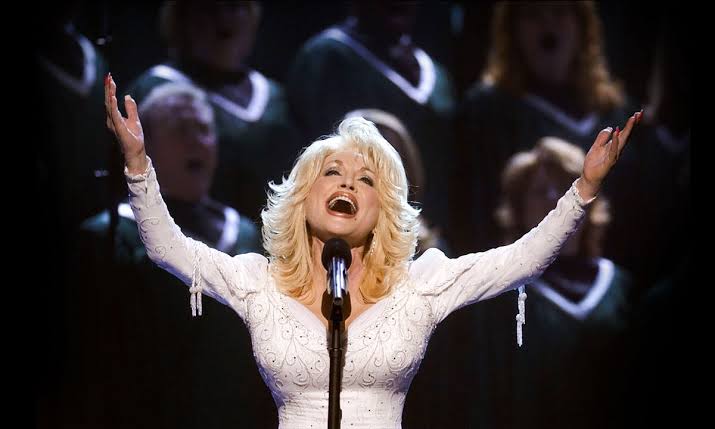
Well, for a long time, a lot of us have found the living embodiment of those values that Paul talks about in the woman that so many millions are mourning this week. Dolly Parton was more than just a country singer, or a movie star, or even a pop-cultural icon. She was that most powerful of things: a symbol. And very much like Queen Elizabeth II, she understood the importance of being a unifier; a symbol that brings people together. That builds up and celebrates, rather than tears down and divides. It is hard work as both Dolly and the late Queen would testify and demonstrate, but it was powerful and important work. Dolly stood up for her beliefs, but did so as inoffensively as possible. She shared her love more than she shared her opinions. She was a brilliant businesswoman and an incredibly talented musician, and that’s great, but what I think most people are mourning this week is that more than anything else she made us all feel loved. She lived her life as if it were her job to love others, and she did it better than anyone else.
I think that is why Dolly’s death feels like such a personal loss to so many people, like myself and like many of you, that never knew her in person. No matter what, she made us feel loved. Paul’s words this morning are not some pie in the sky fantasy. Dolly proved that even in the world we are living in right now, it is still possible for us broken humans to love genuinely, to live peaceably with people that are different than you, to live humbly, to give generously and to overcome evil with good. It is possible, but it is also hard work. But Paul and Dolly remind us this week that it is work that we all must do. All of us. Not just the rich and famous, but all of us have the capacity to be a little more like Dolly. The spirit that moved in her, I am convinced, was a lot of the Holy Spirit, and we have access to that spirit too. I am not generally in favor of conferring sainthood on people right after they die, and certainly not before they die, but for Dolly I might be willing to make an exception. If a saint is a shining example of living a Christian life, then certainly Dolly was one. Her faith wasn’t just something she talked about; it was something she lived. And our faith, as Christians, is that it is a faith she is still living and proclaiming now even after her death. For to your faithful people Lord, life is changed, not ended. Her work may be different now, but her work goes on. There is much that we don’t know about heaven, but one thing we know for sure is that there is music there. The scriptures tell us so. So Dolly will be right at home. I know somewhere there is a recording of her singing an old hymn about heaven called “The land where we’ll never grow old.” Well for someone that always joked about how much effort and money she put into NOT growing old in this world, or at least not looking old, I am sure she will find it a welcome change to discover when she gets up there to heaven that looking good and staying young come free of charge.

