
Readings:
Genesis 45:1-15
Romans 11:1-2a, 29-32
Matthew 15: 10-28

Readings:
Genesis 45:1-15
Romans 11:1-2a, 29-32
Matthew 15: 10-28
Through him, then, let us continually offer a sacrifice of praise to God, that is, the fruit of lips that confess his name. Hebrews 13:15
In 1920, the Rev. C. J. Smith, then Dean of Pembroke College, Cambridge addressed the First Anglo-Catholic Congress of The Church of England on the history and theology of the sacrifice of the altar. He concluded his presentation with the following prescient observation:
So long as the central act of Christian devotion is thought of only or principally as a means of receiving, so long will religion be centered upon self. But let that central act be recognized as an act of worship and offering and sacrifice, and Christian life, which draws its inspiration and its power from the altar, will more and more become a life which is offered, a life which is made a living sacrifice, a life whose object is not self but God.
Now, more than 90 years later, Holy Eucharist is the principle act of worship among most Anglican churches, which would not have been the case at the time that Dean Smith was making his presentation, but the renewed emphasis on the Eucharist has happened in precisely the one-sided manner which the good dean feared: we think of our worship as a place where we go to get something, not where we go to give something.
Time and again I hear people make comments about “not getting anything” out of church. While I am very sympathetic to people wanting to avoid bad preaching or bad liturgy, having a spiritually edifying experience on Sunday morning might be more dependent on what we are prepared to give than what we are expecting to get. If we aren’t getting anything out of our worship of God, the real problem might be that we aren’t putting anything into it. Maybe it is time for us to start getting less out of our worship.
From the beginning of the book of Genesis to the end of the book of Revelation, the central theme in the human worship of God has been sacrifice. The ritual of sacrifice has taken different forms and the object being sacrificed has varied, but our worship of God has been nonetheless, sacrificial. The supreme sacrifice was that of our Lord Jesus Christ on the cross, which the church has traditionally believed, is made present to us, or re-presented in the sacrifice of the altar or the Mass. Christ does not re-suffer or die anew each time we say Mass, but his “one oblation of himself once offered” is made present to us through his very real presence in the bread and wine on the altar. His sacrifice becomes our sacrifice as he is laid upon our altars.
The sacrifice of Christ is the supreme offering to God, but that does not mean that we are thereby exempted from offering anything ourselves. We offer God our money, we offer God our service, and, most importantly, we offer God our praise. Routinely taking the time to stop and pay attention to God is a sacrifice that we are called to make, not because we expect to receive something in return as payment, but in recognition and thanks for the life that the author of life has already given us.
Our sacrifices can never attain the glory of the sacrifice of Christ, but that does not, I think, make them any less precious in God’s sight. Have you ever received a handmade gift or drawing from your child? They aren’t always the most beautiful things in the world, but to a loving parent they are priceless. So it is with our sacrifices: God’s doesn’t really need them, and they can never be perfect, but they are dear to him nonetheless.
Our modern culture has become far more consumerist than Dean Smith would probably even have imagined and predictably that consumerist culture has bled into our church culture as well. People come to church with the expectation of getting something, not doing something. The idea of sacrifice is becoming more and more foreign to people and the result is a faith that is increasingly centered on self and far less centered on God.
Christ’s sacrifice was an act of giving. It is a truly wonderful and great thing that Christ offers himself to us through the sacrament, and it is a good and devout practice to receive him regularly; but if we are to be Christ-like as Christians then our supreme act of worship should be a reflection of his: it should be an act of giving.
Let us not shy away from speaking of sacrifice in our worship of God; let us emphasize it. Let us remember that we are called to make offerings to God as acts of praise and thanksgiving for the life that we have been given. Let us worry less about what we are getting from our worship and think more about what we are putting into it. In so doing we just may discover that the true power and grace of the Christian life comes more from what we put on the altar, than from what we take off of it.
It’s time we got less out of our worship, and allowed our worship to give God more.
Sermon for Sunday, July 27th 2014
Readings:
Genesis 29:15-28
Romans 8:26-39
Matthew 13:31-33, 44-52
Sermon for July 20th, 2014
Readings:
Genesis 28: 10-19a
Romans 18: 12-25
Matthew 13: 24-30, 36-43

Readings for Sunday, July 13th, 2014:
Genesis 25:19-34
Romans 8:1-11
Matthew 13:1-9,18-23
Readings for June 29th 2014:
Genesis 22:1-14
Psalm 13
Romans 6:12-23
Matthew 10:40-42
Readings for Sunday, June 22nd, 2014:
Genesis 21:8-21
Romans 6:1b-11
Matthew 10:24-39
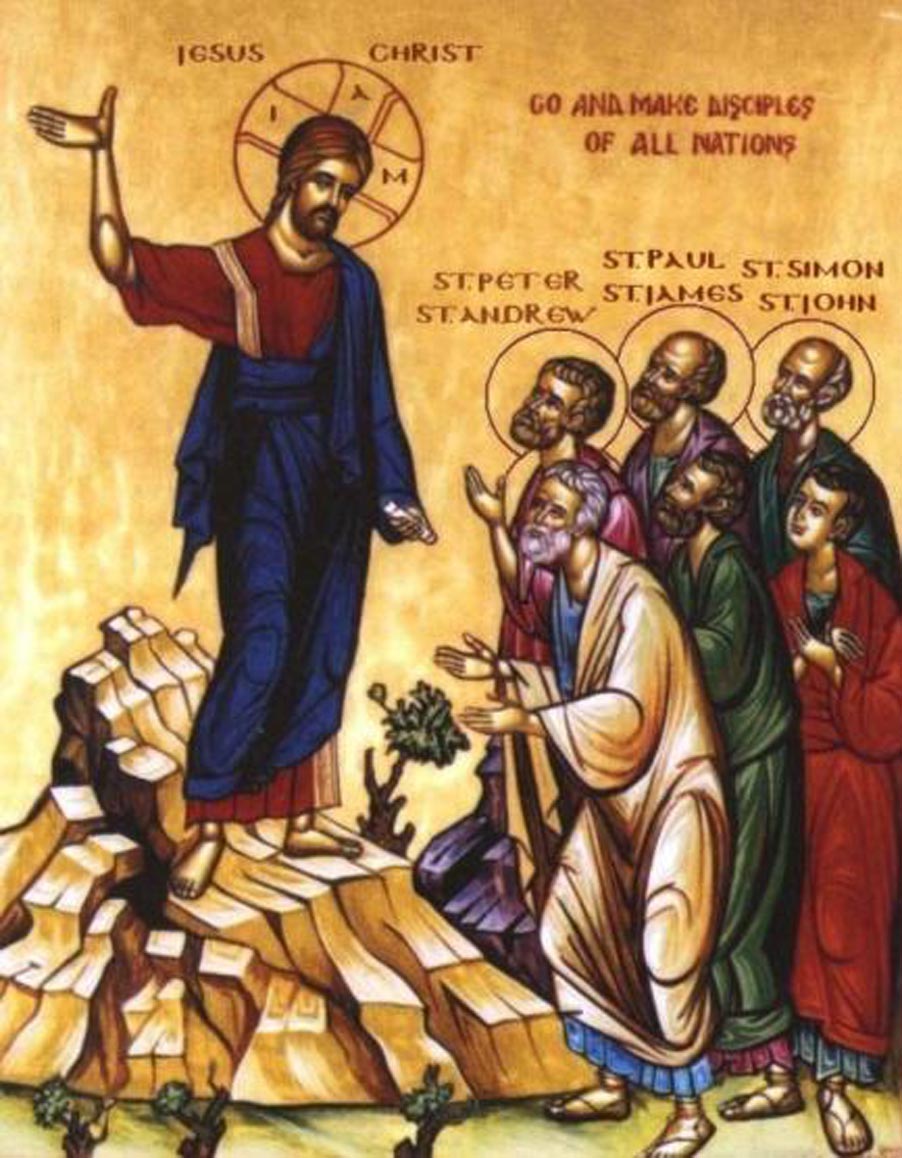
In last week’s gospel for Trinity Sunday, we heard Christ’s last words (according to Matthew) as he gave his disciples ‘The Great Commission:’
Go therefore and make disciples of all nations, baptizing them in the name of the Father, and of the Son and of the Holy Spirit, and teaching them to obey everything that I have commanded you. And remember, I am with you always, to the end of the age.
Jesus did NOT tell his disciples to go out and be nice to everyone, making sure that they always feel good about themselves, although to see the church in action sometimes you might think that. Some people may say that the church is just about telling people that God loves them. While God’s love for us may be a great truth, frankly, I have always found myself needing more. Specifically, I want to know why we think God loves us; I want to know what that love has compelled God to do for us in the past; I want to know what significance that love has for my life here and now. In short, I need God’s love to be more than some abstract sentiment that passed about like an insincere compliment or a “have a nice day.” I need God’s love to be a real story, that really affects me.
Christ’s command is to make more disciples; to go out into the whole world telling people his story. We exist as disciples of Christ, not for our own sake, not for making ourselves feel good, but for the sake of telling the story of Christ to the world. The story of Christ is indeed the story of God’s love, but it isn’t some vague idea, it is a flesh and bone history of what God’s love has done in the world, not just in the person of Jesus of Nazareth, but in each and every disciple that has been baptized into his body.
Throughout history the story of Christ has transformed people. It transforms people by making God’s love a concrete reality, not just an abstract sentiment. If we want to teach people the importance of Christ’s commandments, perhaps we should start by teaching them first the importance of Christ. Making disciples is about more than people learning the power of Christ’s commandments; it is about people learning the power of the one giving the commandments. We are here to convert people to a life lived in Christ, which is more about making them holy than it is about making them nice.
We are the guardians of the sacred story. We are here to make sure that this story is transmitted to those who have not received it yet. In this sense the primary task of the church, the entire church, is youth ministry, but not (I hasten to add) youth ministry as we normally conceive of it. We are here for the sake of those who are young in the faith (regardless of their age). Our mission is to raise up people to be lovers and followers of Christ. We do this, first and foremost, by telling people the sacred story of Christ. The fact that we are able to speak of Christ’s commandments, or that we have sacred scriptures, or that we even talk about Jesus at all, we owe completely to our ancestors in the faith, who found in Christ’s story something sacred and precious that needed to be preserved and handed down.
We are guardians of the sacred story, not because it belongs to us, but specifically because it doesn’t. The story of Christ is always more for those who haven’t received it yet, than it is for those who have. We are not here for ourselves, we are here for those who are young in the faith. The ‘Great Commission’ of our Lord to go out and make disciples, to baptize and to teach, should be a reminder to us that the church exists solely to tell his story.
What are we doing to make sure that Christ’s story is told to those who have not heard it yet? I am not just referring to our children or non-Christians; I am referring to future generations. It isn’t about whether our children will have faith; it is about whether our children’s children’s children will have faith. What are we doing to ensure that the sacred story of Christ will be alive and well for them? Are we effectively teaching Christ’s story to our own children? Are we creating adult disciples of Christ that understand how God’s love has manifested itself in the world? As older adults are we being faithful stewards of the facilities and resources that we have? Does our liturgy serve to help people increase in holiness, or does it merely congratulate them for being nice?
We are entering into Ordinary Time, the time of the church year when much of the pomp and circumstance of the big liturgies take a back seat, and we go about the day-in day out business of the church, but as our Lord reminds us: the day-in day-out business of the church is making disciples. Now is the time for us to take that sacred story of Christ which we have just retold from Christmas to Pentecost, out into the world and to share it with those who either have not received it, or who are as yet, young in the faith. Now is the time for each and every one of us to evaluate how we are serving Christ as guardians of his story: are we carrying it out into the world? Are we making sure that it will be told to future generations?
The future of the church is not in any one ministry to any one demographic: it isn’t in Sunday school or pastoral care to the elderly; it won’t be found by merely changing the liturgy or moving the furniture; nor does the secret lie in starting up new community service organizations. The future of the church lies in reclaiming its original raison d’être: telling the story of Christ to everyone, everywhere, all the time. It may not seem like a very easy task, but at least we have our Lord’s added promise that he will be with us as we try to undertake it…even to the end of the ages.
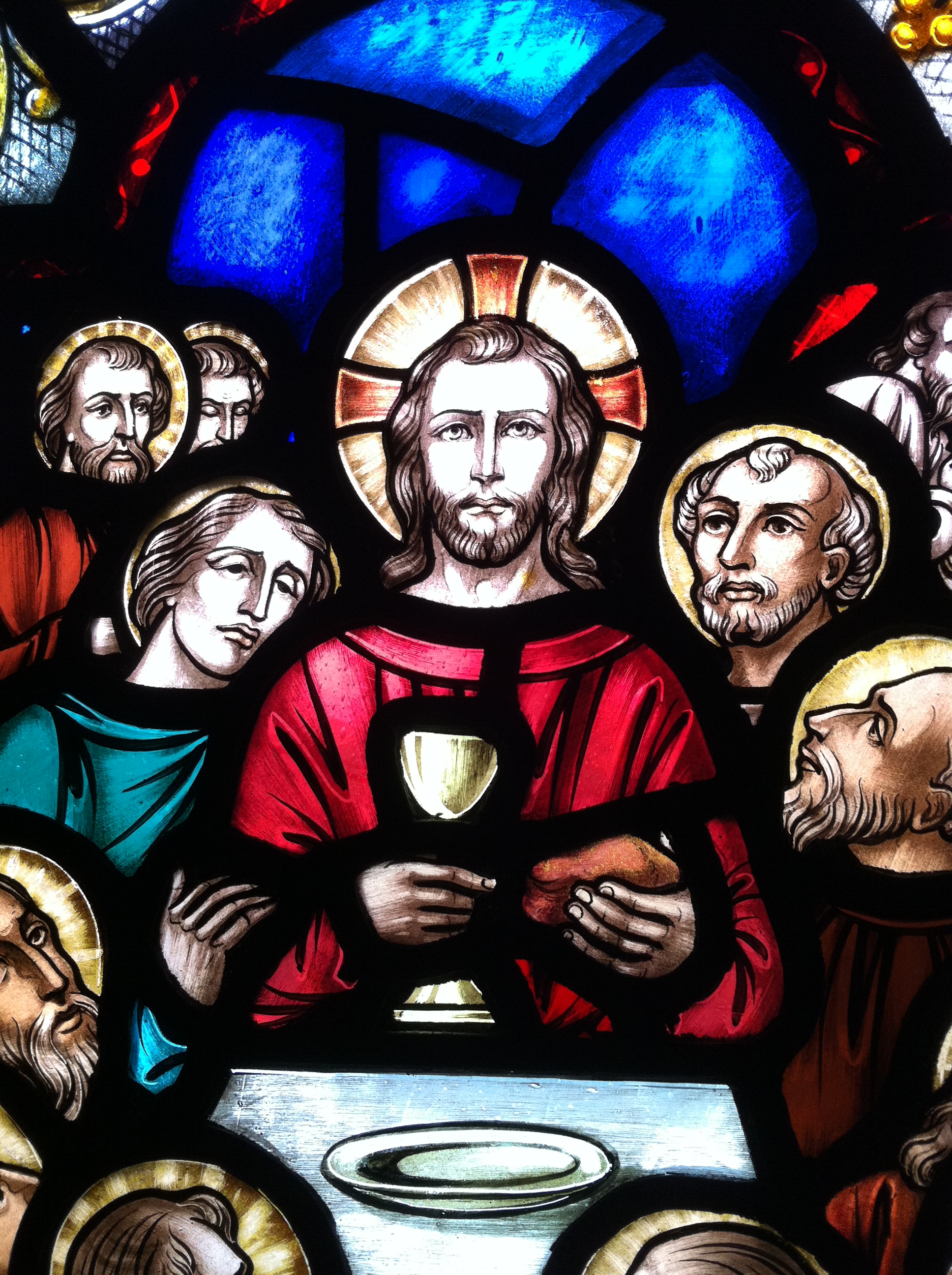
“The greatest love story of all time is contained in a tiny white host” -Archbishop Fulton Sheen
“You take communion to become holy, not because you already are” -St. Peter Julian Eymard
Episcopalians believe in the Real Presence of Christ in the Eucharist. That is to say that Jesus Christ is truly and objectively present on the altar under the form of bread and wine, which are consecrated as His Body and His Blood. It is an idea that goes back to the very earliest time in the church and it is one of the greatest mysteries of the Catholic faith. Medieval theologians went to great lengths to explain exactly how this happens, but nowadays I think the average worshiper is content to accept the elements as being what Christ says they are (i.e., His Body and His Blood) without much exploration into the intricate philosophical arguments as to how they got that way. The idea of the Real Presence seems pretty uncontroversial these days, but I do question sometimes what we actually believe.
Do we actually believe in the Real Presence of Christ in the Eucharist? If so, do our actions, both in the mass and outside of the mass, bear witness to that belief? Sometimes I wonder…
I once visited a church where the custom was to take the unconsumed bread outside after the service (they used leavened bread) and to scatter it upon the sidewalk in a misguided attempt to feed the birds. Although this was an extreme example of sacrilege, it was certainly not the only such experience I have had in my ministry, and I am aware of many more examples of similar desecration from stories I have heard from my colleagues. It is a trite saying, but it is true: actions speak louder than words. If we expect people to take our beliefs seriously, then those beliefs need to be reflected in our lives; if we are going to claim in word that the Holy Eucharist is the supreme act of Christian worship and that Christ is truly present in the sacrament on the altar, then our actions need to claim it in deed.
I so often hear priests discussing liturgy as if it is merely concerned with style and not substance. This is a fallacy. The liturgical actions we employ in the worship of God teach as much, if not more, than the words we use. Our style of worship conveys the substance of our faith; in and of itself it is not the substance, but it is an important tool that we use to point people to deeper realities. G.D. Carleton, in his classic guide to the Anglo-Catholic faith The King’s Highway writes:
If true worship in the spirit were lacking, all grandeur of material worship would indeed be a dead and meaningless form: but true spiritual worship, from beings such as we are, would not be complete and perfected if it were divorced from as perfect an outward expression as we are able to give. This is the principle which underlies all the ceremonial of the church.
The ceremonial is an outward expression of our inner faith and worship, and although I would argue that it does not need to be (nor should it be) universally the same, I do think that it should be an experience of dignity and reverence that is a fitting expression of the spiritual reality that we are proclaiming. We claim that our Lord and Savior Jesus Christ is actually present in the bread and wine offered on the altar; do our actions proclaim the same thing? Can people tell from our posture and actions a sense of respect for the God in our midst? Would a stranger walking into our churches see in our expressions any awe and wonder at the great mystery of the incarnation held before us? If we really believe that Christ is present in the sacrament of the altar and if we believe that part of our calling as Christians is going out into the world and making people disciples of that very same Christ, then what we do, both inside the mass and outside the mass, matters.
Next week is the Feast of Corpus Christi and my church will be observing it with a service of Choral Evensong and Benediction of the Blessed Sacrament. Although Benediction, for most Anglicans, may seem a strange or foreign service, best left to the spikiest of Anglo-Catholics, there is much to be commended about it, and I am happy to say that it seems to be gaining in popularity of late. Benediction and Eucharistic Adoration draw our attention to the mystery of the incarnation in a way that makes us stop what we are doing and take notice that there is something very profound happening here. It is a wonderful compliment to, but not replacement of, the mass itself. Here we must reflect on the reality to which the Eucharistic prayer speaks: the great love story of God that is contained in this bread. Our actions speak to this reality too: we bow, we kneel, we burn candles and incense all to show the great love and respect for the God who chooses to be among us.
But of course, our love for God should not stop there. The great paradox of sanctity, is that when you learn to recognize the holiness of one thing, you can then see that same holiness reflected in other things. It is only by recognizing the holiness of God that we are able to eventually lay claim to our own holiness, as well as the holiness of others. First we recognize the sacredness of the bread, then we recognize the sacredness of all that the bread feeds. Saint Peter Julian Eymard, the French priest and founder of the Congregation of the Blessed Sacrament, once remarked: “Happy is the soul that knows how to find Jesus in the Eucharist, and the Eucharist in all things.”
Are we helping people to find Jesus in the Eucharist? Do our actions, whether they be liturgical or in the secular world, point to the great truth which we claim in the Holy Eucharist? Would a stranger observing what we do, but ignoring what we say, still understand our worship as something profound and mysterious, our would they see it simply as another gathering of like-minded individuals? If we truly believe in the Real Presence of Christ in the Eucharist, then our worship and our lives need to reflect that. We don’t all need to celebrate in exactly the same way and our liturgies needn’t always be complicated, but what we do should always help people to find Jesus in the Eucharist and the Eucharist in all things. It is here where style really matters to the substance of our faith.
The following sermon was preached on Pentecost Sunday, 2014, immediately before our first Pentecost Sunday Gospel Brunch and Hymn Sing.


You must be logged in to post a comment.